Low Back Pain Imaging: Red Flags That Change the Scan Strategy

Key Takeaways
- Many cases of low back pain do not need immediate imaging, especially when there are no warning signs.
- Red flags such as severe weakness, fever, cancer history, trauma, or loss of bladder or bowel control can change the imaging plan.
- MRI is often preferred for nerves, discs, infection, or tumor concerns; CT and X-ray have more specific roles.
- A careful history and physical exam usually guide the first decision about whether a scan is needed.
- Patients traveling for evaluation should bring prior records and seek prompt medical review if symptoms change.
Medically reviewed by the Acıbadem clinical team — June 13, 2026
Most low back pain improves without urgent imaging, but certain red flags can change the scan strategy and point clinicians toward a more targeted workup. This article explains which warning signs matter, how doctors choose between X-ray, MRI, and CT, and what patients can expect when seeking care locally or abroad.
Overview
Low back pain is one of the most common reasons people seek medical advice, yet the first question is not always which scan should be ordered. In many cases, the more important question is whether imaging is needed at all. For uncomplicated back pain, a clinician may recommend a period of observation, activity adjustment, and symptom control before any scan is considered.
The picture changes when certain warning signs, often called red flags, appear. These clues can suggest that the pain is coming from a fracture, infection, nerve compression, cancer, inflammatory disease, or another condition that benefits from earlier imaging. In those situations, the scan strategy becomes more focused, and the choice of MRI, CT, or X-ray depends on what the clinician is trying to rule out.
For international patients, this decision can feel especially important because it affects travel timing, appointment planning, and whether care should be coordinated before or after arrival. A thoughtful imaging plan can reduce unnecessary tests while still identifying the problems that truly need attention.
Symptoms
Typical mechanical low back pain often feels like aching, stiffness, or soreness that worsens with certain movements and improves with rest or position changes. It may start after lifting, prolonged sitting, exercise, or a minor strain. Even when uncomfortable, this type of pain does not automatically mean a scan is needed.
Red flag symptoms suggest the need for a closer look. These may include pain that is severe and constant, pain that wakes the person from sleep, or pain associated with fever, unexplained weight loss, new numbness, weakness, balance problems, or trouble walking. Symptoms that spread into both legs, especially when combined with bladder or bowel changes, deserve urgent evaluation.
It is also important to pay attention to the story around the pain, not just the pain itself. A recent fall, known osteoporosis, a history of cancer, immune suppression, intravenous drug use, or recent infection can all raise the stakes and may change the imaging pathway even when the back pain seems ordinary at first glance.
Causes & Risk Factors

Imaging decisions are shaped by the possibility of underlying causes. A simple muscle or ligament strain may improve without scans, but a compressed nerve, vertebral fracture, spinal infection, inflammatory arthritis, or tumor can require imaging to confirm the diagnosis and guide treatment. In practice, doctors look for clues that make one of these conditions more likely.
Risk factors matter because they raise the chance that low back pain is not just mechanical. Older age, osteoporosis, long-term steroid use, major trauma, known malignancy, fever, weakened immune defenses, and drug use that increases infection risk are all examples. A person with one or more of these factors may need imaging sooner, even if the pain seems familiar.
The scan strategy also changes when symptoms are not following the expected course. Pain that persists beyond the usual recovery window, progressively worsens, or begins to show nerve-related features may prompt a doctor to move from conservative care to imaging, especially if the person is planning travel or needs a clear diagnosis before returning home.
Diagnosis
Diagnosis starts with a careful conversation and physical examination. Clinicians ask when the pain began, what makes it better or worse, whether there was an injury, and whether there are symptoms such as fever, numbness, weakness, or urinary changes. They also review medical history, because prior cancer, osteoporosis, infection, or surgery can alter the threshold for imaging.
When there are no red flags, imaging is often deferred because early scans frequently show age-related changes that are not the cause of pain. In that setting, a scan may create confusion instead of clarity. If a red flag is present, however, imaging becomes more useful because it can confirm or exclude conditions that need prompt treatment.
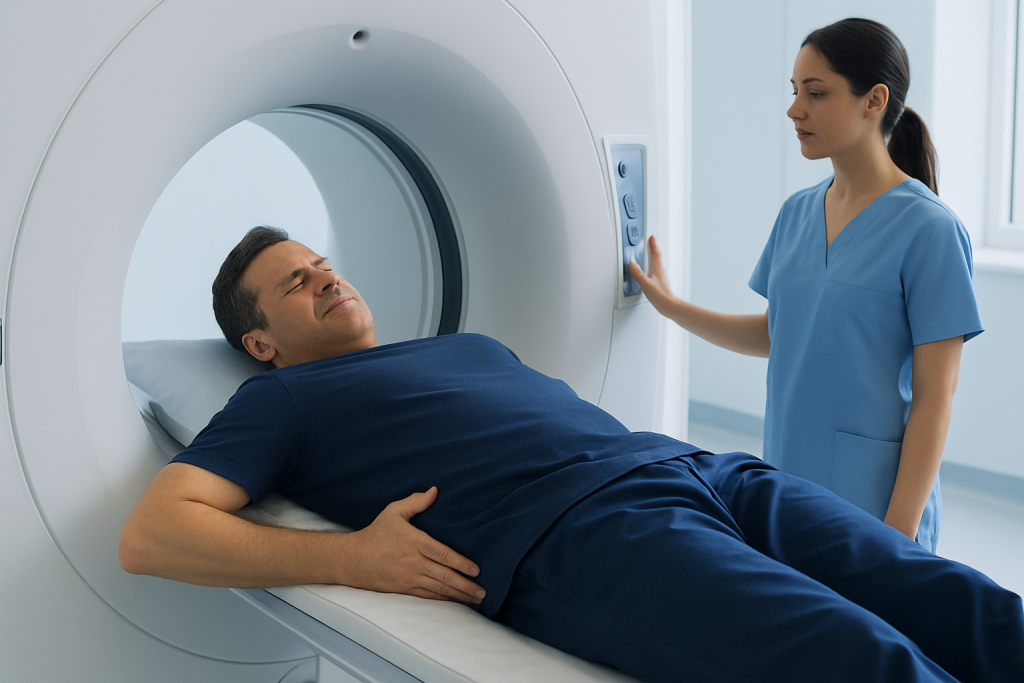
The choice of test depends on the suspected problem. X-rays are commonly used to look for fracture, alignment issues, or some signs of degeneration. MRI is usually the best option for discs, nerves, infection, inflammation, and many tumors. CT may be chosen when detailed bone assessment is needed or when MRI is not suitable.
For patients traveling internationally, previous reports and images are especially valuable. Bringing prior imaging on a disc or secure digital file can help the radiologist compare changes over time and may prevent duplicate tests after arrival.
Treatment Options
Imaging itself does not treat low back pain, but it can guide the next step. If the scan shows a simple strain or non-specific pain pattern, treatment may remain conservative with movement, physical therapy, posture changes, and time. If the scan reveals a fracture, infection, nerve compression, or another structural issue, treatment becomes more specific.
Some patients need medication, targeted injections, bracing, or surgery, depending on the diagnosis. Others benefit from a rehabilitation plan that restores motion and strength while reducing the chance of recurrence. In situations where imaging detects a serious cause, prompt referral to the right specialist is more important than the scan itself.
The most appropriate treatment is usually based on the whole clinical picture rather than a single image. That is why doctors combine symptoms, exam findings, and imaging results before recommending care. This approach helps avoid both unnecessary procedures and delays in conditions that need active treatment.
Prevention & Self-care
Most low back pain improves best when the back is kept gently active rather than protected for too long. Short walks, avoiding prolonged bed rest, and returning gradually to normal movement can support recovery. Simple measures such as heat, ergonomic adjustments, and careful lifting technique may also help.
Prevention is especially important for people with recurrent pain or known risk factors. Strengthening the core and hip muscles, maintaining bone health, managing weight, and reviewing workplace ergonomics can reduce strain on the spine. For those with osteoporosis or a history of fracture, medical follow-up matters because small changes in symptoms may signal a need for earlier imaging.
When seeking care across borders, it helps to arrive with a concise symptom timeline, a list of medications, and previous scan reports if available. This allows the medical team to understand what has already been tried and whether the current episode is changing in a way that justifies a different imaging plan.
When to See a Doctor
Medical review is recommended if low back pain is severe, persistent, or interfering with daily function, especially when home care is not helping. A clinician should also be seen promptly if there is fever, unexplained weight loss, a history of cancer, significant trauma, or pain that is steadily worsening rather than improving.
Urgent assessment is important when back pain comes with new weakness, numbness in the groin or saddle area, difficulty walking, or loss of bladder or bowel control. These symptoms may signal nerve compression or another serious spinal problem and should not wait for routine follow-up. The earlier the evaluation, the easier it is to choose the right scan and the right treatment pathway.
Patients planning to travel for evaluation should contact a qualified doctor before departure if symptoms are changing quickly. Acibadem Health Point’s multidisciplinary specialists and JCI-accredited hospitals can help international patients diagnose and treat low back pain conditions when imaging is needed, while keeping the process coordinated and medically appropriate.
Practical scan strategy: how red flags change the next step
In everyday practice, the imaging plan changes less because of the label “back pain” and more because of the details surrounding it. A younger person with a short history of lifting-related pain and no red flags may not need any imaging right away. By contrast, an older adult with osteoporosis after a fall may need an X-ray, while someone with leg weakness or suspected infection is more likely to need MRI.
This is why doctors focus on triage first: identify the likelihood of serious disease, then choose the least invasive test that answers the question. If a scan is done too early or without a clear reason, it may show unrelated findings that complicate care. If it is done too late when red flags are present, an important diagnosis may be missed.
Patients can support this process by describing their symptoms clearly, including what has changed, what is new, and what feels different from prior episodes. That information often determines whether the next step is reassurance, conservative care, or an image that looks more closely at bone, discs, nerves, or infection.
Frequently asked questions
Do all people with low back pain need an MRI or X-ray?
No. Many cases of low back pain improve without immediate imaging, especially when there are no red flags. Doctors usually start with a history and physical exam and reserve scans for situations where the result is likely to change care.
What counts as a red flag for low back pain?
Red flags include fever, unexplained weight loss, a history of cancer, major trauma, osteoporosis, severe weakness, numbness in the groin area, or bladder and bowel changes. These features can point to a more serious cause and may change the imaging choice.
Why might a doctor choose MRI instead of X-ray?
MRI shows soft tissues, discs, nerves, infection, inflammation, and many tumors more clearly than X-ray. X-ray is better for some bone problems, but it cannot show nerve compression or many other internal spinal causes of pain.
Can a scan show a problem even if the pain is mild?
Yes, but not every scan finding explains the pain. Age-related changes are common and may appear even in people without symptoms, which is one reason clinicians avoid unnecessary imaging when red flags are absent.
What should a traveler bring to a back pain appointment abroad?
It helps to bring prior imaging reports, copies of scans if available, a medication list, and a brief timeline of symptoms. This makes it easier for the new medical team to compare findings and decide whether additional imaging is needed.
When should low back pain be treated as urgent?
Urgent care is needed when back pain comes with new weakness, trouble walking, saddle numbness, fever, or loss of bladder or bowel control. These symptoms can signal a serious spinal condition that should be assessed quickly.
References
- World Health Organization
- National Institute for Health and Care Excellence
- American College of Radiology
- American Academy of Orthopaedic Surgeons
- Mayo Clinic
This article is for general information only and is not a substitute for professional medical advice. Please consult a qualified doctor about your individual situation.