

Hip Replacement vs. Physical Therapy: How Doctors Decide When Conservative Care Is Not Enough

Key Takeaways
- Physical therapy is often tried first when hip pain is mild to moderate and the joint still has usable function.
- Hip replacement is usually considered when pain, stiffness, and mobility limits continue despite well-supervised conservative care.
- X-rays, exam findings, and how much the pain affects daily life help guide the decision more than imaging alone.
- The right choice depends on age, activity goals, overall health, and whether the hip problem is arthritis, injury-related, or another condition.
- A structured plan can include weight management, activity changes, medication, injections, and rehabilitation before surgery is discussed.
Medically reviewed by the Acıbadem clinical team — July 13, 2026
Hip pain does not always lead straight to surgery. Doctors weigh symptoms, imaging, daily function, and response to conservative care to decide whether physical therapy is still the best next step or whether hip replacement may offer better relief.
Overview
When a hip starts to hurt, the first question is not always whether it needs to be replaced. In many cases, doctors begin with conservative care such as physical therapy, activity modification, and pain control because these measures can reduce symptoms and help preserve movement.
The decision becomes more nuanced when pain keeps returning, walking becomes difficult, or sleep and daily tasks begin to revolve around the hip. At that point, doctors compare what physical therapy can realistically improve with what a hip replacement could correct more directly, especially if the joint is badly worn.
This is not a one-size-fits-all decision. A younger patient with manageable symptoms may do well with rehabilitation for a long period, while someone with advanced arthritis, severe stiffness, and declining quality of life may benefit more from surgery. The goal is to match treatment to the stage of the condition and the person’s life, not just the appearance of the x-ray.
Symptoms That Help Guide the Choice

Hip problems often announce themselves quietly at first: a dull ache after walking, trouble getting in and out of a car, or stiffness when standing up after sitting. Over time, the pain may spread to the groin, outer hip, thigh, or buttock, and simple movements such as putting on socks can become frustratingly hard.
Doctors pay close attention to patterns that suggest conservative care may be losing ground. These include pain that wakes the person at night, a reduced range of motion, limping that does not improve, or the need to avoid ordinary activities like climbing stairs or shopping. The more the hip interferes with independence, the more seriously surgery enters the conversation.
Symptoms also help doctors distinguish between hip joint disease and pain that may come from the back, pelvis, tendons, or nerves. That distinction matters because not every painful hip needs a replacement, and not every patient with an x-ray showing arthritis is ready for surgery.
- Persistent groin pain or deep joint pain
- Stiffness that limits bending or rotation
- Pain with walking, stairs, or standing from a chair
- Limping or reduced walking distance
- Pain that continues despite rest and therapy
Causes & Risk Factors
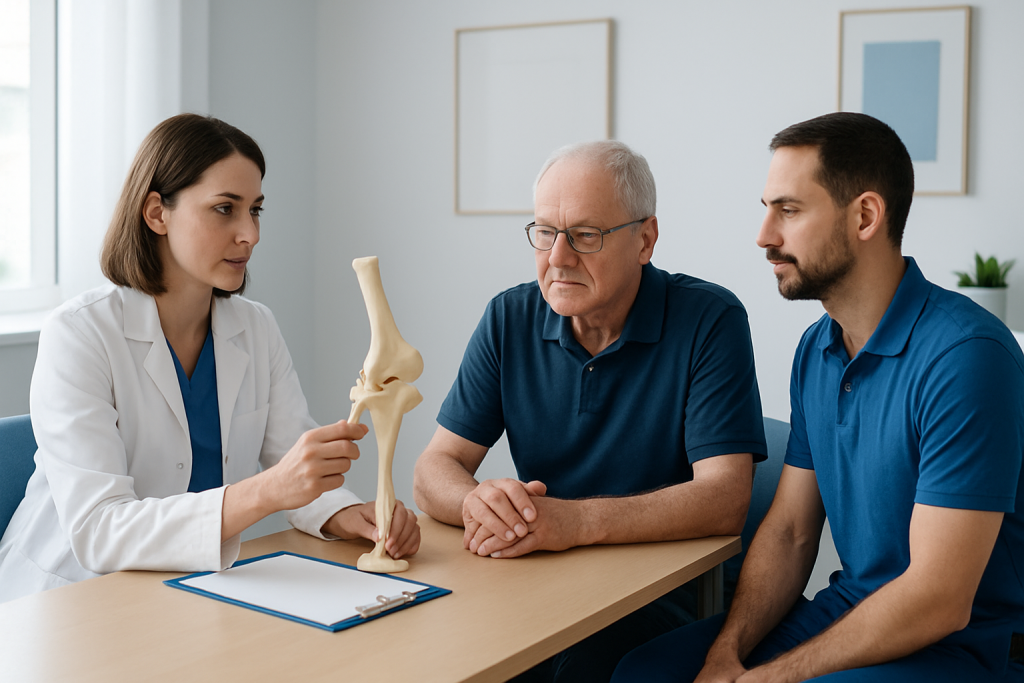
The most common reason doctors consider hip replacement is osteoarthritis, a condition in which the cartilage that cushions the joint gradually wears away. Other causes include inflammatory arthritis, hip dysplasia, avascular necrosis, previous fractures, and damage from childhood hip disorders or old injuries.
Several factors make hip joint problems more likely to become difficult to manage with physical therapy alone. Age can play a role, but it is not the deciding factor by itself. Body weight, prior hip surgery, repetitive impact activities, joint deformity, and certain medical conditions can all affect how quickly the joint deteriorates and how well it responds to conservative treatment.
Doctors also consider the person’s goals. Someone who wants to return to long walks, travel, or work that requires standing may be more affected by moderate symptoms than a person with a more sedentary routine. The best treatment choice depends on whether the hip can still support the patient’s goals without constant pain or compensation.
- Osteoarthritis and cartilage loss
- Inflammatory joint disease
- Past trauma, fracture, or dislocation
- Avascular necrosis
- Structural problems such as dysplasia or impingement
Diagnosis: How Doctors Judge Severity
The decision between hip replacement and physical therapy begins with a careful clinical exam. Doctors ask where the pain is felt, how long it has been present, what makes it worse, and which activities have become limited. They examine gait, hip motion, strength, and tenderness, and they may compare one side with the other.
Imaging is then used to confirm what the examination suggests. X-rays are often the most important starting point because they show joint-space narrowing, bone spurs, deformity, or advanced wear. In some cases, MRI or other imaging is needed when the diagnosis is unclear or when doctors are looking for problems such as avascular necrosis or labral injury.
What matters most is the combination of findings: the degree of structural damage, how much pain is present, and how much function has been lost. A hip can look mildly worn on imaging yet cause major symptoms, or it can look quite damaged while still being managed reasonably well. Doctors decide by putting the whole picture together.
Treatment Options Before Surgery
Physical therapy is often the first structured treatment when the hip remains stable enough to be managed without replacement. A therapist may work on muscle strengthening, movement patterns, flexibility, balance, and safe ways to reduce joint stress. For some people, this can reduce pain enough to delay surgery for months or years.
Other non-surgical measures are often layered in alongside therapy. Doctors may recommend activity adjustment, weight reduction when relevant, anti-inflammatory medication if appropriate, assistive devices such as a cane, or image-guided injections in selected cases. These strategies are most useful when they are part of a coordinated plan rather than tried in isolation.
Conservative care is usually considered insufficient when the patient has already tried it in a real, consistent way and still cannot function comfortably. A short or sporadic attempt at therapy does not tell the same story as a well-supervised program that has been followed for weeks or months.
- Supervised physical therapy and home exercises
- Modified activity and pacing
- Pain-relief medicines recommended by a doctor
- Walking aids or supportive devices
- Joint injections in selected situations
When Hip Replacement Becomes the Better Option
Hip replacement is usually considered when the joint is so damaged that non-surgical care can no longer provide acceptable quality of life. In practical terms, this may mean the person still hurts with nearly every step, cannot sleep well, has become increasingly dependent on others, or feels that daily life has narrowed around the hip.
Doctors are also attentive to signs that conservative care has reached its limit. If pain remains severe despite therapy, medications, and lifestyle changes, or if range of motion is so restricted that basic activities are hard to perform, replacement may offer a more reliable path to relief. The operation is not chosen simply because arthritis exists; it is chosen when the balance tips in favor of a mechanical solution.
Age alone does not decide the issue. A patient’s overall health, bone quality, activity level, and ability to recover all matter. For international patients, this discussion often includes travel logistics, rehabilitation planning, and follow-up arrangements before surgery is scheduled, because a clear recovery plan is part of the decision rather than an afterthought.
Recovery, Prevention & Self-care
Whether the plan is physical therapy or surgery, success depends on what happens after the clinic visit. Hip pain usually improves more steadily when the person follows a realistic routine: strengthening the muscles around the joint, avoiding sudden overexertion, and giving the body time to adapt. Consistency matters more than intensity.
People who are trying to delay surgery may benefit from keeping the hip moving in ways that do not worsen pain, using supportive footwear, and reducing triggers such as prolonged standing or high-impact exercise. If weight is a contributing factor, even modest changes can reduce load on the joint. Self-care works best when it is individualized and reviewed with a clinician or physical therapist.
For those who do have a replacement, rehabilitation is not optional; it is what helps the new joint function well. Patients traveling from another country should clarify where postoperative therapy will happen, who will manage wound checks, and how questions will be handled once they return home. Acibadem Health Point’s multidisciplinary specialists and JCI-accredited hospitals support international patients through diagnosis, treatment, and follow-up planning in a coordinated way.
- Follow prescribed home exercises consistently
- Use activity pacing instead of pushing through pain
- Maintain healthy body weight when possible
- Choose low-impact exercise if approved by the care team
- Plan recovery and follow-up before traveling for care
When to See a Doctor
A medical evaluation is worthwhile when hip pain lasts more than a short period, keeps returning, or begins to change how a person walks, sleeps, or works. It is especially important when the hip feels stiff enough to limit dressing, shoes, stairs, or getting in and out of a vehicle.
Doctors should also assess hip pain if there is a limp, a sense that the joint is giving way, fever, sudden swelling, a history of injury, or pain that begins after a fall. These symptoms do not always indicate something urgent, but they do deserve attention because the cause may be different from routine wear-and-tear arthritis.
Anyone already in physical therapy who is not improving should let the clinician know rather than assuming the program has failed. Sometimes the exercise plan needs adjustment; sometimes the problem is more advanced than expected. A thoughtful reassessment can prevent months of frustration and help clarify whether continued conservative care or hip replacement is the more appropriate next step.
A Practical Way Doctors Decide
In everyday practice, doctors often ask a simple question: is the hip still being managed, or is it now controlling the person’s life? If the answer is that pain is present but manageable, physical therapy and other conservative measures usually stay in the lead. If the answer is that even ordinary days are becoming difficult, surgery may be the more effective solution.
The decision is rarely based on a single scan or one bad week. It comes from examining symptoms, looking at the joint, reviewing the response to treatment, and understanding the patient’s goals. That is why two people with similar x-rays may receive different advice.
For patients deciding between travel for surgery, a longer rehabilitation plan, or continued non-surgical care, a well-organized consultation can bring clarity. The best decision is the one that matches the anatomy, the symptoms, and the person’s life in a way that feels medically sound and personally workable.
Frequently asked questions
Can physical therapy avoid hip replacement forever?
Sometimes it can delay surgery for a long time, especially when the joint damage is mild or symptoms fluctuate. However, if arthritis or another condition keeps progressing, therapy may eventually stop providing enough relief. The goal is not to avoid surgery at all costs, but to use the least invasive treatment that still works well.
How do doctors know when conservative care is no longer enough?
They look for persistent pain, worsening stiffness, reduced walking ability, and limited improvement after a genuine course of treatment. Imaging helps, but the decision is driven mainly by how the hip affects daily life. If the person is still struggling despite appropriate care, surgery may become the better option.
Is severe pain the only reason to choose hip replacement?
No. Function matters just as much as pain. Some patients describe moderate pain but have major difficulty sleeping, traveling, working, or caring for themselves, and that level of disruption can justify surgery even if the pain is not constant.
Can a person try physical therapy again before deciding on surgery?
Yes, especially if the first program was brief, not well tolerated, or not targeted to the actual problem. A second review may lead to a better exercise plan, different support strategies, or a clearer understanding that the joint is too damaged for therapy alone. Reassessment is often useful.
What should international patients plan for before hip surgery?
They should think ahead about hospital stay, rehabilitation, follow-up visits, and what will happen once they return home. Clear communication with the care team helps make recovery safer and smoother. Having a coordinated plan is particularly important when treatment is being arranged from another country.
Does age decide whether someone gets a hip replacement?
Age is one factor, but it does not make the decision by itself. Doctors also consider bone quality, overall health, symptom severity, activity goals, and whether conservative care is still helping. A younger person may still need surgery, while an older person may do well with non-surgical care for some time.
References
- American Academy of Orthopaedic Surgeons
- Mayo Clinic
- National Institute of Arthritis and Musculoskeletal and Skin Diseases
- Arthritis Foundation
- NHS
This article is for general information only and is not a substitute for professional medical advice. Please consult a qualified doctor about your individual situation.
More from the Health Library



Related Specialists

Prof. Dr. Ahmet Alanay
Orthopedic Surgery & Traumatology
Dr. Sinan Aksu
Orthopedic Surgery & Traumatology
Dr. Sirri Baştürk
Orthopedic Surgery & Traumatology
Prof. Dr. Korhan Özkan
Orthopedic Surgery & Traumatology