

Hip Impingement

Key Takeaways
- Hip impingement often causes groin pain, stiffness, and discomfort during bending or twisting movements.
- It may be related to bone shape, sports activity, prior injury, or combined mechanical factors in the hip joint.
- Diagnosis usually includes a physical examination and imaging studies such as X-rays and sometimes MRI.
- Many people improve with activity changes, physiotherapy, and other non-surgical measures.
- Surgery may be considered when symptoms persist and joint damage or mechanical conflict continues.
- Prompt assessment is helpful when hip pain limits walking, exercise, sleep, or travel plans.
Hip impingement is a mechanical problem in which the bones of the hip joint do not move as smoothly as they should, leading to pain, stiffness, and sometimes labral irritation. Early evaluation can help clarify the cause of symptoms and guide treatment that matches a person’s activity level and goals.
Overview
Hip impingement, also called femoroacetabular impingement (FAI), happens when the ball and socket of the hip do not glide with ideal clearance. Instead of moving freely, the bones may press against one another during certain motions, especially deep bending, turning, squatting, or getting in and out of a car. Over time, that repeated contact can irritate the joint lining and the labrum, the ring of cartilage that helps seal and stabilize the hip.
For many people, the condition starts as a nagging ache rather than a dramatic injury. The pain may show up during sport, long walks, sitting for extended periods, or even while dressing. Some people notice it after increasing training intensity, while others discover it only once they begin losing hip flexibility. The pattern can be subtle at first, which is why it is often confused with a groin strain, back problem, or muscle tightness.
Hip impingement is important to evaluate because the issue is mechanical. If the joint continues to pinch in the same way, symptoms may persist and, in some cases, contribute to cartilage wear over time. The goal of care is not only to reduce pain, but also to protect function and help the person return to ordinary movement, work, travel, and exercise with better confidence.
Symptoms
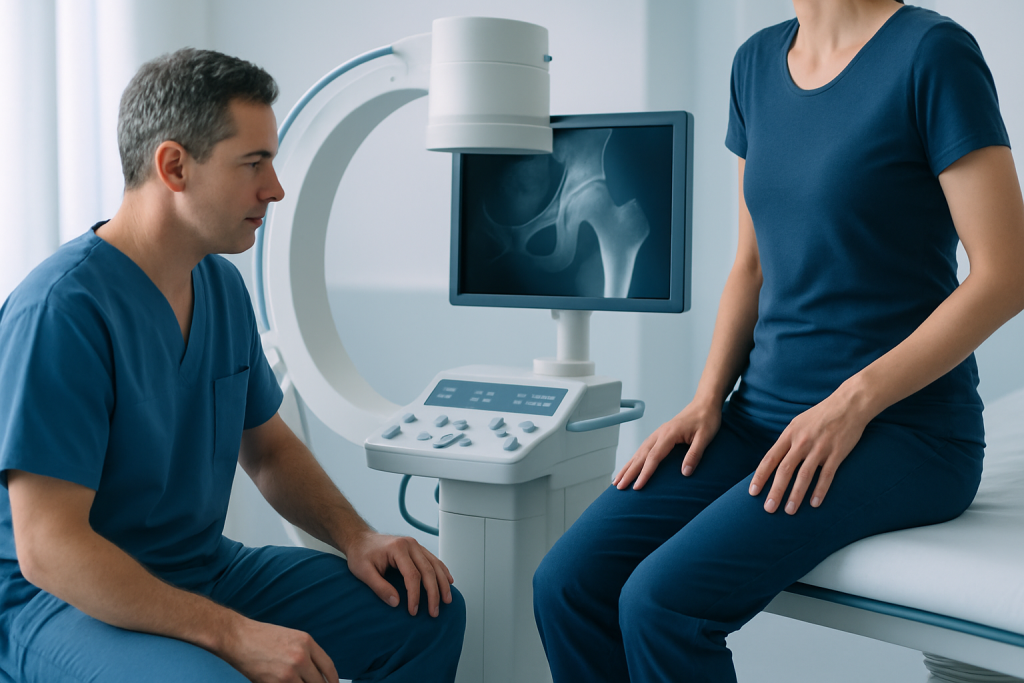
The most common symptom is pain felt deep in the front of the hip or groin. Some people describe a catching sensation, stiffness after sitting, or discomfort when the hip is brought toward the chest. Pain can also appear on the outside of the hip or in the buttock, especially when movement changes the way pressure is shared across the joint.
Symptoms often become more noticeable with activities that require repeated flexion or rotation. These may include running, cycling, dancing, martial arts, climbing stairs, rising from low seats, or lifting the knee to put on socks and shoes. In some cases, pain is mild during the activity but lingers afterward, which can make rest periods feel less restorative than expected.
Other possible signs include reduced range of motion, a sense that the hip is “tight,” and occasional clicking or catching. Not every click is a sign of damage, but when it comes with pain or movement limitation, it deserves medical attention. Because hip pain can arise from several sources, the pattern of symptoms helps clinicians decide whether the joint, muscles, spine, or nearby structures are involved.
Causes & Risk Factors
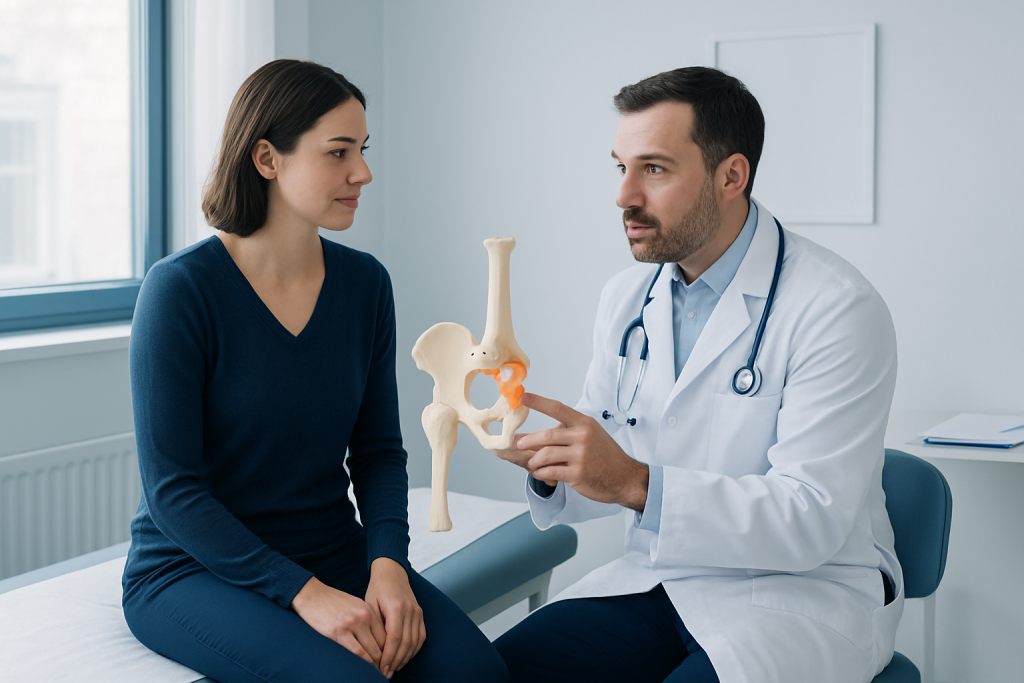
Hip impingement is usually linked to the shape of the hip bones. In cam-type impingement, the ball of the femur is not perfectly round, so it can rub against the socket during movement. In pincer-type impingement, the socket covers too much of the femoral head. Many people have a mixed pattern with features of both, and the exact shape varies from person to person.
It is also more likely to be noticed in active adolescents and adults who place repeated demands on the hip through sport, dance, or training. That said, activity alone does not cause the problem; the underlying bone anatomy usually plays a central role. Previous hip injury, altered movement mechanics, or another condition that changes how the joint loads may contribute to symptoms or make them easier to trigger.
Risk factors can include:
- Participation in sports or activities that involve deep hip flexion and rotation
- Hip shape differences present from development
- A history of hip injury or surgery
- Stiffness in the hip, pelvis, or surrounding muscles
- Symptoms that worsen with prolonged sitting or repetitive movement
Because every hip is different, two people with similar imaging findings may experience very different symptoms. Some have pain with modest activity, while others remain comfortable until the joint is pushed through certain positions again and again. That is one reason treatment decisions are based on the whole picture, not on a scan alone.
Diagnosis
Diagnosis begins with a detailed history and physical examination. A clinician will ask where the pain is located, what movements bring it on, how long it has been present, and whether it affects walking, sitting, sleep, exercise, or travel. Physical testing often includes moving the hip through different positions to see whether certain angles recreate symptoms or reveal limited motion.
Imaging is commonly used to support the diagnosis and rule out other problems. X-rays can show bone shape and help identify cam or pincer features. In some cases, MRI or MR arthrography may be recommended to look more closely at the labrum, cartilage, and other soft tissues. The choice of test depends on the symptoms, the exam findings, and whether surgery is being considered.
It is useful to remember that imaging findings do not always match pain levels. Some people have structural changes on a scan but little or no discomfort, while others have significant symptoms with more modest findings. A good evaluation aims to connect the scan with the real-life problem: which movements hurt, what activities are affected, and what treatment is most likely to help.
Treatment Options
Treatment depends on symptom severity, the degree of mechanical conflict, age, activity goals, and whether there is damage to the labrum or cartilage. Many people begin with non-surgical care, especially if the pain is manageable and there is no major joint degeneration. The aim is to calm irritation, improve movement quality, and reduce positions that repeatedly pinch the hip.
Conservative treatment may include activity modification, a structured exercise program, physiotherapy, and short-term use of anti-inflammatory medication when appropriate and recommended by a doctor. Physiotherapy often focuses on strengthening the muscles that support hip control, improving core stability, and teaching safer movement patterns. The emphasis is usually not on forcing the hip into more range, but on helping the joint move more efficiently within its comfortable limits.
Surgery may be discussed when symptoms continue despite careful non-surgical care, or when imaging and exam findings suggest a mechanical problem that is unlikely to settle on its own. Arthroscopic hip surgery can reshape the bone and address labral damage in selected patients. The decision is individualized, and doctors typically consider current pain, function, age, joint health, and personal priorities before recommending an operation.
In a travel-based care setting, it helps to plan treatment and follow-up with the recovery timeline in mind. Patients coming from another country may need coordinated imaging, preoperative evaluation, and a practical plan for rehabilitation after they return home. Clear communication with the orthopedic team makes that process smoother and safer.
Prevention & Self-care
Not every case of hip impingement can be prevented, especially when bone shape is part of the cause. Still, many people can reduce flare-ups and protect hip function by paying attention to how the joint is loaded during daily life and exercise. Small changes often matter more than one large change made only after pain is already severe.
Helpful self-care approaches may include:
- Avoiding repeated deep squats, low chairs, or positions that reproduce sharp groin pain
- Using a warm-up that gradually prepares the hips before sport or exercise
- Building strength in the glutes, core, and trunk to support smoother movement
- Taking standing or walking breaks during long periods of sitting or travel
- Choosing exercises that stay within a comfortable range while symptoms are active
People often do better when they treat hip pain as a movement signal rather than something to push through. Rest alone is rarely the complete answer, but neither is forcing the joint into aggravating positions. A physiotherapist or orthopedic specialist can help identify which movements are safe, which should be temporarily reduced, and how to return to training or daily routines in a staged way.
When to See a Doctor
Medical evaluation is sensible when hip pain lasts more than a short period, keeps returning, or interferes with walking, exercise, sleep, work, or travel. It is especially worth assessing if the pain is centered in the groin, movement feels restricted, or everyday tasks such as putting on shoes become difficult. Early assessment can help distinguish hip impingement from other causes of pain in the hip, pelvis, or lower back.
A doctor should also be consulted if the hip becomes suddenly very painful after an injury, if there is visible swelling, if the person cannot bear weight, or if the symptoms are accompanied by fever or other general illness. These features may point to a different problem that needs prompt attention. Even when symptoms are not urgent, timely advice can prevent a long period of compensating movements that may strain the back, knees, or opposite hip.
For international patients, coordinated orthopedic review can be especially helpful when care must fit between flights, hotel stays, and recovery away from home. Acibadem Health Point’s multidisciplinary specialists and JCI-accredited hospitals diagnose and treat hip impingement for international patients with coordinated evaluation and follow-up planning. That kind of organization can make treatment easier to navigate, especially when imaging, physiotherapy, and possible surgery need to be linked across more than one visit.
Frequently asked questions
What exactly is hip impingement?
Hip impingement is a condition where the bones of the hip joint contact each other in a way that causes pinching during movement. This can irritate the joint and, in some cases, affect the labrum or cartilage. It is often called femoroacetabular impingement, or FAI.
Is hip impingement the same as hip arthritis?
No, but they can be related. Hip impingement is a mechanical problem, while arthritis refers to joint wear and inflammation. If impingement continues over time, it may contribute to arthritis in some people.
Can hip impingement improve without surgery?
Yes, many people improve with conservative treatment such as physiotherapy, activity changes, and symptom control. The right approach depends on how much the condition limits daily life and whether there is ongoing structural conflict. A doctor can help decide whether non-surgical care is likely to be enough.
Which movements usually make it worse?
Deep bending of the hip, twisting, squatting, and prolonged sitting often trigger symptoms. Activities like running, cycling, dancing, or getting in and out of low seats may also be uncomfortable. The exact pattern varies from person to person.
How is hip impingement diagnosed?
Diagnosis usually starts with a physical examination and a discussion of symptoms. X-rays are often used to look at bone shape, and MRI may be added if soft tissue injury is suspected. Imaging is interpreted together with symptoms, not by itself.
When should someone seek an orthopedic opinion?
An orthopedic opinion is appropriate when pain persists, motion becomes limited, or daily activities start to suffer. It is also helpful if the person wants to understand whether surgery might be needed. Early assessment can make treatment planning more straightforward.
References
- American Academy of Orthopaedic Surgeons
- Mayo Clinic
- National Institute of Arthritis and Musculoskeletal and Skin Diseases
- Arthroscopy Association of North America
- Cleveland Clinic
This article is for general information only and is not a substitute for professional medical advice. Please consult a qualified doctor about your individual situation.
More from the Health Library



Related Specialists

Prof. Dr. Ahmet Alanay
Orthopedic Surgery & Traumatology
Dr. Sinan Aksu
Orthopedic Surgery & Traumatology
Dr. Sirri Baştürk
Orthopedic Surgery & Traumatology
Prof. Dr. Korhan Özkan
Orthopedic Surgery & Traumatology