Full Mouth Bridge

Key Takeaways
- A full mouth bridge replaces several missing teeth and may be supported by natural teeth or implants.
- Treatment planning depends on bone health, remaining teeth, bite alignment, and gum condition.
- The approach can improve function and appearance, but it requires careful hygiene and regular follow-up.
- Implant-supported designs often offer more stability when many teeth are missing.
- Patients traveling for care should plan time for examination, treatment, and follow-up before returning home.
A full mouth bridge is a restorative dental option used to replace many or all missing teeth in one or both arches. It can improve chewing, speech, appearance, and daily comfort when planned carefully with a qualified dental team.
Overview
A full mouth bridge is a restorative solution designed for people who have lost many teeth across an upper or lower arch. Instead of replacing each tooth individually, the dentist creates a connected structure that spans a wide area and restores the look and function of a fuller smile.
This treatment may be built on remaining natural teeth, dental implants, or a combination of support points, depending on the person’s oral health and long-term goals. For patients considering treatment abroad, the first step is usually a detailed consultation that reviews scans, bite alignment, gum health, and the stability of the teeth or implants that may support the bridge.
Because full-mouth rehabilitation can affect chewing, speech, and facial support, planning is important. A bridge that fits well should feel secure, distribute biting forces appropriately, and allow daily cleaning without difficulty.
Symptoms

People who may benefit from a full mouth bridge often notice practical changes long before they think about reconstruction. Meals can become tiring, certain foods may be avoided, or speech may sound less clear because of missing teeth and shifting bite patterns.
Other common concerns include embarrassment about smiling, difficulty keeping dentures stable, or soreness caused by uneven pressure on the gums and remaining teeth. Some patients also report that adjacent teeth have drifted, leaving spaces that trap food or make cleaning harder.
- Multiple missing teeth in one or both arches
- Loose, worn, or heavily restored teeth
- Difficulty chewing a balanced diet
- Changes in speech or facial support
- Recurring gum irritation around remaining teeth
These concerns do not always mean a bridge is the only option, but they do signal that a professional evaluation is worthwhile. A dentist can determine whether the problem is mainly cosmetic, functional, or part of a larger bite and gum-health issue.
Causes & Risk Factors
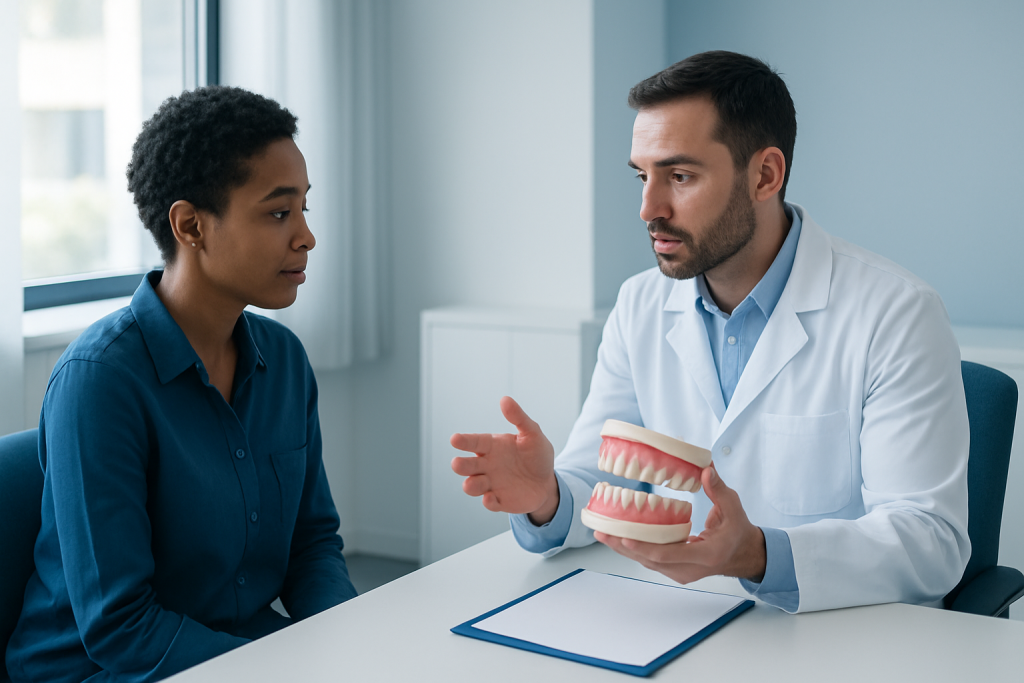
Tooth loss that leads to full mouth bridge treatment may develop gradually or follow a single event. Common causes include advanced decay, gum disease, trauma, longstanding wear from grinding, or the breakdown of old restorations over time.
Risk factors often overlap. Poor oral hygiene, tobacco use, uncontrolled diabetes, dry mouth, frequent sugary snacking, and infrequent dental care can all increase the chance of losing teeth or supporting bone. Some people also have a history of jaw problems or enamel defects that make teeth more vulnerable from an early age.
When considering an implant-supported bridge, bone volume and gum condition become especially important. If teeth have been missing for a long time, the jaw may need additional assessment before the final treatment plan is chosen.
Diagnosis
Diagnosis begins with a comprehensive dental examination rather than a quick look at the visible gaps. The dentist typically reviews medical history, current medications, symptoms, previous dental work, and any past difficulties with anesthesia or healing.
Imaging is usually part of the process. Digital X-rays, panoramic scans, and sometimes 3D imaging help show bone levels, root health, hidden decay, and the position of the jaw structures that will influence bridge design. Bite records and photographs may also be taken to guide the final shape and alignment.
For international patients, this evaluation may be split into a virtual pre-assessment and an in-person visit. That can help the team estimate whether the bridge is possible, whether extractions or implants are needed first, and how many appointments should be planned during the stay.
Treatment Options
There is no single full mouth bridge design that fits everyone. Some bridges rely on healthy natural teeth prepared as anchors, while others are implant-supported and do not depend on individual teeth for stability. The choice depends on how many teeth remain, how strong they are, and what kind of long-term support is realistic.
When natural teeth are used, the dentist reshapes the anchor teeth and creates a fixed restoration that spans the missing spaces. If the supporting teeth are weak or too few in number, implants may offer a more dependable base. In some treatment plans, temporary restorations are placed first so the patient can eat and speak more comfortably while healing occurs.
Depending on the starting condition, treatment may also include extractions, gum therapy, bone grafting, or adjustment of the bite. This staged approach can make the final bridge more stable and more comfortable in daily use.
Patients planning treatment from another country should ask about the number of visits required, the healing period between stages, and how any follow-up care will be handled once they return home. A clear timeline helps reduce stress and makes the process easier to manage.
Prevention & Self-care
After a full mouth bridge is placed, long-term success depends on consistent home care and routine dental review. The bridge itself cannot develop decay, but the teeth, gums, and implants that support it still need daily attention.
Gentle cleaning around the edges of the bridge is essential. Dentists may recommend specific flossing aids, interdental brushes, water flossers, or other tools to remove plaque from hard-to-reach areas. Good gum care helps protect the supporting structures and lowers the chance of inflammation.
- Brush twice daily with a soft-bristled toothbrush
- Clean under and around the bridge as instructed
- Avoid using teeth to open packaging or bite very hard objects
- Limit smoking and maintain regular dental checkups
- Follow any guidance about night guards if grinding is present
For patients returning to another country after treatment, it helps to leave with written aftercare instructions and a plan for local follow-up. A small amount of adjustment time is normal, and knowing when to contact the dental team can make recovery feel far more manageable.
When to See a Doctor
A dental evaluation is appropriate whenever missing teeth are making eating, speaking, or smiling more difficult. It is also wise to seek care if a bridge feels loose, a supporting tooth becomes painful, or chewing begins to feel uneven after treatment.
Prompt review is especially important if there is swelling, persistent bleeding, a bad taste that does not go away, or a change in how the bridge fits. These signs do not always indicate a serious problem, but they do deserve professional attention before minor issues become larger ones.
People with diabetes, gum disease, or a history of slow healing may need closer monitoring after treatment. For international patients, a coordinated plan with the treating clinic and a local dentist can help maintain the result over time. Acibadem Health Point’s multidisciplinary specialists and JCI-accredited hospitals diagnose and treat full mouth bridge cases for international patients with a structured, team-based approach.
Frequently asked questions
What is a full mouth bridge used for?
A full mouth bridge is used to replace many missing teeth in one or both arches with a fixed restoration. It can help restore chewing, speech, and appearance when planned for the person’s oral condition.
Is a full mouth bridge the same as dentures?
No. Dentures are removable, while a bridge is fixed in place and supported by natural teeth, implants, or both. The right option depends on oral health, bone support, and daily needs.
How long does treatment take?
The timeline varies widely because some patients need extractions, gum treatment, implant placement, or healing time before the final bridge is fitted. A dentist can give a realistic schedule after examination and imaging.
Can a full mouth bridge be cleaned like natural teeth?
It should be cleaned daily, but the technique is a little different from cleaning natural teeth alone. Special flossing tools or interdental cleaners are often recommended to reach under and around the bridge.
Who may not be a good candidate?
People with untreated gum disease, very limited bone support, or uncontrolled medical conditions may need additional treatment before a bridge is possible. A full assessment helps determine whether a bridge, implants, dentures, or another plan is safer and more suitable.
Will the bridge feel natural right away?
There is usually an adjustment period while the mouth adapts to the new bite and shape. Small changes in speech or chewing often improve as the person becomes accustomed to the restoration.
References
- American Dental Association
- National Institute of Dental and Craniofacial Research
- British Dental Journal
- Mayo Clinic
This article is for general information only and is not a substitute for professional medical advice. Please consult a qualified doctor about your individual situation.