Tooth Extraction and Implant in One Visit: When It Works and When It Does Not

Key Takeaways
- Immediate implant placement can reduce the number of surgical visits, but it is not appropriate for every tooth or every patient.
- The most important factors are infection control, bone support, gum health, and the stability of the implant at placement.
- Some situations benefit from waiting after extraction, especially when there is active infection, thin bone, or complex tooth loss.
- Recovery still requires good oral hygiene, soft foods, and close follow-up, whether the implant is placed immediately or later.
- A dentist or oral surgeon can explain whether bone grafting, socket preservation, or staged treatment will improve long-term results.
Medically reviewed by the Acıbadem clinical team — June 13, 2026
Tooth extraction and implant placement can sometimes be done in the same appointment, but only when the mouth and bone conditions are suitable. A careful dental evaluation helps determine whether an immediate implant is a good option or whether staged treatment is safer and more predictable.
Overview
For many people, the idea of having a tooth removed and replaced in the same visit sounds appealing. It can shorten the treatment journey, limit the number of appointments, and help maintain the natural shape of the gum and bone. In dental terms, this is often called immediate implant placement.
The approach is simple in concept but selective in practice. After a damaged or non-restorable tooth is extracted, the dentist places a dental implant into the same socket or into a carefully prepared area nearby. That implant then needs time to fuse with the bone before a final crown is attached. When the foundation is right, this can be an efficient and predictable option.
Still, same-day treatment is not the default choice. The mouth has to offer enough healthy bone, the area must be free of significant infection, and the implant must be stable from the start. If those conditions are not present, waiting can lead to a stronger long-term outcome. The real decision is less about speed and more about choosing the sequence that gives the implant the best chance to succeed.
Symptoms and situations that lead to extraction
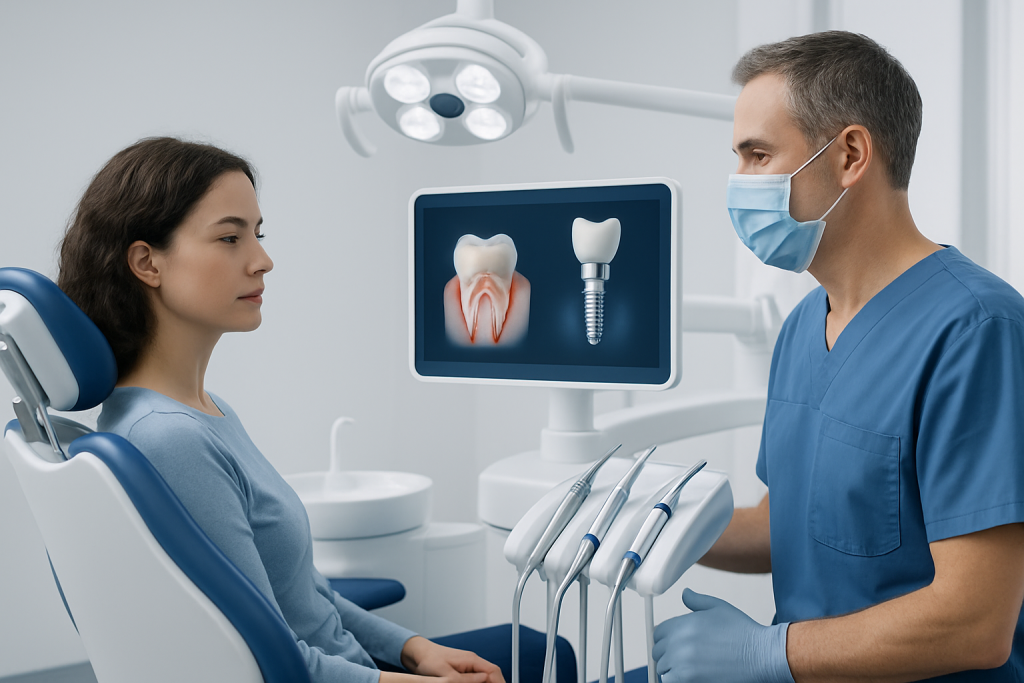
People usually reach this decision after a tooth has become too damaged to save, or when previous treatment has failed to keep it functional. Severe decay, cracked roots, advanced gum disease, trauma, and repeated infection are common reasons a tooth may need removal. In some cases, the tooth may still be present but no longer support chewing or comfort.
Symptoms that often bring a person to the dentist include persistent pain, swelling, sensitivity to biting, drainage, loose teeth, or a tooth that has darkened after injury. Some teeth, especially in the back of the mouth, can also become problematic because they have deep fractures or extensive decay beneath old fillings or crowns.
When replacement is likely, the dentist begins to think beyond extraction alone. Preserving the bone and planning the future crown position early can make the restored tooth feel more natural and reduce the need for later corrective procedures. That is why extraction and implant planning are usually discussed together rather than as separate events.
Causes and risk factors: when one-visit implant placement may work

Immediate implant placement tends to work best when the extraction site is clean, the surrounding bone is strong, and there is enough intact socket wall to support the implant. The tooth should ideally be removed gently, without major damage to the bone around it. Front teeth are sometimes good candidates when aesthetics matter and the anatomy is favorable, although each case is different.
Several factors increase the chance that same-day placement can be considered:
- No active or uncontrolled infection in the extraction area
- Adequate bone volume and good initial implant stability
- Healthy or manageable gum tissue around the tooth
- Good overall health and the ability to heal normally
- Careful bite planning so the implant is not overloaded early
On the other hand, immediate placement becomes less suitable when the bone is thin, the socket is irregular, or infection has eaten away support around the tooth root. Heavy smoking, poorly controlled diabetes, certain immune conditions, or a history of complex gum disease can also make healing less predictable. These issues do not always prevent implants, but they may shift the timing or require extra planning such as bone grafting.
Diagnosis and treatment planning
Before deciding on extraction and implant in one visit, the dentist or oral surgeon evaluates the tooth, gums, jawbone, and bite. This usually includes a clinical examination and imaging, often with dental X-rays and sometimes a 3D scan to see bone thickness and nearby structures in detail. The goal is not only to remove the tooth, but to understand whether the implant can be placed where it will remain stable over time.
Planning also includes discussing medical history. Conditions such as diabetes, osteoporosis treatment, clotting disorders, and use of certain medications may affect how surgery is scheduled or how healing is monitored. A history of clenching or grinding, smoking, or previous implant problems also matters, because these can influence the long-term load on the new implant.
For international patients, this planning stage is especially important. A same-day implant can sound convenient for travel, but it still requires enough time on site for examination, imaging, surgery, and early follow-up. In many cases, the dentist will also explain whether the final crown should be placed later at home or during a return visit, depending on healing and travel plans.
Treatment options: same-day implant versus staged care
If the tooth is extracted and the implant is placed immediately, the surgeon cleans the socket, prepares the bone, and inserts the implant into a stable position. In some cases, a temporary tooth or healing cap is used while the bone integrates with the implant. If there is a small gap between the implant and socket wall, bone graft material may be added to support healing and preserve the contour of the ridge.
When immediate placement is not the best option, the treatment is usually staged. The tooth is removed first, then the area is allowed to heal for several weeks or months. During that time, socket preservation or bone grafting may be recommended to maintain bone volume. Once healing is adequate, the implant is placed in a second procedure. This slower route can be more predictable when the extraction site is compromised.
In both approaches, the implant still needs a healing period before the permanent crown is attached. The exact timing depends on bone quality, the type of implant used, the location of the tooth, and whether additional grafting was needed. The final restoration is designed to match the surrounding teeth in function and appearance, but it should only be added once the implant is stable and the tissues are healthy.
What recovery usually looks like
Recovery after extraction with immediate implant placement is similar to other dental surgery, but it should be managed carefully. Mild swelling, tenderness, and minor bleeding can be expected early on. Most people are advised to eat soft foods, avoid disturbing the surgical site, and keep the mouth clean without aggressive rinsing or brushing around the area during the first days.
Home care typically focuses on protecting the implant while the tissues settle. Good oral hygiene remains important, but it should be gentle and guided by the surgical team’s instructions. Follow-up visits are used to check the gum healing, monitor the implant’s stability, and decide when the next stage of treatment can begin.
Travel can complicate recovery if the patient is far from the treating clinic. Because of that, a realistic plan should include enough time for early review before flying home, clear instructions for local aftercare, and a path for communication if swelling, pain, or loose-feeling restoration develops later. A predictable recovery depends as much on follow-up as on the surgery itself.
Prevention and self-care: how to protect the result
Patients cannot control every factor that affects implant success, but they can support healing in practical ways. The best habits include keeping follow-up appointments, following all post-operative instructions, and avoiding smoking, which can interfere with bone and gum healing. If the dentist recommends delaying the final crown, that waiting period should be respected even if the implant feels fine.
Long-term maintenance is just as important as the surgery. Regular professional cleanings, daily brushing and interdental cleaning, and attention to any signs of gum inflammation help protect both the implant and the teeth around it. People who grind their teeth may need a night guard to reduce pressure on the restoration.
Useful self-care habits include:
- Choose soft, non-sticky foods early in recovery
- Avoid chewing directly on the surgical side until cleared
- Keep the mouth clean using the dentist’s recommended method
- Return promptly if swelling increases or the bite feels off
- Tell the dentist about medication changes or new health conditions
When to see a doctor
A dentist should be consulted before deciding on extraction and implant placement, especially if the tooth is painful, fractured, loose, or repeatedly infected. A professional exam can show whether same-day implant placement is realistic or whether a staged approach would be safer. The decision should never be based on appearance alone, because hidden bone loss or infection can change the plan.
After treatment, the patient should contact the dental team if pain worsens instead of improving, swelling becomes significant, fever develops, bleeding is hard to control, or the implant area feels mobile. Any persistent bad taste, pus, or increasing gum redness also deserves prompt review. Early attention can often solve a small problem before it affects healing.
For patients considering treatment abroad, choosing a center that can coordinate surgery, imaging, and follow-up in one pathway is helpful. Acibadem Health Point’s multidisciplinary specialists and JCI-accredited hospitals diagnose and treat this condition for international patients, with care planning that can be adapted to travel and recovery needs.
A practical way to think about the decision
The question is not simply whether an implant can be placed right after extraction, but whether doing so offers the best balance of healing, stability, and future function. Some mouths are ideal for a one-visit approach, especially when the extraction is straightforward and the bone is strong. Others do better with a more measured plan that protects the site first and places the implant later.
Patients often feel relieved to learn that there is no one-size-fits-all answer. A good treatment plan is tailored to the tooth, the bone, the bite, and the person’s broader health, including how much follow-up is realistic. When those pieces are considered together, both immediate and staged implant treatment can lead to reliable results.
For anyone comparing options, the most helpful next step is a careful consultation with an experienced dentist or oral surgeon. That conversation can clarify whether the tooth can be removed and replaced in one visit, or whether a stepped approach will give the mouth the best chance to heal well and support the restoration for years to come.
Frequently asked questions
Can a tooth extraction and implant really be done in the same appointment?
Yes, in selected cases the tooth can be removed and the implant placed during the same visit. The site must have enough healthy bone and no major active infection, and the implant must be stable when placed. A dentist or oral surgeon decides this after examination and imaging.
Is a same-day implant safer than waiting?
Neither approach is automatically safer for every patient. Same-day placement can be efficient, but waiting may be wiser if there is infection, bone loss, or a difficult extraction. The safest choice is the one that best matches the condition of the tooth and jaw.
Will I get a permanent tooth right away?
Not usually. Even if the implant is placed immediately, it still needs time to fuse with the bone before the final crown is attached. Some patients receive a temporary restoration, but the permanent tooth is typically placed later.
What makes an implant fail after immediate placement?
Failure can happen if the implant does not become stable, the area becomes infected, or too much force is placed on it too early. Smoking, uncontrolled medical conditions, and poor oral hygiene can also interfere with healing. Careful planning and follow-up help lower these risks.
Do I always need a bone graft if I have an immediate implant?
No, but some patients do. If there is a gap around the implant or the socket needs extra support, a graft may help preserve bone and gum shape. The need depends on the size of the socket, the bone walls, and the stability achieved during surgery.
How long does recovery take after extraction with implant placement?
The initial healing period is usually measured in days to weeks, but full integration of the implant takes longer. The exact timeline depends on the tooth location, bone quality, and whether any grafting was done. The dental team will guide when it is safe to progress to the next step.
References
- American Dental Association
- American Academy of Implant Dentistry
- Mayo Clinic
- Cleveland Clinic
- National Institute of Dental and Craniofacial Research
This article is for general information only and is not a substitute for professional medical advice. Please consult a qualified doctor about your individual situation.