

Elbow Pain: Symptoms, Causes and Treatment

Key Takeaways
- Elbow pain is a symptom, not a diagnosis, and its cause often becomes clearer through a careful exam and history.
- Overuse conditions such as tennis elbow and golfer's elbow are common, but fractures, arthritis, bursitis, and nerve irritation can also be involved.
- Most cases improve with activity changes, rest, ice, bracing, physical therapy, and other non-surgical care.
- Persistent swelling, weakness, numbness, deformity, or pain after a fall should be assessed by a doctor.
- Early evaluation can help travelers and international patients plan treatment, rehabilitation, and follow-up with confidence.
Medically reviewed by the Acıbadem clinical team — August 19, 2026
Elbow pain can make everyday tasks unexpectedly difficult, from lifting a cup to turning a doorknob. It may come from overuse, inflammation, injury, or a nerve issue, and the right treatment depends on the source of the problem.
Overview
The elbow is a small joint with a big job. It has to bend, straighten, rotate, and absorb force while the hand performs precise work. When pain develops there, people often notice it first in daily movements such as opening jars, carrying bags, typing, or serving food.
Elbow pain is not a single condition. It is a shared signal that can come from tendons, ligaments, bones, cartilage, bursae, muscles, or nerves. Some problems begin after a clear injury, while others build slowly through repetition or strain. Because the elbow is used so often, even mild irritation can become noticeable quickly.
For international patients, elbow pain can be especially inconvenient when it affects work, travel, luggage handling, or rehabilitation routines abroad. A clear diagnosis matters because treatment is most effective when it matches the exact cause rather than only calming the symptom.
Symptoms
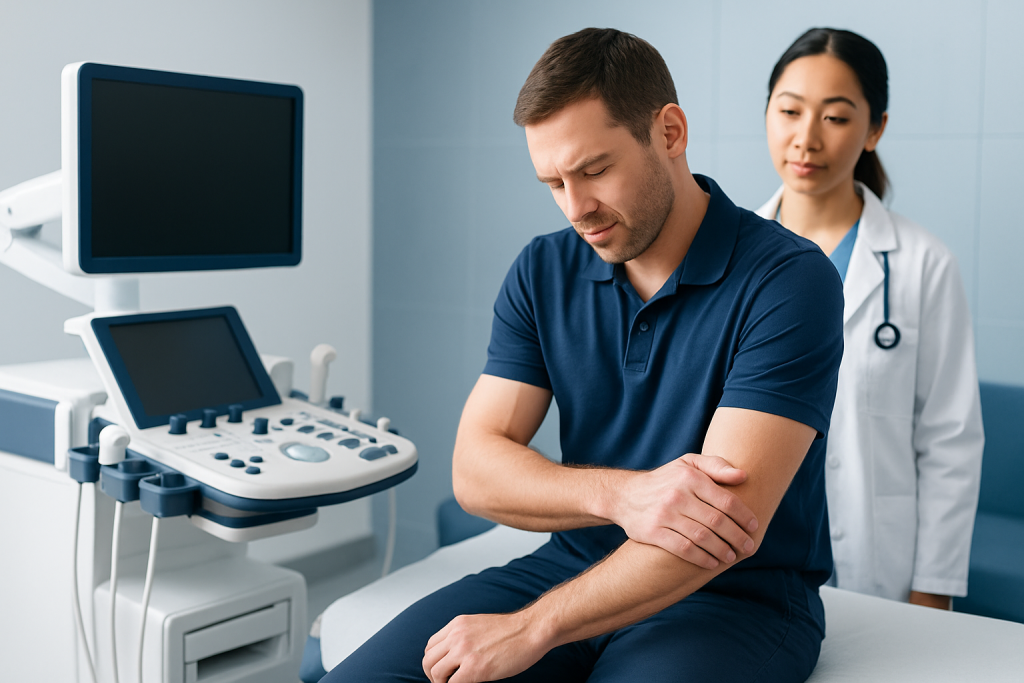
Elbow pain can feel sharp, dull, burning, aching, or stiff, depending on what is irritated. Some people notice pain only during gripping or twisting motions, while others feel it at rest or overnight. Swelling, tenderness, and reduced motion are also common clues.
Different patterns may point to different sources of pain. Pain on the outer elbow is often linked with overuse of the forearm extensor tendons, while pain on the inner side may involve the tendons used in gripping and wrist flexion. Pain after a fall can suggest a fracture, sprain, or dislocation, and tingling in the ring and little fingers may suggest nerve involvement.
- Pain when lifting, turning, or gripping
- Swelling or warmth around the joint
- Weak grip or loss of strength
- Stiffness or trouble fully straightening the arm
- Numbness, tingling, or pain that travels into the forearm or hand
Symptoms that change with activity are often helpful in identifying the source. A doctor will usually ask what movements worsen the pain, how long it has been present, and whether there was a specific event that triggered it.
Causes & Risk Factors

One of the most common causes of elbow pain is overuse. Repeated gripping, lifting, racquet sports, painting, carpentry, and computer-intensive work can strain tendons where they attach to the elbow. Tennis elbow and golfer’s elbow are classic examples, although they can affect many people who do not play sports at all.
Other causes include trauma, arthritis, bursitis, tendon tears, and nerve compression. A sudden pull, direct blow, or fall can injure bones and soft tissues. Inflammatory conditions and age-related wear may also contribute, especially when stiffness and swelling are part of the picture.
Several factors make elbow pain more likely:
- Repeated arm or wrist motions at work or during sport
- Sudden increase in training, lifting, or manual tasks
- Poor technique or equipment that increases strain
- Previous elbow injury
- Inflammatory or degenerative joint disease
For some patients, symptoms begin while traveling or after changes in routine. Carrying luggage, sleeping in unfamiliar positions, or doing unfamiliar physical activity can aggravate tissues that were already sensitive. Recognizing the pattern can help a clinician tailor the plan more precisely.
Diagnosis
Diagnosis usually starts with a detailed conversation and a physical examination. A doctor will look at where the pain is located, which motions trigger it, whether there is swelling or tenderness, and whether strength or sensation has changed. This hands-on assessment often narrows the list of likely causes quickly.
Imaging tests may be used when the diagnosis is unclear or when a more serious injury is suspected. X-rays can help identify fractures, arthritis, or alignment problems. Ultrasound or MRI may be recommended to evaluate tendons, ligaments, cartilage, or other soft tissues in more detail.
In some cases, nerve studies or blood tests are helpful, especially if the pain is associated with numbness, widespread joint symptoms, or a possible inflammatory condition. The goal is not to order every test, but to choose the smallest set that gives a reliable answer.
For international patients, pre-travel review of existing images and reports can save time and reduce duplicate testing. Bringing prior scans, operation notes, and medication lists helps the care team build on what has already been done.
Treatment Options
Many cases of elbow pain improve with non-surgical treatment. The first step is often relative rest, meaning the arm is protected from the activity that causes pain while still being kept gently mobile. Ice, short-term support with a brace or strap, and temporary changes in sport or work technique may help settle irritation.
Physical therapy is a key part of recovery for many patients. A therapist may guide stretching, strengthening, posture work, and gradual return-to-activity planning. When pain comes from tendons, the goal is usually to restore load tolerance rather than avoid movement completely.
Depending on the diagnosis, a doctor may also recommend anti-inflammatory medications, though these are not appropriate for everyone. Some patients benefit from corticosteroid injections or other procedures, but these are considered carefully based on the specific condition, the tissue involved, and the expected long-term outcome.
Surgery is usually reserved for cases that do not improve with well-directed conservative treatment or for clearly defined injuries such as displaced fractures, severe tendon tears, or unstable joints. When surgery is needed, the plan often includes a staged recovery with rehabilitation and follow-up imaging or clinical checks.
Typical treatment paths may include:
- Activity modification and ergonomic changes
- Bracing, taping, or supportive straps
- Targeted physical therapy
- Pain-relief medicine when appropriate
- Injection therapy in selected cases
- Surgical repair for structural damage or persistent symptoms
Prevention & Self-care
Elbow pain often responds well to practical changes in daily habits. People who use their arms repetitively can reduce strain by adjusting tool handles, keyboard position, lifting technique, racquet size, or workout volume. Small changes made early may prevent a minor irritation from becoming a prolonged problem.
At home, it helps to respect the pain signal without becoming inactive for too long. Gentle motion maintains flexibility, while overloading the joint can prolong inflammation. A therapist or doctor can help determine which exercises are safe and when strengthening should begin.
Self-care ideas that are commonly recommended include:
- Use ice for short periods after activity if swelling or soreness is present
- Pause or reduce the movement that triggers pain
- Keep the wrist and forearm muscles conditioned with guided exercises
- Warm up before sports or heavy work
- Use protective padding or a brace if advised
When recovering while abroad, it is useful to keep a simple record of symptoms, exercise tolerance, and any medications or treatments used. This makes follow-up easier if care continues in another country or with a different specialist after returning home.
When to See a Doctor
Elbow pain deserves medical review if it lasts more than a short period despite rest, or if it keeps returning. Pain that interferes with work, sleep, or routine use of the hand and arm should also be assessed, since prolonged irritation can make recovery slower.
Prompt evaluation is especially important after a fall, direct injury, or visible deformity. A doctor should also be contacted if there is marked swelling, redness, fever, numbness, tingling, weakness, or an inability to bend or straighten the arm normally. These features can indicate a problem that needs targeted treatment.
Even when symptoms are mild, early assessment can be worthwhile if the pain is affecting travel plans, rehabilitation goals, or return to sport. A clear diagnosis helps patients choose the right therapy and avoid treatments that do not fit the real cause.
Acibadem Health Point can support international patients with multidisciplinary specialists and JCI-accredited hospitals that diagnose and treat elbow pain in a coordinated way, especially when care needs to continue across borders.
Recovery and Follow-Up
Recovery time depends on the cause of the pain, how long it has been present, and whether the elbow has structural damage. Tendon irritation may improve gradually over weeks with the right exercise plan, while fractures, nerve compression, or surgical recovery can take longer. Progress is usually measured by better motion, less pain during activity, and improved strength.
Follow-up matters because elbow problems often improve in stages rather than all at once. A clinician may adjust exercises, update activity limits, or repeat an exam to confirm that healing is on track. If a treatment is not helping as expected, the diagnosis may need to be revisited.
For patients returning to another country, a written summary of the diagnosis, treatment plan, and rehabilitation recommendations can make continuity of care much easier. This is particularly useful when physiotherapy, sports participation, or manual work will resume soon after treatment.
Outlook
Most elbow pain is manageable, especially when the source is identified early and the joint is allowed to heal with the right balance of rest and movement. Even conditions that linger can often improve with structured rehabilitation and careful load management.
The best outcome usually comes from treating the cause rather than the pain alone. When patients understand which motions aggravate the elbow, how to protect it, and when to seek reassessment, they are better prepared for a steady recovery and a safe return to normal activity.
Although elbow pain can be frustrating, it is often a problem that responds well to organized care. With an accurate diagnosis and a practical treatment plan, many people regain comfortable use of the arm and hand without major disruption to daily life.
Frequently asked questions
What is the most common cause of elbow pain?
Overuse is one of the most common causes, especially when repeated gripping, lifting, or sports movements strain the tendons around the joint. Tennis elbow and golfer's elbow are frequent examples, but several other conditions can cause similar symptoms. A proper examination is the best way to tell them apart.
Can elbow pain go away on its own?
Mild pain from temporary strain sometimes improves with rest and activity adjustment. If symptoms last longer than expected, keep returning, or are linked to swelling, weakness, or numbness, medical assessment is a good idea. That helps prevent the problem from becoming harder to treat.
How do doctors tell if elbow pain is tendon pain or a joint problem?
The location of pain, the movements that trigger it, and the presence of swelling, stiffness, or weakness all help guide the diagnosis. A doctor may also use X-rays or other imaging when needed. Tendon pain often worsens with resisted movement, while joint problems may cause more stiffness and reduced range of motion.
Is icing the elbow helpful?
Ice can be useful for short periods when the elbow is sore or swollen, especially after activity. It should be used as part of a broader plan that may include rest, exercises, and activity modification. If pain is severe or persistent, the underlying cause should be checked rather than relying on home care alone.
When is surgery needed for elbow pain?
Surgery is not the first treatment for most elbow problems. It is usually considered when there is a fracture, severe tendon injury, joint instability, nerve compression, or ongoing pain that has not improved with conservative care. A specialist can explain whether surgery is likely to help in a specific case.
Can elbow pain affect travel or daily tasks?
Yes, especially when it limits lifting, carrying, packing, or using a computer and phone. For international patients, planning treatment and follow-up around travel can be important. A clear diagnosis and rehabilitation plan can make it easier to continue recovery away from home.
References
- American Academy of Orthopaedic Surgeons
- Mayo Clinic
- National Institute of Arthritis and Musculoskeletal and Skin Diseases
- NHS
- World Health Organization
This article is for general information only and is not a substitute for professional medical advice. Please consult a qualified doctor about your individual situation.
Joint and spine care in Turkey — expert assessment & treatment
JCI-accredited · board-certified surgeons · reply within 24h
Add us as a Preferred Source to see more of our trusted health content across Google Search, AI Overviews and Discover.
More from the Health Library



Related Specialists

Prof. Dr. Ahmet Alanay
Orthopedic Surgery & Traumatology
Dr. Sinan Aksu
Orthopedic Surgery & Traumatology
Dr. Sirri Baştürk
Orthopedic Surgery & Traumatology
Prof. Dr. Korhan Özkan
Orthopedic Surgery & Traumatology