Ceramic Teeth Cap

Key Takeaways
- Ceramic teeth caps are used to cover and protect weakened or visibly damaged teeth.
- They are chosen for their natural appearance and ability to blend with surrounding teeth.
- Crowns may be recommended after root canal treatment, large fillings, fractures, or worn teeth.
- Good oral hygiene and regular dental checkups help ceramic crowns last longer.
- A dentist can explain whether a crown, veneer, filling, or other treatment is the best fit.
A ceramic teeth cap, often called a ceramic crown, is a tooth-shaped restoration used to protect, strengthen, and improve the appearance of a damaged tooth. It can be a practical option when a tooth needs more than a simple filling but does not require removal.
Overview
A ceramic teeth cap is a custom-made cover that fits over a tooth to restore its shape, strength, and appearance. In everyday language, many people call it a tooth cap; in dentistry, it is more often described as a crown. Ceramic crowns are designed to look close to natural tooth enamel, which is why they are often chosen for front teeth and other visible areas of the smile.
This treatment is usually considered when a tooth has been weakened by decay, injury, a large filling, or a root canal procedure. Instead of removing the tooth, the crown helps preserve it and restore normal chewing and speaking. For people planning treatment from another country, this can be especially useful because a crown can often be part of a well-organized dental plan with clear steps, scheduled visits, and follow-up before returning home.
Ceramic crowns are one of several restorative options. A dentist will consider the amount of tooth remaining, bite alignment, gum health, and the patient’s cosmetic goals before recommending whether a ceramic cap is the most suitable choice.
Symptoms and signs a tooth may need a crown
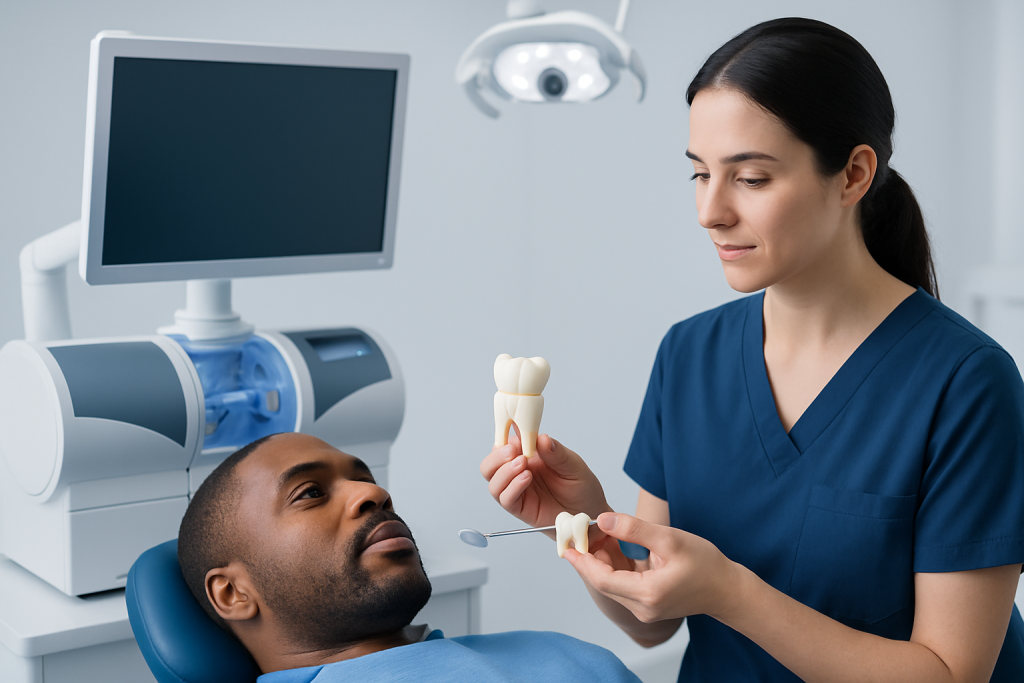
A crown is not placed just because a tooth looks a little different. It is usually recommended when there are signs that the tooth has lost structure or needs protection. Some people notice symptoms such as sensitivity when chewing, pain when biting down, or a tooth that feels cracked or fragile.
Other signs are visible rather than painful. A tooth may have a large filling that leaves little natural structure behind, a deep fracture line, or a shape that has changed after wear. Front teeth may also be crowned when the patient wants a more uniform appearance and the tooth is too damaged for a simple cosmetic repair.
Common situations that may lead to a ceramic crown include:
- A tooth with a large cavity or very large filling
- A tooth that has been cracked, chipped, or worn down
- Protection after root canal treatment
- Support for a tooth that will hold a dental bridge
- Covering an irregularly shaped or discolored tooth when other cosmetic options are not enough
Because symptoms can overlap with other dental problems, a professional assessment is important rather than self-diagnosis.
Causes and risk factors

Teeth usually need crowns when their natural structure is no longer strong enough to function comfortably. Tooth decay is one of the most common reasons. If a cavity grows deep or a previous filling becomes very large, a crown may provide the support the tooth needs.
Wear and injury are also important. People who grind their teeth, clench during sleep, bite hard objects, or have experienced dental trauma may gradually weaken a tooth. Some teeth become more vulnerable after root canal treatment because the internal tissue has been removed, leaving the tooth more brittle than before.
Risk factors that can make crown treatment more likely include:
- Repeated tooth decay or older restorations
- Teeth grinding or jaw clenching
- Sports injuries or accidents affecting the mouth
- Enamel erosion from acid exposure or reflux
- Congenitally small, misshapen, or weakened teeth
Cosmetic concerns can also play a role. A ceramic cap may be chosen when the patient wants a result that looks natural and is less noticeable than some metal-based restorations, especially in the smile zone.
Diagnosis and treatment planning
Before a crown is recommended, the dentist examines the tooth, surrounding gums, and bite. X-rays are often used to check how much healthy structure remains, whether decay has reached deeper layers, and whether there is any infection around the root.
Planning matters because a crown must fit precisely. The dentist may discuss whether the tooth needs additional treatment first, such as a filling build-up, root canal therapy, or gum care. In some cases, a crown is not the first solution; a filling, inlay, onlay, or veneer may be a better match for the amount of damage present.
For international patients, planning may also include timing. A crown treatment schedule can depend on laboratory work, temporary restorations, and the need for one or more visits. A clear plan helps the patient organize travel, comfort, and recovery time more confidently.
Treatment options and how ceramic crowns are placed
Placing a ceramic teeth cap usually involves preparing the tooth so the crown can fit securely over it. The dentist shapes the tooth carefully, taking just enough reduction to make room for the restoration while preserving as much natural structure as possible. Then an impression or digital scan is taken to design the custom crown.
While the final crown is being made, a temporary crown may be placed to protect the tooth. At a later visit, the ceramic crown is checked for fit, bite, and shade before being cemented in place. The dentist makes sure it feels comfortable when speaking and chewing and that it blends naturally with nearby teeth.
There are several materials that may be used in crown dentistry, but ceramic is often selected for its appearance and compatibility with tooth-colored restorations. In some cases, other materials may be preferred if the tooth is under very high biting force or if the dentist wants to combine strength with aesthetics. The best choice depends on the tooth’s location, bite pattern, and the patient’s goals.
After placement, mild sensitivity can occur for a short period, especially to temperature changes. This is usually temporary, but ongoing pain, a high bite, or loosening should be reviewed by the dentist.
Benefits and possible limitations
Many patients choose ceramic crowns because they can look very natural. The color and translucency of ceramic allow the restoration to blend into the smile rather than stand out. This can be especially helpful for visible teeth, where appearance matters alongside function.
Beyond aesthetics, a crown helps reinforce a tooth that might otherwise be at risk of breaking. It can also improve chewing comfort, restore shape, and support teeth that have already been treated or rebuilt. For some patients, a crown provides a long-term way to keep a damaged tooth in the mouth instead of extracting it.
Like any dental treatment, ceramic crowns have limits. They can chip or wear over time, especially if the patient grinds their teeth or bites very hard objects. The preparation process is also irreversible because some enamel must be removed to make room for the cap. A dentist can explain whether the expected benefits outweigh the trade-offs for a particular tooth.
Prevention and self-care
The best way to reduce the need for future crowns is to protect natural teeth before they become structurally weak. Brushing twice a day with fluoride toothpaste, cleaning between the teeth daily, and keeping regular dental visits can help detect problems earlier, when they are often easier to treat.
After a ceramic crown is placed, good home care becomes especially important. The crown itself does not decay, but the tooth underneath and the edge where the crown meets the gumline still need attention. Patients should continue routine flossing and should not use the crowned tooth to open packages, crack ice, or bite very hard foods.
Useful habits include:
- Wearing a night guard if recommended for teeth grinding
- Limiting frequent sugary snacks and acidic drinks
- Keeping up with professional cleanings and examinations
- Reporting changes in bite, discomfort, or looseness promptly
For people traveling for dental care, it is wise to ask for aftercare instructions in advance, especially if follow-up will happen in another country. Written guidance can make it easier to maintain the crown properly once home.
When to see a dentist
A dentist should evaluate any tooth that is painful, cracked, sensitive when chewing, or visibly damaged. Early assessment can prevent a problem from worsening and may preserve more of the natural tooth. If a crown has already been placed and starts feeling loose, uneven, or uncomfortable, it should also be checked.
Prompt dental advice is especially helpful if there is swelling, a bad taste, persistent pain, or difficulty biting. These signs do not always mean something serious, but they do deserve attention so the dentist can determine whether the crown, the tooth beneath it, or the surrounding tissues need care.
Patients considering treatment abroad should ask about the full plan, including diagnostics, temporary protection, the final fitting, and follow-up recommendations after travel. At Acibadem Health Point, multidisciplinary specialists and JCI-accredited hospitals diagnose and treat dental conditions for international patients in a coordinated setting. A thoughtful consultation helps match the treatment to the tooth, the bite, and the patient’s long-term comfort.
Frequently asked questions
Is a ceramic teeth cap the same as a crown?
Yes. In common language, many people say tooth cap, while dentists usually say crown. Both refer to a custom cover that fits over the tooth to restore function and appearance.
How long does a ceramic crown last?
Longevity varies based on oral hygiene, bite forces, and habits such as grinding. With good care and regular checkups, many crowns remain functional for years, but they may eventually need repair or replacement.
Does getting a crown hurt?
The procedure is usually done with local anesthesia, so the tooth should be numb during treatment. Afterward, some temporary sensitivity or soreness is possible, but it is usually manageable and short-lived.
Can a ceramic crown be used on back teeth?
Yes, but the dentist will consider chewing pressure and the patient’s bite before choosing the material. In some back teeth, other crown materials may be recommended if extra strength is needed.
Can a crown be whitened later?
No, ceramic crowns do not respond to whitening treatments in the same way natural teeth do. If color matching is important, the dentist usually considers shade before the crown is made.
What should a patient do if the crown feels high after placement?
The dentist should be contacted for a bite adjustment. A crown that sits too high can cause discomfort or pressure, and a small adjustment often resolves the issue quickly.
Is a crown always better than a filling?
Not always. A filling works well for smaller areas of damage, while a crown is often used when the tooth needs more structural support. The dentist chooses the option that best fits the tooth’s condition.
References
- American Dental Association
- National Institute of Dental and Craniofacial Research
- Mayo Clinic
- Cleveland Clinic
- British Dental Association
This article is for general information only and is not a substitute for professional medical advice. Please consult a qualified doctor about your individual situation.