Dental Bone Graft

Key Takeaways
- A dental bone graft adds or encourages new bone in areas where the jaw has become thin or weak.
- It is commonly recommended before dental implants, after tooth loss, or after infection or trauma.
- Healing takes time because bone must integrate naturally before the next dental step can begin.
- Different graft materials may be used, and the best option depends on the patient’s oral health and treatment goals.
- Good oral hygiene, follow-up visits, and smoking avoidance can support recovery and graft success.
A dental bone graft is a procedure that helps rebuild or preserve jawbone when bone volume is not enough for dental implants or stable oral function. It can support long-term dental health by creating a stronger foundation for future treatment.
Overview
A dental bone graft is a restorative procedure used when the jaw does not have enough bone to properly support a tooth replacement, maintain facial structure, or hold nearby teeth in position. In practical terms, it gives the body a scaffold so new bone can grow in a controlled way.
This treatment is often discussed in the same planning stage as dental implants, but it is not only about implants. Bone loss can happen after tooth extraction, gum disease, injury, infection, or long-standing missing teeth. For many patients, the graft is the step that makes later treatment possible and more predictable.
For people traveling for dental care, bone grafting is often part of a broader treatment plan rather than a stand-alone visit. That means the dentist or oral surgeon may evaluate the jaw, discuss healing time, and plan follow-up care before a final restoration is placed.
Symptoms and Why Bone Loss Matters
Bone loss in the jaw does not always cause pain, so many people do not realize it is happening until a dentist identifies it on an exam or X-ray. Still, the effects can become noticeable over time, especially when teeth begin to shift or dentures stop fitting as well as before.
Possible signs can include a changing bite, loosening teeth, shrinking gums, or a sunken appearance in areas where teeth are missing. Some patients also notice difficulty chewing comfortably or keeping removable appliances stable.
Even when symptoms are subtle, bone loss matters because teeth depend on surrounding bone for support. Without enough bone, implants may not be suitable right away, and nearby structures can become less stable.
- Missing teeth for a long period
- Advanced gum disease
- Jaw injury or facial trauma
- Infection around a tooth root
- Bone changes after extractions
Causes and Risk Factors
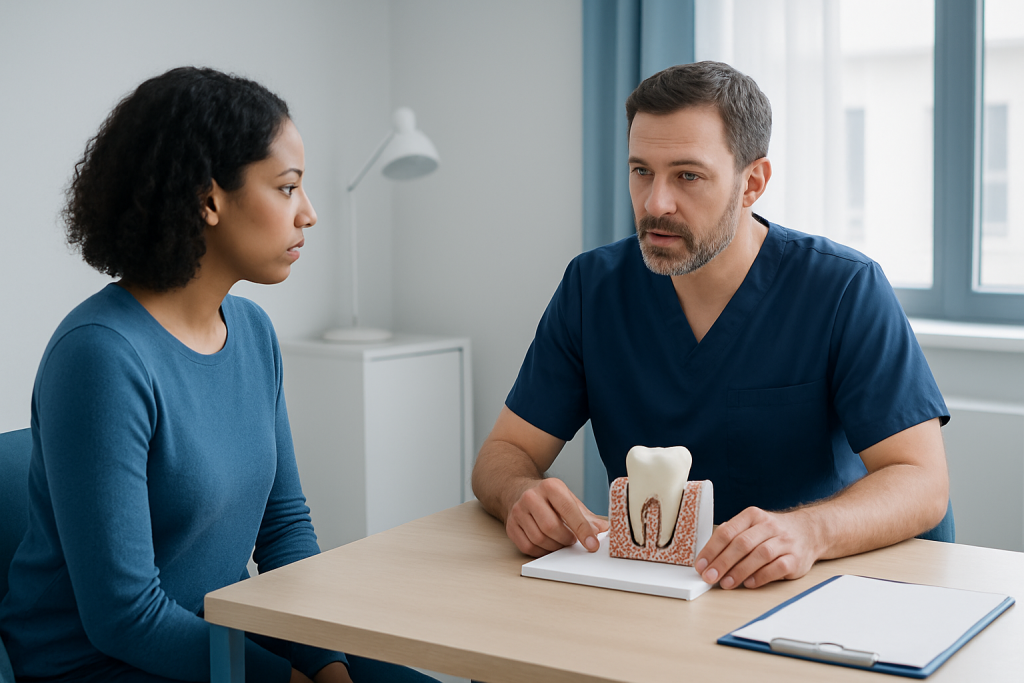
The most common reason for a dental bone graft is loss of bone after a tooth is removed or lost. Once a tooth is gone, the bone that once supported it is no longer stimulated in the same way, and gradual shrinkage can begin.
Periodontal disease is another major cause. When gum infection reaches the structures supporting the teeth, it can damage both soft tissue and bone. Over time, this may create pockets, instability, and areas where bone regeneration is needed before future treatment.
Other factors can also increase the need for grafting. These include trauma, repeated infection, certain medical conditions that affect healing, and habits such as smoking, which can make recovery less reliable. In some cases, a graft is planned proactively to preserve bone after extraction, especially when an implant is likely to be considered later.
Diagnosis and Treatment Planning
Planning usually begins with a dental examination, discussion of symptoms, and imaging such as panoramic X-rays or a cone beam CT scan. The purpose is not only to confirm bone loss, but also to understand its depth, width, and relationship to nearby nerves, sinuses, and teeth.
The dentist or oral surgeon then decides whether the goal is to rebuild bone for a future implant, maintain the socket after extraction, or improve overall jaw support. This is where treatment becomes individualized: some patients need a small ridge preservation graft, while others need a more involved augmentation procedure.
For international patients, this planning stage is especially important. If travel is part of the care journey, the team usually considers healing time, the number of appointments needed, and whether staged treatment is safer than completing everything during one short visit.
Treatment Options
Bone grafting is done using material that supports new bone growth. The graft may come from the patient’s own body, a donor source, an animal-derived processed material, or a synthetic substitute. The best choice depends on the location, the amount of bone needed, and the dentist’s clinical judgment.
In a typical procedure, the area is numbed and the surgeon places the graft material where bone is missing. A barrier membrane may be used to protect the site and guide healing. The body gradually incorporates the graft, and over time the area becomes stronger and more suitable for later dental work.
Common forms of dental bone grafting include:
- Socket preservation after tooth extraction
- Ridge augmentation to rebuild a narrow jaw area
- Sinus lift when upper back jaw bone is too thin for implants
- Periodontal bone grafting to support teeth affected by gum disease
Healing does not happen overnight. The graft must mature before the next step, such as an implant, is placed. That waiting period is normal and is part of what helps the final result last.
Recovery, Risks, and What Healing Usually Feels Like
After a bone graft, it is common to have mild swelling, tenderness, or a small amount of bleeding in the first days. Most patients are given instructions on oral hygiene, diet, and activity limits so the graft can settle without disturbance.
Soft foods are often easier during early recovery, and careful brushing around the area may be recommended. The key is to keep the mouth clean while avoiding pressure directly on the surgical site. Patients who smoke are usually advised to stop, because smoking can interfere with healing and reduce the chance of a successful graft.
As with any procedure, there are risks, though serious problems are not the norm. These can include infection, delayed healing, graft failure, or minor membrane exposure. Prompt communication with the dental team helps address issues early and protect the overall treatment plan.
Prevention and Self-Care
Not every case of jawbone loss can be prevented, but some steps can lower the chance of needing extensive grafting later. The most helpful habits are consistent oral care, routine dental visits, and early treatment for gum disease or tooth infection.
When a tooth must be removed, asking about socket preservation can be worthwhile, especially if future implant treatment is being considered. This proactive approach may help preserve the bone that remains and simplify care down the road.
Practical self-care measures include:
- Brush and clean between teeth as advised by the dentist
- Keep follow-up appointments after extractions or gum treatment
- Manage diabetes and other health conditions that affect healing
- Avoid smoking and tobacco products
- Report persistent pain, swelling, or looseness promptly
For patients who live abroad or are planning treatment while traveling, it is wise to arrange both pre-treatment questions and post-treatment follow-up before the trip begins. Bone graft care depends on continuity, not just the procedure itself.
When to See a Doctor
A dentist or oral surgeon should be consulted if a person has missing teeth, a loose-fitting denture, signs of gum disease, or is considering dental implants and has been told there may not be enough bone. A timely evaluation can clarify whether grafting is needed and whether it should happen before any other treatment.
It is also sensible to seek care if there is swelling, drainage, persistent pain, or a history of trauma or infection in the jaw. These issues do not always mean a graft is required, but they do deserve professional assessment.
People planning care from another country may benefit from a team that can coordinate imaging, surgery, and later restoration in a staged, realistic way. At Acibadem Health Point, multidisciplinary specialists and JCI-accredited hospitals diagnose and treat dental bone graft needs for international patients as part of coordinated oral care.
Frequently asked questions
What is the main purpose of a dental bone graft?
The main purpose is to rebuild or preserve jawbone where it is too thin or has been lost. This helps create a stable foundation for dental implants, teeth, or overall oral support.
Is a dental bone graft painful?
The procedure is usually done with local anesthesia or another form of sedation, so discomfort during treatment is limited. Mild soreness afterward is common and is typically managed with the instructions provided by the dental team.
How long does healing take after a bone graft?
Healing time varies depending on the size and location of the graft, as well as the patient’s overall health. Bone needs time to integrate before the next dental step can begin, so follow-up visits are important.
Can a dental implant be placed without a bone graft?
Sometimes yes, if enough healthy bone is already present. If the jawbone is too thin or has been reduced by tooth loss or gum disease, a graft may be recommended first for better support.
What materials are used for bone grafting?
Dentists may use the patient’s own bone, processed donor material, animal-derived material, or synthetic substitutes. The choice depends on the treatment goal and the clinical situation.
What can a patient do to help the graft heal well?
Following the dentist’s instructions, keeping the mouth clean, avoiding smoking, and attending follow-up visits are all important. It also helps to choose soft foods early on and avoid disturbing the area while it heals.
References
- American Dental Association
- Mayo Clinic
- Cleveland Clinic
- National Institute of Dental and Craniofacial Research
This article is for general information only and is not a substitute for professional medical advice. Please consult a qualified doctor about your individual situation.