Pterygium Surgery: When It Is Done for Vision, Irritation, or Appearance

Key Takeaways
- Pterygium surgery is usually recommended when the growth threatens vision, causes persistent discomfort, or is troubling cosmetically.
- Not every pterygium needs an operation; many can be monitored with lubrication, sun protection, and regular eye exams.
- Modern surgery aims to remove the growth and lower the chance of it coming back, often by using a conjunctival autograft.
- Recovery takes time, and careful drop use, eye protection, and follow-up visits help the eye heal well.
- Anyone with rapid growth, reduced vision, or worsening redness and pain should see an eye doctor promptly.
Medically reviewed by the Acıbadem clinical team — June 13, 2026
Pterygium surgery is considered when a fleshy growth on the eye causes vision changes, ongoing irritation, or cosmetic concern. The decision depends on symptoms, how much the growth is affecting the cornea, and the person’s daily needs and preferences.
Overview
A pterygium is a wedge-shaped growth of tissue that starts on the white part of the eye and can extend toward the cornea, the clear front surface of the eye. It often appears on the side closest to the nose and is sometimes described as a “surfer’s eye,” because long-term sun, wind, and dust exposure may play a role.
For many people, a pterygium is mainly a nuisance. For others, it becomes more than that: it can distort vision, create a constant foreign-body sensation, or become increasingly noticeable in photographs and face-to-face interactions. Surgery is considered when the balance shifts from observation to treatment.
The decision is not only about how the eye looks on a given day. Eye doctors also look at whether the growth is changing the shape of the cornea, whether it is encroaching on the visual axis, and whether the person’s symptoms are interfering with work, driving, reading, or comfort during travel and daily life.
Symptoms
Many pterygia are visible before they are severely symptomatic. A person may first notice a pink, triangular patch on the eye, usually on the inner side. In early stages, the growth may remain stable for long periods and cause little more than mild dryness or occasional redness.
As it enlarges, it can produce a more persistent scratchy feeling, tearing, burning, sensitivity to wind, or a sense that something is stuck in the eye. Some people also notice blurred vision, especially if the pterygium begins to pull on the cornea and alter its shape.
Symptoms that commonly prompt a surgical discussion include:
- Vision blur not explained by glasses alone
- Frequent irritation or inflammation despite lubrication
- Growth approaching the center of the cornea
- Difficulty wearing contact lenses
- Cosmetic concern that affects confidence or social comfort
Redness can come and go, and a pterygium may flare after exposure to sun, dust, or dry air. Because the eye surface is sensitive, even a small lesion may feel disproportionately bothersome to the person living with it.
Causes & Risk Factors

The exact cause is not fully understood, but chronic environmental exposure is strongly associated with pterygium formation. Ultraviolet light is one of the best-known contributors, which is why pterygium is more common in people who spend many hours outdoors without adequate eye protection.
Wind, dust, sand, dry climates, and repeated irritation may also contribute. These factors can be relevant whether someone lives near the coast, works outdoors, or travels often between environments with very different weather and air quality.
Risk is often higher in people who:
- Spend substantial time outdoors
- Live in sunny or windy regions
- Have limited protection from UV exposure
- Have chronic eye irritation or dryness
- Have a personal history of pterygium recurrence
Age may also matter, because pterygium is usually the result of long-term exposure rather than a sudden event. While it is not contagious, it can recur after surgery if the underlying risk factors remain in place.
Diagnosis
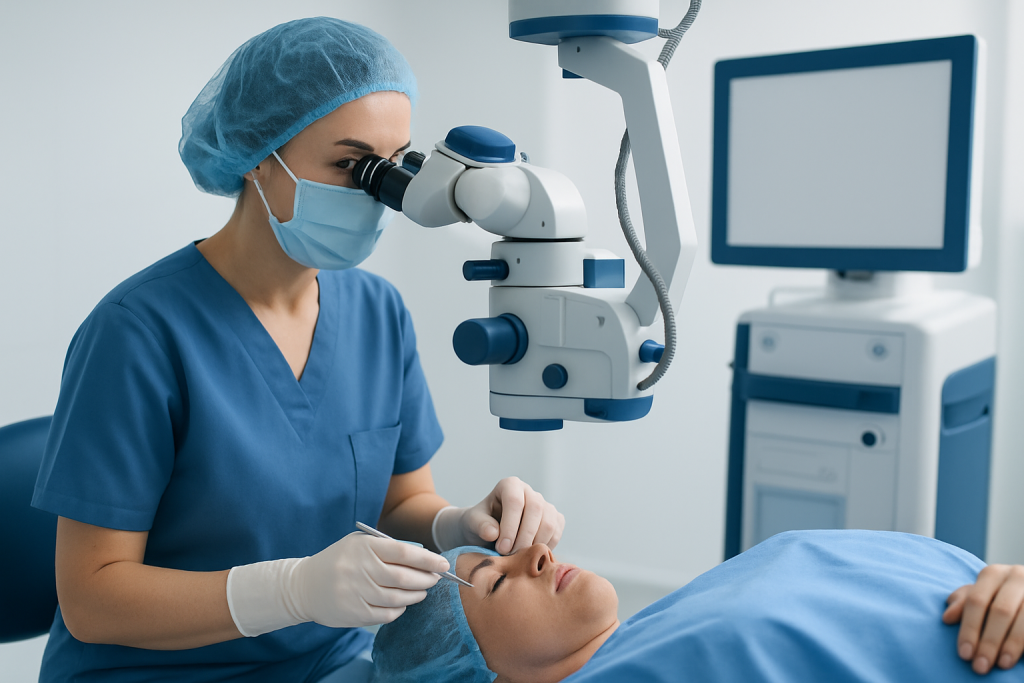
Diagnosis is usually made during a routine eye examination. An ophthalmologist can identify the growth by looking at the eye under a slit lamp, a microscope that provides a detailed view of the conjunctiva and cornea. In many cases, the appearance is typical and no advanced testing is needed to confirm the diagnosis.
The more important question is not simply “Is this a pterygium?” but “What is it doing to the eye?” The doctor may measure how far the tissue extends, check for astigmatism or corneal distortion, and assess visual acuity to see whether the growth is influencing sight.
Before recommending surgery, the clinician may ask about symptom patterns, work conditions, sun exposure, contact lens use, and whether the person is seeking care locally or while traveling for treatment. For international patients, this conversation also helps plan follow-up visits and medication access after returning home.
Treatment Options
Not every pterygium needs surgery. If the growth is small, stable, and only mildly irritating, conservative care may be enough. This can include artificial tears, lubricating ointments, and consistent use of wraparound sunglasses or UV-blocking lenses outdoors.
Surgery is usually discussed when there is a functional reason to intervene. Common reasons include reduced vision, increasing corneal astigmatism, repeated inflammation, trouble wearing contact lenses, or significant cosmetic concern. The goal is to remove the growth and help the eye surface heal in a way that lowers the chance of recurrence.
There are several surgical approaches, but modern techniques often include removal of the pterygium followed by a conjunctival autograft, which uses a small piece of the patient’s own conjunctival tissue to cover the area. In some cases, surgeons may also use tissue glue or sutures to secure the graft. The exact method depends on the eye’s condition, the surgeon’s preference, and whether the case is a first-time operation or a recurrence.
Patients sometimes ask whether surgery is done mostly for appearance. Cosmetic reasons can be part of the decision, especially when the growth is prominent and affects self-image. Even then, a careful evaluation is important, because the same tissue can also affect comfort and corneal shape in ways that are not obvious at first glance.
Prevention & Self-care
Although not every case can be prevented, many people can reduce irritation and possibly slow progression by protecting the eyes from environmental stress. Sunglasses that block ultraviolet light, wide-brimmed hats, and glasses that shield against wind and dust are practical measures that are worth using consistently.
Lubricating drops can help reduce the sensation of dryness or friction, especially in dry climates, on airplanes, or in workplaces with air conditioning. People who already have a pterygium should avoid rubbing the eye, since repeated mechanical irritation can aggravate symptoms.
After surgery, self-care is especially important. Patients are typically advised to follow the eye-drop schedule exactly as prescribed, avoid swimming or dusty environments until cleared, and protect the eye from bright sunlight and physical irritation. For someone recovering abroad or returning to another country soon after surgery, arranging a clear follow-up plan before travel is particularly helpful.
When to See a Doctor
An eye examination is sensible if a visible growth on the eye is new, changing, or uncomfortable. It is also a good idea to seek evaluation if the eye looks red for long periods, if vision becomes blurry, or if contact lenses suddenly feel intolerable.
Prompt assessment is especially important when the growth appears to be moving toward the center of the cornea, because earlier treatment planning may help preserve clearer vision. Sudden pain is not typical of a routine pterygium and deserves medical attention, as it may indicate another eye problem.
People considering surgery while living outside their home country may benefit from an ophthalmology team that can explain the procedure, the healing timeline, and the follow-up requirements in a structured way. Acibadem Health Point’s multidisciplinary specialists and JCI-accredited hospitals diagnose and treat pterygium for international patients, with attention to both the eye findings and the practicalities of recovery.
Frequently asked questions
When is pterygium surgery usually recommended?
Surgery is usually recommended when the pterygium affects vision, causes ongoing irritation, or continues to grow despite conservative care. Cosmetic concern can also be a reason, especially if the person feels bothered by the appearance and the eye doctor confirms that surgery is appropriate.
Can a pterygium come back after surgery?
Yes, recurrence is possible, which is why modern surgical methods focus not only on removing the growth but also on helping the surface heal in a stable way. Protection from ultraviolet light and careful follow-up may help reduce the chance of it returning.
Is pterygium surgery painful?
The procedure is typically done with local anesthesia, so the eye is numb during surgery. Some discomfort, watering, or a gritty feeling can occur during healing, but the surgeon will usually provide instructions to keep recovery as comfortable and safe as possible.
How long does recovery take after pterygium surgery?
Healing time varies, but the eye often needs several weeks to settle, and the surface may continue improving after that. Regular follow-up visits are important so the doctor can check healing, adjust medications if needed, and look for early signs of recurrence.
Can glasses or drops replace surgery?
For mild cases, lubricating drops, sunglasses, and monitoring may be enough. They do not remove the growth, though, so if vision is affected or symptoms persist, surgery may be the more appropriate option.
Should someone fly after pterygium surgery?
Travel plans should be discussed with the surgeon before the procedure, especially for international patients. Flying is not always prohibited, but timing matters because the eye may need close follow-up and a reliable medication schedule during early recovery.
References
- American Academy of Ophthalmology
- National Eye Institute
- Mayo Clinic
- Cleveland Clinic
This article is for general information only and is not a substitute for professional medical advice. Please consult a qualified doctor about your individual situation.