Winking Of Left Eye

Key Takeaways
- Most left-eye winking is a temporary eyelid twitch and is not dangerous.
- Common triggers include stress, lack of sleep, screen strain, caffeine, and dry eyes.
- Persistent twitching, facial weakness, vision changes, or pain should be checked by a doctor.
- Simple self-care steps such as rest, lubrication, and reducing irritants often help.
- If symptoms are one-sided and recurring, an eye specialist or neurologist may be needed.
Winking of the left eye usually refers to involuntary twitching or repeated blinking of the eyelid. Most cases are temporary and linked to common triggers such as stress, fatigue, or eye irritation, but persistent or one-sided twitching can sometimes need medical evaluation.
Overview
Winking of the left eye is commonly used to describe an involuntary twitching or repeated blinking of the upper or lower eyelid. In everyday life, it often appears suddenly, lasts for a short time, and then fades on its own. For many people, it is more of a nuisance than a medical problem.
From a clinical point of view, the symptom can range from a harmless eyelid spasm to a sign that the eye surface is irritated or the muscles around the eye are overworked. The important part is not the fact that it is on the left side, but whether it is brief, occasional, or persistent, and whether any other symptoms are present. That pattern helps guide the next step.
For people traveling for care, this symptom may feel especially distracting because it can interrupt work, reading, or long flights. A careful eye examination usually clarifies whether the issue is related to dryness, strain, inflammation, or a less common nerve or movement disorder.
Symptoms
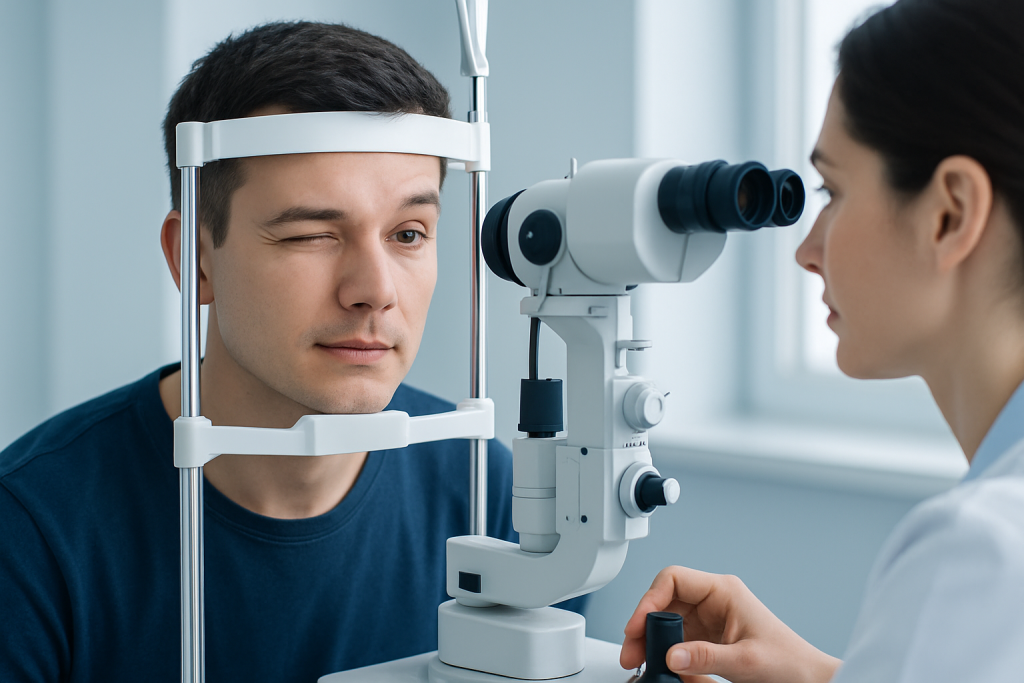
Left-eye winking can look different from person to person. Some notice a faint fluttering sensation in the eyelid, while others see the lid pulling repeatedly or closing briefly without control. It may occur several times a day or come and go over weeks.
Symptoms that often travel with eyelid twitching include eye strain, a gritty feeling, dryness, sensitivity to light, or tired eyes after long screen use. Stress, poor sleep, and excess caffeine can make the twitching more noticeable. In many people, the symptom becomes more obvious during busy periods and settles when the trigger improves.
It is worth paying attention to whether the twitch stays limited to the eyelid or spreads to other parts of the face. If the eye closes forcefully, the cheek or mouth also moves, or the person has blurred vision, drooping, or facial numbness, the symptom deserves medical review rather than simple observation.
Causes & Risk Factors

The most common reasons for winking of the left eye are everyday triggers that affect the eyelid muscles or the eye surface. Dry eyes, irritation from dust or smoke, digital eye strain, sleep deprivation, and emotional stress are frequent causes. Contact lens discomfort and allergies can also play a role.
Other possible contributors include high caffeine intake, alcohol use, certain medications, and nutritional issues that affect muscle function. Sometimes the twitch is related to a small local problem such as an eyelash irritating the eye, an inflamed eyelid margin, or a minor infection. These are usually treatable once identified.
Less commonly, repeated one-sided twitching can be linked to neurological conditions such as benign eyelid myokymia, blepharospasm, hemifacial spasm, or, in rare situations, disorders affecting the nerves that control facial movement. Risk is higher when twitching is persistent, progressively stronger, or accompanied by other neurological symptoms. A history of eye surface disease, chronic fatigue, or significant stress can also make the symptom more likely.
Diagnosis
Diagnosis usually starts with a conversation about when the twitch began, how often it happens, and what makes it better or worse. A doctor will often ask about sleep, screen time, caffeine, medications, allergies, and whether the person has pain, redness, discharge, or vision changes. This history alone often points toward a simple cause.
An eye examination may include checking the eyelid, tear film, cornea, and eyelid margin. The specialist may look for dryness, inflammation, infection, foreign bodies, or signs that the muscles are responding to irritation. If the twitching is isolated and short-lived, tests may not be needed.
If the symptom is persistent, severe, or associated with other facial movements, further evaluation may be recommended. Depending on the findings, this can include a neurological assessment or, less commonly, imaging studies. For international patients, bringing a list of medications and any previous eye reports can make the appointment more efficient and help the team compare symptoms over time.
Treatment Options
Treatment depends on the cause. When the twitch is related to fatigue, stress, or excess screen use, the first step is often supportive care rather than medication. Rest, regular breaks from near work, and reducing known triggers can be enough for many people.
If dry eyes or irritation are present, a doctor may suggest lubricating eye drops, eyelid hygiene, treatment for allergies, or care for an underlying eye condition. If a medication appears to be contributing, the prescribing doctor may review whether an alternative is appropriate. Any medication change should be guided by a clinician.
When twitching is part of a nerve-related movement disorder, more targeted treatment may be needed. Options can include injections, prescription medicines, or procedures, depending on the diagnosis. Severe or unusual cases may benefit from coordination between an eye specialist and a neurologist. The goal is to treat the cause, ease the twitching, and protect comfort and vision.
Prevention & Self-care
Many people can reduce eyelid twitching by adjusting daily habits. Regular sleep, hydration, and scheduled screen breaks often help because the eyelid muscles respond well to rest. Managing stress through simple routines such as walking, breathing exercises, or consistent sleep timing may also make a difference.
Eye-specific self-care matters too. For people with dryness, using artificial tears as advised, avoiding smoke, and taking breaks from contact lenses can reduce irritation. Sunglasses outdoors and careful eyelid hygiene may help if allergies or blepharitis are part of the picture.
- Limit excess caffeine if twitching seems worse after coffee or energy drinks.
- Use the 20-20-20 rule during screen work: every 20 minutes, look 20 feet away for 20 seconds.
- Do not rub the eye, which can increase irritation.
- Keep follow-up plans if the symptom is being monitored across travel or after treatment abroad.
For patients who are returning home after treatment, keeping a record of symptom changes, any prescribed eye-care routine, and follow-up advice can be useful. That continuity helps local doctors continue care without repeating unnecessary steps.
When to See a Doctor
Medical review is a good idea when left-eye winking lasts longer than expected, keeps returning, or interferes with daily activities. A persistent twitch that does not improve with sleep, stress reduction, or eye lubrication should not be ignored. Even when the cause is benign, a professional examination can confirm that nothing else is going on.
Prompt attention is especially important if the twitch comes with eye pain, redness that does not settle, swelling, discharge, new blurred vision, drooping eyelid, facial weakness, numbness, double vision, headache, or twitching that spreads to the cheek or mouth. These symptoms may point to a condition that needs closer assessment.
People planning care abroad should seek evaluation before travel if symptoms are worsening or if vision is affected. Acibadem Health Point’s multidisciplinary specialists and JCI-accredited hospitals diagnose and treat eye conditions for international patients, helping coordinate the right level of care when a simple explanation is not enough.
Living With Intermittent Eyelid Twitching
Occasional left-eye winking can be frustrating, but it is often manageable once the trigger is identified. Many patients feel reassured after learning that the symptom commonly settles with basic changes such as better sleep, less strain, and treatment of dry eyes or allergies. The key is to notice patterns rather than to panic over the symptom itself.
If the twitching occurs during work travel, long flights, or periods of disrupted routine, it may be helpful to plan eye drops, rest breaks, and hydration more deliberately. For people receiving care across borders, a clear written summary of symptoms and treatment can make follow-up at home much smoother. With the right approach, most cases can be handled calmly and effectively.
Frequently asked questions
Is winking of the left eye serious?
Most of the time, it is not serious and is related to temporary eyelid twitching. Common triggers include stress, fatigue, caffeine, and dry eyes. If it persists or comes with other symptoms, it should be checked by a doctor.
Why does only the left eye twitch?
A twitch may affect only one eyelid because the trigger is local, such as irritation, dryness, or strain. The side itself is usually less important than how long the twitch lasts and whether other symptoms appear. Persistent one-sided twitching can sometimes need further evaluation.
Can stress cause left-eye winking?
Yes, stress is a common trigger for eyelid twitching. It can also be worsened by poor sleep and long hours of screen use. Reducing stress and improving rest often helps the symptom settle.
What can I do at home to stop eye twitching?
Rest, hydration, reduced caffeine, and regular screen breaks are useful first steps. If the eye feels dry or irritated, lubricating drops may help if they are appropriate for that person. Avoid rubbing the eye, as that can make irritation worse.
When should someone get medical help for a twitching eye?
A doctor should be seen if the twitching lasts for weeks, becomes stronger, or spreads to other parts of the face. Vision changes, pain, drooping, numbness, or facial weakness also need prompt evaluation. These signs help a clinician decide whether a simple eye problem or a nerve-related issue is present.
Does left-eye winking mean a vitamin deficiency?
Not usually. While nutritional issues can sometimes contribute to muscle irritability, most eyelid twitching is linked to common triggers such as tiredness, dryness, or stress. A doctor can advise whether any testing is appropriate based on the full picture.
References
- American Academy of Ophthalmology
- National Eye Institute
- Mayo Clinic
- Merck Manual Professional Edition
- National Institute of Neurological Disorders and Stroke
This article is for general information only and is not a substitute for professional medical advice. Please consult a qualified doctor about your individual situation.