Where Is Your Appendix?

Key Takeaways
- The appendix is typically located in the lower right abdomen, near where the small and large intestines meet.
- Appendicitis often begins with vague belly pain and may later move to the lower right side.
- Symptoms can include fever, nausea, loss of appetite, and pain that worsens with movement or coughing.
- Diagnosis may involve a physical exam, blood tests, urine tests, and imaging such as ultrasound or CT.
- Severe or persistent abdominal pain should be assessed promptly by a doctor.
Medically reviewed by the Acıbadem clinical team — August 19, 2026
The appendix is a small pouch attached to the large intestine, usually found in the lower right side of the abdomen. Knowing where it sits can help people recognize symptoms of appendicitis and understand when medical evaluation is needed.
Overview
The appendix is a small, finger-shaped pouch connected to the first part of the large intestine. In most people, it sits in the lower right area of the abdomen, though its exact position can vary slightly from person to person. Because it is a relatively small structure tucked inside the digestive tract, many people never think about it until pain begins nearby.
Questions about appendix location often come up when someone is trying to make sense of abdominal discomfort. That is understandable: pain in the lower belly can come from several organs, and the appendix is only one possible source. Knowing the usual location can help people describe symptoms more clearly when speaking with a clinician, especially if they are seeking care while traveling or in a new health system.
The appendix does not have a well-defined essential role in digestion, but it can become inflamed or blocked, leading to appendicitis. This condition is important because symptoms can progress over hours or days, and timely medical assessment helps guide the next steps.
Symptoms
Appendix-related pain is often discussed because appendicitis tends to follow a recognizable pattern, although not every person experiences it in the same way. Many people notice discomfort that starts near the navel or feels diffuse at first, then shifts toward the lower right side of the abdomen. The pain may become sharper with walking, coughing, or pressing on the area.
Other common features may include nausea, vomiting, a reduced appetite, bloating, constipation, or diarrhea. Some people also develop a low-grade fever. In children, older adults, and pregnant patients, the picture can be less typical, which is why symptoms should not be judged by location alone.
- Pain that often localizes to the lower right abdomen
- Loss of appetite
- Nausea or vomiting
- Mild fever
- Pain that worsens with movement
It is worth remembering that many other conditions can cause similar abdominal symptoms. A clinician may look at the whole pattern rather than a single complaint, especially when deciding whether imaging or further observation is needed.
Causes & Risk Factors

Appendicitis usually develops when the appendix becomes blocked, allowing inflammation and infection to build up. The blockage may be caused by hardened stool, swollen lymph tissue, or less commonly a foreign body or growth. Once the opening is blocked, pressure and irritation can increase inside the appendix.
Anyone can develop appendicitis, but it is more often seen in younger people. Family history may play a role in some cases, though many patients have no clear risk factor at all. Diet and lifestyle are not considered direct causes in most situations, even though many people wonder whether something they ate triggered the pain.
Because the appendix is part of the digestive system, abdominal complaints can be confusing at first. Pain may also be influenced by the appendix’s position, which is one reason symptoms sometimes differ between individuals. A pelvic appendix, for example, may cause discomfort that feels lower or more generalized than classic right-sided pain.
Diagnosis
Doctors usually begin with a detailed history and physical examination. They may ask when the pain started, whether it moved, what makes it worse, and whether the person has fever, nausea, appetite changes, or bowel symptoms. Gentle examination of the abdomen can help identify tenderness or signs of irritation.
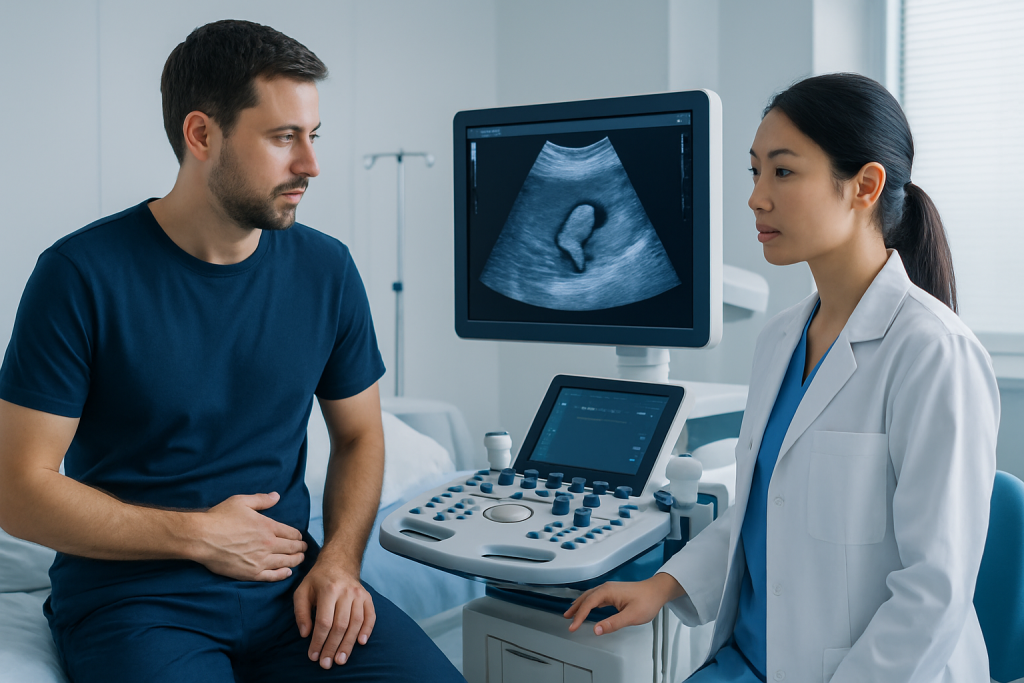
Testing often includes blood work to look for inflammation and infection, along with a urine test to help rule out Kidney Stones: Symptoms, Pain and When to Seek Care" class="ahp-ilk">kidney stones or urinary tract causes. In many settings, imaging is used to clarify the diagnosis. Ultrasound is commonly used in children and pregnant patients, while CT scans are often helpful in adults when the diagnosis is uncertain.
For people arranging care from another country, it can help to gather any previous test results, a written timeline of symptoms, and a list of medications or allergies. Clear information allows the care team to move efficiently and avoid repeating tests when possible.
Treatment Options
Treatment depends on the diagnosis. If appendicitis is confirmed, surgery to remove the appendix, called appendectomy, is the most common treatment. In some selected cases, doctors may discuss antibiotics as an initial option, but this decision depends on the severity of symptoms and the individual clinical situation.
Appendectomy may be done through minimally invasive techniques or, in certain cases, through an open operation. The choice depends on factors such as the patient’s condition, imaging findings, and whether the appendix has already ruptured. When the appendix has perforated, treatment may also involve drainage of an abscess and antibiotics.
Hospital stay and recovery vary. Many people are able to return to light daily activity gradually after treatment, but exact timing depends on the procedure and how the abdomen heals. International patients are often advised to plan for follow-up before traveling home, since wound checks and symptom review are part of safe recovery.
Prevention & Self-care
There is no guaranteed way to prevent appendicitis, but general digestive health habits can support overall well-being. A balanced diet with adequate fiber, steady hydration, and regular physical activity may help bowel function, though these measures do not eliminate the possibility of appendix inflammation.
For self-care, the most important step is to avoid delaying evaluation when abdominal pain is persistent, unusual, or worsening. People should not rely on home remedies, laxatives, or pain medicine alone to “wait it out” if appendicitis is a possibility. Pain masking can make it harder to judge whether symptoms are progressing.
If a person is recovering after appendectomy, following discharge instructions closely matters. This may include wound care, gradual return to activity, attention to fever or increasing pain, and keeping all planned follow-up appointments. Travelers should also know how to contact their care team after leaving the hospital, especially if they are back in another country.
- Eat a generally balanced diet
- Stay hydrated
- Seek prompt assessment for persistent abdominal pain
- Follow post-treatment instructions carefully
When to See a Doctor
Medical evaluation is important when abdominal pain is severe, lasts longer than expected, or keeps getting worse. Pain in the lower right abdomen deserves attention, especially if it is accompanied by fever, nausea, vomiting, or loss of appetite. A person should not assume the cause is minor simply because the pain began vaguely or seems to come and go.
Urgent care is particularly important if the abdomen becomes very tender, rigid, or painful to move, or if the person seems weak, dehydrated, or unable to keep fluids down. These symptoms may suggest a condition that needs rapid assessment. Prompt attention is also wise for anyone who has recently traveled, because access to records and follow-up can be more complicated after the first visit.
Acibadem Health Point supports international patients with multidisciplinary specialists and JCI-accredited hospitals that diagnose and treat appendicitis and other digestive conditions in a coordinated way. For anyone unsure whether pain is appendix-related, a qualified doctor can help determine the safest next step.
Frequently asked questions
Where is the appendix usually located?
The appendix is usually in the lower right side of the abdomen, where the small intestine meets the large intestine. Its exact position can vary a little from person to person, which is one reason symptoms do not always feel identical.
Does appendix pain always start on the right side?
Not always. It often begins as a vague pain around the belly button or middle abdomen before moving to the lower right side. Some people, including children and pregnant patients, may have a less typical pattern.
What does appendicitis pain feel like?
People often describe it as pain that becomes sharper and more localized over time. It may worsen with movement, coughing, or pressing on the abdomen. Nausea, fever, and loss of appetite can occur as well.
Can the appendix hurt without being appendicitis?
Pain in the area of the appendix can come from many other causes, including digestive, urinary, or gynecologic conditions. That is why doctors look at the full symptom pattern and may use tests to confirm the cause.
How is appendicitis diagnosed?
Doctors usually combine a physical exam with blood and urine tests, and they may use ultrasound or CT imaging. The goal is to distinguish appendicitis from other causes of abdominal pain as safely and accurately as possible.
When should someone seek urgent help for appendix pain?
Urgent medical care is important if abdominal pain is worsening, localized to the lower right side, or accompanied by fever, vomiting, or significant tenderness. It is best not to wait for the pain to become severe before getting checked.
References
- Mayo Clinic
- Cleveland Clinic
- MedlinePlus
- NHS
- American College of Surgeons
This article is for general information only and is not a substitute for professional medical advice. Please consult a qualified doctor about your individual situation.
Persistent digestive symptoms? Get evaluated in Turkey
JCI-accredited · board-certified surgeons · reply within 24h
Add us as a Preferred Source to see more of our trusted health content across Google Search, AI Overviews and Discover.