Weighted Vest For Walking
Key Takeaways
- A weighted vest can make walking more challenging without changing the basic movement pattern.
- Potential benefits include higher energy expenditure, improved strength demand, and more training variety.
- Poor fit, excessive weight, or medical conditions affecting joints, heart, balance, or bone health can increase risk.
- The safest approach is to start light, keep sessions short, and stop if pain, dizziness, or unusual shortness of breath appears.
- People recovering from injury or living with chronic conditions should ask a clinician before adding a weighted vest to walking.
A weighted vest for walking adds external resistance to a routine many people already know well. It may help increase exercise intensity, but it is not suitable for everyone and works best when introduced gradually and used with good posture and medical guidance.
Overview
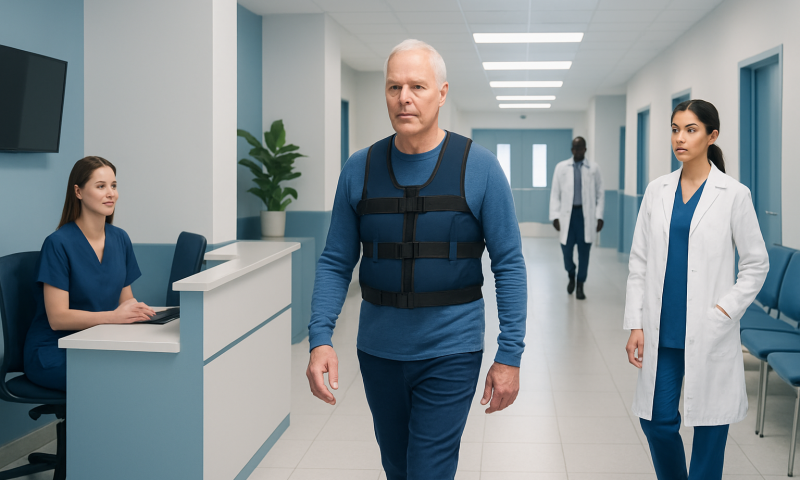
Walking is one of the most accessible forms of exercise, which is why some people look for ways to make it more effective without turning it into a completely different workout. A weighted vest for walking does exactly that: it adds resistance to the torso while preserving the familiar motion of walking.
For some adults, this can be a useful way to increase training load, support fitness goals, or add variety to a routine that has become too easy. It may also be attractive to international patients who want a practical exercise plan they can continue before travel, during a rehabilitation stay, and after they return home. Still, a weighted vest is not a simple upgrade for everyone; the added load can affect posture, joints, balance, and breathing.
The right approach depends on a person’s age, fitness level, weight-bearing tolerance, and medical history. In rehabilitation settings, clinicians often think less about trends and more about whether the body can safely handle the extra demand. That same careful thinking applies to home use.
Symptoms and How It Feels During Use
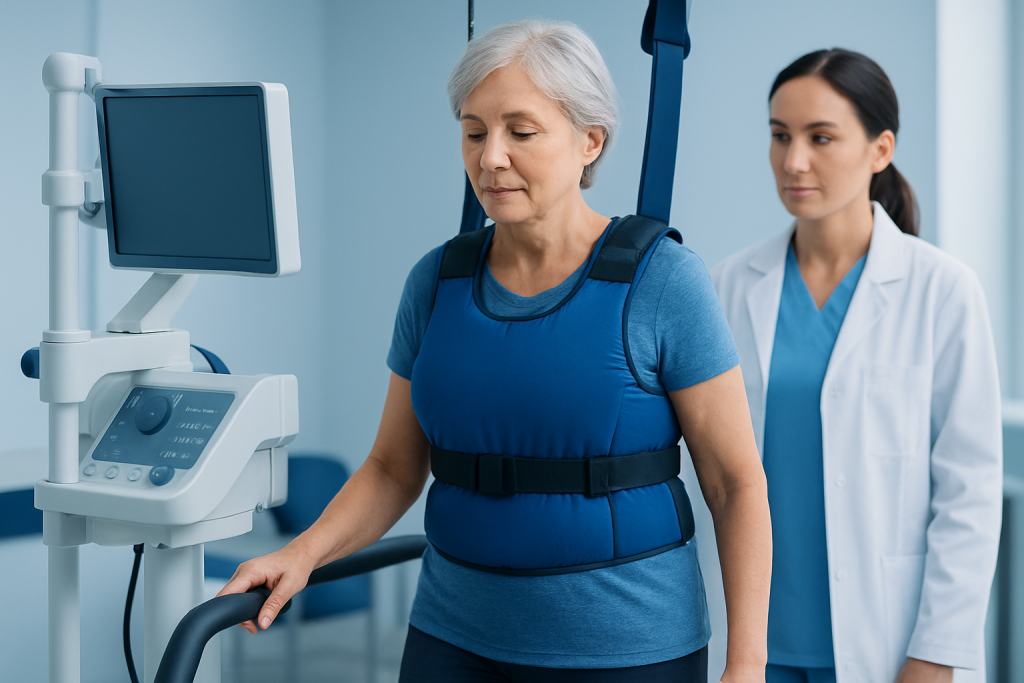
Walking with a weighted vest usually feels like regular walking with extra effort through the trunk, hips, and legs. The heartbeat may rise sooner, the steps may feel slower, and the shoulders or upper back may notice the load if the vest does not fit well.
These sensations are not necessarily a problem. In fact, a moderate increase in effort is part of the goal. However, warning signs such as joint pain, back strain, neck discomfort, tingling, unusual fatigue, lightheadedness, chest discomfort, or shortness of breath that feels out of proportion to the activity should be taken seriously.
Fit matters as much as weight. A vest that shifts, rubs, or presses unevenly can create pressure points and change walking mechanics. If the person has to lean forward, shorten the stride dramatically, or brace the torso to keep the vest stable, the setup may be too heavy or poorly adjusted.
Causes and Risk Factors

A weighted vest creates a simple form of overload: the body must move additional mass with every step. This can increase the demand on muscles, bones, and the cardiovascular system. For many healthy adults, that challenge is manageable when introduced slowly. For others, the same load may be too much too soon.
Risk tends to be higher in people with knee, hip, ankle, foot, or spine problems; reduced balance; osteoporosis or other bone-weakening conditions; recent surgery; uncontrolled cardiovascular disease; or breathing problems that limit exercise tolerance. Older adults may also need extra caution because falls and overuse injuries are more likely when balance is reduced.
Other factors matter too. A vest that is too heavy, worn for too long, or used on uneven terrain can raise the chance of strain. Rushing into advanced workouts, hills, stairs, or long distances before the body adapts can also turn a helpful tool into a stressor.
How It Is Evaluated and Introduced Safely
There is no special medical test for deciding whether a weighted vest is appropriate. Instead, clinicians consider the person’s walking ability, pain history, joint stability, posture, heart and lung health, and goals. For someone recovering from injury or surgery, the decision often depends on whether added load will support rehabilitation or interfere with healing.
A practical first step is to review current walking habits. If a person already walks comfortably for a set distance or time, the vest should be introduced only after that baseline feels stable. Many specialists recommend a gradual, supervised approach rather than starting with the heaviest available vest. The focus should be on how the body responds, not on matching someone else’s workout.
Professional guidance is especially useful when the person is traveling for care. A multidisciplinary team can help determine whether a weighted vest belongs in the plan, how it should be used, and whether other options such as hills, incline treadmill walking, or resistance training would be safer and more effective.
Treatment Options and Training Strategies
A weighted vest is not a treatment on its own; it is a training tool. Its role is to modify walking intensity. The most useful plan usually begins with short sessions at a comfortable pace, followed by careful observation of how the body responds over the next day or two.
Common strategies include using the vest only on level ground at first, keeping walks brief, and separating vest sessions from more demanding workouts. Some people do better with occasional use rather than daily wear. If the goal is strength, bone-loading, or conditioning, a clinician or physical therapist may combine walking with other exercises such as sit-to-stand drills, balance work, or resistance training.
It is also important to remember that more weight is not automatically better. A lower load used consistently and safely is often more valuable than an ambitious setup that causes soreness or discourages regular activity. The best program is the one a person can sustain without compromising posture or comfort.
- Start with a light vest and short duration.
- Keep the torso upright and the pace controlled.
- Use supportive shoes and stable surfaces.
- Increase only one variable at a time.
- Stop if pain, dizziness, or unusual breathing difficulty appears.
Prevention and Self-care
Good self-care starts before the first walk. The vest should fit snugly without limiting breathing or shoulder motion, and the load should sit evenly across the torso. If the vest slides, pinches, or changes posture, it is not a good match for that body.
Warm up with a few minutes of easy walking before adding resistance, and cool down afterward at a relaxed pace. Hydration, sensible footwear, and attention to walking surface all help reduce strain. People with sensitive knees, hips, feet, or backs may prefer flat routes and shorter sessions. Those with balance concerns may need to avoid crowded paths, stairs, or uneven ground.
After a session, mild tiredness can be normal, but persistent soreness, swelling, or next-day pain suggests the body is asking for less load or less time. Recovery matters as much as effort, especially for people resuming exercise after illness, injury, or a long period of inactivity.
When to See a Doctor
Medical advice is sensible before starting a weighted vest routine if the person has heart disease, high blood pressure that is not well controlled, lung disease, osteoporosis, balance problems, chronic back or joint pain, diabetes with nerve problems, or a recent injury or operation. A doctor or physical therapist can help determine whether the added load is appropriate and how to use it safely.
It is also important to seek evaluation if walking with the vest causes chest discomfort, fainting, persistent shortness of breath, severe pain, numbness, weakness, swelling, or a noticeable change in gait. These symptoms do not mean that something serious is certain, but they do mean the routine should be paused until a clinician reviews it.
For international patients planning rehabilitation or preventive care abroad, a structured assessment can be especially useful. Acibadem Health Point’s multidisciplinary specialists and JCI-accredited hospitals diagnose and treat a wide range of mobility and rehabilitation concerns for international patients, helping them build a plan that fits both medical needs and travel realities.
Bottom Line
A weighted vest for walking can be a practical way to increase exercise intensity, but it works best when treated as a carefully adjusted tool rather than a shortcut. The safest results usually come from light loads, gradual progression, and attention to posture, balance, and recovery.
For some people, especially those with joint problems, bone fragility, cardiovascular limitations, or recent injury, the risks may outweigh the benefits. A conversation with a qualified clinician can clarify whether weighted walking belongs in the plan or whether another form of exercise would be a better fit.
Frequently asked questions
Is walking with a weighted vest better than normal walking?
It can be more challenging than normal walking because it adds resistance, but that does not automatically make it better. The best option depends on the person’s fitness level, goals, and medical history. For some, regular walking is safer and easier to sustain.
How heavy should a weighted vest be for walking?
There is no single correct weight for everyone. A safer approach is to begin with a light load and increase only if the body adapts well. A clinician or physical therapist can help set an appropriate starting point.
Can a weighted vest help with weight loss?
It may increase the effort of a walk, which can support a higher-calorie exercise session. However, weight loss depends on many factors, including nutrition, overall activity, sleep, and health conditions. A vest should not be viewed as a standalone solution.
Who should avoid using a weighted vest?
People with significant joint pain, balance problems, osteoporosis, uncontrolled heart or lung disease, or recent surgery should be cautious and often need medical advice first. The same is true for anyone who develops pain, dizziness, or shortness of breath during use. Safety should come before training goals.
Can older adults use a weighted vest for walking?
Some older adults may use one safely, but only if their balance, bone health, and joint comfort allow it. Because fall risk and overuse injury risk can be higher with age, a light, supervised start is especially important. A healthcare professional can help decide whether it is appropriate.
What is the best way to start?
The best start is usually a short, flat, easy walk with a light vest and good footwear. The person should pay attention to posture and to how the body feels later that day and the next day. If there is discomfort or fatigue that feels excessive, the load or duration should be reduced.
References
- World Health Organization
- American College of Sports Medicine
- National Institute on Aging
- Centers for Disease Control and Prevention
- National Osteoporosis Foundation
This article is for general information only and is not a substitute for professional medical advice. Please consult a qualified doctor about your individual situation.