Varicocele Treatment: When Observation Is Enough and When Surgery Helps

Key Takeaways
- Many varicoceles do not need immediate treatment if there is no pain, testicular shrinkage, or fertility concern.
- Observation usually means regular follow-up with a urologist and attention to any changes in symptoms or fertility.
- Surgery or another procedure may help when pain persists, the testicle on the affected side is smaller, or semen analysis shows abnormalities.
- A varicocele does not always cause infertility, but it can be an important factor in a fertility evaluation.
- Diagnosis is usually based on a physical exam and sometimes scrotal ultrasound; testing is tailored to the person’s age and goals.
Medically reviewed by the Acıbadem clinical team — June 13, 2026
A varicocele is an enlargement of veins in the scrotum that often causes no symptoms, but it can sometimes affect discomfort or fertility. Many men can be safely observed, while others benefit from treatment based on symptoms, testicular changes, or fertility goals.
Overview
A varicocele is a cluster of enlarged veins in the scrotum, most often on the left side. It develops when valves inside the veins do not move blood efficiently, allowing blood to pool and the veins to stretch.
For many men, a varicocele is found by chance during an exam for another reason. For others, it becomes noticeable because of a dull ache, a feeling of heaviness, or a concern about fertility. The key question is not only whether a varicocele is present, but whether it is causing enough trouble to justify treatment.
That decision is often more nuanced than people expect. In some cases, observation is the safest and most sensible path. In others, especially when discomfort persists or fertility is being evaluated, repair may improve the situation. A careful urologic assessment helps separate those two paths.
Symptoms

Varicoceles may produce no symptoms at all. When they do, the discomfort is often described as a dull, dragging sensation rather than sharp pain. Some men notice that the scrotum feels more uncomfortable after standing for long periods, exercise, or a long day on their feet.
Visible or palpable enlarged veins can sometimes be felt as a soft, “bag of worms” texture above the testicle, especially when standing. A varicocele may also be associated with a testicle that seems smaller on one side, which is one reason it is taken seriously during fertility and adolescent evaluations.
Common ways a varicocele may come to attention include:
- Scrotal heaviness or aching
- A lump or fullness in the scrotum
- Fertility concerns after a period of trying to conceive
- A size difference between the testes
- An incidental finding during a routine physical exam
Symptoms are not always a reliable guide to severity. Some larger varicoceles cause little discomfort, while smaller ones may be more bothersome. That is why evaluation focuses on both the physical findings and the person’s goals, especially if fertility is part of the picture.
Causes & Risk Factors
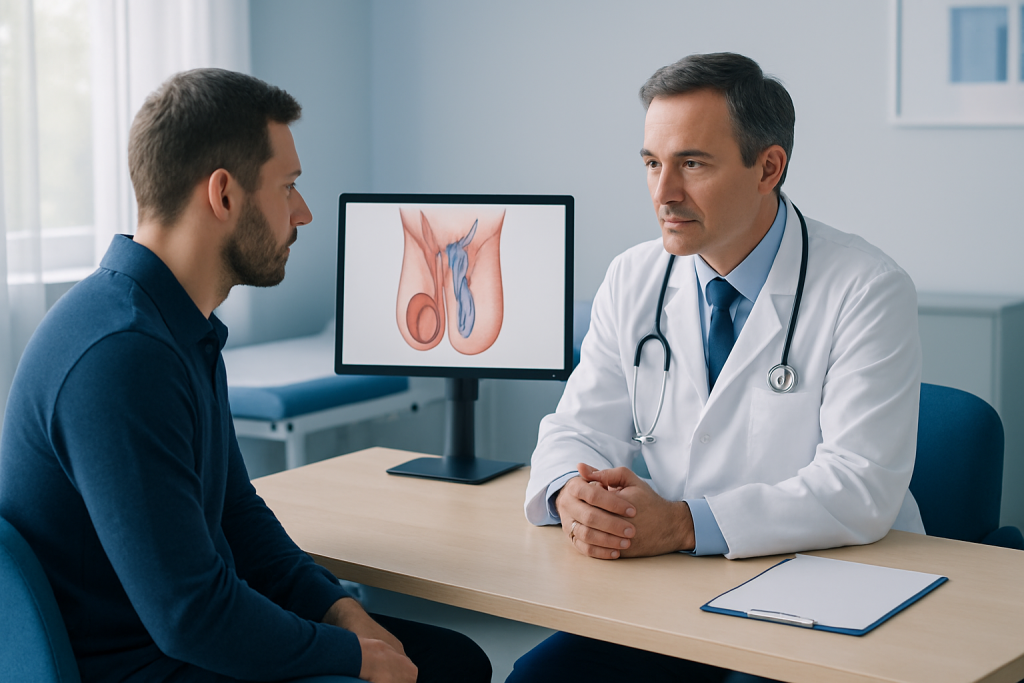
Varicoceles form when blood does not drain smoothly through the veins that carry blood away from the testicle. The reason often relates to vein anatomy and pressure changes in the left-sided drainage system, which is why varicoceles are more common on the left.
They are common in adolescents and adults and may become more noticeable around puberty, when testicular growth and blood flow increase. In many men, no single cause is identified, and the condition is not usually linked to personal habits or a specific injury.
Factors that may increase the chance of a varicocele being noticed or evaluated include:
- Puberty and young adulthood
- A family history of venous problems or fertility issues
- Evaluation for testicular asymmetry
- Workup for male-factor infertility
- Persistent scrotal discomfort
It is also important to remember that a varicocele can coexist with other causes of scrotal pain or fertility concerns. A doctor’s job is to make sure the symptoms are actually being caused by the varicocele and not by another condition that needs a different treatment.
Diagnosis
Diagnosis usually starts with a physical examination while the person is standing, because varicoceles are often easier to detect in that position. A clinician may ask the person to bear down gently, which can make the enlarged veins more apparent.
Scrotal ultrasound is often used when the diagnosis is unclear, when the exam findings need confirmation, or when there is a concern about testicular size or another scrotal condition. In fertility evaluations, a semen analysis is commonly recommended to look at count, movement, and shape of sperm.
The evaluation may also include questions about pain pattern, activity level, sexual and reproductive plans, and how long symptoms have been present. This broader picture matters because a varicocele that is simply present is managed differently from one that is interfering with comfort or family planning.
For international patients, this stage is especially important because it shapes the rest of the journey. If a procedure is being considered, the clinician will usually review imaging, labs, timing, travel plans, and follow-up needs before recommending the most practical option.
Treatment Options
Not every varicocele needs treatment. Observation is often appropriate when the person has no pain, no testicular size loss, and no current fertility concern. In that setting, the goal is to monitor for change rather than rush into a procedure.
When treatment is helpful, the main options are surgical repair and, in some centers, a minimally invasive procedure called embolization. The most suitable choice depends on the size of the varicocele, symptoms, fertility goals, anatomy, and the doctor’s expertise. The aim is to improve blood flow away from the testicle while minimizing the chance of recurrence or complications.
Treatment may be considered when one or more of the following are present:
- Ongoing scrotal pain that does not improve with conservative measures
- Reduced testicular growth or a smaller testicle on the affected side
- Abnormal semen analysis in a man trying to conceive
- A couple’s Male Fertility Evaluation: Which Test Answers Which Question First" class="ahp-ilk">fertility evaluation suggests the varicocele may be relevant
- Discomfort or concern that affects daily life despite observation
Surgery is typically done as an outpatient procedure, though the exact approach varies. Some techniques use a small incision with magnification to tie off the abnormal veins, while embolization uses a catheter through a vein to block the affected drainage path. Recovery is usually gradual, and the doctor will advise when activity, travel, and sexual activity can resume safely.
It is worth noting that treatment does not guarantee a particular fertility outcome, but in selected patients it can improve semen parameters or relieve pain. A thoughtful discussion before deciding on intervention is more useful than focusing on the word “surgery” alone.
Prevention & Self-care
There is no proven way to prevent a varicocele from forming, but day-to-day measures can make symptoms easier to manage when observation is chosen. Supportive underwear can reduce a sense of heaviness for some men, and avoiding prolonged standing may help if discomfort tends to build during the day.
Simple self-care can be especially helpful while someone is deciding whether treatment is needed. Over-the-counter pain relief may be discussed with a doctor, and gentle activity adjustments can reduce strain. However, persistent or worsening pain should not be managed indefinitely at home without medical review.
Useful self-care habits may include:
- Wearing supportive underwear or a jock strap if it helps comfort
- Taking breaks from long periods of standing
- Using cold packs briefly if recommended by a clinician
- Tracking whether pain changes with exercise, travel, or work patterns
- Following fertility testing and follow-up plans if conception is a goal
For someone traveling from another country, planning matters. If surgery or a procedure is being considered abroad, it helps to clarify how long to remain nearby for follow-up, what documents to bring, and how postoperative care will be coordinated once the patient returns home.
When to See a Doctor
A doctor’s evaluation is appropriate if a man notices a scrotal lump, aching, one-sided testicular shrinking, or a heaviness that keeps returning. It is also wise to seek assessment if a couple has been trying to conceive without success, because varicocele is one possible contributor to male-factor infertility.
Prompt review is especially important if the pain is sudden, severe, associated with fever, or accompanied by nausea or urinary symptoms. Those features may point to another condition that needs attention rather than a typical varicocele.
Men considering surgery should meet with a urologist who can explain whether observation is still reasonable, whether a semen analysis or ultrasound is needed, and what improvement might realistically be expected. For patients who travel for care, a structured plan for diagnosis, treatment, and follow-up makes the process safer and easier to manage across borders.
At Acibadem Health Point, multidisciplinary specialists and JCI-accredited hospitals diagnose and treat varicocele for international patients, with attention to both medical details and follow-up planning.
Living With a Varicocele: Practical Decision-Making
Many men feel uncertain when they hear they have a varicocele because the next step is not always obvious. The most helpful approach is to match the treatment to the problem being solved: pain, testicular changes, or fertility concerns. If none of those are present, observation is often enough.
When fertility is the main issue, the decision becomes more personal and time-sensitive. A semen analysis, the partner’s fertility evaluation, age, and how long conception has been attempted all influence whether repair is worthwhile. In pain-focused cases, the pattern of discomfort and response to conservative measures guide the choice.
Clear expectations are important. Varicocele treatment is not meant to “fix everything,” but rather to address a specific problem in a measured way. A good consultation should leave the patient understanding why a procedure is or is not being recommended, what recovery may look like, and what follow-up will be needed afterward.
Frequently asked questions
Can a varicocele go away on its own?
A varicocele usually does not disappear spontaneously. Some men never need treatment because the condition stays stable and does not cause symptoms or fertility problems. In those cases, observation with periodic follow-up is often appropriate.
Does every varicocele affect fertility?
No, many men with a varicocele father children without difficulty. Still, a varicocele can sometimes affect sperm production or quality, so it is worth evaluating when fertility is a concern. A semen analysis helps show whether it may be playing a role.
How do doctors decide between observation and surgery?
The decision is based on symptoms, testicular size, semen analysis, and fertility goals. If there is no pain, no testicular shrinkage, and no fertility issue, observation is often enough. Surgery is more likely to be recommended when the varicocele is clearly causing a problem.
Is varicocele surgery major surgery?
It is usually an outpatient procedure, but the exact technique can vary. Most people go home the same day and recover gradually over days to weeks. The doctor will explain the expected downtime and any limits on exercise or travel.
What happens if a man just watches it and does nothing?
That is sometimes the right choice, especially when the varicocele is small and not causing symptoms. The key is to monitor for changes in pain, testicular size, or fertility concerns. Follow-up is what makes observation safe and purposeful.
Can varicocele pain be managed without surgery?
Yes, in some cases supportive underwear, activity changes, and watchful follow-up are enough. If pain keeps returning or interferes with daily life, a urologist may discuss repair as a more durable option. The best plan depends on how much the symptoms are affecting the person.
References
- American Urological Association
- European Association of Urology
- Mayo Clinic
- National Institutes of Health
- Cleveland Clinic
This article is for general information only and is not a substitute for professional medical advice. Please consult a qualified doctor about your individual situation.