Men’s Fertility Preservation: When Sperm Freezing Is Worth Planning Before Treatment

Key Takeaways
- Sperm freezing is usually most useful before treatments that may reduce sperm count or quality, such as chemotherapy, radiotherapy, or certain surgeries.
- The process is straightforward: semen samples are collected, tested, frozen, and stored for possible future use.
- Men with a cancer diagnosis, some autoimmune conditions, or anticipated fertility-impacting treatment should ask about preservation early.
- One sperm sample may be enough in some situations, but several samples can improve future options.
- If ejaculation is difficult or not possible, doctors can sometimes use other retrieval methods.
- An experienced fertility team can help match preservation choices to the person’s diagnosis, treatment timeline, and future family goals.
Men’s fertility preservation gives some patients a practical way to protect the option of future fatherhood before treatments that may affect sperm production. Sperm freezing, also called sperm cryopreservation, is often the simplest preservation method when there is time to plan ahead.
Overview
For many men, fertility is not something they think about until a diagnosis or treatment plan forces the question into the foreground. Sperm freezing offers a way to keep that future decision open. It is a form of fertility preservation in which sperm are collected, frozen at very low temperatures, and stored for later use.
The idea is simple, but the timing matters. Treatments such as chemotherapy, radiotherapy, testicular surgery, or some hormone-related therapies can affect sperm production for a short time or, in some cases, more permanently. When preservation is planned before treatment begins, a patient may have more options later if he wants to have a child.
Sperm freezing is not only relevant to cancer care. It may also be discussed before certain operations, before treatment for inflammatory or autoimmune disease, and in some cases before gender-affirming care or other medical plans that may affect fertility. A fertility specialist can help determine whether preservation is advisable, urgent, or unlikely to be necessary.
Who Might Benefit from Sperm Freezing
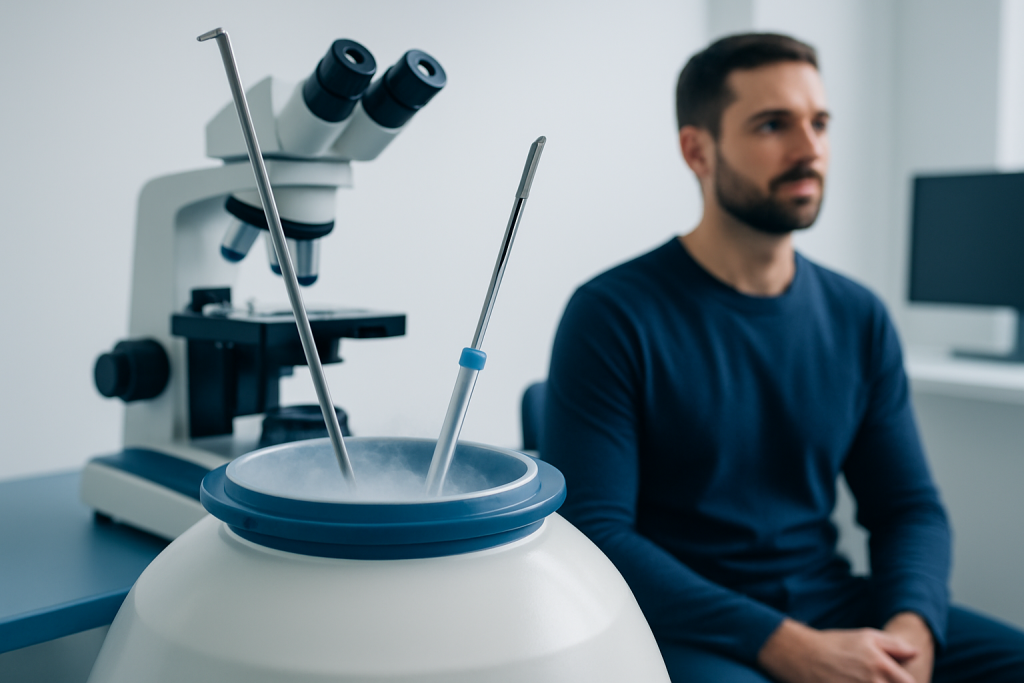
Sperm freezing is often most valuable when a treatment has a realistic chance of lowering sperm count, changing sperm movement, or temporarily stopping sperm production. Men who are newly diagnosed with cancer are commonly advised to ask about preservation quickly, because treatment may need to start soon and there may be only a short window to collect samples.
It can also be worth discussing before therapies for non-cancer conditions. For example, some men receiving medicines that affect the immune system, or those scheduled for procedures near the testicles or pelvic organs, may want to preserve sperm in case fertility is affected. Men with a history of low sperm count, testicular injury, or previous fertility problems may also benefit from early planning because their baseline fertility may already be more fragile.
Sometimes the right answer is simply a conversation. Not every treatment leads to infertility, and not every patient will choose preservation. However, having the discussion before treatment starts gives the individual and his doctors more room to decide calmly rather than under pressure.
Causes & Risk Factors

The main reason to consider sperm freezing is not a disease itself but the possibility that a future treatment could interfere with sperm production. Cancer treatments are among the best-known examples. Chemotherapy and radiotherapy can damage the cells in the testes that produce sperm, and the effect may be temporary or long-lasting depending on the treatment type and dose.
Other situations may also raise the need for fertility planning. These include surgery that could affect the reproductive tract, some medicines used for autoimmune or inflammatory diseases, and certain conditions that already reduce fertility. Men with a single testicle, a history of undescended testis, varicocele, or prior scrotal surgery may want to ask whether preservation would be sensible before any new treatment begins.
Risk is not the same as certainty. A doctor can explain whether the planned therapy is expected to have a mild, moderate, or significant effect on fertility, and whether sperm freezing is the most appropriate option or simply a precaution worth considering.
- Time-sensitive cancer therapy
- Pelvic or testicular surgery
- Radiotherapy involving the pelvis, abdomen, or testes
- Medicines that may affect sperm production
- Pre-existing fertility concerns
How Sperm Freezing Is Planned and Diagnosed
The evaluation begins with a consultation, often with a urologist, andrologist, or fertility specialist. The team reviews the diagnosis, the treatment timeline, any previous fertility history, and whether the patient has already fathered children. In some cases, a semen analysis is recommended to understand the current sperm count and motility before freezing.
Collection usually happens by masturbation into a sterile container at a fertility laboratory or hospital. If needed, more than one sample may be collected on separate days. When treatment needs to begin quickly, the team may work to preserve as many samples as possible in a short period. If a patient cannot produce a sample in the usual way, other approaches may sometimes be discussed, depending on the medical situation.
After collection, the sperm is mixed with a protective solution, divided into vials, and cooled in a controlled process before long-term storage. The laboratory records are important, because future use depends on accurate identification and safe chain-of-custody procedures. Patients traveling internationally for treatment should ask how samples are stored, how long they can remain frozen, and what paperwork is needed if future use may take place in another country.
Treatment Options
Sperm freezing itself is the preservation treatment. The stored sperm may later be used in assisted reproductive techniques such as intrauterine insemination in selected cases, or more commonly with in vitro fertilization and intracytoplasmic sperm injection, depending on the quantity and quality of the sperm available at that time.
For some men, sperm freezing is enough on its own. For others, especially when sperm count is very low, the fertility team may recommend collecting several samples to improve future options. If no sperm can be obtained from ejaculation, surgical sperm retrieval may be considered in specific cases, but that decision is made individually and depends on the diagnosis and the urgency of treatment.
It is also important to understand what sperm freezing does not do. It does not improve sperm quality, reverse infertility, or guarantee future pregnancy. What it can do is preserve the best available sample before a treatment that might compromise fertility. That makes it a planning tool, not a promise.
Prevention & Self-care
Because sperm freezing is usually planned before treatment, the most helpful step is early conversation. Men who have just received a diagnosis or are considering a procedure that may affect fertility should raise the subject as soon as possible. That early discussion can prevent missed opportunities if treatment must start quickly.
Practical self-care before collection may include staying hydrated, avoiding alcohol and recreational drugs, and following any clinic instructions about abstinence before a sample is given. If fever, acute illness, or major stress is present, the team may advise whether collection should proceed immediately or be postponed briefly if safe to do so.
Emotional preparation matters as well. A fertility decision made alongside a cancer diagnosis or another serious condition can feel overwhelming. Some men find it useful to involve a partner, family member, or trusted interpreter so they can understand the options and ask questions about storage, consent, costs, and future use.
- Ask about fertility early, before treatment begins
- Request a specialist consultation if timing is short
- Clarify how long samples will be stored
- Keep copies of consent and laboratory records
- Discuss future use laws if care may continue abroad
When to See a Doctor
Men should speak with a doctor or fertility specialist before any treatment that may affect sperm production, especially if starting cancer therapy, pelvic radiation, or surgery involving the reproductive organs. The earlier the discussion happens, the more likely it is that preservation can be completed without delaying necessary care.
It is also wise to ask for help if there is already a history of infertility, very low sperm count, testicular pain, prior testicular surgery, or difficulty producing a semen sample. Even when the answer turns out to be that freezing is not needed, a specialist can explain the reasons clearly and help reduce uncertainty.
For international patients, coordination is especially important. Records, laboratory procedures, and follow-up plans may need to be organized across borders, and a team familiar with fertility preservation can help make the transition smoother. Acibadem Health Point’s multidisciplinary specialists and JCI-accredited hospitals can diagnose and treat this condition for international patients, with care arranged around both treatment urgency and future family planning.
Living With the Decision
Choosing sperm freezing is often about preserving possibilities during an otherwise difficult time. Some men feel relieved once samples are stored; others prefer to revisit family-planning decisions later, after treatment is complete and recovery is underway. Both approaches are reasonable. Fertility preservation is meant to support informed choice, not add pressure.
After treatment, the stored sperm may remain unused for years. When the time comes to consider conception, the fertility team can review the original records and discuss whether natural conception, assisted reproduction, or another approach is most appropriate. The stored samples are one part of a broader reproductive plan, not the whole story.
Men who are unsure whether preservation is necessary should still ask. A brief consultation can clarify whether sperm freezing fits the medical situation, the treatment schedule, and the patient’s future goals. In many cases, that one conversation makes the difference between uncertainty and a clear plan.
Frequently asked questions
When should sperm freezing be considered before treatment?
It is best considered as soon as a treatment is expected to affect fertility, ideally before chemotherapy, radiotherapy, or certain surgeries begin. Early planning gives the patient the most options and reduces the chance of missing the window for collection.
Is one sperm sample enough?
Sometimes one sample is enough, especially if treatment must start quickly. In other situations, collecting several samples is helpful because it may improve the number of stored sperm available for future use.
Does sperm freezing guarantee that a future pregnancy will happen?
No, it does not guarantee pregnancy. It preserves sperm for possible future use, but success later depends on many factors, including sperm quality at the time of use and the fertility of the partner or donor situation.
Can sperm be frozen if a man cannot ejaculate normally?
In some cases, yes. A fertility specialist may discuss alternative retrieval methods depending on the medical reason and how urgently treatment needs to begin.
How long can frozen sperm be stored?
Frozen sperm can often be stored for long periods, but the exact rules depend on the clinic, the country, and consent arrangements. Patients should ask the fertility team about storage duration and renewal requirements.
Will fertility return after treatment ends?
Sometimes fertility recovers after treatment, but not always. Because recovery is difficult to predict, doctors often recommend preserving sperm before treatment whenever there is a meaningful risk to fertility.
References
- American Society for Reproductive Medicine
- Centers for Disease Control and Prevention
- National Cancer Institute
- World Health Organization
- European Association of Urology
This article is for general information only and is not a substitute for professional medical advice. Please consult a qualified doctor about your individual situation.