Urinary Incontinence in Men: Pads, Devices, or Surgery—How Doctors Decide

Key Takeaways
- Male urinary incontinence has several causes, including prostate treatment, bladder changes, nerve issues, and weakened pelvic support.
- Doctors first identify the type of leakage before recommending pads, exercises, medicines, devices, or surgery.
- Conservative treatment often starts with bladder habits, pelvic floor training, and absorbent products for comfort and confidence.
- Surgery may be considered when leakage remains troublesome despite other treatments, especially after prostate surgery.
- A careful evaluation helps match treatment to daily life, travel plans, recovery time, and long-term expectations.
Medically reviewed by the Acıbadem clinical team — June 13, 2026
Urinary incontinence in men can range from occasional leakage to daily bladder control problems, and treatment is usually chosen step by step rather than all at once. Doctors consider the type of leakage, its cause, overall health, and personal goals when deciding between pads, devices, medicines, pelvic floor therapy, or surgery.
Overview
Urinary incontinence in men is the unintentional loss of urine. For some men, it appears as a small leak after urinating or coughing. For others, it can mean repeated accidents that affect work, sleep, travel, exercise, and confidence.
The important point is that leakage is not a single condition with a single solution. Doctors look at why it is happening, when it happens, and how much it affects daily life before suggesting the next step. That is why two men with the same symptom may be advised very different treatments.
In practice, the decision often moves from simpler to more advanced care. A man may begin with pads and bladder training, then add pelvic floor exercises or medication, and later consider a device or surgery if the problem persists. The goal is not only dryness, but also a plan that is realistic, safe, and suited to the person’s routine and health status.
Symptoms
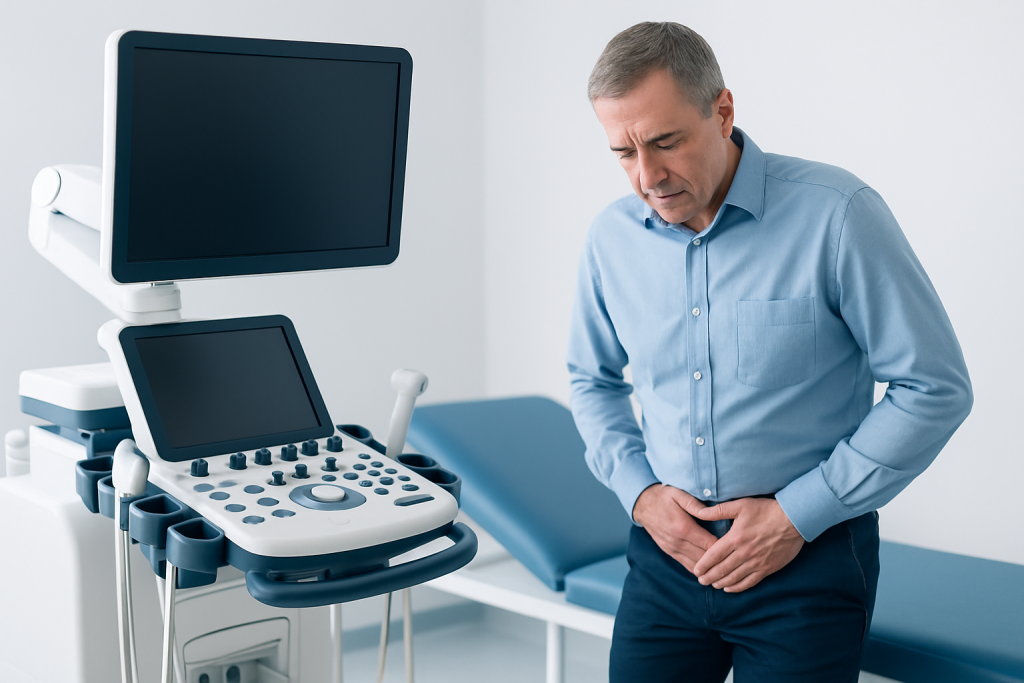
Men describe urinary incontinence in several ways. Some notice a few drops after finishing urination, while others leak during coughing, lifting, walking, or exercising. Urgency incontinence can feel different: the need to pass urine comes on suddenly, and the person may not reach the toilet in time.
Common patterns include stress leakage, urgency leakage, overflow leakage, and mixed forms. Stress leakage is often linked to physical pressure on the bladder, while urgency leakage is more about an overactive bladder signal. Overflow leakage may happen when the bladder does not empty well and urine dribbles out because it is too full.
Other symptoms can include frequent urination, nighttime trips to the bathroom, a weak stream, straining to pass urine, or a feeling that the bladder is not empty. These details matter because they help doctors narrow down the cause and choose treatment more accurately.
Causes & Risk Factors

Several conditions can lead to urinary incontinence in men. Prostate surgery is one of the best-known causes, especially after procedures for prostate cancer or an enlarged prostate. Leakage may also develop after radiation treatment, because the tissues around the bladder and urethra can become irritated or less flexible.
Other causes include an overactive bladder, urinary tract infection, bladder stones, diabetes, neurologic conditions such as stroke or Parkinson’s disease, and medications that affect urine production or bladder function. In some men, the issue is related to a combination of aging muscles, prostate enlargement, and changes in nerve control.
Risk tends to increase when a man has had pelvic surgery, lives with chronic constipation, has excess body weight, smokes, or performs repeated heavy lifting. Long-term urinary symptoms should not be assumed to be “just age,” because many causes can be evaluated and treated.
Diagnosis
Evaluation usually begins with a careful conversation. Doctors ask when leakage happens, how often it occurs, what the urine pattern looks like, whether the man has had prostate treatment, and whether there are symptoms such as pain, blood in the urine, weak flow, or urgency. A bladder diary may be helpful, especially if symptoms vary from day to day.
A physical examination and basic urine tests are often part of the first visit. Depending on the situation, the doctor may also check post-void residual urine, which shows how much urine remains after passing urine. If needed, further tests such as uroflowmetry, cystoscopy, or urodynamic studies may be used to understand bladder and sphincter function more precisely.
This step matters because treatment depends on the type of incontinence, not just the fact that leakage exists. A man with stress incontinence after prostate surgery may need a different plan from someone whose main issue is urgency and frequent urination.
Treatment Options
Doctors usually decide between pads, devices, or surgery by asking a simple question: how much does the leakage interfere with life, and how likely is it to improve with conservative care? For mild or temporary symptoms, absorbent pads or guards may be enough while the bladder and pelvic floor recover. Many men use them as a practical short-term or long-term solution because they are discreet and easy to adapt to travel or work schedules.
Pelvic floor muscle training is often recommended early, particularly after prostate surgery. Bladder training, timed voiding, and adjustments to fluids and caffeine can also reduce urgency and accidents. If overactive bladder is involved, medications may help calm bladder contractions, though they are chosen carefully based on other medical conditions and possible side effects.
When leakage is persistent or more severe, device-based or surgical options may be considered. A male sling can support the urethra in selected men with mild to moderate stress incontinence. An artificial urinary sphincter is another option, often used for more significant leakage, especially after prostate surgery. Some men may be offered a catheter-based or external collection device in special circumstances, particularly when surgery is not appropriate.
Doctors weigh several practical points before recommending surgery: the type and severity of leakage, prior prostate treatment, bladder function, ability to operate a device if one is implanted, and the person’s willingness to go through recovery and follow-up. For international patients, this discussion is especially important because travel timing, post-procedure checks, and access to care at home all affect the best choice.
Prevention & Self-care
Not every case of urinary incontinence can be prevented, but symptoms may be reduced with everyday habits. Maintaining a healthy weight, avoiding constipation, stopping smoking, and limiting bladder irritants such as excess caffeine or alcohol may help some men. Regular physical activity can also support overall pelvic and urinary health.
Men recovering from prostate treatment often benefit from doing pelvic floor exercises consistently, even if results take time. It also helps to empty the bladder on a schedule rather than waiting too long, especially during work meetings, long drives, or flights. For men who travel frequently, planning ahead with restroom access and carrying appropriate supplies can lower stress and make leakage easier to manage.
Skin care matters as well. If pads are used, changing them regularly and keeping the area clean and dry can help prevent irritation. A simple bladder diary, written on paper or a phone, can reveal patterns that make self-management more effective and give the doctor clearer information at follow-up.
When to See a Doctor
Men should seek medical advice if leakage is new, worsening, or affecting sleep, work, intimacy, or confidence. It is also important to be evaluated if there is pain, fever, blood in the urine, difficulty passing urine, a sudden inability to urinate, or leakage that begins after surgery or cancer treatment.
Even when symptoms seem mild, a checkup is worthwhile if the problem persists beyond a few weeks or if pads are becoming a regular part of daily life. Treatment is often more effective when started earlier, before habits and skin irritation become part of the picture.
At Acibadem Health Point, international patients can be assessed by multidisciplinary specialists in JCI-accredited hospitals, where diagnosis and treatment planning are coordinated with follow-up in mind. A careful, individualized review can help determine whether pads, a device, surgery, or another approach is the most suitable next step.
Living with the condition and planning treatment
Many men feel relieved simply knowing that leakage is a medical issue with options, rather than a personal failing. Treatment planning works best when it reflects the person’s priorities: staying active, returning to work, handling long-distance travel, protecting privacy, or avoiding repeated procedures.
Doctors often discuss not only the medical side of treatment but also the practical side. That includes how soon a man needs to be dry for travel, whether he can manage device use comfortably, how long recovery may affect daily routines, and what follow-up will look like once he returns home.
Because urinary incontinence can change over time, a treatment plan may need adjustment. Some men move from pads to exercises, others from conservative care to surgery, and some find that a combination approach works best. The most useful plan is the one that matches the cause of the leakage and remains workable in real life.
Frequently asked questions
Is urinary incontinence in men always related to the prostate?
No. Prostate surgery is a common cause, but not the only one. Urinary incontinence can also be linked to overactive bladder, infection, neurologic conditions, diabetes, medications, or poor bladder emptying.
When are pads enough, and when is surgery considered?
Pads may be enough for mild leakage or while symptoms are improving. Surgery is usually considered when leakage remains bothersome despite conservative treatment, especially after prostate surgery and when the type of leakage is suitable for a procedure.
Can pelvic floor exercises really help men?
Yes, they can help, particularly after prostate treatment and in some cases of mild leakage. They work best when done regularly and when a clinician or physiotherapist shows the correct technique.
What is the difference between a male sling and an artificial urinary sphincter?
A male sling supports the urethra and is often used for selected men with mild to moderate stress incontinence. An artificial urinary sphincter is an implanted device that can provide stronger control and is often used for more significant leakage.
Do all men with incontinence need special tests?
Not always, but many benefit from a structured evaluation. Simple urine tests and a history are often enough to start, while more detailed studies are used when the cause is unclear or surgery is being considered.
Can urinary incontinence improve on its own?
Sometimes it can, especially after recent surgery or when a temporary cause is treated. If symptoms continue, evaluation is important so that the right management plan can be chosen.
References
- American Urological Association
- National Institute of Diabetes and Digestive and Kidney Diseases
- Mayo Clinic
- International Continence Society
- European Association of Urology
This article is for general information only and is not a substitute for professional medical advice. Please consult a qualified doctor about your individual situation.