Enlarged Prostate Surgery Abroad: How Doctors Decide Between TURP, Laser, and Other Options

Key Takeaways
- Surgery for enlarged prostate is usually considered when medicines no longer give enough relief or when complications develop.
- TURP and laser procedures are among the most common choices, but the best option depends on prostate size, anatomy, and overall health.
- Doctors also look at bleeding risk, use of blood thinners, bladder function, and whether the patient can manage follow-up after travel.
- Most procedures aim to improve urine flow, reduce nighttime urination, and lower the chance of urinary retention or repeated infections.
- A clear recovery plan matters, especially for international patients who will continue healing after returning home.
When an enlarged prostate starts affecting urine flow, sleep, or bladder emptying, surgery may become part of the discussion. Doctors compare the size of the prostate, symptom pattern, medical history, and travel needs before recommending TURP, laser procedures, or another option.
Overview
An enlarged prostate, also called benign prostatic hyperplasia (BPH), is common as men get older. When the prostate grows around the urethra, it can make urination slower, less predictable, or more urgent, especially at night.
Not every man with an enlarged prostate needs surgery. Doctors usually begin with symptom control, watchful waiting, lifestyle changes, or medication. Surgery enters the conversation when symptoms remain disruptive, urine cannot be emptied well, or complications such as repeated infections, bladder stones, or urinary retention appear.
For men considering care abroad, the decision is not only about which procedure sounds most advanced. It is also about finding a treatment that matches the prostate’s size and shape, the person’s general health, and the practical realities of traveling, healing, and follow-up once back home.
Symptoms that may lead to surgery
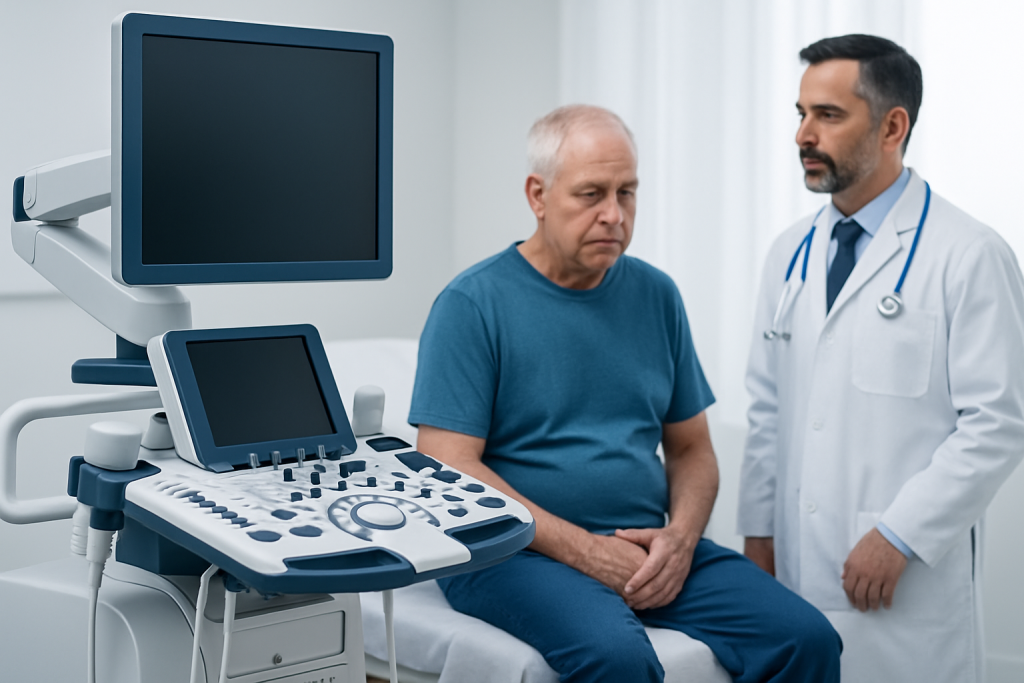
The symptoms that push a doctor toward procedural treatment are often the ones that interfere with daily life in a steady, exhausting way. A man may notice a weak stream, trouble starting urination, dribbling at the end, or the feeling that the bladder never fully empties.
Nighttime bathroom trips are another common reason men seek further treatment. Waking several times each night can disturb sleep, affect concentration, and make travel or work much harder than before. Some men also experience urgency, leakage, or sudden difficulty passing urine at all.
Doctors pay close attention when symptoms are accompanied by complications. These may include:
- Urinary retention, or an inability to pass urine
- Repeated urinary tract infections
- Blood in the urine that is linked to prostate enlargement
- Bladder stones
- Worsening kidney function related to obstruction
Symptoms alone do not decide the treatment, but they help show how much the enlarged prostate is affecting everyday life and whether a procedure could provide meaningful relief.
Causes & risk factors

BPH is not prostate cancer. It is a noncancerous increase in prostate tissue that usually develops gradually with age. Hormonal changes, especially the balance between testosterone and other hormones over time, are believed to play a role in prostate growth.
Age is the strongest risk factor, but family history, body weight, and metabolic health may also influence the likelihood of symptoms becoming significant. Some men develop a large prostate without much trouble, while others have moderate enlargement but severe blockage, which is why treatment decisions are individualized.
Doctors also consider factors that can affect procedure choice and recovery. These include use of blood thinners, heart or lung disease, previous prostate surgery, bladder weakness, and the amount of scar tissue or anatomic change seen on imaging or cystoscopy. These details matter because the right operation is not only the one that removes tissue, but also the one that fits the person safely.
How doctors decide between TURP, laser, and other options
The first step is usually a careful review of symptoms, test results, and treatment goals. A doctor wants to know what the patient is trying to improve most: flow, nighttime urination, urgency, retention, or repeated infections. The answer helps guide the procedure discussion.
TURP, or transurethral resection of the prostate, has long been a standard operation for relieving blockage. In this procedure, tissue is removed through the urethra using an instrument placed without an external incision. TURP is often considered when the prostate is of moderate size and the main goal is reliable relief of obstruction.
Laser options are also widely used. They may include vaporization or enucleation techniques that use laser energy to remove or shrink excess tissue. A doctor may favor a laser approach when bleeding risk is a concern, when a faster return to certain daily activities is important, or when the prostate size and anatomy suit that technique better.
Other treatments may be discussed as well. Some men are candidates for minimally invasive procedures that preserve more tissue or target a specific part of the prostate. Others may need a different approach if the prostate is very large, if there are bladder stones at the same time, or if prior treatments have not worked well.
In practice, doctors compare several points side by side:
- Prostate size and shape
- Severity of urinary symptoms
- Whether the bladder is still emptying well
- Bleeding risk and medication use
- Need for a durable result
- Likelihood of needing a catheter afterward
- Ability to travel safely and return for follow-up
For international patients, the last point is especially important. A procedure with a smooth short-term recovery may still be a poor fit if it requires rapid in-person follow-up that cannot be arranged after travel. Good planning helps avoid surprises later.
Diagnosis and pre-surgery evaluation
Before recommending surgery, doctors confirm that the symptoms are really coming from BPH and not from another urinary problem. This usually begins with a detailed medical history and a discussion of how often symptoms occur, how severe they feel, and how they affect sleep, work, and quality of life.
Testing may include a urinalysis, blood tests, urine flow studies, post-void residual measurement, ultrasound, or cystoscopy. Some men also have PSA testing or imaging to better understand prostate size and rule out other concerns. The exact workup depends on age, symptoms, and overall health.
Pre-surgery evaluation is also where travel-related safety is addressed. The team may review anesthesia plans, blood-thinning medications, heart conditions, prior surgeries, and how long the patient should remain in the destination country after the procedure. This stage is important because a well-timed operation is only part of the care plan; the recovery window matters too.
Treatment options
TURP remains one of the most established procedures for easing blockage caused by an enlarged prostate. It is often chosen when doctors want a proven method that can provide strong symptom relief and when the prostate size is within a range that suits the technique.
Laser surgery has several forms, and the doctor may explain them in plain language rather than by brand name. Some laser procedures remove tissue, while others vaporize it or separate it from the surrounding capsule. The best choice depends on prostate anatomy, surgeon experience, and whether the patient’s bleeding risk or medication profile makes one method safer than another.
Other options may include minimally invasive office-based or day-procedure techniques for selected patients. These are not right for everyone, but they can be useful when symptoms are moderate, the prostate is not extremely large, and the patient wants a shorter recovery. In some situations, open or robotic surgery may be considered for very large prostates or when there are additional bladder or structural problems.
No single operation is best for every man. Doctors try to match the treatment to the problem being solved: obstruction, bleeding, recurrent infections, retention, or frequent nighttime waking. That is why two patients with similar symptom scores may leave the consultation with different recommendations.
Recovery, prevention, and self-care
Recovery after enlarged prostate surgery depends on the procedure performed. Many men notice improvement in urine flow fairly quickly, but some symptoms such as urgency, mild burning, or temporary blood in the urine can last for a short period while the urinary tract heals.
Self-care is usually straightforward but important. Patients are often encouraged to drink fluids as advised, avoid heavy lifting for a time, and take prescribed medications exactly as directed. It is also wise to avoid constipation, since straining can increase discomfort during recovery.
For men traveling home after surgery, planning should include transportation, a place to rest, and a clear understanding of when to seek medical advice. Follow-up appointments may be scheduled before travel, by telemedicine, or with a local physician if the treating team agrees. A smooth recovery often depends as much on organization as on the operation itself.
To support long-term urinary health, men can also benefit from general habits such as staying active, limiting evening fluids if nighttime urination is a problem, reducing bladder irritants when appropriate, and returning for routine prostate checks. These measures do not replace treatment, but they can make symptoms easier to manage.
When to see a doctor
A medical evaluation is appropriate if urinary symptoms become persistent, bothersome, or disruptive to sleep and daily life. Men should not wait until symptoms are severe before asking for help, especially if the problem is gradually getting worse.
Urgent assessment is important if a man cannot urinate, has fever with urinary symptoms, sees significant blood in the urine, or develops pain with swelling that seems out of proportion to ordinary recovery. These situations deserve prompt attention because they may signal a complication that needs treatment.
For men planning care abroad, a consultation before travel is especially useful. It gives the care team time to review test results, discuss procedure options, and confirm that the patient can safely undergo surgery and return home with a realistic follow-up plan. Acibadem Health Point’s multidisciplinary specialists and JCI-accredited hospitals can diagnose and treat enlarged prostate conditions for international patients in a coordinated setting.
Living well after treatment
Most men want to know whether surgery will let them sleep better, urinate more comfortably, and stop planning every outing around bathroom access. Those are reasonable goals, and for many patients, properly selected treatment does improve day-to-day life.
It is still helpful to remember that recovery is a process, not a single moment. Follow-up visits give the doctor a chance to check urine flow, address lingering urgency, and make sure the bladder is adapting well after the obstruction has been relieved. If symptoms return later, they should be reviewed rather than dismissed as “just part of aging.”
A thoughtful decision about TURP, laser, or another option is usually the result of a conversation, not a sales pitch. The best outcome comes from matching the procedure to the man, the prostate, and the practical realities of recovery at home.
Frequently asked questions
How do doctors decide if enlarged prostate surgery is needed?
Doctors look at how severe the urinary symptoms are, whether medicines have helped, and whether complications such as retention or infections are present. They also consider prostate size, bladder function, and the patient’s overall health.
Is TURP still a common treatment for BPH?
Yes, TURP is still widely used and remains a standard option for many men with moderate prostate enlargement. It is often recommended when a reliable improvement in urine flow is the main goal.
Why might a doctor recommend laser surgery instead of TURP?
Laser procedures may be preferred when bleeding risk is a concern, when a particular prostate shape or size fits the method better, or when the surgeon believes it offers the best balance of safety and recovery. The choice depends on the individual patient, not on one technique being universally better.
How long does recovery usually take after prostate surgery?
Recovery varies by procedure and overall health, but many men resume light activities fairly soon while avoiding heavy exertion for a period of time. Some urinary irritation or temporary blood in the urine can happen during healing and usually improves with time.
Can enlarged prostate surgery affect sexual function?
Some procedures can change ejaculation, and less commonly other aspects of sexual function. A doctor should explain these possibilities before surgery so the patient knows what to expect.
What should an international patient ask before traveling for surgery?
It helps to ask how long to stay after the procedure, what follow-up will be needed, and what symptoms would require urgent medical care after returning home. The patient should also confirm which medications to continue or stop before travel.
References
- National Institute of Diabetes and Digestive and Kidney Diseases
- Urology Care Foundation
- European Association of Urology
- Mayo Clinic
- NHS
This article is for general information only and is not a substitute for professional medical advice. Please consult a qualified doctor about your individual situation.