Transverse Myelitis: Symptoms, Causes and Treatment

Key Takeaways
- Transverse myelitis affects the spinal cord and may cause weakness, sensory changes, and bladder or bowel problems.
- Symptoms can begin over hours to days and often need urgent neurological assessment.
- Diagnosis usually includes MRI, blood tests, lumbar puncture, and sometimes tests for related autoimmune or infectious conditions.
- Treatment may involve corticosteroids, plasma exchange, symptom control, and rehabilitation.
- Recovery varies widely, and follow-up care is important to monitor function and long-term needs.
Medically reviewed by the Acıbadem clinical team — August 19, 2026
Transverse myelitis is an inflammation of the spinal cord that can interrupt how signals travel between the brain and the rest of the body. Because symptoms can change quickly, early medical evaluation is important to confirm the cause and begin appropriate care.
Overview
Transverse myelitis is a neurological condition in which inflammation develops across a section of the spinal cord. The inflammation can disturb the passage of nerve signals, affecting movement, sensation, and some automatic body functions below the level of the spinal cord involved.
The condition is often described by where it appears in the spinal cord and how completely it affects that segment. For patients and families, the first experience is usually not a label but a sudden change: legs that feel weak, a band-like sensation around the trunk, unusual numbness, or new bladder difficulty. Those changes can be frightening, but they are also signals that the nervous system needs prompt assessment.
Transverse myelitis is not a single disease with one cause. It can appear after an infection, alongside an autoimmune disorder, or sometimes without a clearly identified trigger. In an international-patient setting, this often means the work-up needs to be broad and carefully sequenced, especially when someone is deciding whether to travel for specialist neurology care or continue treatment closer to home.
Symptoms
Symptoms usually develop over a relatively short time, though the pace can vary. Some people notice a few odd sensations first, while others feel a clear step-down in function within hours or days. The exact pattern depends on which part of the spinal cord is inflamed and how extensive the inflammation is.
Common symptoms include:
- Weakness in the legs, arms, or both, sometimes progressing to difficulty walking
- Numbness, tingling, burning, or reduced ability to feel temperature or touch
- A tight or band-like sensation around the chest, abdomen, or back
- Back pain or pain that radiates around the torso
- Bladder urgency, urinary retention, constipation, or bowel control problems
- In some cases, sexual dysfunction or increased sensitivity to touch
Fever is not a typical feature of transverse myelitis itself, although an infection may have triggered the inflammation. Some patients also notice that symptoms appear on both sides of the body, which helps distinguish spinal cord problems from certain conditions affecting only one limb or one nerve root.
Causes & Risk Factors

Transverse myelitis can occur after or alongside several different medical problems. Sometimes the immune system seems to become overactive and targets spinal cord tissue after an infection or another inflammatory event. In other cases, transverse myelitis is part of a broader condition affecting the brain, spinal cord, optic nerves, or other organs.
Possible causes and associations include:
- Viral, bacterial, or other infections that precede the spinal cord inflammation
- Autoimmune diseases such as multiple sclerosis, neuromyelitis optica spectrum disorder, or systemic autoimmune conditions
- Post-infectious or post-vaccination immune reactions, which are uncommon and require careful medical evaluation
- Inflammatory disorders involving blood vessels or connective tissue
- Rarely, tumors, spinal cord compression, or other structural problems that can mimic inflammation
Risk factors are not always clear-cut. A recent infection, a known autoimmune diagnosis, or a history of immune-mediated neurological disease may raise suspicion, but many patients do not have an obvious risk profile. That is one reason thorough testing matters: the treatment plan can differ significantly depending on whether the underlying issue is isolated transverse myelitis or part of a larger neurological condition.
Diagnosis
Diagnosing transverse myelitis is more than naming symptoms; it is a process of excluding emergencies and identifying the most likely reason the spinal cord is inflamed. A neurologist usually begins with a detailed history and neurological examination, looking at strength, reflexes, sensation, coordination, and bladder or bowel function.
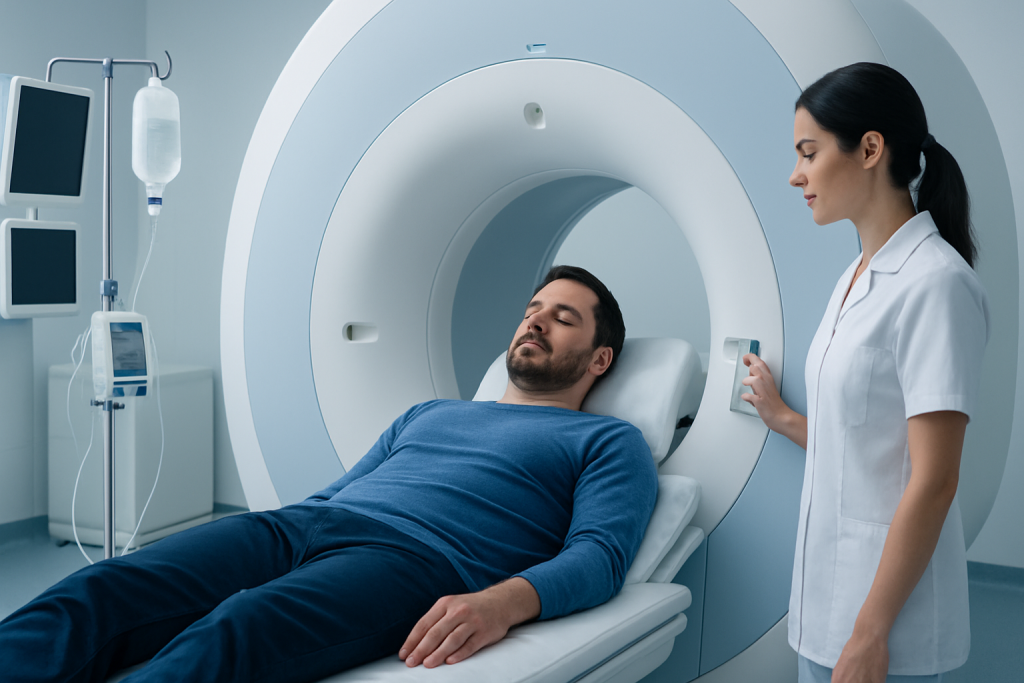
Common tests include MRI of the spinal cord, often with contrast, to look for inflammation and to rule out compression, bleeding, or other structural causes. Blood tests may help screen for autoimmune markers, vitamin deficiencies, infections, or evidence of systemic disease. A lumbar puncture can assess cerebrospinal fluid for inflammation or infection and may provide clues about whether another neurological disorder is present.
Depending on the clinical picture, additional tests may be recommended, such as brain MRI, evoked potentials, or antibody testing. For international patients, a well-coordinated diagnostic plan is especially helpful because it can reduce unnecessary delays, avoid duplicated testing, and make follow-up decisions easier when care continues across countries.
Treatment Options
Treatment focuses on reducing inflammation, protecting neurological function, and supporting recovery. In many cases, high-dose corticosteroids are used early in the course of care to try to calm the immune-driven inflammation. If response is limited or symptoms are severe, plasma exchange may be considered to remove harmful antibodies or inflammatory factors from the blood.
Supportive treatment is also important. This can include pain control, medicines for bladder symptoms, bowel management, prevention of complications from reduced mobility, and physical or occupational therapy. When weakness is significant, rehabilitation may begin while the patient is still in the hospital and continue afterward to rebuild strength, balance, and independence.
In some patients, the most important part of treatment is not a single medication but the combination of acute care, rehabilitation, and long-term monitoring. If an underlying condition such as multiple sclerosis, neuromyelitis optica spectrum disorder, or another autoimmune disorder is identified, ongoing disease-specific therapy may be recommended by the neurology team.
Prevention & Self-care
Not every case of transverse myelitis can be prevented, especially when the cause is unknown or related to an unpredictable immune response. Still, patients can lower the chance of complications and support recovery by treating new symptoms seriously and staying engaged with follow-up care.
Practical self-care steps may include:
- Following the neurology team’s rehabilitation plan consistently
- Using mobility aids or home adaptations if recommended
- Paying attention to bladder and bowel routines
- Keeping all follow-up appointments, including repeat imaging or lab work if advised
- Managing related conditions such as autoimmune disease, diabetes, or chronic infections
For patients recovering after travel, it helps to plan ahead for medication access, therapy appointments, and emergency contact pathways in their home country. A clear discharge summary and a written follow-up plan can make cross-border recovery smoother and reduce confusion if new symptoms appear later.
When to See a Doctor
New weakness, numbness, or trouble walking should be evaluated promptly, especially if symptoms are progressing. Bladder retention, sudden bowel control changes, or numbness rising quickly up the trunk can point to a spinal cord problem that should not be watched at home.
Emergency care is appropriate if symptoms are severe, rapidly worsening, or accompanied by breathing difficulty. Even when symptoms are milder, medical review is important because transverse myelitis can resemble other urgent neurological conditions that require different treatment.
People who have already been diagnosed should contact their doctor if function worsens, if medication side effects become difficult to manage, or if they notice new neurological symptoms such as vision changes or spreading numbness. In settings where patients travel for care, a specialist team that can coordinate diagnosis, treatment, and rehabilitation can be especially reassuring; Acibadem Health Point’s multidisciplinary specialists and JCI-accredited hospitals diagnose and treat this condition for international patients.
Frequently asked questions
What is transverse myelitis in simple terms?
Transverse myelitis is inflammation of the spinal cord. That inflammation can interrupt nerve signals and lead to weakness, numbness, pain, or bladder and bowel problems below the affected area.
Is transverse myelitis the same as multiple sclerosis?
No, but they can be related. Transverse myelitis may happen on its own or as part of a broader disorder such as multiple sclerosis or neuromyelitis optica spectrum disorder.
How quickly do symptoms usually appear?
Symptoms often develop over hours to days, though the pace can vary. A faster change in walking, strength, or bladder function should be checked promptly.
Can transverse myelitis get better?
Many patients improve to some degree, especially when treatment starts early and rehabilitation is consistent. Recovery varies, and some people continue to have lasting weakness, numbness, or fatigue.
What tests are most important for diagnosis?
MRI of the spinal cord is usually central to the evaluation, along with blood tests and sometimes a lumbar puncture. Doctors may also order brain imaging or antibody testing to look for related conditions.
When should someone seek urgent help?
Urgent assessment is needed if there is rapidly worsening weakness, severe walking difficulty, trouble breathing, or loss of bladder control. These symptoms can signal a serious spinal cord problem that needs immediate medical attention.
References
- National Institute of Neurological Disorders and Stroke
- Mayo Clinic
- Cleveland Clinic
- Johns Hopkins Medicine
- World Health Organization
This article is for general information only and is not a substitute for professional medical advice. Please consult a qualified doctor about your individual situation.
Joint and spine care in Turkey — expert assessment & treatment
JCI-accredited · board-certified surgeons · reply within 24h
Add us as a Preferred Source to see more of our trusted health content across Google Search, AI Overviews and Discover.