Cervicogenic Headache: Symptoms, Causes and Treatment

Key Takeaways
- Cervicogenic headache usually starts with a neck problem and is felt as head pain, often on one side.
- It may worsen with certain neck movements or positions and can be confused with migraine or tension-type headache.
- Diagnosis often depends on a careful history, physical examination, and sometimes imaging or diagnostic blocks.
- Treatment commonly combines physical therapy, posture changes, pain relief strategies, and care for the underlying neck issue.
- People with persistent, recurring, or changing headaches should be assessed by a qualified clinician.
Medically reviewed by the Acıbadem clinical team — August 19, 2026
Cervicogenic headache is a type of head pain that begins in the neck and is felt in the head, often on one side. Understanding its pattern, triggers, and treatment options can help patients manage symptoms more confidently and seek the right care.
Overview
Cervicogenic headache is a secondary headache, meaning the pain is driven by a problem elsewhere in the body rather than beginning as a primary headache disorder. In this condition, the source is usually the upper neck, where joints, muscles, nerves, or discs can refer pain into the head.
The discomfort is often described as a one-sided ache that starts at the back of the head or upper neck and may spread toward the temple, forehead, or around the eye. Some patients first notice it after a neck injury, long hours at a desk, or a period of reduced movement, while others develop it gradually without a clear event.
For international patients considering evaluation abroad, the practical question is often not only “What is the headache?” but also “Why is the neck triggering it?” A useful assessment looks at both the head pain and the cervical spine together, because treating the neck source is usually central to lasting improvement.
Symptoms
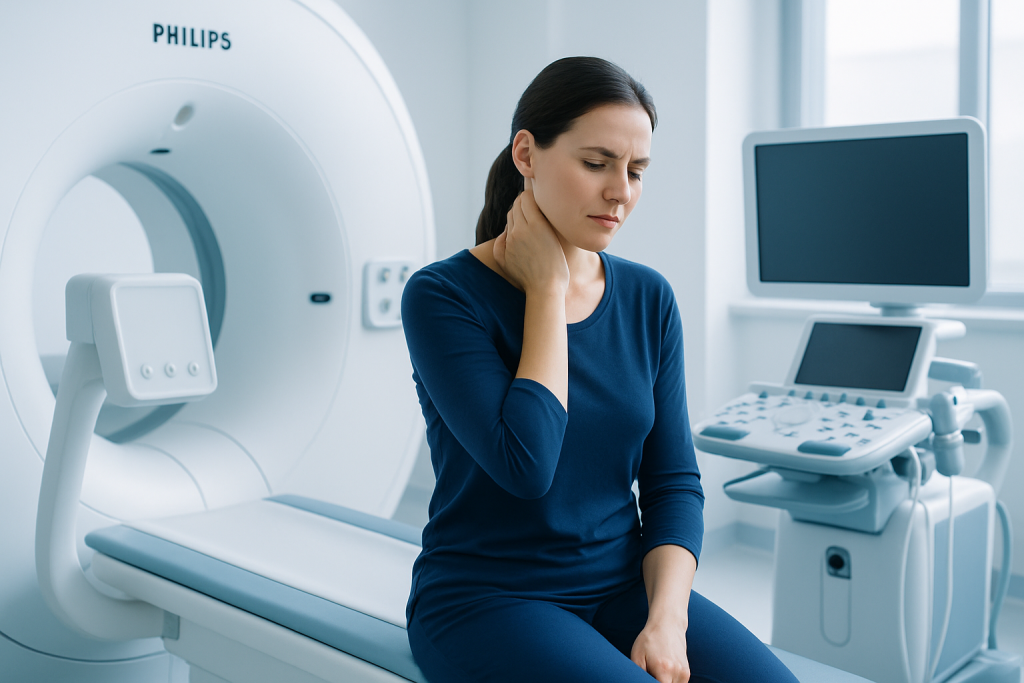
The pattern of pain can be more helpful than the intensity alone. Cervicogenic headache is commonly steady rather than throbbing, and it may be felt on one side of the head, although both sides can be involved in some people. Pain may begin in the neck or the base of the skull and then move forward.
Movement and posture often matter. Turning the head, looking up, sustained computer work, or sleeping in an awkward position may make symptoms worse. Some people also notice reduced neck range of motion, tenderness around the upper neck, or pain that increases when pressure is applied to certain areas.
Other features can overlap with different headache types, which is one reason careful assessment is important. Patients may report nausea, light sensitivity, or a sense of pressure, but these do not automatically mean migraine. The overall pattern, neck findings, and response to movement help clinicians sort out the source.
- One-sided head pain that starts in the neck or base of the skull
- Neck stiffness or limited movement
- Pain triggered by neck posture or rotation
- Discomfort around the temple, forehead, or eye area
- Shoulder or upper back tightness in some patients
Causes & Risk Factors

Cervicogenic headache is usually linked to irritation or dysfunction in the structures of the upper cervical spine. This may include the facet joints, discs, ligaments, muscles, or nerves that connect the neck to the head. When these structures are inflamed, stressed, or mechanically irritated, pain signals can be perceived as coming from the head.
Common contributors include neck injury, such as whiplash, repetitive strain, poor workstation setup, arthritis in the cervical spine, and prolonged postures that keep the neck in a fixed position. People who clench their jaw, carry tension in the shoulders, or spend long periods driving or using a laptop may also be more vulnerable.
Risk is not determined by one single factor. In many cases, several small stresses add up over time. A previous neck problem, reduced flexibility, or an occupation that demands sustained head positions can make symptoms more likely to appear or persist.
Examples of factors that may contribute include:
- Whiplash or other neck trauma
- Degenerative changes in the cervical spine
- Prolonged sitting, reading, or screen use with forward head posture
- Muscle imbalance or tension in the neck and shoulders
- Repetitive lifting, driving, or overhead work
Diagnosis
Diagnosis begins with a detailed conversation about where the pain starts, how it travels, what worsens it, and whether neck movement changes the symptoms. This history matters because cervicogenic headache can resemble migraine, tension-type headache, or occipital neuralgia, yet the treatment approach may differ.
A clinician will usually examine the neck, shoulders, posture, range of motion, and tender points, and may test whether certain movements reproduce the headache. The goal is to identify whether the head pain is truly being referred from the neck rather than arising primarily in the brain or blood vessels.
Imaging such as X-rays, CT, or MRI may be helpful in selected cases, especially when there is a history of injury, neurological symptoms, or concern about another structural problem. However, imaging findings do not always explain the headache by themselves, so results are interpreted alongside the physical examination and symptom pattern.
In some cases, a specialist may consider a diagnostic nerve or joint block to confirm the pain source. This is not needed for every patient, but it can be useful when the diagnosis is uncertain or when procedural treatment is being considered.
Treatment Options
Treatment is usually most effective when it addresses both the symptoms and the neck problem behind them. Many patients improve with conservative care first, especially when the headache is related to posture, muscle strain, or restricted neck movement. The plan is often individualized based on the cause, severity, and how long symptoms have been present.
Physical therapy is a common foundation of care. Gentle mobilization, stretching, strengthening, and posture retraining can reduce irritation and improve support around the cervical spine. A therapist may also teach movement strategies that are especially useful for people who work at a desk or travel frequently and spend long periods sitting.
Pain relief medicines may be used short term when appropriate, but they do not fix the underlying neck source on their own. Depending on the case, clinicians may also consider manual therapy, trigger point treatment, targeted injections, or nerve blocks. These options are selected carefully after an evaluation and are not suitable for everyone.
When symptoms are linked to a specific cervical joint or nerve pain generator, interventional treatments may be discussed. In more complex cases, a multidisciplinary team may be helpful, combining neurology, rehabilitation, pain management, and spine care to create a coordinated plan that fits the patient’s needs and travel schedule.
Treatment may include:
- Physical therapy and guided exercise
- Posture and ergonomics correction
- Short-term pain relief medicines when advised by a doctor
- Manual therapy or soft-tissue techniques
- Targeted injections or nerve blocks in selected patients
- Management of underlying cervical spine conditions
Prevention & Self-care
Not every cervicogenic headache can be prevented, but many flare-ups can be reduced by lowering strain on the neck. Small changes in daily habits often make a meaningful difference, especially when symptoms are tied to long hours of sitting or repeated positions.
Ergonomics are worth paying attention to. A screen at eye level, a chair that supports the back, and regular breaks from fixed posture can ease pressure on the cervical spine. Travelers may also benefit from planning stretch breaks during long flights or car rides, since staying in one position for too long can aggravate the neck.
Simple self-care steps may help, if they are comfortable and approved by a clinician for the individual situation. Heat or cold, gentle range-of-motion exercises, stress reduction, and attention to sleep position can all support recovery. If a pillow or sleeping posture consistently worsens symptoms, it may be worth reviewing with a physiotherapist or doctor.
Useful self-care habits include:
- Taking movement breaks during screen work
- Keeping the head and shoulders aligned during sitting and driving
- Doing prescribed neck and shoulder exercises regularly
- Avoiding sudden, forceful neck manipulation unless recommended by a qualified professional
- Managing stress, which can tighten neck muscles and amplify pain
When to See a Doctor
Medical evaluation is important when headaches are new, persistent, returning frequently, or clearly linked to neck movement. Patients should also seek care if the pain pattern is changing, becoming more intense, or interfering with work, travel, or sleep.
Prompt assessment is especially important if there are neurological symptoms such as weakness, numbness, balance problems, fainting, confusion, fever, or sudden severe headache. These features do not necessarily mean a serious condition, but they need professional review rather than self-treatment.
People with a history of neck injury, known cervical spine disease, or headaches that do not respond to basic measures should not wait too long before consulting a clinician. A careful evaluation can distinguish cervicogenic headache from other causes and prevent unnecessary treatment.
For patients coming from abroad, it can be helpful to bring any prior imaging, medication lists, and notes about symptom triggers. At Acibadem Health Point, multidisciplinary specialists and JCI-accredited hospitals diagnose and treat cervicogenic headache for international patients with coordinated care and follow-up planning.
Living With Cervicogenic Headache
Day-to-day management often improves when patients understand their own triggers. Keeping a brief symptom diary can help identify which activities, postures, or travel routines seem to set off pain, making it easier to adjust habits and discuss patterns with a clinician.
Recovery is often gradual rather than immediate, especially when the neck has been irritated for a long time. Improvement may come from combining therapy, better ergonomics, and treatment of the underlying neck issue. Staying consistent with a care plan usually matters more than relying on one quick fix.
When the condition is managed well, many people are able to return to normal work, exercise, and travel routines. The key is a plan that is realistic, individualized, and reviewed if symptoms change or new concerns arise.
Frequently asked questions
How is cervicogenic headache different from migraine?
Cervicogenic headache usually begins with a neck problem and is often linked to neck movement or stiffness. Migraine more often has features such as throbbing pain, nausea, and sensitivity to light or sound, although symptoms can overlap. A clinician uses the full pattern, examination, and sometimes imaging to tell the difference.
Can poor posture cause cervicogenic headache?
Poor posture can contribute by putting repeated strain on the muscles and joints of the neck. It is usually one part of the picture rather than the only cause. Improving ergonomics and movement habits may reduce flare-ups.
Will an MRI always show the cause?
Not always. Imaging can help identify structural problems, but some people have changes on scans that do not explain the headache, while others have symptoms with minimal findings. Diagnosis depends on the clinical picture as a whole.
Is cervicogenic headache dangerous?
It is often not dangerous, but it can be persistent and disruptive. Because other conditions can also cause head pain, new or worsening headaches should be evaluated by a qualified doctor, especially if there are neurological symptoms or a recent injury.
What kind of doctor treats cervicogenic headache?
Neurologists, rehabilitation specialists, pain medicine doctors, and spine specialists may all be involved depending on the cause. In many cases, a coordinated approach works best because the headache source is in the neck rather than the head alone.
Can exercise help?
Yes, gentle and targeted exercise can be part of treatment when it is guided by a clinician or physiotherapist. The goal is to restore mobility, improve support, and avoid movements that aggravate pain. Exercises should be individualized, especially after injury or if symptoms are severe.
References
- World Health Organization
- International Headache Society
- National Institute of Neurological Disorders and Stroke
- Mayo Clinic
- Cleveland Clinic
This article is for general information only and is not a substitute for professional medical advice. Please consult a qualified doctor about your individual situation.
Joint and spine care in Turkey — expert assessment & treatment
JCI-accredited · board-certified surgeons · reply within 24h
Add us as a Preferred Source to see more of our trusted health content across Google Search, AI Overviews and Discover.