Tartar

Key Takeaways
- Tartar is hardened plaque that cannot be removed with brushing alone.
- It can irritate the gums and increase the risk of gum disease and cavities.
- Professional dental cleaning is the safest way to remove tartar.
- Daily brushing, flossing, and regular checkups help prevent new buildup.
- Early attention is especially helpful for people with dry mouth, crowded teeth, or a history of gum problems.
Tartar is hardened plaque that can cling to teeth and gums, making daily brushing and flossing less effective. Understanding how it forms, why it matters, and how it is removed can help protect both oral health and confidence in everyday life.
Overview
Tartar is what happens when soft plaque is left on the teeth long enough to harden. Once it becomes calcified, it can attach firmly along the gumline, between teeth, and in other hard-to-reach areas. At that stage, ordinary home care can slow new buildup, but it cannot fully remove the deposit that has already formed.
For many people, tartar is first noticed as a yellow, brown, or chalky edge near the gums. Sometimes it is more of a texture than a visible stain: teeth may feel rough in certain spots, or floss may catch more easily than before. Even when it is not painful, tartar matters because it creates a surface where more plaque and bacteria can accumulate.
In a dental setting, tartar is common and very manageable. The key is to treat it as a sign that the mouth needs professional cleaning and a closer look at daily hygiene habits. When patients are considering care while traveling, it can be useful to plan a dental visit that includes both tartar removal and an exam of gum health, so the treatment is efficient and complete.
Symptoms
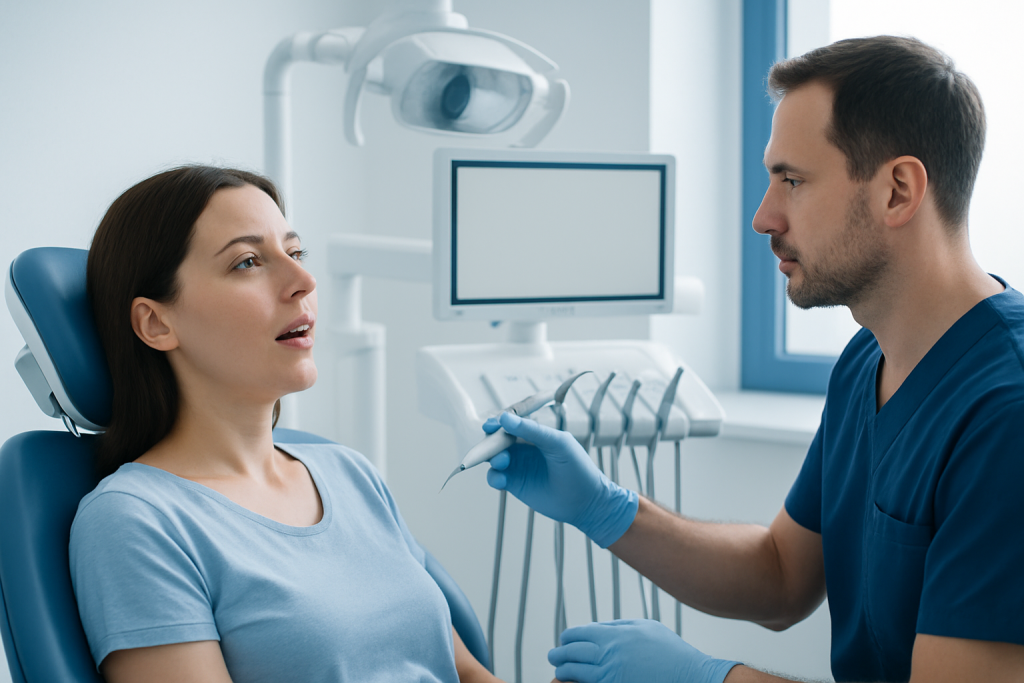
Tartar does not always cause obvious symptoms at first. Many people discover it during a routine dental examination, or when they notice buildup that brushing no longer seems to affect. Because it tends to collect near the gumline, the earliest signs often appear there rather than on the chewing surfaces of the teeth.
Common clues include rough or hardened patches on the teeth, visible discoloration, persistent bad breath, and gums that look red or feel tender. Some people also notice bleeding during brushing or flossing, which may suggest that tartar and plaque are irritating the gum tissue.
- Yellow, brown, or dark deposits near the gums
- Teeth that feel rough or uneven
- Bleeding when brushing or flossing
- Swollen, red, or sensitive gums
- Bad breath that returns quickly after cleaning
When tartar is left in place, it can contribute to gingivitis and, over time, more serious gum disease. That does not mean every person with tartar has a major problem, but it does mean the mouth is sending a useful signal: the area needs professional attention and a steadier prevention routine.
Causes & Risk Factors
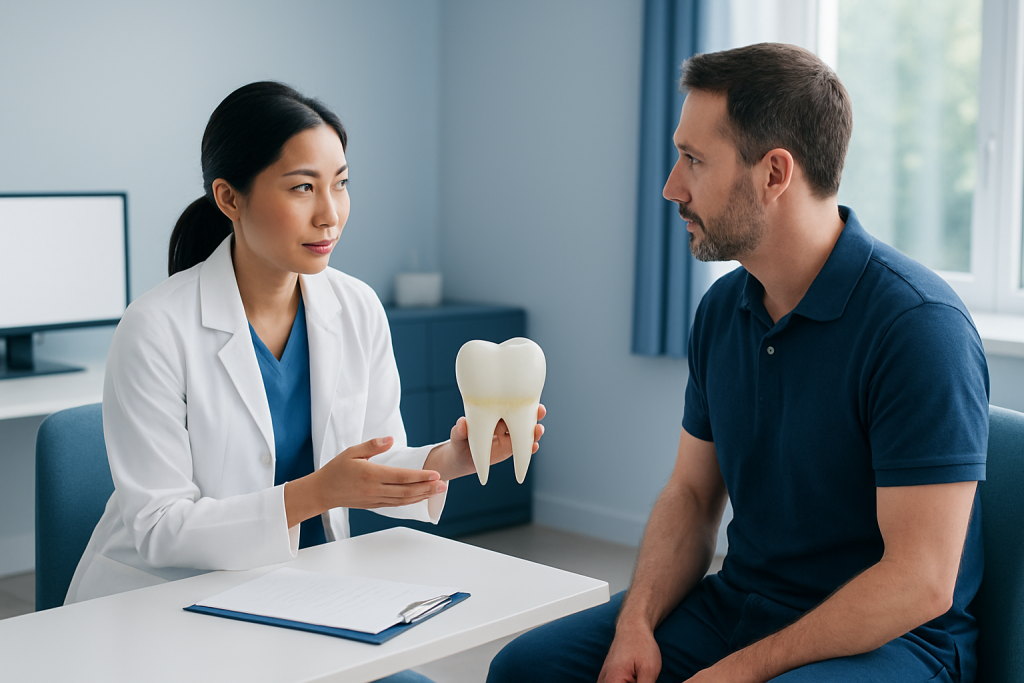
Tartar starts with plaque, a sticky film made up of bacteria, food particles, and saliva components. When plaque is not removed thoroughly and regularly, minerals in the saliva harden it into tartar. This can happen anywhere in the mouth, but it is especially common behind the lower front teeth and along the outer surfaces of the upper molars, where saliva collects and cleaning may be less thorough.
Several everyday factors make tartar more likely. Inconsistent brushing or flossing is the most familiar reason, but it is not the only one. People with braces, crowded teeth, bridges, or other dental restorations may find it harder to clean certain areas. Dry mouth can also raise the risk because saliva normally helps wash away debris and buffer acids.
Other factors can include smoking or other tobacco use, frequent snacking, a diet high in sugary foods or drinks, and a history of gum disease. Some people simply form tartar more quickly than others because of the composition of their saliva or their natural tooth alignment. For international patients planning treatment, it helps to mention these habits and past dental history during the consultation so the team can tailor prevention advice to daily life at home as well as after travel.
Diagnosis
Dental professionals usually identify tartar during a visual and tactile examination. A dentist or dental hygienist may look closely at the tooth surfaces, use a mirror and light, and gently check for rough deposits along the gumline. In many cases, the diagnosis is straightforward because tartar has a distinct hardened appearance and texture.
The visit often includes an assessment of gum health as well, since tartar frequently travels with inflammation. If the gums bleed easily, look puffy, or have developed pockets around the teeth, the clinician may evaluate whether there are signs of gingivitis or deeper periodontal concerns. Dental X-rays are not always needed for tartar itself, but they may be used if the team wants to check for bone changes, hidden decay, or disease below the gumline.
For people arranging care from another country, a consultation may combine an exam, cleaning plan, and discussion of follow-up timing before departure. That can be especially practical if the patient wants treatment completed efficiently and still has time for a second visit before returning home.
Treatment Options
Tartar is removed with professional dental cleaning, not with scraping at home. The exact approach depends on how much buildup is present and whether the gums are also inflamed. In routine cases, a hygienist or dentist uses specialized instruments to lift tartar from the tooth surface and polish the teeth afterward so plaque is less likely to cling as easily.
When tartar sits below the gumline or gum disease is suspected, deeper cleaning may be recommended. This may include scaling to remove deposits from the tooth surfaces and root planing to smooth the roots so the gums can heal more comfortably. The goal is not only to clean the teeth, but also to create a healthier environment for the gums.
After the cleaning, the care plan often shifts toward prevention. That may mean choosing a toothbrush that the patient can use more effectively, adjusting flossing technique, adding interdental brushes or other tools, and scheduling follow-up visits at the right interval. If tooth sensitivity is present after cleaning, it is usually temporary, and the dental team can suggest general ways to make oral care more comfortable.
In cases where tartar has contributed to cavities, gum recession, or periodontal disease, treatment may become more involved and require a coordinated plan. Acibadem Health Point’s multidisciplinary specialists and JCI-accredited hospitals diagnose and treat dental conditions for international patients, which can be helpful when care needs to be organized around travel and continuity.
Prevention & Self-care
The most effective prevention starts with steady daily habits rather than occasional intensive cleaning. Brushing twice a day with a fluoride toothpaste helps remove plaque before it hardens, and flossing or cleaning between the teeth once a day reduces the buildup that brushing alone cannot reach. For people with tight spaces, bridges, or braces, interdental brushes or other dentist-recommended tools may be useful.
It also helps to pay attention to the details that are easy to overlook. Replacing a worn toothbrush, spending enough time at the gumline, and cleaning the tongue can all support a cleaner mouth. Drinking water regularly, especially for people with dry mouth, may help rinse away food debris between meals.
- Brush gently but thoroughly twice daily
- Clean between teeth every day
- Limit frequent sugary snacks and drinks
- Avoid tobacco use
- Keep regular dental checkups and cleanings
Self-care works best when it fits real routines. Some patients do better with a simple, repeatable evening sequence; others prefer carrying a small dental kit when traveling. For international patients, it can be helpful to ask the dental team for a written home-care plan before leaving, so the routine remains clear after the trip.
When to See a Doctor
A dentist should be seen if tartar is visible, if the teeth feel persistently rough, or if home cleaning no longer seems effective. It is also wise to arrange an appointment when bleeding gums, bad breath, or gum tenderness appear, because these may point to inflammation that should not be ignored.
Professional evaluation is particularly important if the person has loose teeth, receding gums, pain when chewing, or a history of periodontal disease. Those features do not automatically mean severe illness, but they do suggest the mouth deserves a more complete assessment and possibly a deeper cleaning plan.
People who are traveling for care may want to schedule treatment before a busy period, such as a return flight, a work assignment, or a family commitment, so any follow-up can be organized in a practical way. Clear communication about timing, comfort, and aftercare makes the experience smoother and helps protect the results of treatment.
Frequently asked questions
Can tartar be removed at home?
No. Once plaque hardens into tartar, it usually needs professional dental instruments for removal. Brushing and flossing at home are still important, but they mainly prevent new tartar from forming.
Does tartar always mean poor oral hygiene?
Not necessarily. Inconsistent cleaning is a common cause, but tooth alignment, dry mouth, tobacco use, and saliva composition can also play a role. Some people simply build up tartar more quickly than others.
Is tartar dangerous?
Tartar is not dangerous in itself, but it can irritate the gums and create a surface where more bacteria collect. Over time, that can increase the risk of gingivitis, gum disease, and cavities.
How often should someone have a dental cleaning?
That depends on the person’s oral health, gum condition, and risk factors. Many people benefit from regular checkups and cleanings at intervals recommended by their dentist, which may be more frequent if tartar builds up quickly.
Why does tartar often form behind the lower front teeth?
Saliva ducts near that area can make deposits harden more quickly, and the space can be easy to miss during brushing. That is one reason careful cleaning along the gumline is so important.
Can tartar come back after it is removed?
Yes, it can. Tartar can form again if plaque is not removed consistently, so daily home care and regular professional cleanings remain important after treatment.
References
- American Dental Association
- National Institute of Dental and Craniofacial Research
- World Health Organization
- Mayo Clinic
This article is for general information only and is not a substitute for professional medical advice. Please consult a qualified doctor about your individual situation.