Supraventricular Tachycardia: Symptoms, Causes and Treatment

Key Takeaways
- SVT is a type of arrhythmia that begins above the heart’s ventricles.
- Episodes may cause palpitations, dizziness, shortness of breath, or chest discomfort.
- Triggers can include stress, caffeine, alcohol, certain medicines, and underlying heart conditions.
- Diagnosis often relies on an ECG and sometimes longer rhythm monitoring.
- Treatment may include vagal maneuvers, medicines, and in some cases catheter ablation.
Medically reviewed by the Acıbadem clinical team — August 19, 2026
Supraventricular tachycardia, often called SVT, is a fast heart rhythm that starts above the heart’s lower chambers. It can come on suddenly, feel unsettling, and often responds well to medical evaluation and treatment.
Overview
Supraventricular tachycardia, or SVT, describes a family of heart rhythms that start in the upper part of the heart and beat faster than expected. The rhythm can begin and end abruptly, which is one reason people often describe it as a sudden “racing heart” rather than a gradual increase in pulse.
For many people, SVT is not life-threatening, but it can interfere with daily comfort, work, travel, and sleep. Some episodes last only a few minutes, while others persist longer and feel difficult to predict, especially when they occur far from home or during a trip.
Because SVT has several forms and several possible triggers, evaluation is useful even when symptoms settle on their own. A cardiology team can help identify the pattern, rule out other rhythm problems, and choose a plan that fits the person’s overall health and lifestyle.
Symptoms
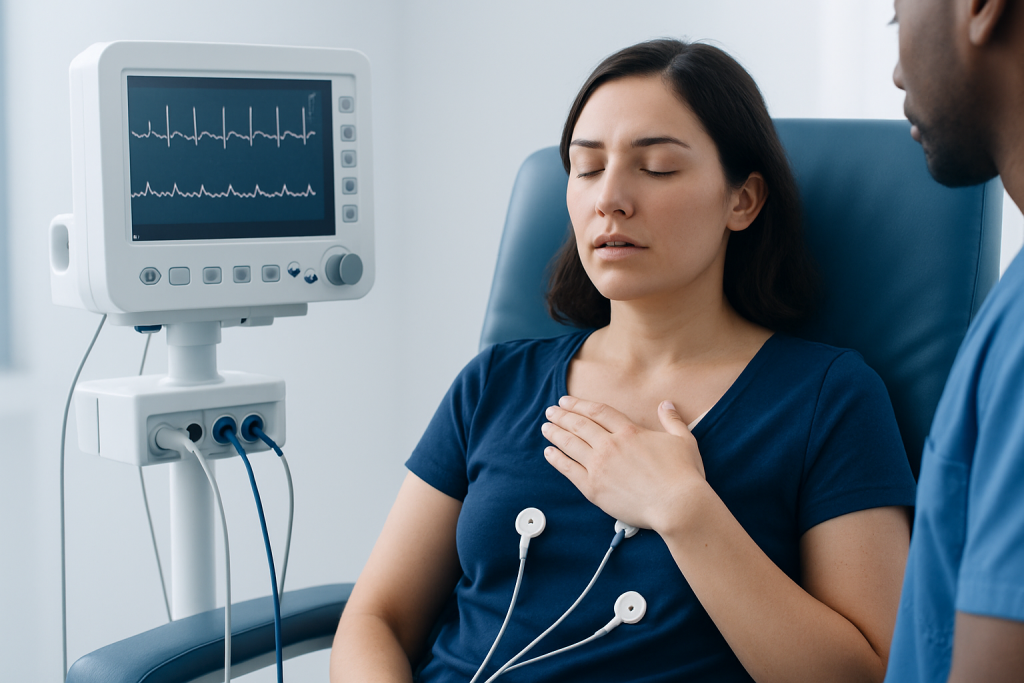
SVT often announces itself with palpitations, which may feel like pounding, fluttering, or a heart rate that is suddenly much faster than normal. Some people notice a tight feeling in the chest, lightheadedness, shortness of breath, or a sense of anxiety that seems to appear out of nowhere.
Not every episode feels dramatic. In some people, especially children or older adults, the main clue may be fatigue, reduced exercise tolerance, or a vague sense that “something is off.” The heartbeat may be too fast to count accurately by hand.
- Rapid, regular heartbeat
- Fluttering or pounding in the chest
- Dizziness or near-fainting
- Shortness of breath
- Chest discomfort
- Fatigue after an episode ends
If the rhythm starts and stops suddenly, that pattern can be a helpful clue for clinicians. Keeping a note of what the person was doing before the episode began can also help the doctor understand possible triggers.
Causes & Risk Factors

SVT happens when the heart’s electrical signals begin or circle in a way that makes the upper chambers fire too quickly. In some cases, this is due to an extra electrical pathway, while in others it relates to a re-entry circuit or an irritable focus of cells in the atria.
Many people with SVT have no obvious structural heart disease. Still, episodes may be more likely when the body is under strain, such as during illness, dehydration, lack of sleep, or emotional stress. Stimulants and some medications can also make rapid rhythms more likely.
- Caffeine or energy drinks
- Alcohol in some people
- Nicotine
- Stress, anxiety, or poor sleep
- Thyroid problems
- Certain cold, asthma, or stimulant medicines
- Underlying heart disease in some cases
Risk factors vary by the type of SVT. Some forms are seen more often in younger people, while others are discovered later in life or alongside another heart condition. A doctor may look for reversible contributors rather than assuming the rhythm will behave the same way every time.
Diagnosis
Diagnosis usually begins with a careful history of what the episode felt like, how long it lasted, and whether it stopped suddenly. A clinician may ask the person to describe the heart rate pattern, any triggers, and any family history of rhythm disorders or fainting.
An electrocardiogram, or ECG, is often the key test, but it only helps if the rhythm is happening at the time of recording. If the episodes are intermittent, the doctor may recommend longer monitoring with a Holter monitor, event monitor, or wearable device that captures a tracing during symptoms.
Additional tests may be used to look for contributing conditions, such as thyroid imbalance, anemia, or electrolyte problems. In selected cases, an electrophysiology study may be advised to map the pathway causing the rhythm and to guide treatment.
Treatment Options
Treatment depends on how often episodes occur, how long they last, how severe the symptoms are, and whether another heart problem is present. Some episodes stop on their own, while others need medical guidance to bring the rhythm back to normal.
For people who are stable and have been taught safe techniques, vagal maneuvers may help interrupt an episode by influencing the body’s autonomic nervous system. If the rhythm does not settle, a clinician may use medicines or a monitored treatment setting to restore normal rhythm.
Longer-term options can include medicines to reduce future episodes or catheter ablation, a procedure that targets the electrical pathway responsible for the arrhythmia. Ablation may be considered when SVT is frequent, disruptive, or difficult to control with medicines.
- Vagal maneuvers under medical guidance
- Antiarrhythmic or rate-controlling medicines
- Catheter ablation for selected patients
- Treatment of underlying contributors such as thyroid disease
For international patients, planning care can also mean organizing records, test results, and follow-up before travel. At Acibadem Health Point, multidisciplinary specialists and JCI-accredited hospitals diagnose and treat SVT for international patients, helping coordinate evaluation and treatment across a clear care pathway.
Prevention & Self-care
Not every episode can be prevented, but many people reduce their flare-ups by learning their personal triggers and adjusting daily habits. That often starts with practical observations: what happened before the episode, what was eaten or drank, and whether sleep, hydration, or stress were out of balance.
General heart-friendly habits can help lower strain on the rhythm system. Staying hydrated, limiting stimulant drinks if they are a trigger, and avoiding unapproved over-the-counter medicines that can speed the heart are sensible first steps.
- Keep a symptom diary with timing, duration, and possible triggers
- Stay well hydrated, especially during travel or hot weather
- Use caffeine, alcohol, and nicotine cautiously if they seem to worsen symptoms
- Take prescribed medicines consistently
- Ask a doctor before starting cold, allergy, or weight-loss products
For people who travel frequently, carrying a brief medical summary and medication list can be helpful. If care is being coordinated internationally, ask the treating team how to manage a recurrence while away from the hospital and when to seek urgent assessment locally.
When to See a Doctor
Medical review is appropriate whenever repeated palpitations are new, unexplained, or becoming more frequent. Even if symptoms stop before an appointment, a clinician can still help determine whether the pattern fits SVT or another rhythm problem.
Urgent care is important if palpitations come with fainting, ongoing chest pain, severe shortness of breath, or marked weakness. These symptoms do not automatically mean SVT is dangerous, but they do deserve prompt assessment so the cause can be checked safely.
People with known SVT should also speak with a doctor if episodes begin lasting longer, if the usual self-care steps no longer work, or if treatment side effects become a concern. A tailored plan is especially valuable for people managing heart rhythm symptoms while living abroad or traveling between countries.
Frequently asked questions
What is supraventricular tachycardia in simple terms?
SVT is a fast heart rhythm that starts above the heart’s lower chambers. It often begins suddenly and may also stop suddenly. Many people describe it as a racing or pounding heartbeat.
Is SVT the same as a heart attack?
No. SVT is an electrical rhythm problem, while a heart attack is usually caused by reduced blood flow to part of the heart muscle. Both need medical attention when symptoms are severe or unclear, but they are different conditions.
Can stress cause SVT?
Stress does not cause every case, but it can make episodes more likely in some people. Lack of sleep, dehydration, caffeine, and illness may also act as triggers. A doctor can help identify which factors matter most for the individual.
How is SVT usually diagnosed?
Doctors often start with an ECG and a detailed symptom history. If episodes come and go, longer monitoring may be needed to capture the rhythm during symptoms. Additional tests may look for contributing conditions such as thyroid problems.
Can SVT be cured?
Some people manage SVT well with lifestyle changes or medicines, while others may be candidates for catheter ablation. Ablation can reduce or sometimes eliminate certain SVT pathways. The best option depends on the type of SVT and the person’s overall health.
When should emergency help be sought?
Emergency evaluation is important if palpitations happen with fainting, chest pain, severe shortness of breath, or serious weakness. These symptoms should be assessed promptly, especially if they are new or unusually intense.
References
- American Heart Association
- Heart Rhythm Society
- National Heart, Lung, and Blood Institute
- Mayo Clinic
- NHS
This article is for general information only and is not a substitute for professional medical advice. Please consult a qualified doctor about your individual situation.
Explore treatments in Turkey — costs, top hospitals & a free quote
JCI-accredited · board-certified surgeons · reply within 24h
Add us as a Preferred Source to see more of our trusted health content across Google Search, AI Overviews and Discover.