Holter Monitor

Key Takeaways
- A Holter monitor records heart rhythm continuously while a person goes about daily life.
- It is commonly used to evaluate palpitations, dizziness, fainting, and unexplained chest symptoms.
- The test is noninvasive and usually involves wearing small electrode patches and a compact recorder.
- Keeping a symptom diary can help the clinician match symptoms with rhythm changes.
- Results guide next steps, which may include reassurance, lifestyle changes, or additional cardiac testing.
A Holter monitor is a portable device that records the heart’s electrical activity over a longer period, usually 24 to 48 hours and sometimes longer. It helps clinicians catch rhythm changes that may not appear during a short office ECG.
Overview
A Holter monitor is a small, wearable device that records the heart’s electrical activity continuously during ordinary daily routines. Unlike a brief electrocardiogram taken in a clinic, it is designed to observe the heart over time, which can be especially useful when symptoms come and go without warning.
For many patients, the value of the test lies in its timing. A person may feel perfectly well during a short appointment, yet experience palpitations, lightheadedness, or irregular beats later in the day or overnight. A Holter monitor helps the care team see whether those symptoms match a rhythm change or whether the heart rhythm remains normal during the episode.
In international-patient care, this test is often part of a broader evaluation that can be arranged before travel or shortly after arrival, depending on how urgent the symptoms are. The process is usually straightforward and does not require a hospital stay.
Symptoms a Holter Monitor May Help Evaluate
Doctors may recommend ambulatory heart monitoring when the symptom pattern suggests a rhythm problem that a regular ECG could miss. Common reasons include a fluttering or racing sensation in the chest, skipped beats, unexplained dizziness, near-fainting, fainting, or episodes of shortness of breath that seem out of proportion to activity.
Some people are referred for the test after an abnormal office ECG, while others have a normal ECG but continue to describe symptoms that sound rhythm-related. In those situations, a Holter monitor can provide a more complete picture by recording how the heart behaves during sleep, exercise, stress, meals, and routine movement.
It may also be used to check whether treatment is working after a change in medication or after certain procedures. In that setting, the question is not only whether the rhythm is abnormal, but whether it is becoming steadier over time.
Causes & Risk Factors

A Holter monitor does not diagnose one single disease; it helps reveal a pattern. The recorded rhythm may show premature beats, atrial fibrillation, supraventricular tachycardia, pauses, or other conduction disturbances, depending on the person’s underlying heart condition.
Several factors can make rhythm changes more likely. These include a history of heart disease, high blood pressure, thyroid disorders, certain medications, excessive caffeine or alcohol intake, dehydration, sleep disruption, and stress. Sometimes no clear trigger is found, which is also an important result because it narrows the search for causes.
People with symptoms that happen only occasionally are often the ones who benefit most. If the heart rhythm issue is brief and unpredictable, a longer recording window can be the difference between guessing and identifying the problem with confidence.
Diagnosis and What the Test Shows
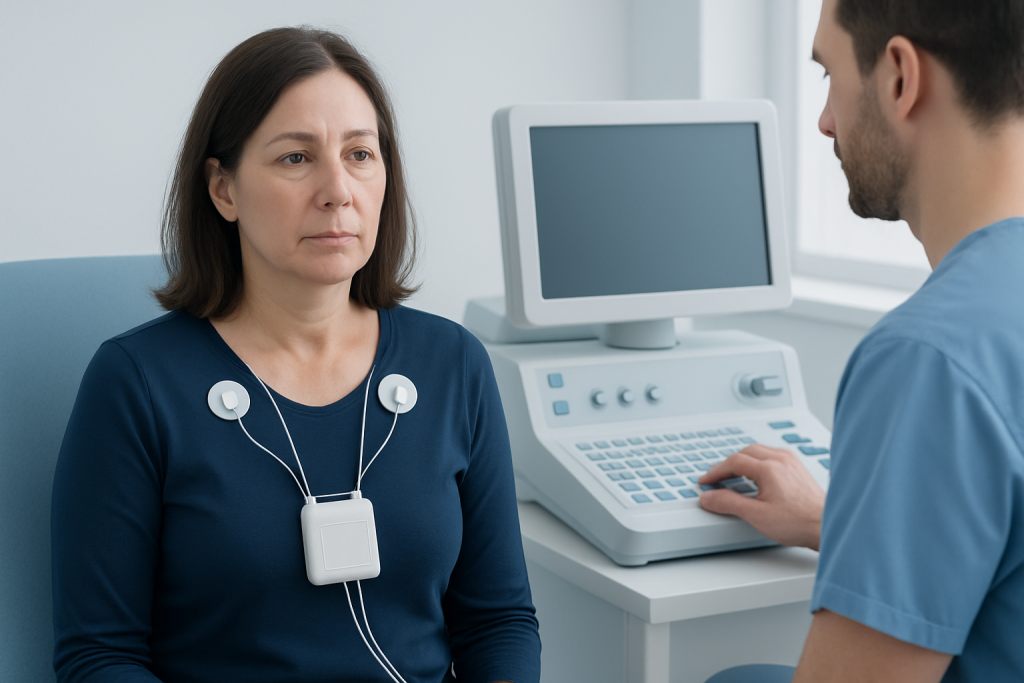
The Holter monitor is itself a diagnostic tool. Small electrode patches are placed on the chest and connected to a lightweight recorder that stores the heart’s electrical signals for a set period, commonly 24 to 48 hours, though longer monitoring may be advised in some cases. The test is painless, and most patients can continue normal activities unless their clinician gives other instructions.
During the monitoring period, the care team often asks the patient to keep a simple diary. Noting the time of symptoms, activity, meals, sleep, emotional stress, and medication use can make the final report much easier to interpret. A single sentence such as “felt sudden palpitations while climbing stairs” can be surprisingly useful.
When the recording is reviewed, the clinician looks for rhythm disturbances, heart rate trends, pauses, and any relationship between symptoms and the tracing. Sometimes the result is normal, which can still be reassuring and may direct attention toward other causes of the symptoms.
Treatment Options After the Results
The next step depends on what the recording shows. If the heart rhythm is normal during symptoms, a clinician may look for non-cardiac causes or consider a longer monitoring period. If the recording shows a rhythm disturbance, treatment is tailored to the specific finding and the patient’s overall health.
Options may include lifestyle adjustments, review of medications, treatment of contributing conditions such as thyroid imbalance or sleep apnea, and in some cases medicines that help regulate rate or rhythm. Some rhythm problems require no active treatment if they are harmless and not causing symptoms, while others need close follow-up or referral to a heart rhythm specialist.
When the Holter monitor suggests a pattern that is too infrequent to catch in a short study, clinicians may recommend extended patch monitoring or another type of ambulatory device. For international patients, that plan is often discussed with travel timing in mind so follow-up can be arranged before returning home.
Preparation, Wearing Tips, and Self-care
Preparation is usually simple. Patients are often advised to bathe before the monitor is placed, because the device typically should stay dry while it is in use. Loose clothing helps the electrodes remain comfortable and less visible during the day.
While wearing the monitor, normal activity is usually encouraged unless the clinician says otherwise. Gentle exercise, work, walking, and sleep are generally fine, but showering, swimming, or activities that loosen the leads may need to be avoided. It helps to keep the skin around the electrodes clean and to follow the instructions given by the care team if a patch begins to peel.
- Keep the diary close by and record symptoms right away.
- Note the time of any palpitations, dizziness, or chest discomfort.
- Avoid tampering with the device or changing the placement of the leads.
- Ask in advance how to handle usual medicines, since instructions can differ.
After the test, electrodes are removed and the recorded data are analyzed. Patients are usually able to return to their normal routine immediately, unless additional testing or treatment is planned.
When to See a Doctor
A doctor should be consulted whenever palpitations, fainting, chest discomfort, or unexplained breathlessness are new, worsening, or troubling. Even if the symptoms are brief, a medical review is worthwhile when they interrupt sleep, limit activity, or create concern about the heart.
Prompt medical attention is especially important if symptoms occur with severe chest pain, prolonged fainting, marked shortness of breath, or a known heart condition. In those situations, a Holter monitor may be part of the evaluation, but urgent assessment should not be delayed if the person feels unwell.
For patients arranging care from another country, a cardiology team can often help decide whether a Holter monitor is the right first step or whether another test is needed sooner. Acibadem Health Point’s multidisciplinary specialists and JCI-accredited hospitals diagnose and treat this condition for international patients in a coordinated setting.
Living With the Result
A Holter monitor result often gives patients something valuable: a clearer explanation. Whether the findings confirm a rhythm issue or show that the heart remained stable during symptoms, the outcome can guide practical decisions about treatment, monitoring, and everyday habits.
Some people leave with reassurance and no further testing. Others may need medication adjustment, additional imaging, or a referral for specialized rhythm care. In either case, the report is most useful when it is reviewed in the context of the patient’s history, symptoms, and overall risk profile rather than in isolation.
When care is shared across borders, it helps to obtain copies of the tracing report, the interpretation, and any follow-up plan before traveling home. That makes continuity of care easier for the local doctor who will continue the next stage of management.
Frequently asked questions
How long does a Holter monitor stay on?
It is commonly worn for 24 to 48 hours, although some patients are asked to wear it longer. The exact duration depends on how often the symptoms happen and what the clinician is trying to capture. Longer monitoring may be suggested if the episodes are rare.
Does a Holter monitor hurt?
The test is not painful. Some people notice mild skin irritation from the adhesive patches or feel a little self-conscious wearing the device, but the monitor itself should not cause pain. If the skin becomes very irritated, the care team should be told.
Can normal activities continue while wearing it?
In most cases, yes. Patients are usually encouraged to follow their usual routine so the monitor records the heart during real-life conditions. They may need to avoid showering, swimming, or anything that could damage the device.
What should be written in the symptom diary?
The diary should include the time of any symptoms and what the person was doing when they started. It is also helpful to note meals, sleep, exercise, stress, and medication use. These details help the clinician link symptoms with the recorded heart rhythm.
What if the Holter monitor results are normal?
A normal result can still be useful because it may show that symptoms are not being caused by a rhythm problem. The clinician may then consider other explanations or recommend longer monitoring if the episodes are infrequent. A normal test should always be interpreted together with the patient’s history.
Is a Holter monitor the same as an ECG?
It records the same type of heart electrical activity, but over a much longer time. A standard ECG gives a short snapshot, while a Holter monitor offers continuous recording during daily life. That longer window is what helps capture intermittent rhythm changes.
References
- American Heart Association
- Mayo Clinic
- National Heart, Lung, and Blood Institute
- European Society of Cardiology
This article is for general information only and is not a substitute for professional medical advice. Please consult a qualified doctor about your individual situation.