

Supination

Key Takeaways
- Supination is a normal movement, but excessive supination can affect walking, balance, and joint stress.
- Common signs include worn outer shoe edges, ankle rolling, foot pain, and a feeling of instability.
- Muscle imbalance, high arches, prior injury, and some nerve or structural issues may contribute to supination.
- Diagnosis usually begins with a gait and foot alignment assessment, sometimes supported by imaging or podiatric tests.
- Supportive shoes, orthotics, physical therapy, and targeted exercises often help reduce symptoms and prevent strain.
Supination is a foot motion that can become a concern when the body spends too much time on the outer edge of the foot. When it is linked to pain, repeated sprains, or uneven wear, a clinician can help identify the reason and guide treatment.
Overview
Supination is the natural outward rolling motion of the foot during walking, running, or standing. In healthy movement, it works together with pronation to help absorb shock and create a stable push-off. The term becomes more clinically relevant when the foot stays too far on its outer edge, a pattern often described as excessive supination or underpronation.
That persistent outward loading can change how the ankle, heel, knee, and even the lower leg handle force. Some people notice it only after shoes wear unevenly or after repeated ankle sprains, while others feel it as a dull ache along the outer foot. For international patients who are comparing treatment options, this is usually a very assessable problem: a careful examination can often show whether the issue is mainly structural, muscular, or related to a previous injury.
Supination is not a diagnosis by itself. It is a movement pattern, and the goal is to understand when that pattern is simply part of normal gait and when it is contributing to pain or injury.
Symptoms
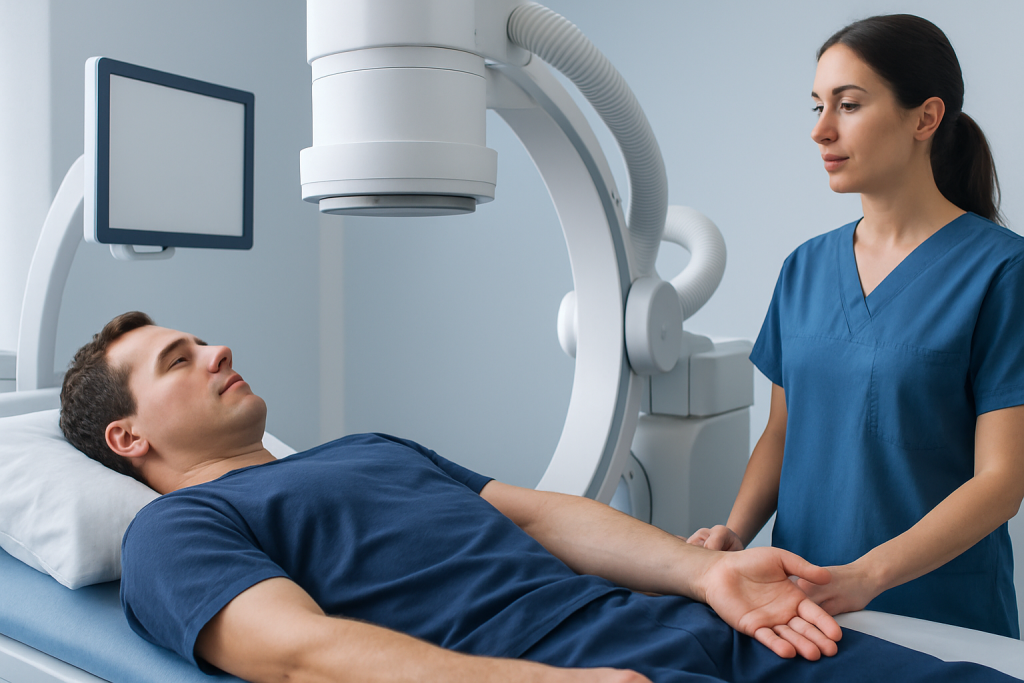
Excessive supination does not always cause symptoms right away. Some people first notice that their shoes look more worn on the outside, especially at the heel or forefoot. Others may realize they are frequently “rolling” the ankle outward, particularly on uneven ground.
When symptoms do appear, they may include:
- Pain on the outer side of the foot or ankle
- Recurrent ankle sprains or a sense of giving way
- Heel pain, arch discomfort, or calf tightness
- Calluses or pressure points along the outer foot
- Uneven wear patterns on walking or running shoes
Because the body tries to compensate for unstable foot mechanics, discomfort may also travel upward. Knee, shin, hip, or lower back strain can sometimes be part of the picture, especially in active people who walk long distances or train regularly.
Causes & Risk Factors
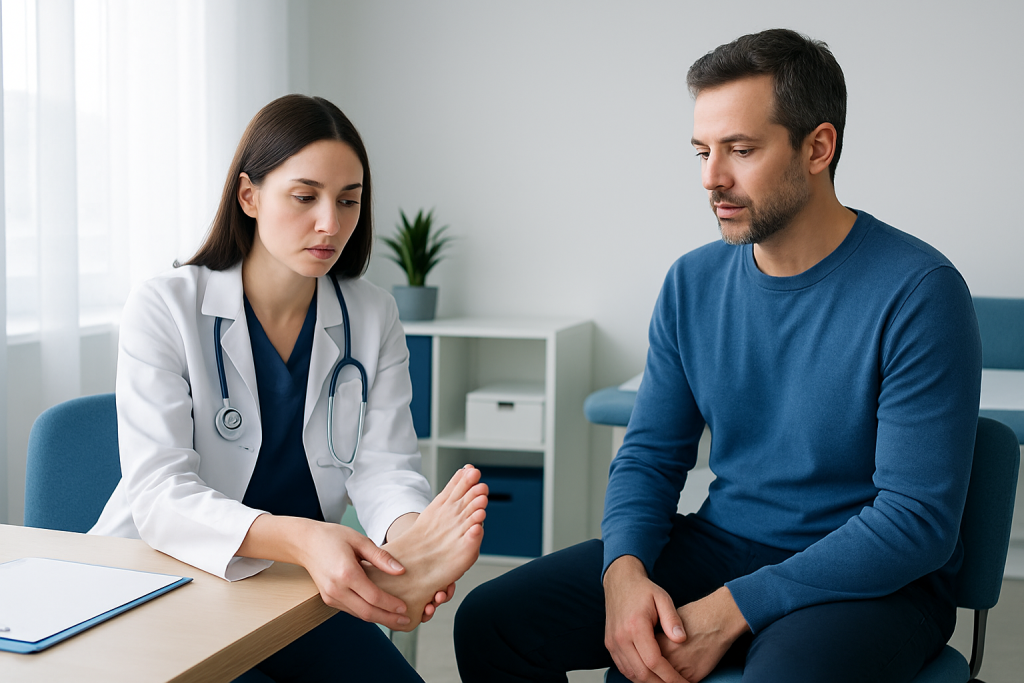
Several factors can lead to a supinated walking pattern. Some people naturally have high arches, which can reduce how much the foot spreads and absorbs force. Others have muscle imbalances, limited ankle mobility, or a history of ligament injury that changes how weight is transferred through the foot.
Common contributors include:
- High arches or a rigid foot structure
- Prior ankle sprains or ligament laxity
- Weakness in the muscles that stabilize the foot and lower leg
- Tight calf muscles or limited ankle dorsiflexion
- Improper footwear that does not match the person’s gait
- Neurologic or structural conditions that alter balance or foot position
Running, court sports, hiking, and other activities that involve frequent direction changes can make excess supination more noticeable. In some cases, the pattern is present for years but only becomes a concern after a change in activity level, a new job requiring prolonged standing, or an injury that unsettles normal mechanics.
Diagnosis
Diagnosis begins with a history and a physical examination. A clinician will usually ask where the discomfort is felt, whether the person has repeated ankle twists, what shoes are worn most often, and whether symptoms change with distance, terrain, or exercise. These details help separate a harmless walking style from a pattern that is causing overload.
A gait assessment is often central. The clinician may watch the patient walk or run to see how the heel strikes, how weight shifts across the foot, and whether the ankle tilts outward. Foot posture, arch height, joint flexibility, leg alignment, and muscle strength are also commonly checked. If the picture is not clear, imaging such as X-rays or other studies may be used to look for structural changes, prior injury, or less common causes of pain.
For patients traveling from abroad, it can be helpful to bring old imaging, prior orthopedic or podiatry notes, and a list of current shoes or orthotics. Those details can make the evaluation more efficient and help the specialist compare the current gait with previous treatment attempts.
Treatment Options
Treatment depends on whether supination is merely a foot characteristic or a source of pain and instability. When symptoms are mild, the focus may be on support and load management. When the pattern is clearly contributing to sprains or chronic discomfort, a more structured plan is often recommended.
Common options include:
- Supportive footwear with good cushioning and a stable base
- Custom or prefabricated orthotics to improve pressure distribution
- Physical therapy to strengthen the foot, ankle, and hip stabilizers
- Stretching for tight calf muscles or other restricted tissues
- Activity modification during recovery from pain or sprain
If an underlying structural problem is driving the gait pattern, treatment may need to address that root issue. Surgery is uncommon for supination itself, but it may be considered if a separate deformity, significant instability, or old injury is causing ongoing disability. In many cases, the best results come from combining footwear changes with exercises that improve balance and control.
Prevention & Self-care
Self-care is often about reducing repetitive strain before it becomes a bigger problem. A stable pair of shoes that fits well can make a real difference, especially for people who stand or walk for long periods. Shoes that are overly worn on the outer edge may no longer provide the support needed for a supinated foot.
Helpful habits include:
- Replacing shoes once the sole becomes uneven or compressed
- Doing balance and ankle-strengthening exercises regularly
- Warming up before sports or long walks
- Progressing activity level gradually rather than in sudden jumps
- Using orthotics or inserts only if they have been recommended for the person’s foot type
It is also wise to pay attention to repeated ankle rolls, even if they seem minor. Small sprains can accumulate and leave the ankle less stable over time. For patients who receive care away from home, a simple follow-up plan with a local clinician or remote review can help keep recovery on track after returning to their country.
When to See a Doctor
A medical evaluation is a good idea if foot or ankle pain keeps returning, if the ankle often feels unstable, or if walking is becoming less comfortable. Supination deserves attention when it affects daily movement, sports participation, or confidence on stairs, slopes, or uneven surfaces.
Prompt assessment is especially important after a significant sprain, if there is swelling that does not settle, if weight-bearing is difficult, or if numbness, weakness, or deformity is present. These symptoms do not automatically mean a serious problem, but they do justify a closer look so the right cause is not missed.
Acibadem Health Point’s multidisciplinary specialists and JCI-accredited hospitals can diagnose and treat this condition for international patients, with coordinated care that supports both treatment and follow-up planning. A qualified orthopedic or foot-and-ankle specialist can confirm whether supination is the main issue and help match treatment to the person’s goals and activity level.
FAQ
Is supination the same as underpronation?
In everyday clinical language, the terms are often used to describe the same idea: the foot stays too much on the outer edge during movement. A specialist may use either term depending on the gait pattern being described. The important question is whether that pattern is causing pain, instability, or repeated injury.
Can supination cause knee or hip pain?
Yes, it can contribute to discomfort farther up the chain because the foot is the base of movement. When the foot does not absorb force well, the ankle, knee, hip, and lower back may compensate. A clinician can check whether the foot pattern is one part of a broader alignment issue.
Do all people with high arches have supination problems?
No. High arches are a common risk factor, but not everyone with high arches has symptoms. Some people function comfortably for years, while others develop pain or repeated sprains and need support.
Are custom orthotics always necessary?
Not always. Some people improve with well-chosen shoes, exercise therapy, and simple inserts, while others benefit from custom orthotics based on their exam findings. The choice depends on symptoms, foot structure, and activity demands.
Can exercise help with supination?
Exercise can help when weakness, stiffness, or poor control is part of the problem. Strengthening the ankle and lower leg, along with balance work, may improve stability and reduce strain. A physiotherapist can tailor the plan to the person’s gait and injury history.
Is surgery common for supination?
Surgery is not commonly used for supination alone. It may be considered only if there is a separate structural issue or severe instability that has not improved with conservative care. Most patients are managed with non-surgical approaches first.
Frequently asked questions
Is supination the same as underpronation?
In everyday clinical language, the terms are often used to describe the same idea: the foot stays too much on the outer edge during movement. A specialist may use either term depending on the gait pattern being described. The important question is whether that pattern is causing pain, instability, or repeated injury.
Can supination cause knee or hip pain?
Yes, it can contribute to discomfort farther up the chain because the foot is the base of movement. When the foot does not absorb force well, the ankle, knee, hip, and lower back may compensate. A clinician can check whether the foot pattern is one part of a broader alignment issue.
Do all people with high arches have supination problems?
No. High arches are a common risk factor, but not everyone with high arches has symptoms. Some people function comfortably for years, while others develop pain or repeated sprains and need support.
Are custom orthotics always necessary?
Not always. Some people improve with well-chosen shoes, exercise therapy, and simple inserts, while others benefit from custom orthotics based on their exam findings. The choice depends on symptoms, foot structure, and activity demands.
Can exercise help with supination?
Exercise can help when weakness, stiffness, or poor control is part of the problem. Strengthening the ankle and lower leg, along with balance work, may improve stability and reduce strain. A physiotherapist can tailor the plan to the person’s gait and injury history.
Is surgery common for supination?
Surgery is not commonly used for supination alone. It may be considered only if there is a separate structural issue or severe instability that has not improved with conservative care. Most patients are managed with non-surgical approaches first.
References
- American Academy of Orthopaedic Surgeons
- Mayo Clinic
- Cleveland Clinic
- National Institute of Arthritis and Musculoskeletal and Skin Diseases
- NHS
This article is for general information only and is not a substitute for professional medical advice. Please consult a qualified doctor about your individual situation.
More from the Health Library



Related Specialists

Prof. Dr. Ahmet Alanay
Orthopedic Surgery & Traumatology
Dr. Sinan Aksu
Orthopedic Surgery & Traumatology
Dr. Sirri Baştürk
Orthopedic Surgery & Traumatology
Prof. Dr. Korhan Özkan
Orthopedic Surgery & Traumatology