

Stretching Routine After Workout

Key Takeaways
- Post-workout stretching should feel gentle, not painful, and is best done after the body has warmed down.
- A balanced routine usually includes major muscle groups used during the workout, held with calm breathing.
- Stretching may support flexibility and ease the feeling of tightness, but it is not a substitute for proper training, hydration, or rest.
- People with injuries, joint problems, or unusual pain should choose modifications and ask a clinician or physiotherapist for guidance.
- Consistency matters more than intensity; a short routine done regularly is often more useful than occasional long sessions.
A well-planned stretching routine after workout can help the body transition from exercise to recovery with less stiffness and more comfort. The most useful approach is gentle, steady, and tailored to the type of training a person has just completed.
Overview
A stretching routine after workout is often treated as an afterthought, yet it is one of the simplest parts of exercise recovery to organize well. Once the heart rate begins to settle and the muscles are no longer working at full effort, gentle stretching can help the body move from “training mode” into “recovery mode.”
For many people, the goal is not dramatic flexibility gains in a single session. It is steadier movement, less feeling of tightness, and a smoother return to daily activities such as walking, sitting, lifting, or traveling home after a gym session. That is especially relevant for international patients who may be balancing exercise with long flights, hotel stays, or unfamiliar routines; a brief, practical cool-down is easier to keep up than a complicated program.
Stretching is best viewed as one part of overall recovery. Sleep, hydration, gradual training progression, and appropriate rest days matter just as much. A good routine complements those habits rather than trying to replace them.
What a Good Post-Workout Stretching Routine Feels Like
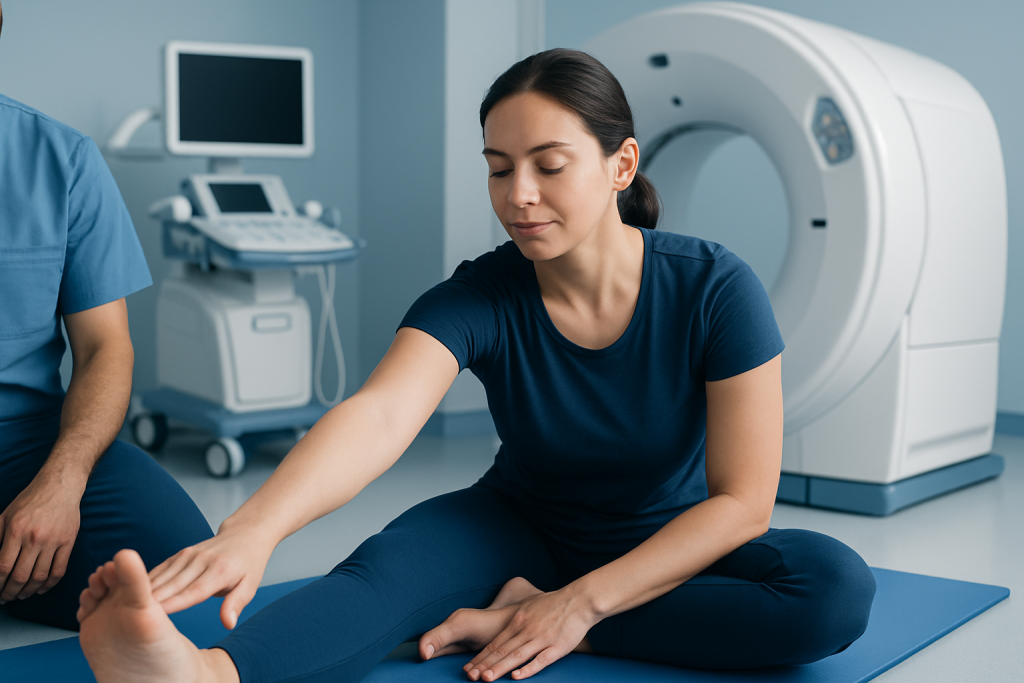
The most useful stretches after exercise are usually slow, controlled, and comfortable. The muscles should feel lengthened, but not forced. A person should be able to breathe normally and hold the position without shaking, sharp pain, or the need to “push through.”
Post-workout stretching often works best when it matches the training that was just done. After a run, for example, the calves, hamstrings, hip flexors, and glutes often deserve attention. After upper-body strength training, the chest, shoulders, upper back, and arms may benefit from gentle lengthening. The routine does not need to cover every muscle every day; it should focus on the areas that were most active or most likely to feel stiff afterward.
Many people do well with a short sequence of static stretches held for a calm, steady period while breathing slowly. Others prefer to begin with a brief walk or easy movement first, then stretch once the body has cooled a little. Either approach can be reasonable as long as the muscles are not stretched cold and the movement stays controlled.
Which Muscles to Include

The best post-workout routine usually starts with the largest or most-used muscle groups. That makes the stretching session more practical and easier to repeat consistently. It also reduces the temptation to spend time on less relevant areas while neglecting the ones that actually feel tight.
A simple structure can include the following areas:
- Lower body: calves, hamstrings, quadriceps, hip flexors, and glutes
- Upper body: chest, shoulders, upper back, and arms
- Core and spine: gentle trunk rotation and supported back mobility, when appropriate
People who spend long hours sitting may find hip flexors, glutes, and chest muscles especially important. Those who lift weights may notice the shoulders, lats, and forearms feeling shortened after training. Runners often benefit from a more focused lower-body routine, while swimmers and racket-sport players may need extra attention around the shoulders and torso.
Benefits and Realistic Expectations
A stretching routine after workout may support flexibility over time and can make the body feel less stiff in the short term. It may also help people mentally shift out of an intense workout and into recovery, which can be useful when exercise is part of a busy travel day or a tightly scheduled treatment or business trip.
That said, stretching is not a cure for soreness, and it does not prevent every injury. Muscle ache after exercise can still happen, especially if the workout was new, intense, or longer than usual. Stretching should be seen as one supportive habit among several, not a promise of instant relief.
It is also important to remember that flexibility changes gradually. Progress is usually modest and cumulative. A person who stretches regularly after workouts is more likely to notice easier movement over weeks and months than dramatic changes from a single session.
How to Build the Routine Safely
A safe routine starts with a short cool-down. Light walking, easy cycling, or gentle movement for a few minutes can help the body settle before deeper stretches. Once breathing is calmer, each stretch can be held with steady posture and relaxed breathing.
General safety principles include avoiding bouncing, keeping joints in a neutral and comfortable range, and stopping well before pain. A mild sensation of tension is acceptable; a sharp or pinching feeling is not. It is also wise to stretch both sides of the body, even if one side feels tighter, so that the routine remains balanced.
People returning to exercise after injury, surgery, or a long break may need a more cautious approach. In those situations, it can be helpful to ask a physiotherapist or doctor which movements are appropriate and which ones should be avoided. That guidance is especially valuable when the person is far from home and wants a routine they can confidently continue abroad.
Common Mistakes to Avoid
One common mistake is stretching too aggressively right after a hard workout. Muscles and connective tissues have just been loaded, so forcing a deep stretch can feel like a shortcut but may leave the body more irritated rather than more relaxed. The aim is ease, not intensity.
Another frequent issue is rushing through the routine. Quick, shallow holds with no breathing tend to offer less benefit than a few calm stretches done properly. A person does not need a long session, but the time spent should be attentive and deliberate.
Other avoidable problems include holding the breath, comparing one side of the body with the other too strictly, or using stretches that create numbness, tingling, or joint pain. Those symptoms deserve a pause and, if they continue, medical advice.
When Stretching Should Be Modified or Skipped
Not every body should use the same stretching routine after workout. If a person has an acute injury, significant swelling, a torn muscle, or sudden joint pain, the priority is assessment rather than stretching through the area. In those cases, movement may need to be limited until a clinician advises otherwise.
People with hypermobility, arthritis, spine conditions, nerve-related symptoms, or recent surgery may also need a customized plan. Even a generally gentle stretch can be unsuitable if it places stress on a healing tissue or an unstable joint. A qualified physiotherapist can help adjust the routine so it supports recovery instead of disrupting it.
It is sensible to skip any stretch that causes symptoms to travel down an arm or leg, creates dizziness, or feels distinctly different from ordinary muscle tension. A safe routine should leave the person feeling more settled, not less.
When to See a Doctor
Medical advice is appropriate when pain is persistent, worsening, or out of proportion to the workout that caused it. It is also important to seek evaluation if there is visible swelling, bruising, weakness, loss of range of motion, or pain that interferes with walking, sleeping, or daily tasks.
A doctor or physiotherapist can help determine whether the issue is ordinary post-exercise soreness, a strain, tendon irritation, joint problem, or something else. They can also guide when stretching is helpful and when rest, modified activity, or targeted rehabilitation is a better choice.
For international patients, that support can be especially useful when exercise habits, travel schedules, and recovery plans need to be coordinated across visits. Acibadem Health Point’s multidisciplinary specialists and JCI-accredited hospitals diagnose and treat musculoskeletal conditions for international patients with individualized care pathways.
Frequently asked questions
Should stretching be done before or after a workout?
Both can have a place, but the purpose is different. Before exercise, people usually do dynamic movement to prepare the body, while after exercise gentle stretching can help the body cool down. The most suitable choice depends on the workout and the person’s needs.
How long should a post-workout stretch last?
A short, consistent routine is often enough. Many people hold each stretch long enough to feel a gentle release while keeping the body relaxed and breathing evenly. The key is regularity and comfort rather than forcing a long session.
Is it normal to feel sore after stretching?
Mild tightness may be normal, but stretching should not create sharp pain or make soreness significantly worse. If the discomfort is strong or lasts beyond the expected post-workout stiffness, it is wise to reassess the routine. Pain that persists should be discussed with a clinician.
Can stretching prevent injury?
Stretching may support flexibility and movement quality, but it does not guarantee injury prevention. Good training technique, gradual progress, recovery, and appropriate footwear or equipment are also important. It works best as part of a broader plan.
What is the best stretch after running?
There is no single best stretch for everyone, but runners often benefit from calves, hamstrings, hip flexors, glutes, and quadriceps. A brief walk first, followed by gentle stretches, is a practical way to cool down. The routine should match the runner’s pace, distance, and any areas that feel especially tight.
Can someone stretch every day?
Many people can include gentle stretching daily, especially if it feels comfortable and does not irritate joints or healing tissues. The routine should still be adjusted to the body’s needs and the type of exercise done that day. If daily stretching causes pain, a professional review is sensible.
References
- World Health Organization
- American College of Sports Medicine
- National Institute of Arthritis and Musculoskeletal and Skin Diseases
- NHS
- Mayo Clinic
This article is for general information only and is not a substitute for professional medical advice. Please consult a qualified doctor about your individual situation.
More from the Health Library



Related Specialists

Dr. Safiye Sayilir
Physical Medicine & Rehabilitation
Dr. Özgün Barış Çolak
Physical Medicine & Rehabilitation
Prof. Dr. Meltem Vural
Physical Medicine & Rehabilitation
Prof. Dr. Meral Bayramoğlu
Physical Medicine & Rehabilitation