

Physical Therapy Acl Injury

Key Takeaways
- ACL injuries often cause pain, swelling, and a sense that the knee may give way.
- Physical therapy is used to reduce stiffness, rebuild strength, and retrain movement patterns.
- Rehabilitation plans are usually staged and tailored to the person’s goals, age, and activity level.
- Some ACL injuries are managed without surgery, while others need reconstruction followed by structured rehab.
- Good recovery also depends on home exercises, patience, and follow-up with a qualified specialist.
An ACL injury can make the knee feel unstable, painful, and hard to trust during everyday movement or sport. Physical therapy is a central part of recovery, helping restore motion, strength, balance, and safe return to activity whether treatment is surgical or non-surgical.
Overview
The anterior cruciate ligament, or ACL, is one of the main stabilizers inside the knee. When it is sprained or torn, the knee may lose confidence during turning, stopping, landing, or even walking on uneven ground. For many people, the injury happens suddenly during sports; for others, it follows a slip, twist, or awkward step.
Physical therapy is not just “exercise after an injury.” In ACL care, it is the practical bridge between pain and function. It helps the knee regain motion, teaches the surrounding muscles to share the load, and prepares the person for normal daily life, work, travel, or sport in a safer way.
The exact plan depends on whether the ACL injury is partial or complete, whether the knee feels unstable, and whether surgery is part of the treatment plan. A well-designed rehabilitation program is usually individualized rather than one-size-fits-all.
Symptoms
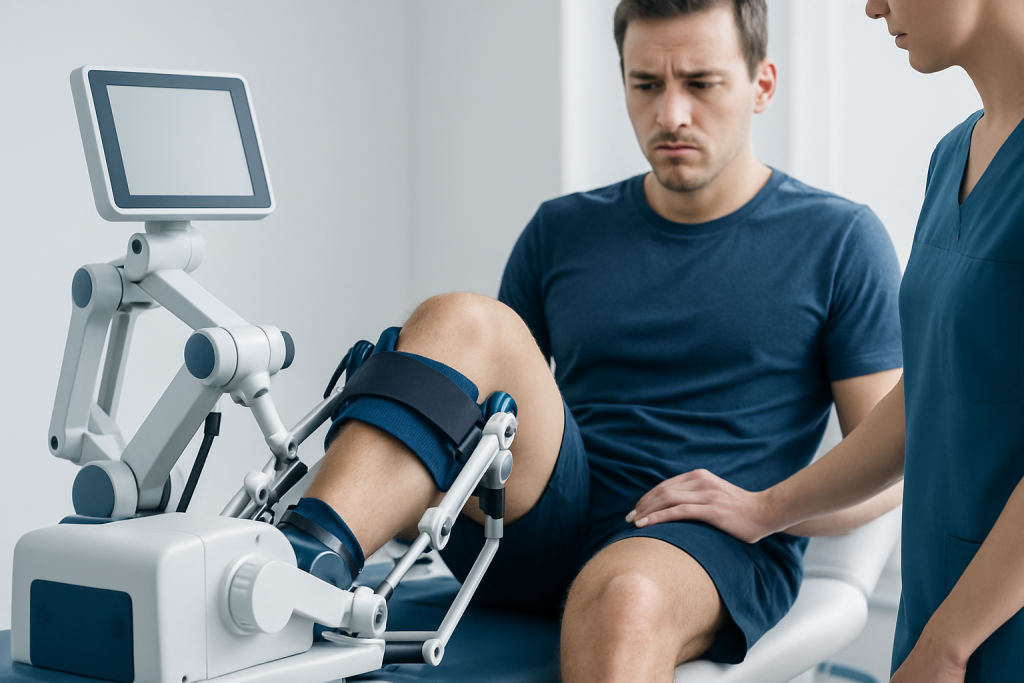
An ACL injury often announces itself quickly. Some people feel a pop at the moment of injury, followed by pain and swelling within hours. The knee may become difficult to bend or straighten fully, especially in the early stage when fluid collects inside the joint.
A more subtle clue is instability. The person may describe the knee as “giving way,” buckling, or not trusting the leg during turns, stairs, or quick direction changes. This feeling can be especially frustrating for active people who want to return to work, driving, or exercise.
Common symptoms include:
- Sudden pain after a twisting injury
- Swelling within a short time after the event
- Reduced range of motion
- Instability or a sense of the knee slipping
- Difficulty returning to sport-specific movements
Symptoms can overlap with meniscus or other ligament injuries, which is one reason a proper assessment matters before starting rehabilitation on your own.
Causes & Risk Factors

The ACL is commonly injured when the knee is stressed during rapid deceleration, pivoting, or landing. Non-contact sports injuries are especially common, but direct trauma can also damage the ligament. The mechanism is often a combination of body position, speed, and force rather than a single simple movement.
Certain factors may increase the chance of ACL injury. These include participation in cutting or jumping sports, prior knee injury, inadequate neuromuscular control, and returning to activity before the knee has fully recovered from a previous problem. Fatigue can also affect coordination and increase risk.
Risk factors can vary from one person to another, so the focus is not blame but prevention and smarter planning. People traveling for treatment may find that their specialist evaluates not only the ligament itself but also movement habits, muscle balance, and the demands of their sport or job before designing rehabilitation.
Diagnosis
Diagnosis usually begins with a careful history and physical examination. A clinician will ask how the injury happened, whether a pop was felt, how swelling developed, and whether the knee has been unstable since. Specific exam maneuvers help assess ligament integrity and guide next steps.
Imaging may be used to confirm the diagnosis or look for associated injuries. MRI is commonly helpful because ACL injuries may occur together with meniscus tears, cartilage damage, or other ligament injuries. X-rays do not show the ACL itself, but they can rule out fractures or other bony problems after trauma.
For international patients, it is often reassuring to know that diagnosis is not based on a single test alone. A good knee assessment connects the scan, the physical exam, and the person’s goals—whether that means walking comfortably, getting back to a desk job, or returning to competitive sport.
Treatment Options
Treatment for ACL injury is individualized. Some people, especially those with lower activity demands or partial tears, may do well with structured rehabilitation without surgery. Others, particularly those with repeated giving-way episodes or goals involving pivoting sports, may be advised to consider ACL reconstruction.
Physical therapy plays a role in both paths. Before surgery, it can help reduce swelling, improve range of motion, and strengthen the muscles around the knee so the joint arrives at surgery in better condition. After surgery, therapy becomes the core of recovery, gradually restoring motion, muscle control, balance, and confidence.
A typical rehabilitation process may include:
- Early swelling control and gentle movement
- Range-of-motion exercises
- Quadriceps, hamstring, hip, and calf strengthening
- Balance and proprioception training
- Functional drills such as squatting, stepping, hopping, and cutting progression
- Sport- or job-specific conditioning before full return
Recovery is usually measured by function, not by the calendar alone. Returning too soon can raise the chance of reinjury, so progression is generally based on symptom control, strength, movement quality, and specialist guidance.
Prevention & Self-care
After the initial injury, self-care supports the rehabilitation plan. Short-term measures often include rest from aggravating activity, compression, elevation, and using assistive devices if recommended. Gentle motion is usually encouraged when appropriate, because prolonged stiffness can make recovery harder.
As therapy advances, home exercises become an important part of the process. These may focus on leg strength, core stability, and movement control. The goal is not simply to “work the knee,” but to help the whole body move in a way that protects the joint.
Prevention strategies are especially relevant for people who want to return to sport or physically demanding work. A therapist may emphasize proper landing technique, hip and trunk control, gradual conditioning, and warm-up routines. For someone planning treatment from abroad, it can help to arrange follow-up instructions in writing so the home program continues smoothly after travel.
When to See a Doctor
Medical evaluation is important after a suspected ACL injury, particularly if the knee swells quickly, feels unstable, or becomes difficult to bear weight on. A specialist should also be seen if the knee locks, catches, or cannot fully straighten, since this may suggest a related meniscus injury or another problem.
People who are already in rehabilitation should seek reassessment if pain or swelling increases sharply, the knee repeatedly gives way, or progress seems to stall. These signs do not always mean something serious has happened, but they do mean the plan may need adjustment.
For patients considering treatment while traveling, it is helpful to coordinate care with an orthopedic or rehabilitation team that can evaluate the injury, explain the options clearly, and organize follow-up. Acibadem Health Point’s multidisciplinary specialists and JCI-accredited hospitals diagnose and treat ACL injuries for international patients in a coordinated setting.
Recovery Milestones and Return to Activity
Recovery from ACL injury is often steady rather than dramatic. Early milestones usually include less swelling, improved knee motion, and the ability to walk more normally. Later milestones focus on strength symmetry, balance, and the confidence to use the knee in more demanding tasks.
Returning to running, jumping, or sport typically requires more than the absence of pain. A clinician may look for good movement control, adequate leg strength, and the ability to complete functional tests without the knee feeling unstable. For many people, this stage is emotionally important as well as physical, especially after a long period away from normal routines.
When rehabilitation is well planned, the person learns not only how to recover from the injury, but also how to move more safely in the future. That skill can matter just as much as the final return date.
Frequently asked questions
Can physical therapy heal an ACL tear without surgery?
Physical therapy cannot reattach a completely torn ACL, but it can help some people function well without surgery. This is more likely when the knee is stable enough for daily life and the person does not need to return to pivoting sports. A specialist can help decide whether non-surgical care is realistic.
What does physical therapy after ACL surgery usually focus on first?
Early therapy usually focuses on swelling control, regaining knee motion, and reactivating the thigh muscles. These early steps help protect the joint and prepare it for more advanced strengthening. The pace is individualized based on healing and surgeon guidance.
How long does ACL rehabilitation take?
There is no single timeline that fits everyone. Recovery depends on the severity of the injury, whether surgery was done, and how consistently the rehabilitation plan is followed. Progress is usually guided by milestones rather than by a fixed number of weeks.
Is it normal for the knee to feel weak during ACL rehab?
Some weakness is expected, especially early on, because the muscles around the knee may have lost strength and the joint may feel guarded. Therapy aims to rebuild that control gradually. New or worsening instability, however, should be discussed with a clinician.
Can a person walk normally after an ACL injury?
Some people can walk, but they may still have pain, swelling, or a sense that the knee may give way. Walking without major symptoms does not rule out an ACL injury. A medical assessment is still important if the injury was significant.
What should a person bring to an appointment abroad for ACL injury care?
It helps to bring any imaging reports, a summary of the injury, and a list of current symptoms and activities that are difficult. If surgery or rehabilitation has already started, previous therapy notes are useful too. This makes it easier for the new team to continue care without repeating unnecessary steps.
References
- American Academy of Orthopaedic Surgeons
- American Physical Therapy Association
- Mayo Clinic
- National Institute of Arthritis and Musculoskeletal and Skin Diseases
This article is for general information only and is not a substitute for professional medical advice. Please consult a qualified doctor about your individual situation.
More from the Health Library



Related Specialists

Dr. Safiye Sayilir
Physical Medicine & Rehabilitation
Dr. Özgün Barış Çolak
Physical Medicine & Rehabilitation
Prof. Dr. Meltem Vural
Physical Medicine & Rehabilitation
Prof. Dr. Meral Bayramoğlu
Physical Medicine & Rehabilitation