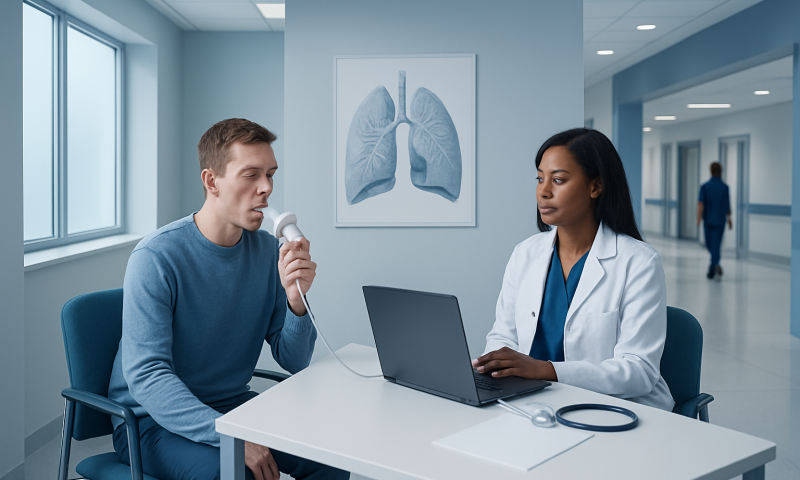
Spirometer

Key Takeaways
- A spirometer measures airflow and lung volume during breathing tests.
- The test can help identify conditions such as asthma, COPD, and other breathing problems.
- Results are interpreted alongside symptoms, medical history, and sometimes other tests.
- Good preparation and clear instructions help improve test accuracy.
- A spirometer does not treat disease, but it can guide safer, more targeted care.
A spirometer is a simple device used to measure how well the lungs move air in and out. It helps doctors assess breathing symptoms, monitor known lung conditions, and guide follow-up care.
Overview
A spirometer is a device used to measure how much air a person can breathe out and how quickly that air leaves the lungs. The test it supports, called spirometry, is one of the most common ways doctors assess lung function.
For many patients, spirometry is part of a broader check-up rather than a stand-alone event. It may be ordered after ongoing cough, shortness of breath, wheezing, chest tightness, or reduced exercise tolerance, and it is also used to monitor known conditions over time. Because the test is noninvasive and generally brief, it is often a practical first step when breathing symptoms need a clearer explanation.
In international-patient settings, spirometry can be especially helpful because it gives an objective starting point before travel, treatment decisions, or follow-up planning. The results can help a medical team decide whether more testing is needed and which care pathway is most appropriate.
What the Test Measures
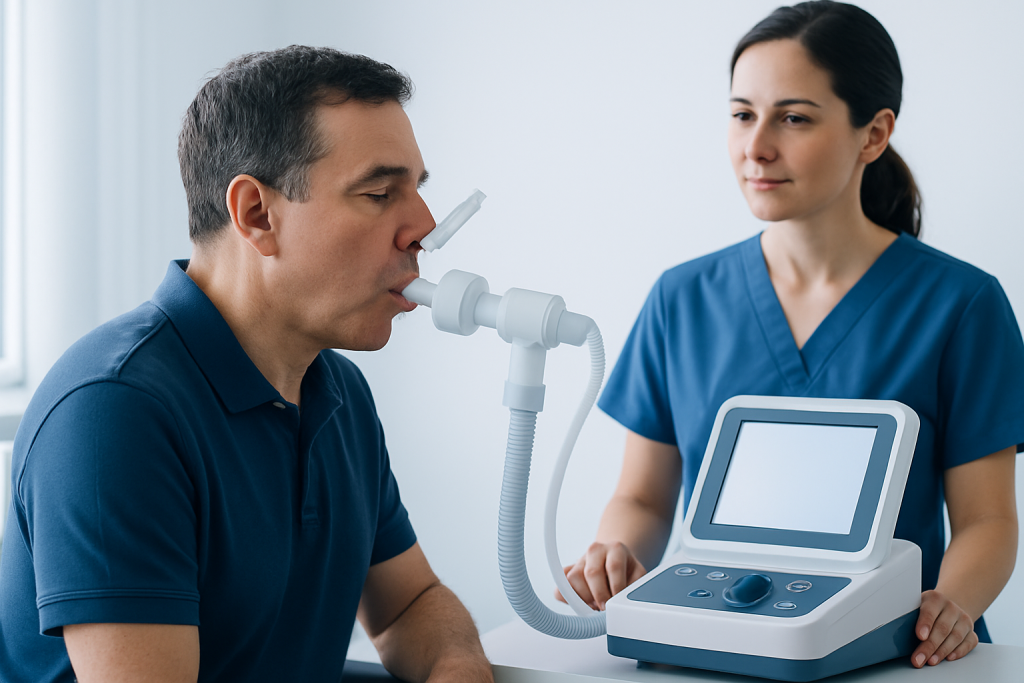
Spirometry focuses on two main questions: how much air can be exhaled, and how fast that air can be pushed out. These measurements help doctors understand whether the airways are narrowed, whether the lungs are moving air efficiently, and whether symptoms may reflect an obstructive or restrictive pattern.
Common values include the forced vital capacity, which reflects the total amount of air exhaled after a deep breath, and the forced expiratory volume in one second, which shows how much air comes out during the first second of the blow. The ratio between these numbers can give useful clues about airway narrowing and overall lung mechanics.
It is important to remember that spirometry is only one piece of the picture. A result is always interpreted together with the patient’s age, height, sex, symptoms, smoking history, occupation, and other medical conditions. A number on its own does not tell the full story.
Symptoms and Conditions It Can Help Evaluate
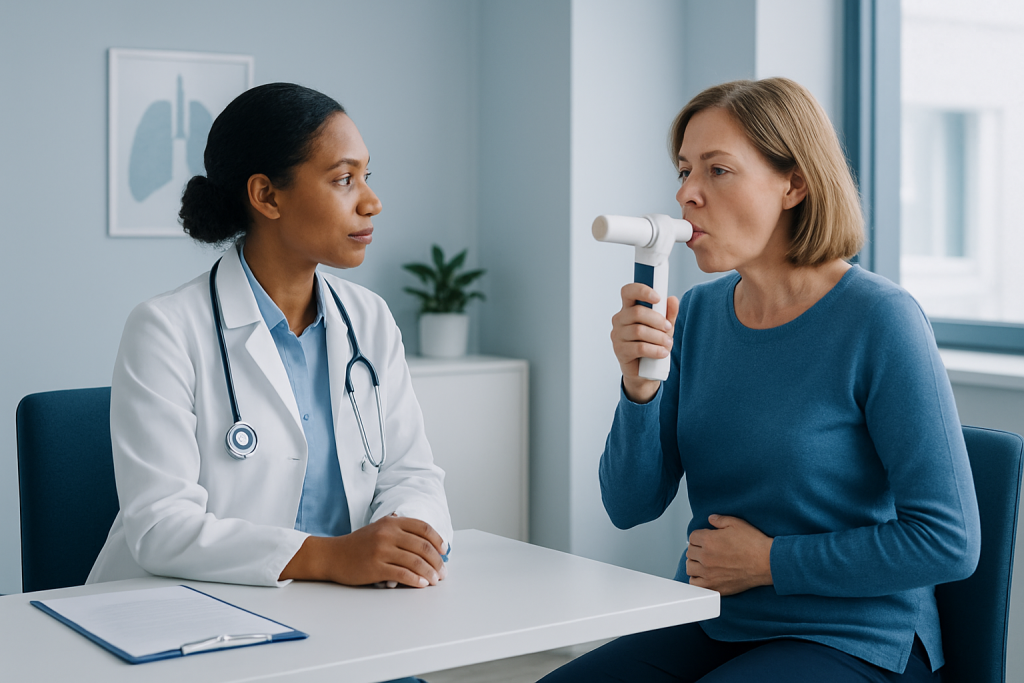
Doctors commonly use a spirometer when a patient has symptoms that suggest a breathing problem but the cause is not yet clear. The test may help explain persistent breathlessness during walking, frequent wheeze, a cough that does not settle, or a feeling that breathing is becoming harder during daily activity.
It is also used in the assessment and follow-up of several long-term lung conditions. These may include asthma, chronic obstructive pulmonary disease (COPD), and other disorders that affect airflow or lung capacity. In some cases, spirometry may be part of preparation before surgery, especially when the team wants to understand how well the lungs are functioning before a planned procedure.
- Ongoing shortness of breath
- Wheezing or chest tightness
- Chronic cough
- Monitoring asthma or COPD
- Pre-operative lung assessment in selected patients
Because many respiratory symptoms overlap with heart, allergy, or infection-related problems, spirometry can help narrow the possibilities without relying on guesswork alone. It supports a more focused conversation between patient and doctor.
Causes and Risk Factors for Abnormal Results
Abnormal spirometry results can happen for many reasons, and not all of them mean permanent lung disease. Airway irritation from smoking, exposure to dust or chemicals, long-standing asthma, and COPD are among the more familiar causes of reduced airflow. Recurrent infections, uncontrolled allergies, or poorly managed inflammation can also affect breathing patterns.
Sometimes a result appears abnormal because the test was difficult to perform correctly. Spirometry requires a strong inhale and a forceful, sustained exhale, so fatigue, pain, poor understanding of instructions, or coughing during the maneuver can influence the numbers. For that reason, technicians usually coach the patient carefully and may repeat the test several times to confirm consistency.
Risk factors for breathing problems often include tobacco exposure, occupational inhalants, aging, a history of childhood lung disease, and a family background of certain respiratory conditions. Still, a patient without these risk factors can also develop abnormal results, which is why a medical evaluation should never rely on assumptions alone.
How Spirometry Is Done
Spirometry is usually performed in a clinic, hospital, or pulmonary function laboratory. The patient is seated, fitted with a mouthpiece, and asked to breathe in deeply before blowing out as hard and as long as possible. A clip may be placed on the nose so that all airflow passes through the mouthpiece.
During the test, a trained professional gives instructions and watches for a good effort. The patient may be asked to repeat the maneuver several times so the measurements can be compared for consistency. In some cases, the test is repeated after a bronchodilator inhaler to see whether the airways improve with medication, which can help distinguish certain reversible patterns.
Preparation is usually simple, but patients should follow the instructions given by their clinician. They may be asked to avoid heavy meals, smoking, or certain inhaled medicines before testing, depending on the reason for the exam and the clinic’s protocol. Comfort, clear guidance, and a calm pace often lead to the most reliable results.
How Results Are Interpreted
Interpreting spirometry requires clinical context. A doctor will compare the measured values with expected ranges based on personal characteristics and look at the shape of the breathing curve, not just the final numbers. This helps identify whether airflow is reduced, whether lung volumes appear limited, or whether the pattern suggests another issue.
If a bronchodilator is used during the test, the clinician may look for improvement after the inhaled medicine. A meaningful change can suggest that airway narrowing is at least partly reversible, which is helpful in conditions such as asthma. If the response is limited, the doctor may consider other explanations and additional tests.
Patients should not try to interpret the report in isolation, especially if they have no medical training. A result that seems “abnormal” may still be mild, temporary, or explained by technique, while a “normal” result does not always rule out every breathing disorder. The interpretation is best made by a clinician who can connect the numbers with the patient’s story.
Treatment Options and Follow-up Care
Spirometry itself does not treat lung disease; it helps guide treatment choices. Depending on the findings, a doctor may recommend inhaled medication, allergy management, smoking cessation support, pulmonary rehabilitation, vaccination review, or further imaging and blood tests. The next step is shaped by both the spirometry pattern and the patient’s symptoms.
For patients travelling from another country, follow-up planning matters just as much as the test. A useful report should be easy to share with the home physician, and the treatment plan should include clear instructions about medicines, warning signs, and when to repeat testing. If ongoing care will happen across borders, documentation and continuity become part of the medical work.
In some situations, spirometry is repeated after treatment starts to see whether lung function changes over time. This can help the care team understand whether the chosen plan is working and whether adjustments are needed. Consistent follow-up is often more valuable than a single result.
Prevention and Self-Care
Although not every lung problem can be prevented, many breathing symptoms can be eased by reducing known triggers and supporting overall respiratory health. Avoiding tobacco smoke is one of the most important steps, and limiting exposure to dust, fumes, or strong chemical irritants may also help. Patients with asthma or allergies often benefit from knowing their triggers and using medicines as prescribed.
General self-care can support better breathing and make future spirometry more meaningful. Staying active within personal limits, keeping chronic conditions under control, staying hydrated, and following the inhaler technique taught by a clinician are all sensible habits. During travel, patients should keep their medicines accessible and carry a list of current treatments.
- Do not smoke and avoid secondhand smoke when possible
- Use prescribed inhalers correctly and consistently
- Attend scheduled follow-up visits and repeat testing when advised
- Seek medical guidance before changing respiratory medicines
- Bring prior lung test results when seeing a new doctor
If a patient is planning treatment abroad, it can be helpful to ask in advance how test results will be shared and what kind of follow-up will be needed after returning home. Clear planning reduces uncertainty and supports safer continuity of care.
When to See a Doctor
Medical advice is appropriate if breathing symptoms are persistent, getting worse, or interfering with ordinary activity. A doctor should also be consulted if a cough lasts for weeks, wheezing is recurrent, or breathlessness appears with minimal exertion. Spirometry is often one of the first investigations considered in these situations.
Prompt review is especially important if symptoms are accompanied by chest pain, fainting, blue lips, high fever, or sudden severe shortness of breath. Those signs may suggest a more urgent problem that needs immediate assessment rather than routine testing.
For patients seeking care internationally, it is reasonable to choose a center that can perform the test, interpret it in context, and coordinate next steps without delay. Acibadem Health Point’s multidisciplinary specialists and JCI-accredited hospitals diagnose and treat respiratory conditions for international patients, helping make the path from testing to follow-up more coordinated.
Whether the issue turns out to be temporary irritation or a chronic lung condition, a spirometer can be a useful guide. It gives doctors objective information and helps patients understand what their lungs are doing, which is often the first step toward better breathing care.
Frequently asked questions
What is a spirometer used for?
A spirometer is used to measure how much air a person can breathe out and how quickly they can exhale. Doctors use it to assess symptoms such as shortness of breath, cough, or wheezing, and to monitor known lung conditions.
Is spirometry the same as a spirometer?
Not exactly. A spirometer is the device, while spirometry is the test performed with that device. In everyday conversation, people sometimes use the terms interchangeably.
Does spirometry hurt?
Spirometry is usually not painful. Some people may feel tired, lightheaded, or briefly short of breath during the forceful breathing effort, but the test is generally well tolerated.
Do patients need to prepare before a spirometry test?
Preparation is often simple, but instructions vary by clinic and reason for testing. Patients may be asked to avoid smoking, heavy meals, or certain inhalers for a period before the test, so they should follow the instructions given by their doctor or testing center.
Can spirometry diagnose asthma or COPD on its own?
Spirometry can strongly suggest airflow problems and help support a diagnosis, but it is usually interpreted together with symptoms, history, and sometimes other tests. A doctor decides whether the pattern fits asthma, COPD, or another condition.
What if the results are abnormal?
An abnormal result does not automatically mean a serious or permanent disease. The doctor will look at the pattern, the patient’s symptoms, and whether the test was performed well before recommending any next steps.
References
- World Health Organization
- National Heart, Lung, and Blood Institute
- American Thoracic Society
- Global Initiative for Chronic Obstructive Lung Disease
This article is for general information only and is not a substitute for professional medical advice. Please consult a qualified doctor about your individual situation.