How Long Do You Need to Wait for Imaging Results Abroad? Realistic Timelines

Key Takeaways
- Routine imaging results are often available within hours to a few days, but complex studies may take longer.
- Emergency scans are usually interpreted quickly, sometimes before the patient leaves the hospital.
- The type of scan, need for specialist review, and the delivery method all affect turnaround time.
- Patients traveling abroad should ask in advance who will explain the results and how follow-up will happen after returning home.
- A report may be ready before the full treatment plan is finalized, especially if images need multidisciplinary review.
Medically reviewed by the Acıbadem clinical team — June 13, 2026
Waiting for imaging results can feel uncertain, especially when care is being arranged in another country. Timelines vary by scan type, urgency, and how reports are reviewed, but international patients can usually plan ahead with a few practical questions.
Overview
Imaging is one of the fastest ways doctors can look inside the body without surgery, but the wait for the official report can still feel long. For patients seeking care abroad, that wait is often tied not only to the scan itself, but also to how the hospital handles interpretation, second review, and communication across time zones.
In many cases, the image acquisition is the easy part; the real question is how quickly a radiologist, specialist, or multidisciplinary team can turn those images into a useful answer. A simple X-ray may be reviewed the same day, while a more detailed MRI or a complex PET-CT for Cancer Staging: When It Is Useful and When It Adds Little" class="ahp-ilk">cancer staging study may require more time, especially if the case needs comparison with older studies or discussion among several doctors.
International patients benefit from setting expectations before travel. Knowing whether the report will be shared as a brief summary, a full written radiology report, or a clinician consultation helps avoid confusion and makes it easier to plan onward flights, follow-up appointments, and treatment decisions.
Typical result timelines
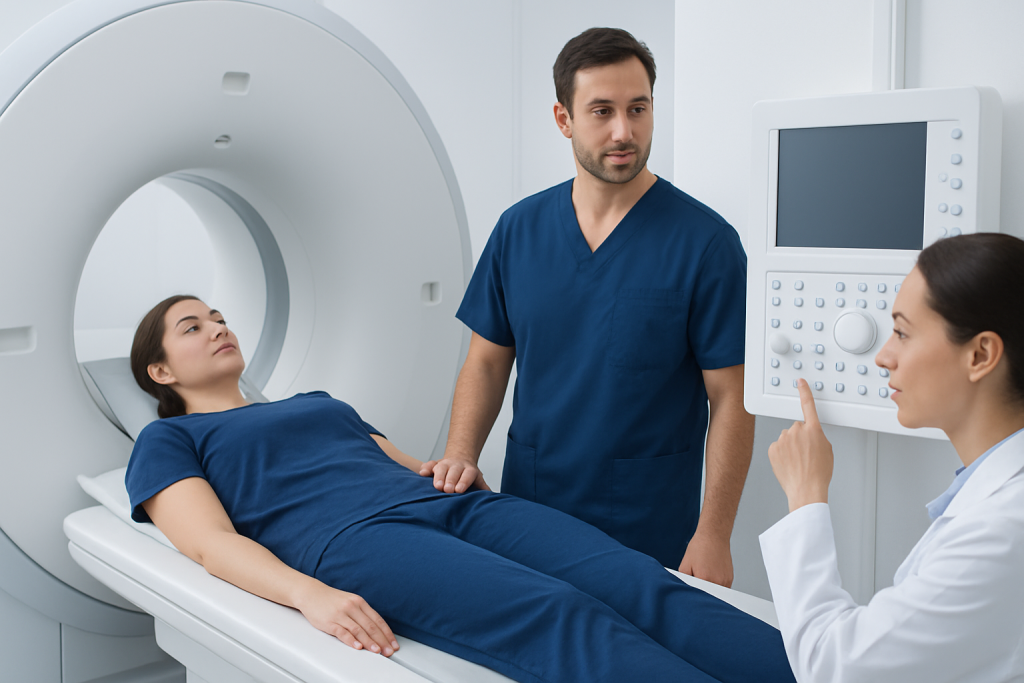
There is no single clock for imaging results, because each test follows a different workflow. A same-day result is common for urgent emergencies, but routine outpatient imaging usually follows a more measured pace. Hospitals may also separate the time needed to read the scan from the time needed to explain it in a consultation.
As a general pattern, plain X-rays are often interpreted within hours and sometimes immediately, especially when the clinical question is straightforward. Ultrasound results are frequently available the same day or the next day, depending on the service and whether a specialist sonographer or radiologist is involved. CT scans are commonly reported within a day or two for routine cases, while MRI reports may take one to several days because the images are more detailed and take longer to review.
More specialized imaging, such as PET-CT, cardiac MRI, or studies done for cancer staging, may take longer because the report often needs careful comparison and sometimes team discussion. If a biopsy or follow-up test depends on the imaging, the doctor may wait to present a combined interpretation rather than sending a quick standalone note.
- X-ray: often same day
- Ultrasound: same day to next day
- CT scan: same day to 2 days
- MRI: 1 to several days
- Complex or specialist imaging: may take longer
What makes the wait shorter or longer

The biggest factor is urgency. If a scan is done in an emergency department or during an active hospital admission, it is usually prioritized and read quickly. By contrast, an outpatient scan scheduled in advance may enter a routine queue, even when the hospital is highly efficient.
Image complexity matters too. Some studies are easy to interpret, while others require careful slice-by-slice review, contrast timing analysis, or comparison with prior images. If the scan shows something that needs a second opinion, the final report may be delayed while another radiologist or specialist reviews it.
Other factors can include the hospital’s staffing model, local workload, whether the imaging center is attached to a larger referral hospital, and how reports are delivered. A digital portal may make a report available sooner, but a doctor consultation can still be scheduled later so the findings are explained in context. For patients abroad, language support and coordination across departments can also affect how quickly the result reaches the patient in a clear form.
How imaging is diagnosed and reviewed
Most imaging results begin with a radiologist reviewing the images and writing a report. In some situations, the ordering doctor may also look at the images directly, especially if they are involved in a procedure or if the case is straightforward and urgent. The written report usually includes what was seen, whether the findings appear normal or abnormal, and what the next step might be.
For more complicated cases, the process may involve a multidisciplinary discussion. This is common when the images are part of cancer workup, neurological evaluation, or surgical planning. A team may compare the new scan with previous studies, laboratory results, or pathology findings before giving a final recommendation.
International patients should remember that “results available” and “results explained” are not always the same moment. A report might be uploaded to a patient portal first, but the meaning of the findings is often clearer after a conversation with the treating physician, especially when translation or cross-border follow-up is involved.
What patients can ask before traveling
Planning ahead can reduce stress and help the trip feel more organized. Before booking travel around an imaging appointment, it is sensible to ask how long the report usually takes, whether urgent findings are called immediately, and whether a consultation is included in the schedule. Patients should also ask whether the images will be provided on a CD, USB, portal download, or shared directly with another doctor.
If there is a chance the scan will guide surgery, medication changes, or additional testing, it helps to confirm whether enough time is reserved for review before departure. Some patients need only a written report, while others need both the images and a detailed discussion with a specialist. Clarifying this before arrival can prevent the common problem of receiving a scan but not leaving enough time for the decision that depends on it.
Useful questions include:
- When is the written report usually ready?
- Will a doctor review the images with the patient?
- How are urgent findings communicated?
- Can the report be shared in English or another preferred language?
- Will follow-up instructions be sent for care back home?
How to prepare for the wait and follow-up
The waiting period is often easier to handle when the patient knows what will happen next. If the report is expected after returning home, it helps to arrange a secure way to receive it and a local doctor who can review it. Keeping copies of prior scans, laboratory results, medication lists, and referral letters can make interpretation more reliable.
When traveling for care, timing also affects recovery and logistics. Some imaging is done before a procedure, while other scans are used after treatment to check response or healing. In either case, patients should leave enough flexibility in the itinerary for an unexpected delay, since a radiologist may need extra time to clarify a finding or a specialist may request a short follow-up appointment.
Practical self-care during the wait is simple but important: stay hydrated if allowed, keep records organized, and write down questions before the review visit. If the scan was done with contrast, patients should follow the hospital’s instructions about eating, drinking, and activity afterward. Clear instructions help the report become part of a coherent care plan rather than an isolated file in an inbox.
When to see a doctor
Patients should contact their doctor promptly if the scan was ordered for a new, worsening, or unexplained symptom and the report has not arrived within the timeframe the hospital gave. They should also seek timely medical advice if the radiology team says the scan contains urgent findings, even if the final written report is still being completed.
It is especially important to check in if symptoms are progressing, such as severe pain, sudden weakness, breathing difficulty, fainting, new neurological changes, or a rapidly changing lump or swelling. Imaging is only one part of diagnosis, and a delay in interpretation should not delay medical attention for concerning symptoms.
For travelers, follow-up is best handled before leaving the country whenever possible. Acibadem Health Point’s multidisciplinary specialists and JCI-accredited hospitals can support international patients with diagnosis, imaging review, and treatment planning, helping the next step stay coordinated across borders.
A realistic way to think about timing
The most useful expectation is not a fixed number of hours, but a range: same day for many urgent or simple studies, a day or two for common outpatient scans, and longer for complex or team-reviewed cases. That range is normal and usually reflects careful review rather than delay for its own sake.
For international patients, the key is to separate the scan appointment from the result appointment in the planning process. Once that distinction is clear, the timeline becomes easier to manage, whether the patient is waiting in the hospital, preparing to fly home, or arranging continued care with a doctor in another country.
When the process is explained well, imaging results stop feeling like an uncertain pause and become what they are meant to be: a bridge between a question and a safer, better-informed next step.
Frequently asked questions
How long do MRI results usually take abroad?
Routine MRI reports are often available within one to several days, though some centers can provide faster turnaround for urgent cases. The time depends on how complex the scan is and whether a specialist review is needed.
Are X-ray results faster than CT or MRI results?
Usually, yes. X-rays are often read the same day, while CT and MRI may take longer because they require more detailed interpretation.
Why do some imaging results take longer even when the scan is finished?
The scan images may be done quickly, but the formal report still needs to be reviewed and written. Delays can happen if the case is complex, needs a second opinion, or must be discussed with another specialist.
Can a doctor tell if something is wrong right after the scan?
Sometimes they can, especially in urgent settings where the scan is read immediately. Even then, the final written report may follow later and provide more detail.
Should international patients wait for the report before flying home?
If the scan may change treatment or require urgent follow-up, it is usually wise to wait for the review visit if possible. If travel plans are fixed, patients should make sure they know how the report will be sent and who will explain it.
What if the results are in a language the patient does not understand?
Patients should ask for a translated summary or an explanation in a language they can follow before leaving. Clear communication is especially important when care continues in another country.
References
- World Health Organization
- Radiological Society of North America
- American College of Radiology
- NHS
- European Society of Radiology
This article is for general information only and is not a substitute for professional medical advice. Please consult a qualified doctor about your individual situation.