Signs Of Skin Cancer

Key Takeaways
- A new, changing, or non-healing skin spot deserves attention, especially if it looks different from the rest of the skin.
- Melanoma may follow the ABCDE pattern, but other skin cancers can appear as pearly bumps, scaly patches, or sores that do not heal.
- Sun exposure, fair skin, prior sunburns, tanning bed use, and a personal or family history of skin cancer can raise risk.
- A dermatologist or cancer specialist may use a skin exam, dermoscopy, and biopsy to confirm the diagnosis.
- Protecting skin from UV exposure and checking the skin regularly can help people notice changes earlier.
- Any rapidly changing, bleeding, painful, or persistently itchy lesion should be assessed by a doctor.
Skin cancer can begin as a small change in a mole, spot, or patch of skin, which is why noticing new or evolving features matters. This article explains the warning signs, how doctors evaluate suspicious skin changes, and the steps that support early care.
Overview
Skin cancer often begins quietly. A person may notice a mole that no longer looks familiar, a small pink bump that never settles down, or a rough patch that keeps returning in the same place. Because these changes can develop slowly, skin cancer is sometimes found only after a person has learned to compare one area of skin with the rest of their own skin, rather than with a generic image in mind.
There is no single look that defines skin cancer. Some cancers show up as a dark, irregular mole; others appear as a shiny bump, a scaly plaque, or a sore that seems to heal and reopen. Understanding the pattern of change is often more helpful than focusing on one appearance alone. When a spot is new, changing, or unusually persistent, it is worth professional evaluation.
For people deciding on care from another country, a clear diagnosis matters early because it shapes the whole journey: whether the lesion needs a simple office procedure, a biopsy before travel home, or coordinated surgery and follow-up. A well-planned assessment can reduce uncertainty and help patients move from worry to a practical plan.
Symptoms
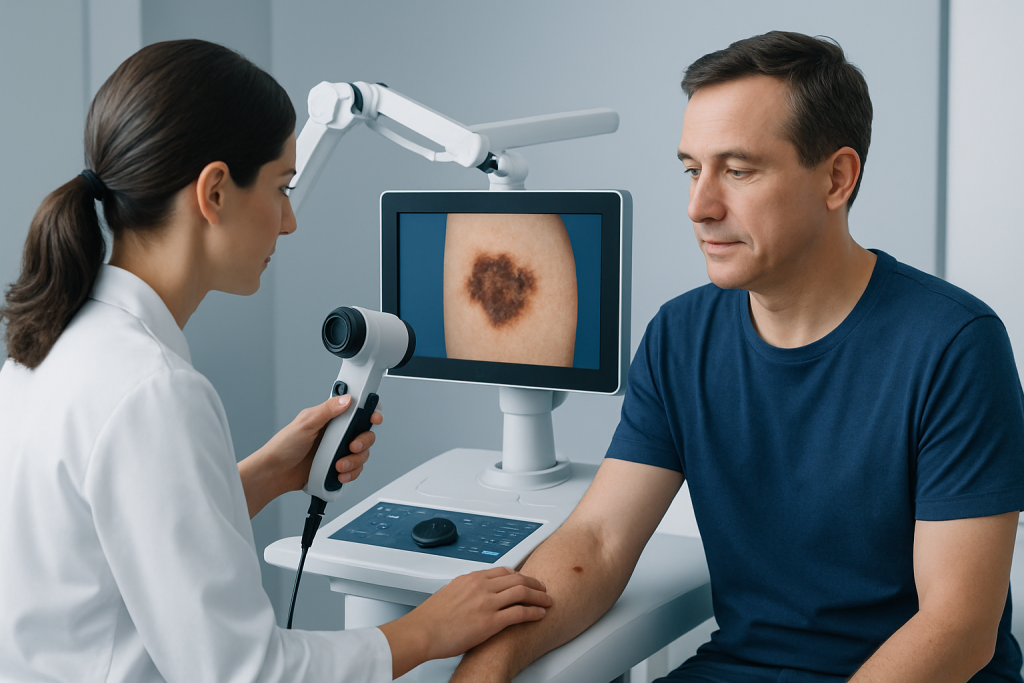
The most important clue is change. A skin lesion that is growing, becoming darker or lighter, changing shape, or developing new symptoms such as bleeding or itching should be checked. Skin cancer can also present as a spot that simply does not behave like the surrounding skin.
Melanoma, one of the more serious forms of skin cancer, is often described using the ABCDE pattern:
- Asymmetry: one half does not match the other
- Border: edges are uneven, blurred, or notched
- Color: more than one color or an unusual spread of pigment
- Diameter: a larger size, especially if the lesion is increasing
- Evolving: any change in size, shape, color, or symptoms
Not all melanomas fit the full ABCDE pattern, so people should not wait for every box to be checked. Other warning signs include a sore that does not heal, a pearly or translucent bump, a crusted lesion, a rough scaly patch, or a spot that bleeds easily after minor contact. New lesions in adults, especially those that stand out from other moles or freckles, deserve attention.
Causes & Risk Factors

Most skin cancers develop after repeated damage to skin cells, often linked to ultraviolet (UV) radiation from the sun or tanning devices. Over time, UV exposure can alter the DNA inside skin cells, increasing the chance that they grow in an uncontrolled way.
Risk is influenced by a combination of skin type, history, and environment. People with fair skin, light eyes, red or blond hair, many freckles, or a tendency to burn easily are at higher risk, but skin cancer can occur in any skin tone. Prior sunburns, outdoor work, frequent sun exposure, and the use of tanning beds also increase risk.
Other factors can matter as well. A personal history of skin cancer, many or unusual moles, a weakened immune system, and a family history of melanoma can raise concern. Patients traveling for treatment sometimes bring years of skin changes that were never fully evaluated, so a detailed history and a careful full-skin examination are especially important when the diagnosis is first being considered.
Diagnosis
Doctors usually begin with a thorough skin examination. They look at the size, color, border, texture, and location of the lesion, and they may compare it with other spots on the body. A handheld device called a dermatoscope can help reveal patterns beneath the surface that are not visible to the naked eye.
If a lesion appears suspicious, a biopsy is the standard next step. This means removing all or part of the lesion so that a pathologist can examine the cells under a microscope. The biopsy result helps determine whether the spot is cancerous, what type it is, and how deeply it extends into the skin.
In some cases, especially when a lesion is large, recurrent, or looks more advanced, doctors may recommend additional tests or imaging to understand whether nearby structures or lymph nodes are involved. For international patients, these findings are often reviewed together so the care team can explain the diagnosis clearly before planning the next step.
Treatment Options
Treatment depends on the type of skin cancer, where it is located, and how deeply it has grown. Many early skin cancers can be treated effectively with a minor procedure to remove the lesion and a rim of surrounding tissue. When skin cancer is identified early, the treatment plan is often straightforward and focused on complete removal.
Common treatment approaches may include surgical excision, Mohs surgery for select cancers in cosmetically sensitive or high-risk areas, and other local treatments for certain superficial lesions. In some situations, doctors may discuss radiation therapy, topical medicine, immunotherapy, targeted therapy, or other cancer treatments if the disease is more advanced or has spread beyond the skin.
The most appropriate plan depends on pathology results and overall health, not on appearance alone. Patients who are traveling for care may need a coordinated timeline that includes the procedure, wound care guidance, pathology review, and a clear follow-up arrangement once they return home. This is especially helpful when treatment decisions are made across more than one visit or specialty.
Prevention & Self-care
Daily skin protection is one of the most practical ways to reduce future risk. That means seeking shade, wearing protective clothing, using a broad-spectrum sunscreen, and avoiding tanning beds. These habits are useful throughout the year, not only during holidays or beach seasons.
Self-checks also help people notice change early. A mirror, a phone camera, or help from a family member can make it easier to inspect hard-to-see areas such as the scalp, back, and the backs of the legs. People with many moles may find it useful to note which spots are stable so that any new or changing lesion stands out.
After treatment, wound care and follow-up are important parts of recovery. Keeping the area clean, following the surgeon’s instructions, and attending recommended skin checks can support healing and future surveillance. For people recovering in another country, a written plan in plain language can make the transition home easier and safer.
When to See a Doctor
A doctor should evaluate any skin spot that is new and unusual, changes over time, bleeds without clear reason, or does not heal within a few weeks. The same applies to a lesion that becomes painful, persistently itchy, crusted, or visibly different from nearby moles or marks.
It is especially sensible to seek care sooner if the person has a history of skin cancer, many atypical moles, a strong family history, or a weakened immune system. People do not need to decide on their own whether a spot is “serious enough”; that judgment is exactly what dermatology and oncology teams are trained to make.
For international patients, timely assessment can help avoid delays from repeated uncertainty. Acibadem Health Point’s multidisciplinary specialists and JCI-accredited hospitals diagnose and treat skin cancer for international patients, with coordinated evaluation and follow-up when needed.
Frequently asked questions
What are the earliest signs of skin cancer?
Early signs often include a new skin spot or a change in an existing mole, bump, or patch. A lesion that grows, changes color, develops irregular borders, or starts bleeding or itching should be checked.
Does every skin cancer look like melanoma?
No. Melanoma is only one type of skin cancer. Basal cell and squamous cell cancers often look like shiny bumps, scaly plaques, or sores that do not heal.
Can skin cancer appear on darker skin tones?
Yes, skin cancer can appear on any skin tone. In darker skin, it may be noticed on areas not often exposed to the sun, such as the palms, soles, nails, or inside the mouth.
When should someone worry about a mole?
A mole should be checked if it changes in size, shape, color, or symptoms such as bleeding, itching, or tenderness. A spot that looks different from a person’s other moles is also worth examining.
Is a biopsy always needed?
If a lesion looks suspicious, a biopsy is usually needed to confirm the diagnosis. A biopsy is the most reliable way to tell whether the spot is cancerous and what type it may be.
Can skin cancer be prevented completely?
Not completely, but risk can be lowered by protecting the skin from UV exposure and avoiding tanning beds. Regular self-checks and routine skin exams can also help detect changes earlier.
References
- American Cancer Society
- National Cancer Institute
- American Academy of Dermatology
- World Health Organization
- Mayo Clinic
This article is for general information only and is not a substitute for professional medical advice. Please consult a qualified doctor about your individual situation.