Synovial Sarcoma

Key Takeaways
- Synovial sarcoma is a rare type of soft tissue cancer and is not the same as a joint disorder.
- A painless lump, swelling, or persistent pain near a limb or joint may be an early clue.
- Diagnosis usually requires imaging and a biopsy reviewed by specialists experienced in sarcoma care.
- Treatment often combines surgery with radiation and, in some cases, chemotherapy or other systemic therapy.
- Follow-up matters because sarcoma care continues after treatment, especially for monitoring recurrence and recovery.
Synovial sarcoma is a rare soft tissue cancer that usually begins in the deep tissues of an arm, leg, or around a joint, but it can develop elsewhere as well. Because its symptoms can resemble less serious conditions, timely evaluation and expert imaging, biopsy, and treatment planning are important.
Overview
Synovial sarcoma is a rare cancer that arises from soft tissues, most often in the arms, legs, or areas close to the joints. Despite its name, it does not start in the synovial lining of a joint in most cases. The term reflects how the tumor cells look under a microscope, not where the cancer truly begins.
Because it can grow slowly at first and sit deep in the body, synovial sarcoma may be mistaken for a sports injury, a benign lump, or a problem with a tendon or joint. That is one reason specialist evaluation is so important. For people who are considering care away from home, the path usually begins with careful imaging, followed by a biopsy and review by a multidisciplinary sarcoma team that can coordinate surgery, oncology, pathology, and rehabilitation.
Although this diagnosis can be unsettling, treatment planning has become more precise over time. The goal is to remove or control the tumor while protecting function as much as possible and building a realistic follow-up plan that continues after the patient returns to everyday life.
Symptoms
The first sign is often a lump or swelling that may or may not hurt. Some people notice a firm mass that seems to slowly enlarge over weeks or months. Others feel aching, pressure, stiffness, or reduced movement near the affected area, especially if the tumor is close to nerves, muscles, or joints.
Symptoms can vary depending on where the tumor is located. A mass in the leg may interfere with walking or bending, while a lesion in the arm can make lifting or gripping uncomfortable. If the tumor is deeper in the chest, abdomen, or pelvis, symptoms may be subtler and can include a sense of fullness, pain, or pressure rather than a visible lump.
General symptoms such as fatigue or unintentional weight loss are not always present and are not specific to this cancer. The more practical signal is a new or changing lump, especially one that is firm, deep, larger than expected, or not improving as time passes. Any such change deserves medical review, even if it is not painful.
Causes & Risk Factors

The exact cause of synovial sarcoma is not fully understood. Like many cancers, it develops because of changes in the genetic material of cells, which allow them to grow in an uncontrolled way. In synovial sarcoma, a characteristic genetic alteration is often present, and testing may help support the diagnosis.
Most people diagnosed with synovial sarcoma do not have an obvious cause or a clear inherited risk. It is not typically linked to a single lifestyle factor, and it is not something a patient can usually prevent by changing diet or activity. The condition is uncommon, and it can appear in younger adults as well as older patients.
Known risk factors are limited. A personal history of certain rare cancers or prior radiation exposure may be relevant in some cases, but many patients have no identifiable risk factor at all. For international patients planning evaluation abroad, it is helpful to gather prior imaging, pathology reports, and any surgical records because these often provide more useful clues than a long search for a trigger that may never be found.
Diagnosis
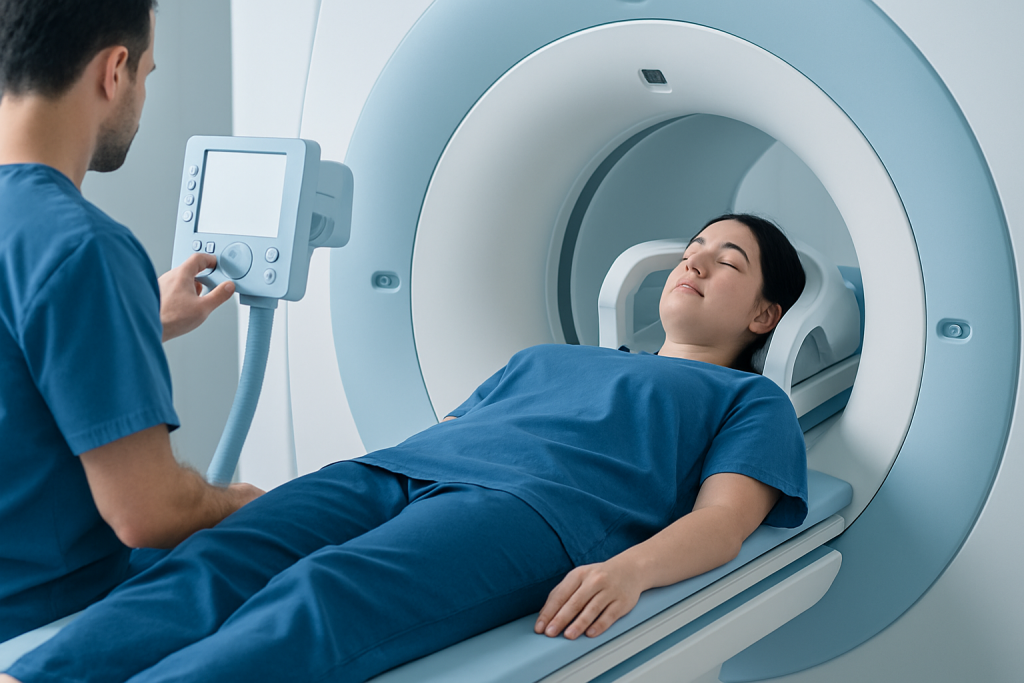
Diagnosis usually begins with a clinical examination and imaging studies. MRI is often preferred for a mass in an arm or leg because it shows the relationship between the tumor and surrounding muscles, nerves, and blood vessels. CT scans may be used when the mass is deeper or when doctors need to look at the chest or other regions for possible spread.
A biopsy is essential before treatment planning. This means taking a small sample of the tissue so a pathologist can examine it under the microscope and, when needed, perform additional laboratory testing. Because the way the biopsy is done can affect future surgery, it is best to have this step coordinated by clinicians familiar with sarcoma care rather than approached like an ordinary lump removal.
Staging may include imaging of nearby and distant areas, especially the lungs, because soft tissue sarcomas can spread there. The diagnosis is usually confirmed only after pathology review, and in complex cases a second opinion from a sarcoma-focused pathologist can be valuable. For patients traveling from another country, virtual record review and image sharing can help narrow the next steps before they arrive.
Treatment Options
Treatment depends on the size, location, grade, and stage of the tumor, as well as the patient’s overall health and treatment goals. Surgery is commonly the main treatment when the tumor can be removed safely. The aim is to achieve clear margins, meaning no visible cancer is left behind at the edges of the removed tissue.
Radiation therapy is often used before or after surgery to lower the risk of the cancer returning in the same area. It may help shrink a tumor before an operation or treat microscopic disease after the mass is removed. In some situations, especially when the tumor is larger, high-grade, or has spread, chemotherapy or other systemic treatments may be considered as part of a broader plan.
Reconstructive surgery, orthopedic support, or rehabilitation may also be part of treatment when the tumor is near a limb or joint. This is one reason sarcoma care is best delivered by a team rather than by a single specialist alone. The best plan balances cancer control with function, recovery time, and the realities of follow-up after the patient leaves the treatment center.
During the international-patient journey, treatment often requires careful sequencing. Pathology review, surgery, radiation, and follow-up imaging may need to be arranged in a way that is efficient and safe, especially when the patient is returning home between visits. At Acibadem Health Point, multidisciplinary specialists and JCI-accredited hospitals diagnose and treat synovial sarcoma for international patients as part of coordinated care.
Prevention & Self-care
There is no proven way to prevent synovial sarcoma. Since the condition usually arises without a clear, modifiable cause, prevention focuses more on early attention to symptoms than on avoiding a specific exposure. The practical goal is to notice a persistent lump or deep pain early enough for proper evaluation.
Self-care during and after treatment is centered on healing, mobility, and communication. Patients may be advised to follow wound-care instructions carefully, attend physical therapy, and gradually resume activity based on the surgical site and treatment plan. Keeping a simple record of symptoms, medication changes, and follow-up appointments can be especially useful when care continues across countries or healthcare systems.
- Monitor the surgical area or treated limb for changes in swelling, pain, redness, or range of motion.
- Keep copies of imaging reports, pathology results, and treatment summaries.
- Ask the care team what type of activity is safe during recovery and when to return for scans.
- Report new lumps, cough, chest symptoms, or unexplained pain without delay.
Emotional support is also part of self-care. A rare cancer diagnosis can feel isolating, particularly for patients who travel abroad for expert treatment. Clear written instructions, interpreter support when needed, and a defined follow-up plan can reduce uncertainty and help patients stay engaged in their own recovery.
When to See a Doctor
A medical evaluation is appropriate for any lump that is growing, deep, firm, or unexplained, especially if it lasts more than a few weeks. This is even more important if the area is painful, if movement is becoming limited, or if the mass seems to be changing in size or shape. Early assessment does not mean the problem is cancer, but it does help rule out serious causes.
People who have already been diagnosed should contact their doctor if new symptoms appear during or after treatment. Examples include increasing pain, swelling, shortness of breath, new lumps, or difficulty using the affected arm or leg. These changes may need imaging or examination to determine whether they are part of healing or a sign that treatment should be adjusted.
For patients who are arranging care from another country, it is reasonable to seek a specialist opinion before any biopsy or surgery on a suspicious mass. Sarcoma treatment is highly coordinated, and starting in the right place can make later steps more straightforward.
Living With Follow-up
After treatment, follow-up is a routine part of synovial sarcoma care. Doctors commonly use periodic exams and imaging to look for local recurrence or spread, often with special attention to the lungs and the original tumor site. The schedule depends on the tumor’s features and the treatment received.
Recovery may include physical therapy, pain management, and help with daily tasks until strength and function improve. Some patients need help adapting to changes in mobility or to scar tissue and stiffness after surgery or radiation. A gradual return to work, travel, and exercise is usually more sustainable than trying to resume everything at once.
Because recurrence can happen, even years later, patients benefit from keeping a lifelong record of their diagnosis and treatment. That record is especially important for people who move between healthcare systems or return home after treatment abroad. Consistent follow-up is not a sign of problem, but a practical way to protect long-term health.
Frequently asked questions
Is synovial sarcoma the same as arthritis or a joint problem?
No. Despite the name, synovial sarcoma is a cancer of soft tissue, not a typical arthritis condition. It may occur near a joint and cause pain or stiffness, which is why it can be mistaken for a musculoskeletal problem at first.
What does a synovial sarcoma lump feel like?
It is often firm, deep, and gradually enlarging. Some lumps are painless at first, while others cause aching or pressure because of their location. A lump that keeps changing should be evaluated by a doctor.
How is synovial sarcoma confirmed?
Imaging can show where the mass is and how it relates to nearby structures, but a biopsy is needed for confirmation. Pathology and specialized laboratory testing help determine the exact diagnosis and guide treatment.
Does synovial sarcoma always require surgery?
Surgery is often the main treatment when the tumor can be removed safely. Depending on the tumor’s features, radiation and sometimes chemotherapy or other systemic therapy may also be recommended.
Can synovial sarcoma come back after treatment?
Yes, it can recur, which is why follow-up visits and imaging are important. The timing and frequency of follow-up depend on the individual case and the treatment plan.
What should an international patient bring to a sarcoma appointment?
It helps to bring all prior imaging, pathology slides or reports, operative notes, and a list of treatments already received. These records allow the team to review the case efficiently and plan the next step without repeating unnecessary tests.
References
- National Cancer Institute
- American Cancer Society
- World Health Organization
- NCCN Clinical Practice Guidelines in Oncology
- Mayo Clinic
This article is for general information only and is not a substitute for professional medical advice. Please consult a qualified doctor about your individual situation.