Red Eye: Symptoms, Causes and Treatment

Key Takeaways
- Eye redness is a symptom, not a diagnosis, and the cause can range from simple irritation to conditions needing treatment.
- Pain, vision changes, light sensitivity, or discharge deserve medical attention, especially if they appear suddenly.
- Proper diagnosis often depends on a careful eye exam and a review of symptoms, contact lens use, injury, and general health.
- Home care may help mild cases, but the wrong drops or delayed treatment can sometimes make the problem worse.
- People who wear contact lenses, have eye trauma, or have recurring redness should not self-treat for long.
Medically reviewed by the Acıbadem clinical team — August 19, 2026
An eye that looks red inside is a common symptom with many possible causes, from dryness and irritation to infection or inflammation. Most cases are mild, but certain signs mean it is time to seek prompt eye care.
Overview
When an eye looks red inside, the color usually comes from visible blood vessels on the white part of the eye or from irritation on the surface of the eye. Some people notice it in one eye only, while others see it in both. The redness may appear alongside watering, burning, itching, a gritty feeling, or no other symptoms at all.
Because the eye can become red for many different reasons, the appearance alone does not tell the full story. A dry environment, lack of sleep, allergies, a small scratch, or a more significant eye disease can all create a similar picture. For this reason, the most useful next step is to pay attention to the pattern of symptoms, not just the color.
For an international patient, this symptom can be especially inconvenient during travel, after a long flight, or while adjusting to a new climate. Even then, the goal is not to panic; it is to notice whether the redness is mild and improving, or whether it is becoming painful, persistent, or associated with changes in vision.
Symptoms
Redness inside the eye may come with a range of sensations. Some people describe irritation or itchiness, while others feel pressure, soreness, or a foreign-body sensation as if something is stuck in the eye. Watery eyes are common, but thick discharge may point to infection.
Additional symptoms help separate minor irritation from more urgent eye conditions. Blurred vision, light sensitivity, headaches, swelling, or pain when moving the eye deserve closer attention. If the eye looks red after a hit to the face, after chemical exposure, or after wearing contact lenses for too long, the situation should be assessed promptly.
- Redness in one or both eyes
- Itching, burning, or dryness
- Watery eyes or discharge
- Blurred vision or halos around lights
- Light sensitivity
- Pain, pressure, or a scratchy feeling
Symptoms that come and go may still need evaluation if they keep returning. Recurrent redness can be linked to allergies, eyelid problems, dry eye, or inflammation inside the eye, and repeated episodes are worth discussing with an eye specialist.
Causes & Risk Factors

The most common reasons for eye redness are usually surface-related. Dry eye, allergic conjunctivitis, eye strain, smoke exposure, dust, chlorine, and rubbing the eyes can all make the vessels on the eye look more prominent. Mild viral conjunctivitis can also cause redness and tearing, often with a gritty feeling.
Some causes are deeper or more serious. Uveitis, corneal scratches, keratitis, acute glaucoma, and scleritis may produce significant redness, often with pain or vision changes. These conditions need medical assessment because the treatment depends on the exact diagnosis.
Risk factors can include contact lens wear, poor lens hygiene, recent eye injury, autoimmune disease, prolonged screen time, dry indoor air, and seasonal allergies. Travel can add its own triggers, such as long-haul flights, dehydration, dust, and sleep disruption, all of which may worsen dryness and irritation.
When the redness appears after using a new eye drop or cosmetic product, an irritation or allergy is also possible. A careful review of exposures often gives the first clue about what is driving the symptom.
Diagnosis
Diagnosing a red eye starts with questions about when the redness began, whether it affects one or both eyes, and what else is happening at the same time. The clinician may ask about pain, discharge, blurred vision, contact lens use, injury, allergies, recent illness, and any prior eye problems.
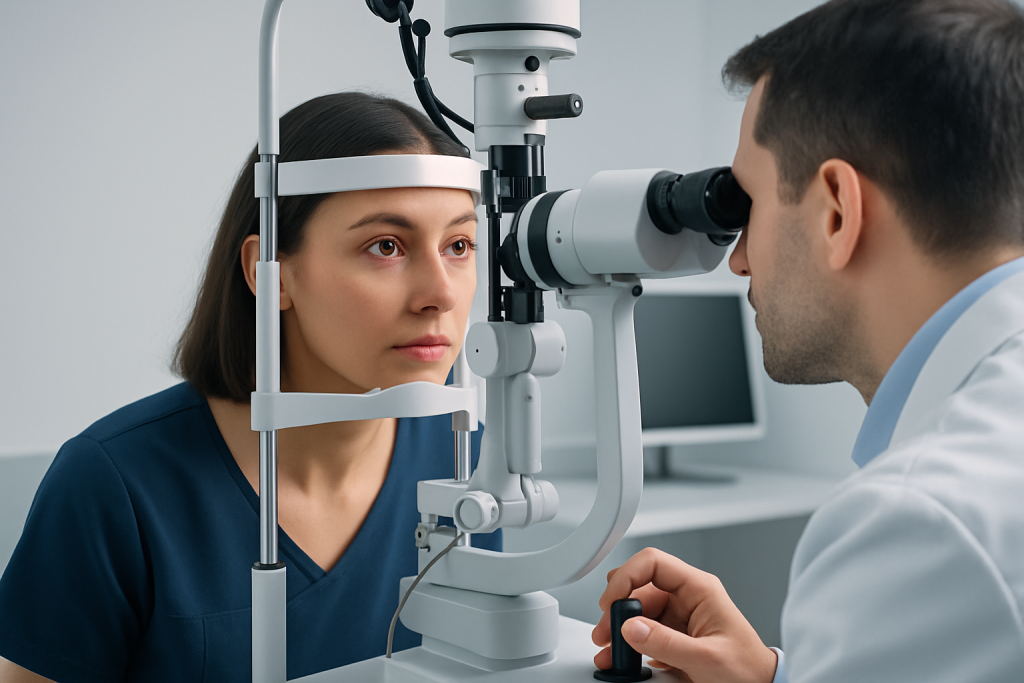
An eye examination may include checking visual acuity, the surface of the eye, the eyelids, the pupil response, and the front structures of the eye. In some cases, the doctor may use a fluorescent dye to look for scratches or corneal injury. If pressure inside the eye is a concern, it may also be measured.
Most of the time, these steps are enough to identify the likely cause. If inflammation, infection, or another underlying condition is suspected, additional tests may be recommended. A precise diagnosis matters because different causes can look similar but require very different treatment plans.
Treatment Options
Treatment depends entirely on the cause. Mild dryness or irritation may improve with rest, lubrication, and reducing exposure to smoke, dust, or screens. Allergy-related redness may respond to avoiding triggers and using doctor-recommended allergy treatments. Viral conjunctivitis is often managed supportively while it runs its course.
Other causes need targeted care. Bacterial infections may require prescription medicine, while corneal injuries, uveitis, scleritis, or glaucoma need prompt specialist management. In these situations, self-treatment can delay recovery or mask a more serious problem.
It is wise to avoid using leftover eye drops, especially those that promise to “whiten” the eye quickly. Some drops can temporarily shrink blood vessels without treating the cause, and frequent use may make redness harder to interpret. Contact lens wearers are usually advised to stop wearing lenses until an eye doctor says it is safe to resume.
For travelers or patients arranging care from another country, treatment is often smoother when the diagnosis is confirmed before choosing a flight home or scheduling follow-up. Acibadem Health Point’s multidisciplinary specialists and JCI-accredited hospitals diagnose and treat eye conditions for international patients, with care plans that can be coordinated across visits when needed.
Prevention & Self-care
Simple habits can lower the chance of recurring redness and help the eye recover. Good hand hygiene, avoiding eye rubbing, and removing contact lenses as directed are practical first steps. People prone to dryness often benefit from regular screen breaks, adequate hydration, and protection from wind or dry air.
Environmental changes can also make a difference. Sunglasses outdoors, a cleaner sleep environment, and reducing exposure to smoke or strong fumes may ease irritation. For allergy-prone eyes, limiting exposure to known triggers during high-pollen periods can be useful.
- Use contact lenses only as instructed
- Do not share eye drops or eye makeup
- Replace eye makeup regularly
- Take screen breaks if eyes feel tired or dry
- Wear protective eyewear during risky activities
Self-care is appropriate only when symptoms are mild and improving. If redness keeps returning, it is better to look for an underlying cause rather than repeatedly treating the surface symptom.
When to See a Doctor
Medical review is recommended if redness is accompanied by eye pain, vision changes, light sensitivity, thick discharge, or swelling. The same is true if the redness follows trauma, a chemical splash, or contact lens overuse. These features can signal conditions that should not be watched at home for long.
Even without severe symptoms, an eye that stays red for more than a few days, keeps recurring, or feels different from a typical irritation deserves evaluation. A doctor can confirm whether the problem is simple dryness or something that needs prescription treatment.
It is especially important to seek care promptly if one eye becomes suddenly very red, the pupil looks unusual, or the eye feels deeply painful. When in doubt, an eye examination is the safest way to protect vision and avoid unnecessary treatment.
Living With Recurring Eye Redness
Repeated redness can be frustrating because it interferes with reading, driving, work, and travel plans. Many people find that keeping a short symptom record helps identify patterns such as seasonal allergies, contact lens wear, dry indoor air, or screen-related strain. That information can be very useful during an eye visit.
If the symptom keeps returning, the goal is to identify the trigger rather than simply calming the redness each time. A stable routine, appropriate lens care, and timely follow-up can reduce flare-ups and make future episodes easier to manage. For patients traveling internationally, a clear written treatment plan also helps continuity of care when returning home.
Frequently asked questions
What does it mean when the inside of the eye is red?
It usually means the blood vessels on the eye surface are enlarged or irritated. Common causes include dryness, allergies, infection, or a minor scratch, but more serious eye conditions can also cause redness. The accompanying symptoms help show how urgent it is.
Can a red eye go away on its own?
Yes, mild irritation or dryness may improve without specific treatment. However, redness that lasts, keeps returning, or comes with pain or vision changes should be checked by a doctor. The cause should be identified before relying on repeated home care.
Is eye redness always an infection?
No, infection is only one possible cause. Allergies, dryness, eye strain, contact lens irritation, injury, and inflammation can all make the eye red. A doctor can usually narrow this down with a simple eye examination.
Should contact lens wearers be concerned about a red eye?
Yes, contact lens use raises the importance of getting the eye checked if redness appears. Lenses can irritate the surface and also increase the risk of corneal infection. It is safest to stop wearing lenses until a clinician advises otherwise.
What home care is reasonable for mild eye redness?
Resting the eyes, avoiding rubbing, limiting smoke or dust exposure, and using lubricating drops recommended by a pharmacist or doctor may help mild cases. If symptoms worsen or do not improve, medical review is the right next step. Never use someone else’s drops or leftover prescription eye medicine.
When is red eye an emergency?
Seek urgent care if redness comes with severe pain, sudden vision loss, a chemical exposure, a serious injury, or marked light sensitivity. A very sudden red eye with headache or halos around lights also needs prompt attention. These symptoms can point to conditions that require immediate treatment.
References
- American Academy of Ophthalmology
- National Eye Institute
- Mayo Clinic
- NHS
This article is for general information only and is not a substitute for professional medical advice. Please consult a qualified doctor about your individual situation.
Explore treatments in Turkey — costs, top hospitals & a free quote
JCI-accredited · board-certified surgeons · reply within 24h
Add us as a Preferred Source to see more of our trusted health content across Google Search, AI Overviews and Discover.