Allergic Conjunctivitis

Key Takeaways
- Allergic conjunctivitis is caused by an allergic reaction, not by an eye infection.
- It often affects both eyes and commonly causes itching, tearing, redness, and swelling.
- Triggers may include pollen, dust mites, pet dander, mold, and some eye products.
- Diagnosis is usually based on symptoms, eye examination, and allergy history.
- Treatment may include avoiding triggers, artificial tears, and doctor-recommended allergy medicines.
- People with severe pain, vision changes, or symptoms in only one eye should seek medical evaluation.
Allergic conjunctivitis is an eye allergy that can make the eyes itchy, red, watery, and sensitive, especially during pollen seasons or after exposure to dust, pets, or other triggers. With the right diagnosis and simple preventive steps, most people can find lasting relief and protect eye comfort.
Overview
When the eyes react to something the body considers an allergen, the result can be allergic conjunctivitis. The clear membrane covering the white part of the eye and the inside of the eyelids becomes irritated, leading to itching, redness, tearing, and a sensation that something is in the eye. For many people, the discomfort comes and goes with the seasons, while for others it is tied to indoor exposures that are present all year.
This condition is common and usually manageable. It is different from infectious conjunctivitis because it is driven by the immune system rather than germs. That distinction matters, especially for travelers and international patients who may wonder whether they need antibiotics or urgent isolation; in allergic conjunctivitis, the focus is typically on identifying triggers and calming the allergic response.
Although the symptoms can be annoying, allergic conjunctivitis is rarely dangerous by itself. Still, it can overlap with other eye problems, and persistent or one-sided symptoms deserve a medical check so the correct cause is identified.
Symptoms
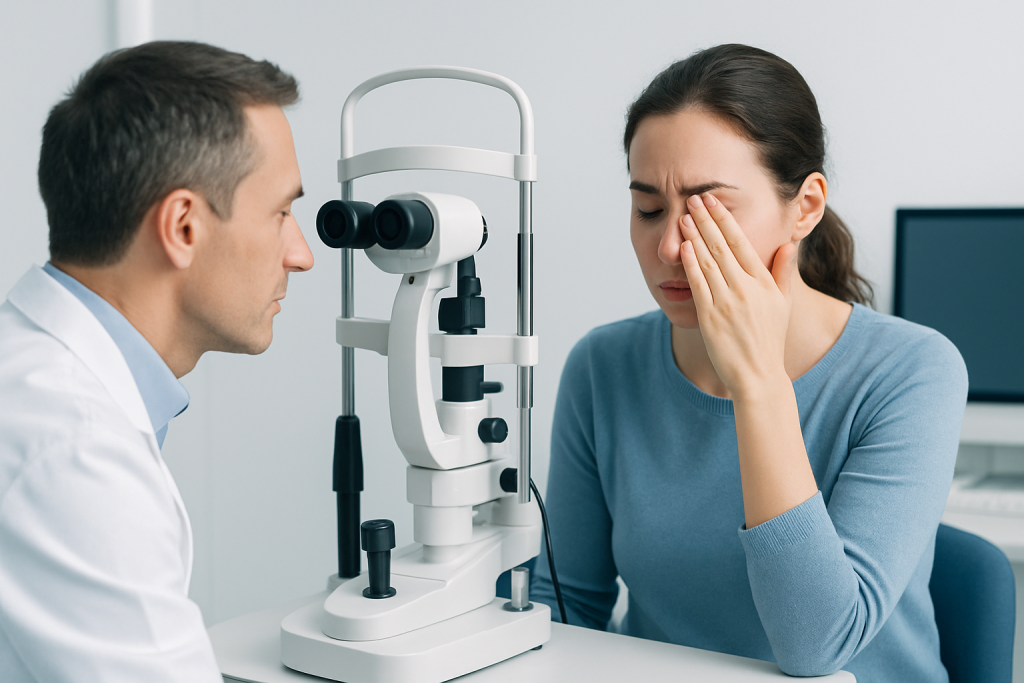
Itching is the hallmark symptom and often the clearest clue that allergies are involved. The eyes may water, feel gritty, and become red or puffy, and the eyelids may look swollen after exposure to pollen, dust, or animal dander. Some people also notice a clear, stringy discharge, frequent blinking, or a strong urge to rub the eyes.
Symptoms often affect both eyes, especially when the trigger is environmental. They may worsen outdoors on windy days, after cleaning dusty rooms, or in spaces with pets, carpeting, or mold. Many people also notice accompanying allergy symptoms such as sneezing, a runny nose, or nasal congestion.
Because eye rubbing can intensify irritation, the cycle of itching and rubbing may keep the eyes inflamed longer. In children, this can be mistaken for tiredness or poor sleep, while contact lens wearers may first notice that lenses feel uncomfortable sooner than usual.
Causes & Risk Factors

Allergic conjunctivitis develops when the immune system overreacts to a normally harmless substance. Common triggers include pollen from trees, grasses, or weeds; dust mites; pet hair and dander; mold spores; and sometimes cosmetics, eye drops, contact lens solutions, or other chemicals that come into contact with the eyes.
People with a personal or family history of allergies, asthma, or eczema are more likely to experience it. Seasonal allergic conjunctivitis tends to flare during high-pollen months, while perennial allergic conjunctivitis can appear year-round because the trigger is indoors or constantly present. Some patients also develop more persistent or intense symptoms if they live in a dry, dusty environment or have frequent exposure to irritants.
Travel can change exposure patterns in unexpected ways. A person who feels well at home may react after arriving in a new climate, staying in a hotel with heavy dust, or spending time near animals. For international patients, that shift in routine can be an important part of the history, because symptom timing often reveals the trigger.
Diagnosis
Diagnosis usually begins with a conversation about the pattern of symptoms, likely exposures, and whether both eyes are involved. An eye-care professional will often examine the eyelids, conjunctiva, and tear film to look for signs that point toward allergy rather than infection or another eye condition.
In many cases, the appearance and history are enough to make the diagnosis. If symptoms are frequent, severe, or difficult to connect with a trigger, a clinician may recommend allergy testing or ask about other allergic conditions. This can be especially helpful when symptoms persist after a move, a long trip, or a change in home environment.
Diagnosis also includes ruling out problems that can look similar, such as dry eye, viral conjunctivitis, blepharitis, or contact lens-related irritation. That step is important because treatment choices differ, and the safest plan depends on the true cause of the redness and discomfort.
Treatment Options
Treatment usually starts with reducing exposure to the trigger whenever possible. Artificial tears can help rinse allergens from the eye surface and soothe irritation, while cool compresses may relieve itching and swelling. For many people, these practical steps make the eyes more comfortable within a short time.
If symptoms continue, a doctor may suggest allergy eye drops or oral allergy medicines, depending on the person’s overall allergy pattern and other health factors. Some eye drops work by calming the allergic reaction, while others reduce inflammation or keep the conjunctiva from reacting as strongly. The right choice depends on symptom severity, age, other medications, and whether the person wears contact lenses.
People who have contact lens discomfort, repeated flare-ups, or symptoms that do not improve with simple measures should not self-treat indefinitely. A clinician may adjust the plan, recommend a different formulation, or look for another cause. In more complex cases, especially when several allergies are involved, coordinated care from an eye specialist and an allergist can be helpful.
For international patients who are arranging care from abroad, treatment plans are often easiest when they include both symptom control and a follow-up strategy. That can mean learning how to use drops correctly, understanding what to avoid after returning home, and knowing when to seek re-evaluation if symptoms return.
Prevention & Self-care
Preventing flare-ups is often easier than trying to quiet them after the eyes are already inflamed. People who know their triggers can reduce exposure by keeping windows closed during high-pollen days, showering after outdoor activities, cleaning bedding regularly, and using dust-control measures at home. If pets are a trigger, limiting close contact and keeping them out of the bedroom may help.
Simple eye-care habits can also make a difference. It is best to avoid rubbing the eyes, since rubbing releases more inflammatory chemicals and can worsen itching. Cold compresses, lubricating drops recommended by a clinician, and careful contact lens hygiene may all support comfort.
For those traveling, a few planning steps can reduce the chance of a flare. Bringing prescribed eye medicines, knowing local pharmacy options, and keeping a copy of the diagnosis can help if symptoms recur in another country. A person with recurring allergies may also benefit from noticing when symptoms begin, what environment they occurred in, and how quickly they settled after the exposure ended.
When to See a Doctor
Medical review is a good idea when symptoms are frequent, bothersome, or hard to distinguish from infection. A doctor should also be consulted if the redness is only in one eye, if the discharge is thick or colored, or if symptoms last longer than expected despite home care. These patterns may suggest another eye condition that needs specific treatment.
Prompt attention is especially important if there is eye pain, light sensitivity, blurred vision, a feeling of something stuck in the eye that does not improve, or swelling that becomes significant. Contact lens wearers should be more cautious, because lens-related irritation and corneal problems can sometimes look like allergy at first.
Anyone who has repeated episodes may benefit from a structured care plan rather than treating each flare on their own. In an international-patient setting, Acibadem Health Point’s multidisciplinary specialists and JCI-accredited hospitals can help diagnose and treat allergic conjunctivitis for patients who need coordinated eye care while away from home.
Living Well With Eye Allergies
Allergic conjunctivitis can be frustrating, but it is often very manageable once the trigger pattern is understood. Many people do best when they combine prevention, simple comfort measures, and targeted medication under medical guidance rather than waiting for symptoms to become intense.
Because eye allergies often travel with other allergy symptoms, treating the wider allergic picture can improve day-to-day comfort. A clear diagnosis also helps avoid unnecessary antibiotics and unnecessary worry, which is reassuring for both local patients and those managing care from another country.
With the right approach, most people can keep their eyes comfortable and continue normal routines with far fewer interruptions. The most useful next step is usually a conversation with an eye-care professional who can confirm the cause and tailor the plan to the person’s triggers and lifestyle.
Frequently asked questions
Is allergic conjunctivitis the same as pink eye?
Not always. Allergic conjunctivitis is caused by an allergic reaction, while pink eye can also refer to viral or bacterial infections. It often affects both eyes and causes itching more than pain, but a doctor can help confirm the cause if the symptoms are unclear.
Can allergic conjunctivitis go away on its own?
Yes, symptoms may improve when the allergen is removed or exposure decreases. However, repeated exposure can make the problem keep returning, so identifying triggers is an important part of care.
Can contact lenses make allergic conjunctivitis worse?
They can, especially if allergens collect on the lenses or the eyes are already irritated. People who wear contacts should speak with an eye-care professional about whether to pause lens use during a flare and how to clean lenses safely.
Does allergic conjunctivitis affect vision?
It usually does not cause lasting vision loss, but swelling and tearing can temporarily blur vision. If vision changes are significant or do not clear, medical evaluation is important.
Should children with itchy red eyes be seen by a doctor?
Yes, if symptoms are frequent, severe, or hard to distinguish from infection. A clinician can confirm whether allergy is the cause and suggest age-appropriate treatment.
References
- American Academy of Ophthalmology
- National Eye Institute
- Mayo Clinic
- Merck Manual Professional Edition
- World Allergy Organization
This article is for general information only and is not a substitute for professional medical advice. Please consult a qualified doctor about your individual situation.