Prosthodontist

Key Takeaways
- A prosthodontist specializes in restoring the appearance and function of teeth and bite.
- Care may include crowns, bridges, dentures, implant restorations, veneers, and full-mouth reconstruction.
- People are often referred after tooth loss, trauma, severe wear, or complex cosmetic and functional concerns.
- Treatment planning usually involves detailed assessment, imaging, impressions, and coordination with other dental specialists.
- Good oral hygiene, regular follow-up, and maintenance visits help replacement teeth last longer.
A prosthodontist is a dental specialist who focuses on restoring missing, worn, or damaged teeth and improving how the mouth functions. Their care can range from crowns and bridges to dentures, implant-supported restorations, and more complex full-mouth rehabilitation.
Overview
A prosthodontist is a dental specialist trained to rebuild teeth, replace missing teeth, and help the mouth work comfortably again. The focus is not only on how a smile looks, but also on how well a person can chew, speak, and close the jaws in a balanced way.
People often meet a prosthodontist when everyday dental treatment is no longer enough. That may happen after tooth loss, major wear, injury, congenital differences, or a long dental history that has left the bite unstable. In many cases, the specialist coordinates with general dentists, oral surgeons, periodontists, and laboratory technicians to design care that fits the person’s needs and long-term goals.
For international patients, prosthodontic care may be part of a planned journey rather than a single appointment. There is often a review of previous records before travel, an in-person examination on arrival, followed by staged treatment and later follow-up, sometimes with support from a local dentist at home.
Symptoms and Situations That May Lead to a Prosthodontist
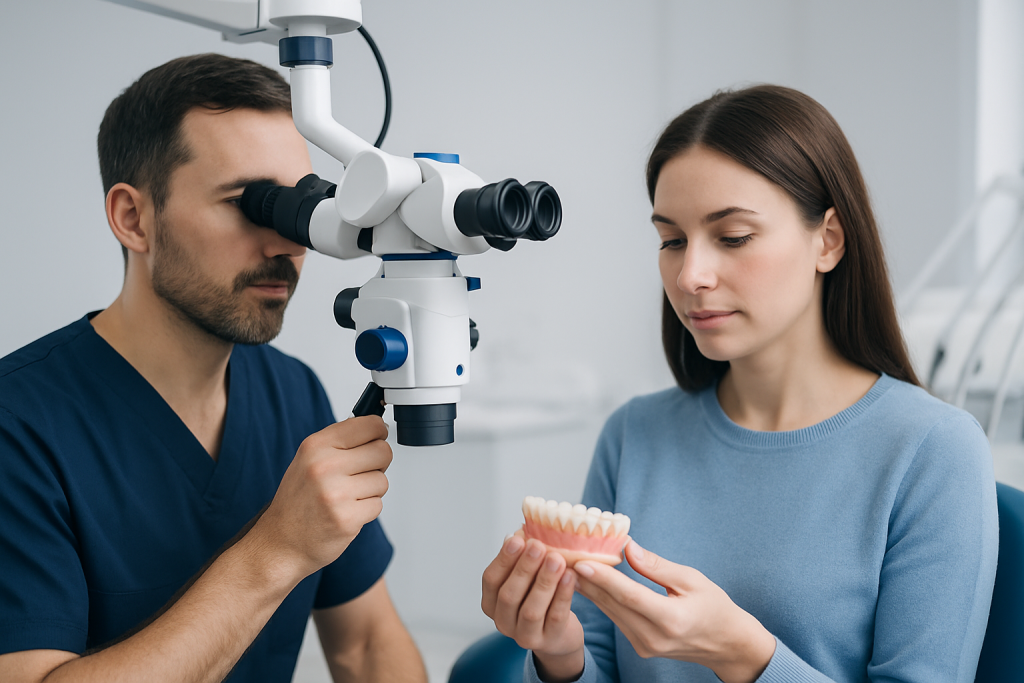
There is no single symptom that points only to prosthodontic care, but certain changes often signal that a specialist opinion would be useful. These include missing teeth, loose or broken crowns, difficulty chewing, a bite that no longer feels even, or a denture that slips, rubs, or no longer fits properly.
Some people seek help because their teeth have become worn down from grinding or age-related changes. Others notice speech changes, sensitivity caused by exposed tooth structure, or embarrassment about gaps and visible damage. In complex cases, people may also feel jaw strain, trouble biting into foods, or an ongoing sense that the smile is “off” in shape or proportion.
- One or more missing teeth
- Broken, cracked, or heavily worn teeth
- Unstable or uncomfortable dentures
- Problems chewing or speaking clearly
- Changes after trauma, cancer treatment, or major dental work
Some patients are referred before treatment starts, especially when implants, multiple crowns, or a full-mouth plan is being considered. In those situations, prosthodontic planning helps organize the order of care so that the final result is more predictable and easier to maintain.
Causes and Risk Factors
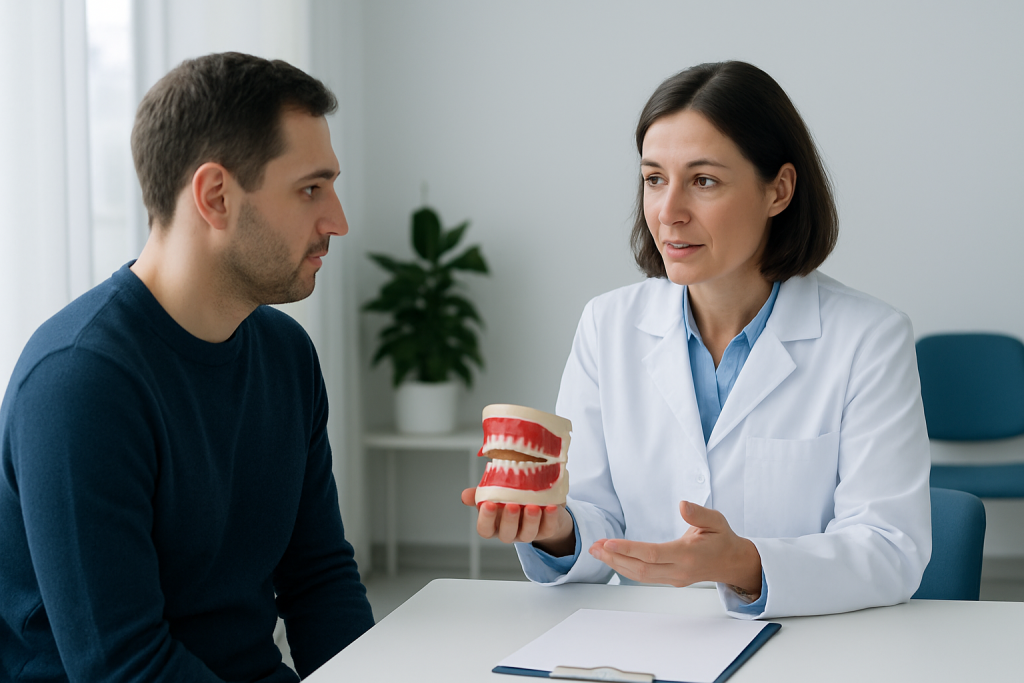
Prosthodontic treatment becomes relevant when teeth or supporting structures can no longer do their work effectively. Tooth decay, gum disease, trauma, and tooth wear are common reasons teeth may need restoration or replacement. Over time, missing teeth can also shift surrounding teeth and change how the upper and lower jaws meet.
Several factors may increase the chance of needing prosthodontic care. These include older age, long-standing dry mouth, teeth grinding, poor access to dental treatment, a history of extensive fillings or root canal treatment, and medical conditions that affect healing or oral health. People who have had head and neck cancer treatment may also need specialized restorative planning because tissues can be more fragile and treatment decisions may need to be coordinated carefully.
Risk factors do not mean a person will definitely need complex rehabilitation, but they help explain why one mouth may need more support than another. A prosthodontist looks at the whole picture, including the condition of the gums, bone support, jaw alignment, and the person’s daily habits and expectations.
Diagnosis and Treatment Planning
Prosthodontic care begins with a detailed assessment rather than a quick decision. The specialist will usually review dental and medical history, examine the teeth and gums, assess the bite, and ask about chewing, speaking, comfort, and appearance concerns. If needed, photographs, digital scans, X-rays, or other imaging may be used to map the current condition more precisely.
Planning often includes impressions or digital models, because replacement teeth must fit the mouth and work with the opposing teeth. The prosthodontist may also test the joints, evaluate how much tooth structure remains, and decide whether teeth can be repaired or should be replaced. If implants are part of the plan, the specialist will consider bone quality, gum health, and how many teeth need support.
For patients traveling from another country, collecting records before the trip can save time and reduce uncertainty. Previous X-rays, lists of past dental work, and a clear description of symptoms help the team create a practical treatment sequence. Good planning is especially important when treatment will happen over more than one visit or when the patient will need temporary restorations before final ones are made.
Treatment Options
Prosthodontists use a wide range of restorative options, and the best choice depends on how many teeth are involved, how the bite functions, and what the person hopes to improve. Some treatments are meant to protect and strengthen existing teeth, while others replace teeth that are missing entirely.
Common options include crowns, which cover and support a damaged tooth; bridges, which replace one or more missing teeth by anchoring to nearby teeth or implants; dentures, which may be partial or full; and implant-supported restorations, which are secured to implants placed in the jaw. Veneers may also be used in selected cases where the main goal is improving the front surface and appearance of teeth.
Complex rehabilitation may involve several steps, such as rebuilding worn teeth, improving the bite, and replacing missing teeth in phases. In some cases, temporary restorations are used first so the patient can test comfort, speech, and bite before the final version is completed. When the situation is complicated, the prosthodontist may work alongside other specialists to make sure the final result is stable and comfortable.
Patients sometimes ask whether they need the “most advanced” option. In practice, the right treatment is the one that matches the mouth, the medical background, the timeline, and the person’s ability to maintain the restoration over time. A careful discussion of benefits, limitations, and maintenance needs is part of good prosthodontic care.
Prevention and Self-care
Not every prosthodontic problem can be prevented, but daily habits can protect both natural teeth and restorations. Brushing gently but thoroughly, cleaning between teeth, and keeping up with regular dental visits all matter. People with crowns, bridges, or dentures often benefit from a personalized cleaning routine because replacement teeth need consistent care even though they are not natural enamel.
For those who grind their teeth, a night guard or other protective approach may help reduce wear on dental work. If dentures are worn, they should be removed and cleaned as directed, and sore spots or looseness should be reported rather than ignored. Implants also require ongoing attention, since the gums around them need to stay healthy over the long term.
- Brush and clean between teeth daily
- Follow the cleaning routine recommended for dentures, bridges, or implants
- Avoid using teeth to open packages or bite hard non-food objects
- Attend maintenance visits even if the restoration feels fine
- Report cracking, looseness, pain, or rubbing early
International patients may need a simple written care plan before returning home. That plan can include when to eat normally again, how to clean temporary or final restorations, and which symptoms should prompt a local dental review. Clear instructions help protect the result once the patient is back in their own country and daily routine.
Frequently Asked Questions
What does a prosthodontist do that a general dentist may not?
A prosthodontist focuses on complex restoration and replacement of teeth, especially when several teeth are involved or the bite needs careful rebuilding. General dentists provide many restorative treatments, but a prosthodontist is often called when the case is more complicated or when a full-mouth plan is needed.
Do prosthodontists only place dentures?
No. Dentures are only one part of prosthodontics. Prosthodontists also design crowns, bridges, implant restorations, veneers, and comprehensive rehabilitation plans for damaged or missing teeth.
Is prosthodontic treatment mainly cosmetic?
It can improve appearance, but the goal is usually broader than cosmetics. Good prosthodontic care aims to restore chewing, speaking, comfort, and bite balance as well as appearance.
How long does treatment take?
That depends on the procedure and whether healing time is needed, especially with implants or multiple stages. Some treatments are completed in a few visits, while full rehabilitation may take longer and involve temporary restorations.
Are prosthodontic restorations permanent?
They are designed to be durable, but they still need maintenance and may eventually need repair or replacement. Regular checkups help catch wear, looseness, or gum changes early.
Can someone travel internationally for prosthodontic care?
Yes, many people do, especially for complex treatment plans. It helps to bring recent records, ask about the number of visits needed, and clarify follow-up arrangements before traveling.
References
American College of Prosthodontists
American Dental Association
National Institute of Dental and Craniofacial Research
British Society of Prosthodontics
World Health Organization
Frequently asked questions
What does a prosthodontist do that a general dentist may not?
A prosthodontist focuses on complex restoration and replacement of teeth, especially when several teeth are involved or the bite needs careful rebuilding. General dentists provide many restorative treatments, but a prosthodontist is often called when the case is more complicated or when a full-mouth plan is needed.
Do prosthodontists only place dentures?
No. Dentures are only one part of prosthodontics. Prosthodontists also design crowns, bridges, implant restorations, veneers, and comprehensive rehabilitation plans for damaged or missing teeth.
Is prosthodontic treatment mainly cosmetic?
It can improve appearance, but the goal is usually broader than cosmetics. Good prosthodontic care aims to restore chewing, speaking, comfort, and bite balance as well as appearance.
How long does treatment take?
That depends on the procedure and whether healing time is needed, especially with implants or multiple stages. Some treatments are completed in a few visits, while full rehabilitation may take longer and involve temporary restorations.
Are prosthodontic restorations permanent?
They are designed to be durable, but they still need maintenance and may eventually need repair or replacement. Regular checkups help catch wear, looseness, or gum changes early.
Can someone travel internationally for prosthodontic care?
Yes, many people do, especially for complex treatment plans. It helps to bring recent records, ask about the number of visits needed, and clarify follow-up arrangements before traveling.
References
- American College of Prosthodontists
- American Dental Association
- National Institute of Dental and Craniofacial Research
- British Society of Prosthodontics
- World Health Organization
This article is for general information only and is not a substitute for professional medical advice. Please consult a qualified doctor about your individual situation.