Positioning Of Fetus

Key Takeaways
- Fetal position describes how the baby lies in the womb and can change throughout pregnancy.
- Head-down positioning is usually preferred near term, but breech or transverse positions may still be managed safely in selected cases.
- Ultrasound and physical examination are the main ways clinicians assess fetal position.
- Some positions resolve on their own; others may need monitoring, external turning, or a planned birth approach.
- Women should seek medical advice if they notice decreased fetal movement, bleeding, leaking fluid, or painful regular contractions.
Positioning of the fetus refers to how a baby is lying in the uterus during pregnancy, especially near the end of pregnancy when birth approach matters. Most babies settle head-down before delivery, but different positions are common and can often be monitored or managed with appropriate medical guidance.
Overview
Positioning of the fetus is the way a baby lies inside the uterus. In early and mid-pregnancy, the fetus often changes position many times because there is still room to move. As pregnancy progresses, space becomes more limited and the baby usually settles into a position that is important for birth planning.
Clinicians pay the closest attention to fetal position in the third trimester, especially near the expected delivery date. The most familiar term is head-down, also called cephalic or vertex presentation. Other positions, such as breech or transverse, are not uncommon and do not automatically mean that something is wrong; they simply call for a thoughtful review of the safest next step.
For many families, fetal position becomes especially relevant when pregnancy care spans countries or when a planned delivery is being organized from abroad. In those situations, it helps to understand the terms used in scans and clinic notes so that decisions can be made confidently and quickly with the obstetric team.
Common fetal positions
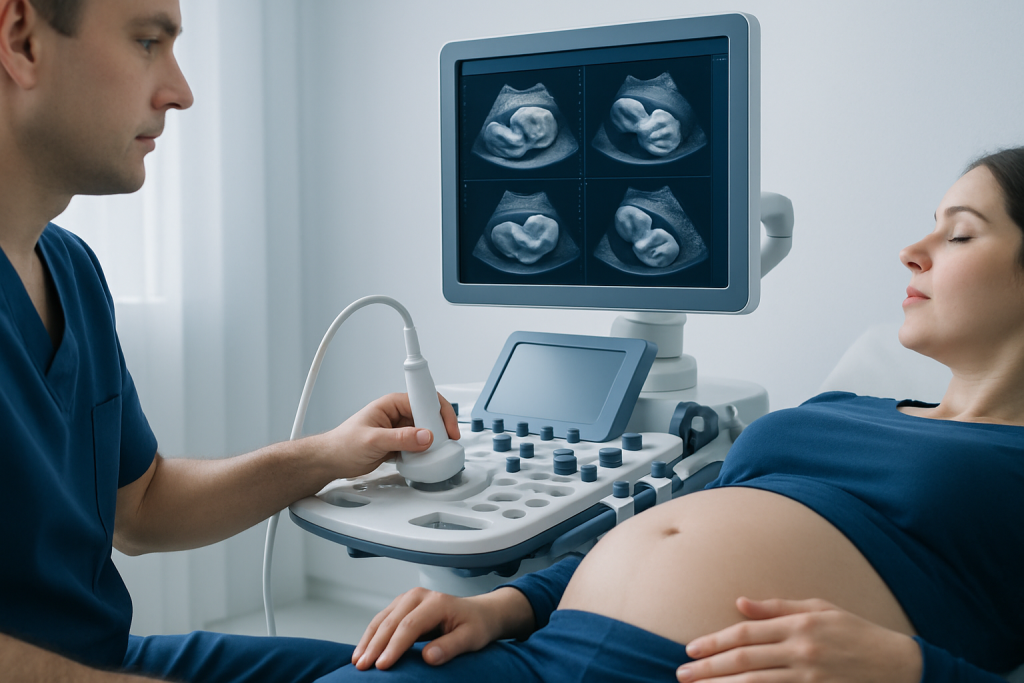
Several terms may appear in an ultrasound report or discussion with the obstetrician. Each describes how the baby is oriented in relation to the birth canal, and each has different implications as pregnancy reaches term.
Cephalic presentation means the baby is head-down. This is usually the most favorable position for vaginal birth. Within this category, the baby may face slightly different directions, and clinicians also consider whether the head is flexed well, which can affect labor progression.
Breech presentation means the buttocks or feet are pointing downward. There are different breech types, including frank, complete, and footling breech. Transverse lie means the baby is lying sideways. Other descriptions, such as oblique lie or occiput posterior position, may also be used depending on the exact orientation of the baby.
- Cephalic: head-down
- Breech: bottom or feet first
- Transverse: sideways across the uterus
- Oblique: angled position
- Occiput posterior: head-down but facing the mother’s front
Symptoms and how fetal position is noticed

Fetal position does not usually cause a symptom by itself. Many women learn about it during a routine antenatal visit, a scan, or a physical examination rather than through a specific sensation.
Some people do notice that movements feel different depending on the baby’s posture. Kicks may be felt higher or lower in the abdomen, and hiccups may seem to come from a particular side. These observations can be interesting, but they are not reliable enough to replace medical assessment.
Near term, an obstetrician or midwife may suspect breech or another non-head-down position if the baby’s head is felt in the upper abdomen or if the heartbeat and movement pattern suggest a different orientation. Ultrasound is then used to confirm the exact position.
Causes and risk factors
There is often no single reason why a fetus remains breech or transverse near the end of pregnancy. In many cases, the baby simply has not settled into the head-down position yet, or it may still be moving between positions until later in pregnancy.
Certain factors can make non-cephalic positioning more likely. These may include placenta location, fluid levels that are higher or lower than expected, multiple pregnancy, uterine shape differences, or a history of previous breech presentation. Prematurity can also be associated with a baby that is not yet head-down, because earlier in pregnancy there is still more room to move.
It is helpful to remember that risk factors do not predict every case. A baby with none of these features can still be breech, and a baby with several risk factors may still turn on its own. That is why individualized assessment is more useful than assumptions.
Diagnosis and monitoring
Diagnosis begins with a clinical examination and is usually confirmed with ultrasound. The scan shows whether the baby is head-down, breech, transverse, or in another position, and it may also show placenta location, amniotic fluid volume, and other details that matter for planning delivery.
During a hands-on abdominal examination, clinicians may feel the baby’s head, back, and bottom to estimate position. This approach is quick and informative, but ultrasound is more precise, especially if the uterus is tense, the mother has a higher body weight, or the position is difficult to judge by touch alone.
For Myomectomy Recovery for International Patients: The Usual Travel Timeline" class="ahp-ilk">international patients, keeping a copy of scan reports can be practical. When care is transferred between countries or hospitals, written documentation of fetal position and the gestational age at which it was observed helps the next team make consistent decisions.
Treatment options and birth planning
Management depends on the baby’s position, gestational age, the mother’s health, and the overall pregnancy picture. If the baby is still preterm, clinicians may simply monitor, because many fetuses turn naturally before delivery becomes imminent.
When a fetus remains breech near term, one option in selected pregnancies is external cephalic version, a procedure in which a clinician gently tries to turn the baby from the outside of the abdomen. This is not suitable for every pregnancy, and it should only be done in a setting where the team can assess safety and respond if needed. Some pregnancies are better managed with planned cesarean birth, while others may still allow a vaginal birth under experienced care depending on local protocols and clinical circumstances.
If the baby is transverse close to labor, delivery planning becomes more important because vaginal birth is generally not possible in that position. The obstetric team may recommend observation, a turning attempt in selected cases, or a scheduled cesarean delivery. The right choice is made by weighing maternal safety, fetal well-being, and the likelihood that the position will change before labor begins.
General treatment pathways may include:
- Watchful waiting if there is still time for the baby to turn naturally
- External cephalic version in appropriate candidates
- Planned cesarean delivery when a non-head-down position persists or other factors apply
- Individualized birth planning for women with prior uterine surgery, placenta concerns, or multiple gestation
Prevention and self-care
There is no guaranteed way to control fetal position, and that is reassuringly normal. The baby’s movements are influenced by several factors that are not under the mother’s control, so the focus is usually on good monitoring rather than prevention in the strict sense.
Still, some self-care habits support healthy pregnancy and make it easier to respond quickly if the position is uncertain. Keeping scheduled antenatal visits, attending recommended scans, and noting fetal movement patterns can all be useful. If the mother is traveling for maternity care, it is wise to arrange records, understand where urgent obstetric assessment is available, and know the local emergency contact details before the journey.
Comfort measures and movement advice are sometimes discussed online, but they should be approached carefully. A clinician should guide any exercises, posture strategies, or alternative methods, especially if there are placenta concerns, bleeding, contractions, or other pregnancy complications.
When to see a doctor
Medical advice should be sought promptly if there is reduced fetal movement, vaginal bleeding, leaking fluid, regular painful contractions, or severe abdominal pain. These symptoms are not specific to fetal position, but they deserve timely assessment in any pregnancy.
A doctor should also be contacted if there is known breech or transverse presentation and the mother is unsure about the delivery plan, especially after reaching the third trimester. Clear guidance is particularly helpful when care will be continued in another country or at a different hospital, because birth timing and available options may vary by setting.
Women who have been told the baby is not head-down may benefit from discussing the likely next steps early, rather than waiting until labor starts. In experienced centers, multidisciplinary teams can review ultrasound findings, maternal history, and delivery preferences together so that the plan is clear and realistic.
At Acibadem Health Point, multidisciplinary specialists and JCI-accredited hospitals support diagnosis and treatment planning for international patients who need careful management of fetal position and delivery options.
Frequently asked questions
What does fetal position mean in pregnancy?
Fetal position describes how the baby is lying inside the uterus. It becomes especially important near the end of pregnancy because it can affect the safest way to plan birth.
Is breech position always a problem?
No. Breech position is a common reason for extra monitoring, but it does not automatically mean there is an emergency. The obstetric team looks at the whole pregnancy before deciding on the best plan.
Can a baby change position late in pregnancy?
Yes, some babies turn on their own even in the third trimester. The chance of change usually decreases as pregnancy advances and space becomes more limited.
How is fetal position checked?
Clinicians use abdominal examination and ultrasound to confirm the baby’s position. Ultrasound gives the clearest picture and may also help assess other factors that matter for delivery planning.
Can exercises guarantee that a baby will turn head-down?
No exercise can guarantee a change in fetal position. If a baby remains breech near term, a clinician can discuss whether observation, an external turning procedure, or another birth plan is appropriate.
When should a woman seek urgent care during pregnancy?
Urgent assessment is important if fetal movements decrease, bleeding starts, fluid leaks, or contractions become regular and painful. These signs should be reviewed promptly regardless of fetal position.
References
- American College of Obstetricians and Gynecologists
- Royal College of Obstetricians and Gynaecologists
- World Health Organization
- Mayo Clinic
- NHS
This article is for general information only and is not a substitute for professional medical advice. Please consult a qualified doctor about your individual situation.
More from the Health Library



Related Specialists

Prof. Dr. A. Taner Usta
Gynecology & Obstetrics
Prof. Dr. Ahmet Tayyar
Gynecology & Obstetrics
Prof. Dr. Ahmet Cem Batukan
Gynecology & Obstetrics
Dr. Sevgi Selen
Gynecology & Obstetrics