Spotting And Implantation

Key Takeaways
- Implantation bleeding is usually light, brief, and occurs around the time the embryo attaches to the uterine lining.
- Not all early pregnancy spotting is implantation; causes can range from cervical irritation to infection or pregnancy-related concerns.
- The color, amount, timing, and associated symptoms help guide what the bleeding may mean.
- Severe pain, heavy bleeding, dizziness, or passing tissue need prompt medical assessment.
- A pregnancy test and medical review are often the best way to clarify what is happening.
Spotting in early pregnancy can be unsettling, especially when it happens around the time a period is expected. In many cases, light bleeding may be related to implantation, but it can also have other explanations that deserve careful attention.
Overview
Spotting and implantation are closely linked in early pregnancy conversations because small amounts of bleeding can appear at the same time a fertilized egg settles into the uterine lining. For many people, that first trace of blood is noticed before a missed period, which can make the moment emotionally complicated: it may be a hopeful sign, a confusing one, or simply a reason to pause and watch carefully.
Implantation bleeding is generally described as light spotting rather than a flow. It is typically short-lived and may look pink, brown, or red. Even so, early pregnancy bleeding is not always implantation, and it should not be assumed to be harmless without considering the full picture. Timing, symptoms, and pregnancy test results all matter.
From an international-patient perspective, this is one of those situations where quick questions often travel with real uncertainty. Someone may be away from home, unsure which clinic to contact, or trying to decide whether to wait for a local appointment or seek assessment sooner. A calm, informed approach helps separate common early-pregnancy changes from signs that need medical attention.
Symptoms
Implantation-related spotting tends to be light and brief. It may appear as a few streaks on underwear, a small amount on toilet tissue, or a tiny amount in a panty liner. The blood may be pink or brown, which can suggest older blood that has taken longer to leave the body.
Common features that may fit implantation include:
- Spotting rather than a heavier menstrual flow
- Bleeding lasting a few hours to a couple of days
- Little or no cramping, or mild lower abdominal twinges
- Occurring around the expected time of a period or shortly before it
Other symptoms, however, can point in different directions. Bleeding with stronger pain, one-sided pelvic discomfort, fever, dizziness, foul-smelling discharge, or bleeding that becomes heavier over time should not be treated as routine spotting. These signs deserve a proper medical review.
It also helps to remember that some people notice spotting after intercourse, a pelvic exam, or strenuous activity because the cervix can be more sensitive. That type of bleeding may be unrelated to implantation and still be worth mentioning to a clinician, especially if pregnancy is possible.
Causes & Risk Factors

Implantation happens when a fertilized egg attaches to the lining of the uterus. As the embryo burrows into this tissue, tiny blood vessels can be disturbed, leading to a small amount of bleeding. This is the basic reason implantation spotting can occur in early pregnancy.
However, early bleeding has several possible explanations. Some are benign and temporary, while others need closer attention. These may include cervical irritation, hormonal changes, vaginal infection, a threatened miscarriage, or an ectopic pregnancy. Because the body is still in the earliest phase of pregnancy, the cause is not always clear from appearance alone.
Certain situations can make spotting more likely or more noticeable:
- Recent intercourse or a pelvic examination
- Hormonal fluctuations in the cycle or early pregnancy
- Use of fertility treatment, which may make early pregnancy timing and symptoms closely monitored
- Existing cervical sensitivity or infection
- A history of prior pregnancy complications
For people who have travelled for fertility care or are returning home after embryo transfer or other treatment, timing can feel especially important. In those settings, the clinic’s guidance on when to test and when to report bleeding is often part of the care plan, since early symptoms are not interpreted in isolation.
Diagnosis
There is no single symptom that can confirm implantation bleeding. Diagnosis usually begins with a conversation about the amount of bleeding, its color, how long it lasted, the date of the last menstrual period, and whether pregnancy is suspected or confirmed. These details help a clinician judge whether the pattern fits implantation or something else.
A pregnancy test is often the first step. If the test is negative but pregnancy is still possible, a clinician may advise repeating it after a short interval. If the test is positive and bleeding continues, further assessment may be needed to confirm that the pregnancy is located in the uterus and developing as expected.
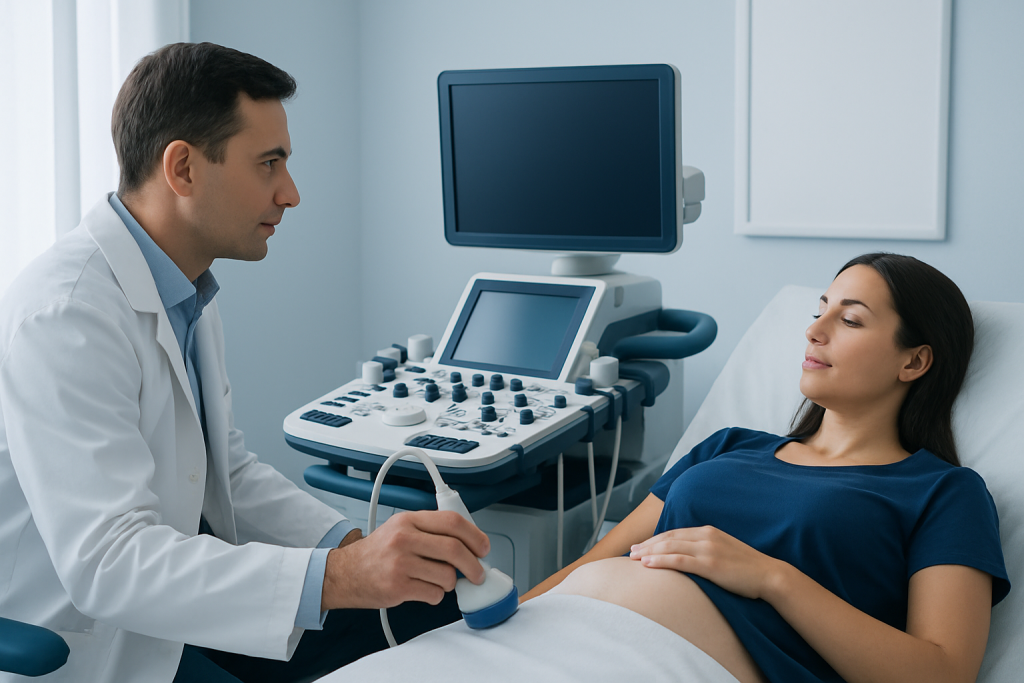
Depending on the situation, evaluation may include a pelvic exam, blood tests to measure pregnancy hormone levels over time, and an ultrasound. These tests are not always needed for simple, brief spotting, but they become more important when pain, heavier bleeding, or uncertainty about the pregnancy is present. For people abroad, it can be reassuring to know that these assessments are standard and widely available in women’s health and fertility settings.
Treatment Options
Implantation bleeding itself usually does not require treatment. Once it is recognized as a mild, self-limited part of early pregnancy, the main approach is observation and appropriate follow-up. Rest is sometimes helpful if cramping or anxiety makes the person feel unwell, but bed rest is not routinely prescribed for uncomplicated spotting.
If the bleeding is due to another cause, treatment depends entirely on that cause. A clinician may recommend managing an infection, monitoring a very early pregnancy more closely, or investigating a possible ectopic pregnancy if symptoms suggest it. This is why self-diagnosing bleeding in early pregnancy can be risky; the right treatment follows the right diagnosis.
When fertility treatment is involved, the care team may already have a follow-up schedule in place. Patients are often advised not to change prescribed medications or supplements without guidance from their specialist. If a person is receiving care away from home, sharing the clinic’s written plan with a local doctor can help avoid delays and keep communication clear.
Prevention & Self-care
Implantation bleeding itself cannot be prevented, because it is part of the natural process of pregnancy when it occurs. What can be supported is a calmer, safer response to early spotting. Noting the amount of blood, timing, and any associated symptoms can make follow-up more useful and less stressful.
Practical self-care measures include:
- Use a pad or liner rather than a tampon if bleeding is present
- Track the color, amount, and duration of spotting
- Avoid douching or inserting products into the vagina unless advised
- Stay hydrated and rest if the body feels tired
- Keep a record of pregnancy test dates and any medications being used
It is also sensible to avoid intense exercise until the cause of bleeding is clearer, especially if cramping is present. Emotional care matters too: early pregnancy can bring mixed feelings, and spotting may amplify them. A measured response—watching symptoms, testing appropriately, and seeking advice when needed—often brings more clarity than trying to interpret the sign alone.
When to See a Doctor
Medical advice should be sought promptly if spotting becomes heavy, if there is strong pelvic pain, if the pain is one-sided, or if dizziness, fainting, shoulder pain, or shortness of breath occurs. These symptoms can indicate a problem that needs urgent assessment, including ectopic pregnancy.
A doctor should also be contacted if bleeding lasts longer than expected, recurs repeatedly, or is accompanied by fever, burning with urination, or unusual discharge. Even when symptoms are mild, a professional opinion is helpful if pregnancy is possible and the bleeding pattern does not clearly resemble a typical period.
For patients traveling internationally, it can be useful to seek care at a clinic that can coordinate records, language support, and follow-up across borders. Acibadem Health Point’s multidisciplinary specialists and JCI-accredited hospitals can diagnose and treat early pregnancy-related concerns for Myomectomy Recovery for International Patients: The Usual Travel Timeline" class="ahp-ilk">international patients in a coordinated setting, when appropriate.
Living With Uncertainty in Early Pregnancy
Spotting in the earliest days of pregnancy often creates uncertainty before it creates a diagnosis. That in-between period can feel especially difficult when a person is far from home, waiting for a test, or unsure which symptoms matter most. Clear information and timely review make a real difference.
The main message is simple: light spotting may be compatible with implantation, but it should be interpreted in context rather than assumed. A pregnancy test, a symptom check, and a clinician’s guidance are the most reliable way to understand what the body is saying.
With a careful approach, most people move from uncertainty to clarity quickly. Whether the bleeding turns out to be implantation, a normal cycle variation, or something that needs treatment, early attention helps protect both health and peace of mind.
Frequently asked questions
What does implantation bleeding usually look like?
It is usually light spotting rather than a true menstrual flow. The blood may be pink, red, or brown, and it often lasts only a short time.
How can spotting and a period be told apart?
Implantation bleeding is generally lighter, shorter, and less likely to become progressively heavier. A period typically develops into a more consistent flow and lasts longer.
Can implantation bleeding happen after a positive pregnancy test?
Yes, light spotting can occur very early in pregnancy, even around the time a test becomes positive. Any bleeding in pregnancy should still be taken seriously enough to monitor, especially if it continues.
Does implantation bleeding mean the pregnancy is healthy?
Not necessarily. It can happen in a normal pregnancy, but bleeding alone cannot confirm how the pregnancy is developing. If there are pain or other concerning symptoms, medical evaluation is important.
Should a person go to the emergency room for light spotting?
Not always. Light spotting without pain may be monitored and discussed with a clinician, but heavy bleeding, severe pain, fainting, or shoulder pain need urgent care.
Can stress cause spotting in early pregnancy?
Stress does not usually cause implantation bleeding, though it can make symptoms feel more noticeable. Because early pregnancy bleeding has many possible causes, it is better to look at the full clinical picture rather than assume stress is the reason.
References
- American College of Obstetricians and Gynecologists
- Mayo Clinic
- NHS
- World Health Organization
- Merck Manual Consumer Version
This article is for general information only and is not a substitute for professional medical advice. Please consult a qualified doctor about your individual situation.
More from the Health Library



Related Specialists

Prof. Dr. A. Taner Usta
Gynecology & Obstetrics
Prof. Dr. Ahmet Tayyar
Gynecology & Obstetrics
Prof. Dr. Ahmet Cem Batukan
Gynecology & Obstetrics
Dr. Sevgi Selen
Gynecology & Obstetrics