Patch of Pimples: Causes and Treatment

Key Takeaways
- A patch of pimples is a description, not a diagnosis, and several skin conditions can look similar at first.
- Location, appearance, itch, pain, and timing all help narrow down the cause.
- Gentle cleansing and avoiding picking or harsh products often support healing.
- Pimples that spread, drain, hurt, or do not improve may need medical assessment.
- People traveling for care can benefit from a dermatology plan that includes diagnosis, treatment, and follow-up before returning home.
Medically reviewed by the Acıbadem clinical team — August 19, 2026
A patch of pimples can appear on the face, scalp, back, chest, or other body areas for several different reasons, including acne, folliculitis, contact irritation, or a skin infection. Most cases are manageable with gentle care, but a clear pattern, sudden spread, or persistent symptoms can help a clinician identify the cause and guide treatment.
Overview
A patch of pimples usually means a small group of raised bumps, whiteheads, or red spots that appear close together on one area of skin. The pattern can be temporary and mild, or it can reflect a condition that needs targeted treatment. Because several skin problems can create a similar look, the most useful first step is to notice where the bumps are, how they feel, and whether they are changing.
In everyday life, these patches often show up at awkward times: before a trip, during a stressful work period, or after trying a new cosmetic, hair product, or sports gear. That timing can be a helpful clue. For international patients, understanding the skin change early is especially useful because it helps determine whether self-care is enough or whether a dermatology visit should be arranged before traveling.
Most causes are not dangerous, but they are not all treated the same way. Acne, folliculitis, heat rash, contact irritation, and some infections can resemble one another, yet each responds best to a different approach. A careful look at the skin often makes the path forward clearer.
Symptoms
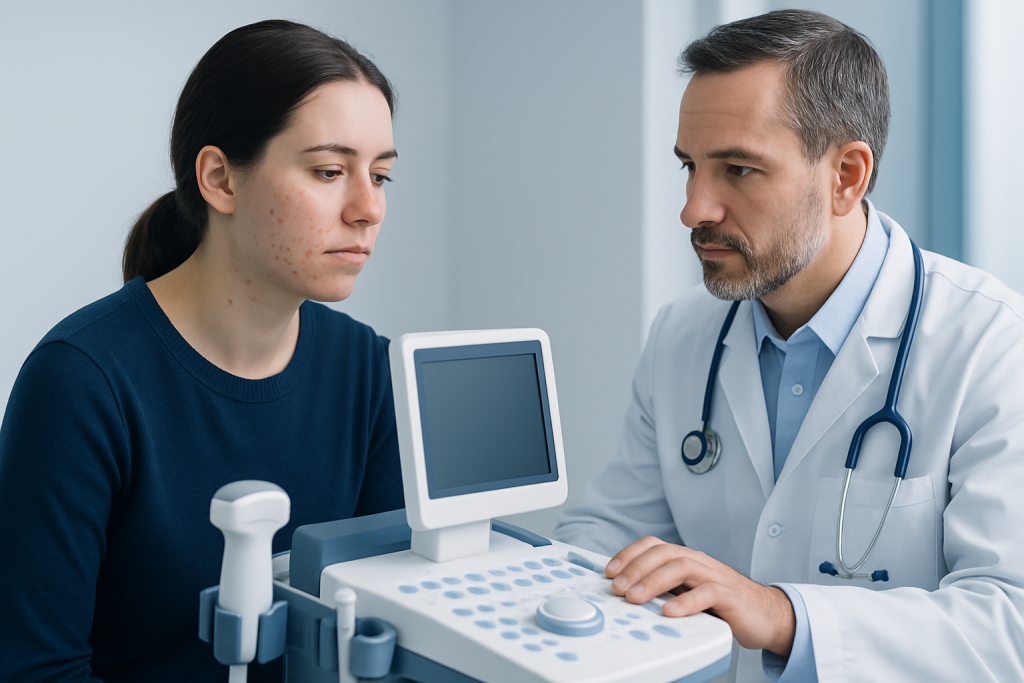
The appearance of the bumps offers the first set of clues. A patch may contain small white or flesh-colored bumps, red pimples, pus-filled spots, or tender raised lesions. Some patches stay localized, while others spread slowly across nearby skin.
Symptoms that often matter include itch, soreness, burning, warmth, scaling, crusting, or drainage. Acne tends to produce clogged pores, blackheads, whiteheads, and inflamed pimples. Folliculitis often centers on hair follicles and may look like clusters of small red or pus-filled bumps. Irritant or allergic reactions may be more itchy than painful and may appear where products touched the skin.
Changes such as fever, rapidly increasing redness, swelling, or a deep painful lump deserve prompt medical attention. These features suggest the process may be more than routine acne and may need earlier review. Even without severe symptoms, a patch that keeps returning in the same spot should be evaluated.
Causes & Risk Factors

There is no single cause behind a patch of pimples. One common reason is acne, which develops when pores become blocked with oil, dead skin cells, and bacteria-related inflammation. Acne often affects the face, chest, upper back, and shoulders, but it can show up wherever pores are active.
Another frequent cause is folliculitis, an inflammation of hair follicles that can follow friction, sweating, shaving, tight clothing, hot tubs, or bacterial overgrowth. Contact dermatitis can also mimic pimples, especially after new skincare, sunscreen, makeup, hair dye, detergent, or a medical adhesive. Less commonly, fungal rashes, insect bites, rosacea, or skin infections may be mistaken for acne-like bumps.
Certain factors can increase the chance of a flare. These include oily skin, hormonal changes, heat and humidity, heavy sweating, repeated rubbing, occlusive cosmetics, and a personal history of acne or sensitive skin. In travelers, long flights, changed routines, and unfamiliar climates can aggravate the skin barrier and make a patch more noticeable.
- Frequent touching or picking
- Shaving or waxing irritation
- Wearing tight helmets, masks, or sports gear
- Using new or heavy skin and hair products
- Stress and disrupted sleep
Diagnosis
Doctors usually diagnose a patch of pimples by looking carefully at the skin and asking about timing, triggers, and symptoms. The shape of the patch, whether it is itchy or painful, and whether there is pus, scaling, or surrounding redness can help separate acne from folliculitis or irritation.
When the cause is not obvious, a dermatologist may ask about personal care products, shaving habits, recent travel, swimming, medication use, and any prior skin conditions. In some cases, a skin swab, culture, or other test may be used if infection is suspected. Rarely, a biopsy is needed when the rash does not follow a typical pattern or does not respond as expected.
For patients planning care from another country, a clear diagnosis matters before treatment is started. A focused exam can avoid unnecessary products and reduce the chance of worsening the skin with the wrong self-treatment. It also helps build a follow-up plan that can continue after the patient returns home.
Treatment Options
Treatment depends on the underlying cause, so the goal is not simply to “dry out” the pimples. For acne, doctors may suggest topical therapies that help unclog pores and reduce inflammation. For folliculitis, treatment may focus on reducing friction and, if needed, using medication directed at the type of infection or inflammation involved.
When irritation is the driver, removing the trigger is often the most effective step. That may mean stopping a new product, simplifying the skin routine, changing shaving habits, or using gentler fabrics and cleansers. If the skin is infected or deeply inflamed, a clinician may recommend prescription treatment after examining the area.
Helpful treatment principles often include the following:
- Use gentle, non-comedogenic cleansers and moisturizers
- Avoid picking, squeezing, or scrubbing the area
- Pause new or fragranced products until the skin settles
- Keep the area cool and dry when sweating worsens the bumps
- Follow the clinician’s plan consistently, even when improvement is gradual
For international patients, treatment planning should take travel into account. A dermatologist may choose options that fit the expected length of stay, explain how to use them safely once the patient is back home, and recommend when follow-up is needed if the skin does not improve.
Prevention & Self-care
Simple routines often make a noticeable difference. Washing the skin with a mild cleanser, especially after heavy sweating, can help reduce pore blockage and follicle irritation. It is usually better to avoid harsh exfoliants, strong alcohol-based toners, and repeated scrubbing, which can inflame the skin barrier.
Choosing products labeled non-comedogenic or oil-free may help people prone to acne-like breakouts. Hair products, sunscreen, and makeup can all contribute to a localized patch if they are heavy or not suited to the skin type. If bumps appear where a mask, helmet, or backpack strap sits, reducing friction and allowing the skin to breathe can be useful.
Self-care should also include a realistic approach to healing. Skin often improves gradually rather than overnight, and repeated switching between products can make it harder to tell what is helping. A short photo record can be helpful for both local and traveling patients, because it shows whether the patch is shrinking, spreading, or changing shape.
When to See a Doctor
Medical review is wise when a patch of pimples is painful, rapidly enlarging, or associated with fever, marked swelling, or drainage. It is also appropriate to seek help when the bumps are near the eyes, on the scalp with hair loss, or in an area that could scar.
A doctor should also be consulted if the patch does not improve after several weeks of gentle care, keeps returning, or appears after starting a medication or new product. People with diabetes, weakened immunity, or a history of serious skin infections should not wait too long to be assessed.
For patients traveling for care, it is reasonable to arrange evaluation before departure if the rash is changing quickly or if the diagnosis is uncertain. Acibadem Health Point’s multidisciplinary specialists and JCI-accredited hospitals can diagnose and treat this condition for international patients, with attention to both treatment and follow-up planning. That kind of continuity can be especially valuable when recovery continues after the trip ends.
Frequently asked questions
Is a patch of pimples always acne?
No. Acne is common, but folliculitis, contact irritation, fungal rashes, and some infections can look similar. The location, symptoms, and pattern of spread help a clinician tell the difference.
Can I treat a patch of pimples at home?
Mild cases often respond to gentle cleansing, avoiding picking, and stopping any new irritating products. If the area is painful, spreading, or not improving, medical assessment is a better choice than trying stronger home remedies.
Why do pimples appear in one small cluster?
A local trigger often causes clustered bumps, such as friction, sweat, shaving, a product applied to one area, or inflammation around hair follicles. Sometimes a cluster is the first sign of acne in an early stage.
Should I pop the pimples in the patch?
It is best not to squeeze or pick them. Doing so can worsen inflammation, spread bacteria, and raise the chance of marks or scarring.
How can a doctor tell whether it is acne or folliculitis?
Doctors look at where the bumps are, whether they center on hair follicles, and whether there is itch, pain, or pus. A skin swab or other test may be used if infection is suspected.
When is a patch of pimples urgent?
It is urgent if the skin becomes very painful, hot, swollen, rapidly spreading, or accompanied by fever. Those changes suggest something more than a routine breakout and should be checked promptly.
References
- American Academy of Dermatology
- Mayo Clinic
- NHS
- National Institute of Arthritis and Musculoskeletal and Skin Diseases
- DermNet
This article is for general information only and is not a substitute for professional medical advice. Please consult a qualified doctor about your individual situation.
Hair transplant in Turkey — costs, graft counts & a free assessment
JCI-accredited · board-certified surgeons · reply within 24h
Add us as a Preferred Source to see more of our trusted health content across Google Search, AI Overviews and Discover.