Pimples And Scars Treatment

Key Takeaways
- Treating active pimples early can help reduce the chance of permanent scarring.
- Different scar types respond to different treatments, so a dermatologist’s assessment matters.
- Topical medicines, oral medicines, peels, lasers, microneedling, and injections may all play a role.
- Daily sun protection and gentle skin care support healing and help fade marks more evenly.
- People with worsening acne, painful nodules, or scarring should seek professional advice sooner rather than later.
Medically reviewed by the Acıbadem clinical team — August 19, 2026
Pimples and acne scars can be managed with the right mix of skin care, medical treatment, and in some cases, procedural dermatology. The best approach depends on whether the concern is active acne, lingering dark marks, or true scarring.
Overview
When people search for pimples and scars treatment, they are often dealing with two related but different problems: active acne and the marks it leaves behind. Some spots are temporary, such as red or brown post-acne marks, while others are true scars that reflect a change in skin texture. Understanding which one is present is the first step toward choosing the right care.
Acne can affect teenagers and adults alike, and it often arrives at inconvenient moments: before travel, during major life changes, or while managing stress and irregular routines. For international patients, it can be especially helpful to plan care with a dermatologist before leaving home or before a long stay abroad, because treatment is usually more successful when it is tailored and followed consistently. A careful diagnosis also prevents people from using the wrong products, which can irritate the skin and make healing slower.
In medical practice, treatment is not a single procedure but a sequence of decisions. Doctors look at whether the skin is oily or inflamed, whether the lesions are comedones, pustules, or nodules, and whether the main concern is marks, pits, raised scars, or a combination. That assessment guides whether the focus should be on controlling breakouts, smoothing texture, restoring tone, or all three.
Symptoms and Types of Acne Marks
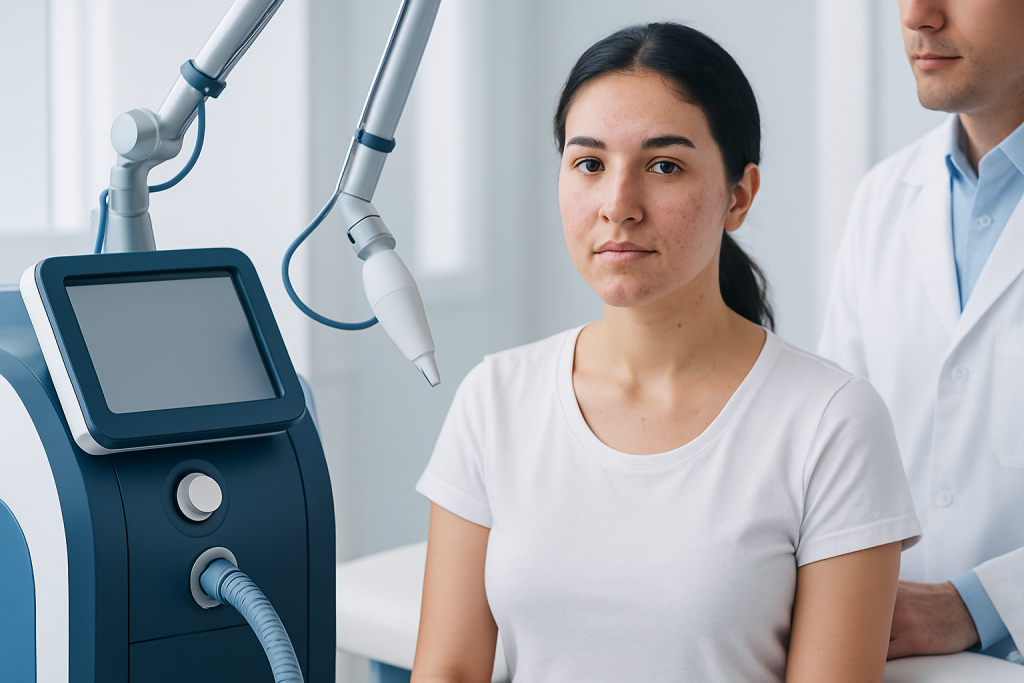
Active pimples usually show up as blackheads, whiteheads, red bumps, pustules, or deeper tender nodules. Some are mild and clear quickly, while others linger and may be painful or leave lasting changes in the skin. Repeated picking, squeezing, or scratching can increase inflammation and make scarring more likely.
After a pimple settles, the skin may show a flat red, pink, or brown mark. These are not always scars in the strict sense; they are often signs of healing skin and inflammation. True scars are different because they change the surface of the skin, creating depressions, rolling areas, ice-pick pits, or raised thickened patches.
Because the appearance can be subtle, many people benefit from a professional skin assessment. A dermatologist can explain whether the concern is mainly pigmentation, texture, or a mix of both. That distinction matters, since redness and pigmentation may fade with time and topical care, while deeper scars often need in-office procedures to improve appearance.
Causes and Risk Factors

Acne develops when pores become clogged with oil, dead skin cells, and bacteria, leading to inflammation. Hormonal shifts, genetics, certain cosmetics, and some medications can contribute. Diet and stress may influence breakouts in some people, though they are rarely the only cause.
Scarring is more likely when acne is deep, long-lasting, or repeatedly inflamed. Nodular or cystic acne can affect the deeper layers of skin and increase the risk of tissue damage. Delayed treatment can also matter, because ongoing inflammation gives the skin less time to heal normally between breakouts.
Other factors can make recovery harder: sensitive skin, darker skin tones prone to post-inflammatory hyperpigmentation, and habits such as frequent touching or picking. For patients traveling for care, it is worth discussing skin products, climate changes, sun exposure, and post-procedure downtime in advance so the treatment plan fits daily life after returning home.
Diagnosis
Diagnosis begins with a clinical examination of the skin. The doctor reviews where breakouts occur, how long they have been present, whether they flare around menstrual cycles or stress, and which treatments have already been tried. In some cases, the pattern suggests hormonal acne, medication-related acne, or another skin condition that can resemble acne.
For scar assessment, the doctor looks closely at the skin’s surface and texture. This helps determine whether the concern is atrophic scarring, which sits below the skin surface, or hypertrophic and keloid scarring, which rise above it. Dark marks and redness are also assessed separately, because they require different expectations and different tools.
Sometimes diagnosis is mostly about matching the right treatment to the right problem. A person who still has active inflammatory acne may need control of breakouts before scar procedures begin. This stepwise approach usually produces more stable results and reduces the chance that new pimples will continue forming during recovery.
Treatment Options
Successful pimples and scars treatment often combines methods. For active acne, dermatologists may recommend topical treatments that unclog pores and reduce inflammation, such as retinoids, benzoyl peroxide, or other prescription creams. If acne is more widespread or deeper, oral medicines may be considered. The exact choice depends on age, skin type, severity, and whether there are signs of hormonal involvement.
Once breakouts are under better control, scar-focused procedures can be considered. Options may include chemical peels, microneedling, fractional laser treatment, subcision for tethered scars, filler in selected cases, or injections for raised scars. Different scar types respond best to different methods, so a combination approach is common. For example, deep ice-pick scars may need a different plan than broad rolling scars or dark post-acne marks.
Timing matters. Some procedures are better suited for patients whose acne is quiet or nearly quiet, while others can be started earlier under medical supervision. People planning treatment while traveling should ask about healing time, sun avoidance, follow-up visits, and what to do if a reaction occurs after they have returned to their home country. Thoughtful planning makes the overall process more practical and safer.
In some cases, the doctor may recommend a staged plan: first reduce active pimples, then address color change, and finally improve texture. This approach is often more realistic than expecting one treatment to do everything at once. It also helps the skin recover in a controlled way.
Prevention and Self-Care
Daily care can make a meaningful difference, especially when skin is still inflamed. Gentle cleansing, non-comedogenic moisturizers, and consistent sunscreen use are practical basics. Sunscreen is particularly important because both active inflammation and post-acne marks can look darker or last longer with sun exposure.
Hands-off skin care is another important habit. Picking at pimples, scrubbing aggressively, and using multiple harsh products at once can worsen irritation. A simpler routine is usually better than constantly switching cleansers, toners, or exfoliants in search of a quick fix.
People who are prone to acne may also benefit from tracking flares. Noting menstrual timing, new skincare products, medication changes, travel stress, or changes in climate can help a dermatologist identify triggers. For those undergoing procedures abroad, it is sensible to follow written post-treatment instructions carefully and keep the skin protected until the doctor confirms it is healed.
When to See a Doctor
Medical advice is especially helpful when pimples are painful, spreading, or leaving marks. If acne is not improving after reasonable home care, or if scarring seems to be forming, a dermatologist can help prevent the problem from becoming more difficult to treat later. Early evaluation is often the most efficient path to better skin.
It is also wise to seek help if acne affects self-confidence, work, or social life. Skin concerns can carry a real emotional burden, and treatment decisions should include both the physical appearance and the person’s daily comfort. A doctor can outline realistic expectations so patients know which changes are likely to happen first and which may take longer.
For people considering treatment while abroad, it can be reassuring to choose a center that offers coordinated care, from diagnosis through procedure and follow-up. Acibadem Health Point’s multidisciplinary specialists and JCI-accredited hospitals diagnose and treat this condition for international patients, with attention to continuity and recovery planning. Whether care is local or overseas, the most important step is meeting a qualified dermatologist before scars become more established.
Frequently asked questions
What is the difference between a pimple mark and an acne scar?
A pimple mark is often flat redness or brown discoloration left behind after inflammation, and it may fade over time. An acne scar usually changes the skin’s texture, creating a pit, depression, or raised area. A dermatologist can help tell the difference during an exam.
Can acne scars be removed completely?
Some scars can improve very noticeably, but complete removal is not always possible. Treatment is usually aimed at softening the appearance, smoothing texture, and blending the skin more evenly. Results depend on scar type, depth, skin tone, and the treatment method used.
Should active pimples be treated before scar procedures?
In many cases, yes. Ongoing acne can create new marks and interfere with healing, so controlling breakouts first is often the most practical approach. A doctor may still combine treatments in a planned sequence if that is appropriate.
Do home remedies help with pimples and scars?
Gentle skin care can support healing, but most home remedies are not strong enough to treat significant acne or true scars. Harsh scrubbing, lemon juice, or unverified treatments can irritate the skin. It is safer to use simple, non-irritating products and ask a dermatologist for evidence-based options.
How long do post-acne dark marks usually last?
That varies widely from person to person and depends on skin tone, sun exposure, and how inflamed the acne was. Some marks fade slowly over months, while others need topical treatment or procedures to improve more quickly. Sunscreen and consistent care can help support fading.
Is laser treatment the best option for every acne scar?
No, laser is only one of several tools. Some scars respond better to microneedling, subcision, peels, fillers, or injections, and many patients do best with a combination. The treatment plan should match the scar type and the skin’s overall condition.
References
- American Academy of Dermatology
- National Institute of Arthritis and Musculoskeletal and Skin Diseases
- Mayo Clinic
- British Association of Dermatologists
- DermNet NZ
This article is for general information only and is not a substitute for professional medical advice. Please consult a qualified doctor about your individual situation.
Explore treatments in Turkey — costs, top hospitals & a free quote
JCI-accredited · board-certified surgeons · reply within 24h
Add us as a Preferred Source to see more of our trusted health content across Google Search, AI Overviews and Discover.