Staph Infection Skin

Key Takeaways
- Staph bacteria can live harmlessly on the skin, but they may cause infection when they enter cuts, bites, or irritated areas.
- Skin staph infections often look like red, warm, tender bumps, pus-filled sores, crusted patches, or draining abscesses.
- Some cases improve with local care, while others need prescribed antibiotics or drainage by a clinician.
- Good hand hygiene, wound care, and avoiding sharing towels or razors can lower the chance of spread and recurrence.
- Seek medical advice if the area is rapidly enlarging, very painful, near the eyes or face, or accompanied by fever.
A staph infection of the skin happens when Staphylococcus bacteria enter through a break in the skin and cause redness, pain, pus, or a boil-like lump. Most cases are treatable, but getting the right diagnosis early helps prevent the infection from spreading or coming back.
Overview
A staph infection on the skin begins when Staphylococcus bacteria, which commonly live on the skin or in the nose without causing harm, find an opening and multiply. That opening can be as small as a shaving nick, a scratched insect bite, a cracked patch of eczema, or a wound that has not fully healed.
Because the skin is the body’s first barrier, the infection often announces itself quickly: a spot becomes warm, tender, swollen, or filled with pus. In some people it stays limited to a small area. In others, it develops into a boil, abscess, or spreading rash that deserves prompt medical assessment.
For international patients, the practical challenge is often not only recognizing the problem, but deciding whether a minor-looking lesion needs care before travel, during a trip, or after arrival in another country. A clear diagnosis matters because different skin infections can look similar, yet they are not managed in exactly the same way.
Symptoms

The appearance depends on how deeply the bacteria have entered the skin. A surface infection may start as a red, itchy, or tender patch. A deeper infection is more likely to become a firm bump, a painful nodule, or a pocket of pus that feels tense under the skin.
Common signs of a skin staph infection include:
- Redness, warmth, and swelling around one spot
- Pain or tenderness when touched
- Pus, drainage, or a yellow-white center
- Crusting or honey-colored scabs, especially with impetigo
- A boil or abscess that grows over several days
- Skin that feels tight, shiny, or increasingly inflamed
Some infections stay local, while others spread into nearby skin and create a larger area of cellulitis. Fever, chills, or feeling generally unwell are less common with mild infections, but they can occur when the infection is more extensive or not improving.
Causes & Risk Factors
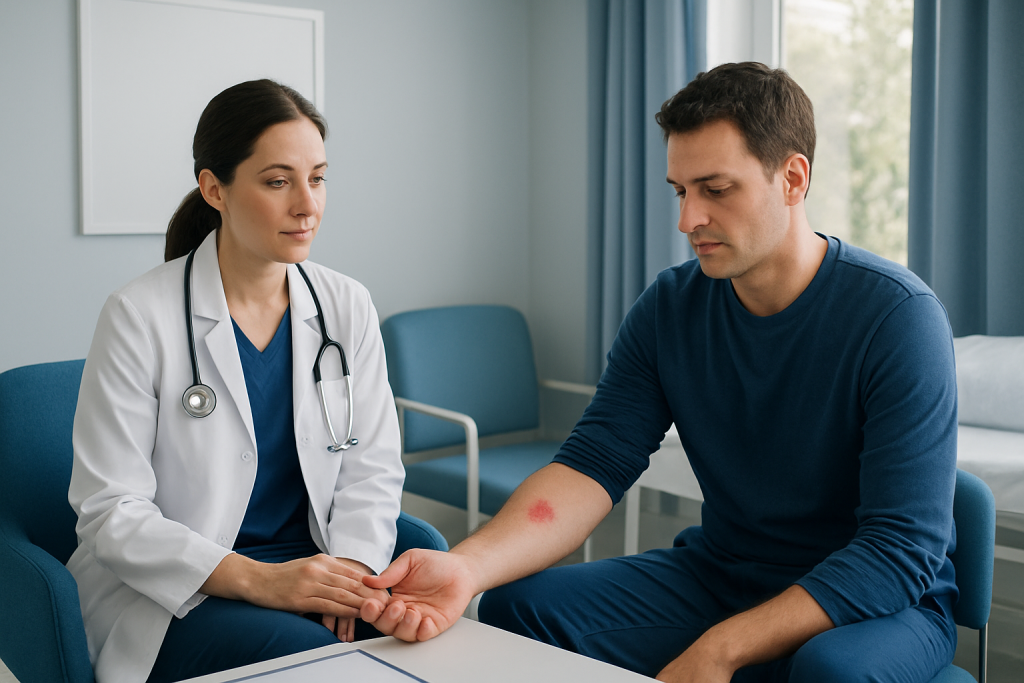
Staph skin infections usually start when bacteria move through a break in the skin. This may happen after shaving, scratching, sports-related friction, insect bites, eczema flares, burns, or minor injuries. People do not need to have poor hygiene for this to happen; even healthy skin can be vulnerable if it is damaged.
Certain situations make infection more likely. Close skin-to-skin contact, crowded living environments, contact sports, and shared personal items can make spread easier. Wounds that are not cleaned or covered properly may also become infected.
Risk can be higher in people with diabetes, weakened immune defenses, chronic skin conditions, recent surgery, or a history of previous staph infections. Some strains are resistant to common antibiotics, including MRSA, which is one reason clinicians may choose to culture the lesion when infections are recurrent, severe, or not responding as expected.
Diagnosis
Diagnosis usually starts with a careful look at the skin and a review of how the lesion developed. A clinician will ask whether it began after an injury, whether it is draining, whether there is pain out of proportion to the appearance, and whether similar infections have happened before.
Many skin staph infections are recognized clinically, but a swab or sample from drainage may be sent to the laboratory when the infection is significant, unusual, recurring, or suspected to be resistant. This helps identify the bacteria and guide treatment if an antibiotic is needed.
In some cases, the clinician may also check whether the problem is actually a different condition, such as an insect bite reaction, dermatitis, fungal infection, or a deeper soft-tissue infection. That distinction is especially important when a person is arranging care while traveling, because the right treatment plan can affect healing time and follow-up needs.
Treatment Options
Treatment depends on how deep and widespread the infection is. Small, uncomplicated areas may improve with local wound care and close observation, while boils or abscesses often need a clinician to drain the infected pocket so the skin can heal properly.
Antibiotics may be prescribed when the infection is spreading, when there is fever, when the person has higher medical risk, or when the lesion involves areas where complications are more likely. If a culture is taken, the medication can be selected more precisely. The goal is not only to clear the current infection, but also to reduce the chance of the bacteria lingering or returning.
What helps most can vary from person to person, so it is best to avoid starting leftover antibiotics or using creams without medical advice. A clinician can decide whether the infection is suitable for watchful care, whether drainage is required, and whether the person needs follow-up after returning home.
Prevention & Self-care
Simple habits can make a real difference, especially for people who have had staph infections before. Clean any cuts or scrapes with mild soap and water, keep them covered while they are healing, and change dressings as instructed. If a boil or sore is draining, dispose of bandages safely and wash hands afterward.
To reduce the chance of spread, avoid sharing towels, razors, clothing, sports gear, or makeup. Showering after heavy sweating, laundering linens regularly, and keeping fingernails short can also help, since scratching can move bacteria into nearby skin.
For people who travel, it can be useful to carry basic wound supplies and know where to seek care if the area worsens. If there is eczema, treating the skin barrier gently may help, because dry, cracked, inflamed skin is easier for bacteria to enter. For recurrent infections, a doctor may discuss additional measures to lower colonization and reduce repeat episodes.
When to See a Doctor
Medical evaluation is a good idea if the lesion is painful, enlarging, draining pus, or not improving after a short period of careful home care. It is also important to seek care if the redness is spreading, if the infection is on the face, near the eyes, or close to the spine, or if there are signs of fever or generalized illness.
Prompt review is especially important for people with diabetes, immune suppression, a recent operation, or a history of MRSA. These situations can make skin infections more complicated and may change how the wound is treated and followed.
For international patients, timely assessment can prevent avoidable delays in healing and make return travel safer. Acibadem Health Point’s multidisciplinary specialists and JCI-accredited hospitals diagnose and treat skin staph infections for international patients, with care plans that can support both treatment and follow-up.
Living With Recovery and Follow-up
Most skin staph infections improve steadily once the right treatment starts, but the skin may remain tender or discolored for a while after the active infection settles. This does not always mean the infection is still present; healing skin often looks pink, brown, or slightly swollen before it returns to normal.
Follow-up matters if the infection required drainage, if antibiotics were prescribed, or if there is any concern that it may recur. A clinician may want to recheck the area, review culture results, or adjust care if healing is slower than expected.
People recovering while away from home may benefit from written aftercare instructions, especially if they need dressings changed or medicines reviewed after travel. Clear instructions can make recovery less stressful and help ensure the skin continues to heal safely.
Frequently asked questions
What does a staph infection on the skin usually look like?
It often appears as a red, warm, painful bump or patch that may fill with pus or drain. Some cases look like boils, abscesses, or crusted sores with yellowish scabs. The exact appearance depends on how deep the infection is.
Can a skin staph infection go away on its own?
Some mild cases may improve with careful local care, but many need medical evaluation to be sure the infection is not spreading or becoming deeper. Boils, abscesses, and infections with fever or significant redness usually need professional treatment.
Is MRSA always a staph infection?
MRSA is a type of staph bacteria that is resistant to certain antibiotics. Not every staph infection is MRSA, but clinicians may consider it when an infection is severe, recurrent, or not improving as expected.
Should a staph skin infection be covered or left open?
In most cases, a draining or open lesion should be covered with a clean dressing to help contain drainage and reduce spread. A clinician can advise on the best dressing routine for the specific wound.
How do people get staph infections from shared items?
Staph bacteria can pass from contaminated towels, razors, clothing, or sports equipment into small cuts or irritated skin. Shared personal items are a common route for spread in households, gyms, and contact sports settings.
When is an abscess likely to need drainage?
An abscess often needs drainage when pus collects under the skin and forms a painful, tense lump. A clinician can decide whether drainage, antibiotics, or both are appropriate based on the location and severity.
References
- Centers for Disease Control and Prevention
- World Health Organization
- American Academy of Dermatology
- Mayo Clinic
This article is for general information only and is not a substitute for professional medical advice. Please consult a qualified doctor about your individual situation.