Parathyroid Surgery Abroad: What Makes a Case Straightforward or Complex?

Key Takeaways
- Parathyroid surgery is most often performed for hyperparathyroidism when one or more glands make too much hormone.
- A straightforward case usually involves a single well-localized adenoma and no major prior neck surgery or complicated medical history.
- Complex cases may involve unclear imaging, multiple abnormal glands, re-operative neck surgery, or important kidney and bone effects.
- Diagnosis typically combines blood tests, urine tests, imaging, and a careful review of symptoms and medical history.
- Treatment may be minimally invasive or open, depending on anatomy, imaging results, and the surgeon’s assessment.
- Good planning before travel helps international patients understand recovery, follow-up testing, and when to seek medical advice.
Medically reviewed by the Acıbadem clinical team — June 13, 2026
Parathyroid surgery is usually done to treat hyperparathyroidism, a condition that can affect calcium balance, bones, and kidneys. For international patients, the complexity of the case often depends on whether the overactive gland is easy to localize, whether there are other medical issues, and whether the operation is a first-time procedure or a revision.
Overview
Parathyroid surgery is a focused operation on one or more of the four tiny parathyroid glands in the neck. These glands help regulate calcium through parathyroid hormone, so when they become overactive, the body can develop a pattern of high calcium and related symptoms that may affect the bones, kidneys, digestion, mood, and energy levels.
For many patients, the decision to have surgery starts with routine blood tests that show elevated calcium or parathyroid hormone levels. In an international-patient setting, the next question is often practical as well as medical: whether the case is likely to be straightforward enough for a minimally invasive procedure, or whether it needs broader imaging, longer operative planning, or a team experienced in more complex neck surgery.
What makes one case simpler and another more involved is not just the diagnosis itself. Surgeons also consider how clearly the problem gland can be found, whether the patient has had previous neck operations, whether more than one gland appears abnormal, and whether other conditions make anesthesia or recovery more delicate.
Symptoms
Some people with parathyroid disease notice few symptoms at first, which is one reason the condition is sometimes discovered during unrelated testing. Others describe a gradual change rather than a sudden illness: more fatigue, slower thinking, thirst, constipation, or discomfort from kidney stones. Because these symptoms can overlap with many other conditions, the diagnosis is usually built from laboratory findings rather than symptoms alone.
When symptoms do appear, they may reflect the effect of excess calcium in the bloodstream. Patients can experience muscle weakness, bone pain, frequent urination, abdominal discomfort, nausea, or mood changes. In some cases, the issue is recognized after bone density testing, a fracture, recurrent kidney stones, or persistent dehydration.
Signs that the condition may be more clinically significant include:
- Repeated kidney stones or reduced kidney function
- Low bone density, fractures, or worsening osteoporosis
- Ongoing constipation, nausea, or loss of appetite
- Marked fatigue, confusion, or trouble concentrating
- Symptoms that continue even after other explanations have been treated
Causes & Risk Factors
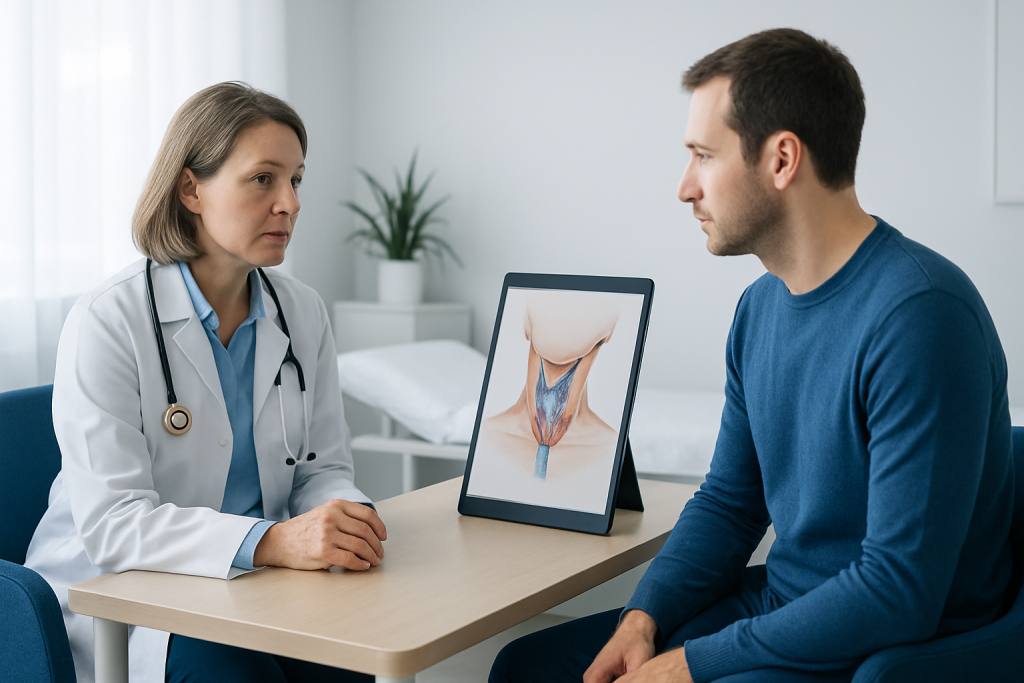
The most common cause of primary hyperparathyroidism is a single benign growth called a parathyroid adenoma. Less often, more than one gland is enlarged, or all four glands are overactive. In rarer situations, parathyroid overactivity may be linked to inherited syndromes or, far less commonly, parathyroid cancer.
Whether surgery becomes straightforward or complex often depends on the underlying pattern. A single adenoma that appears clearly on imaging usually leads to a more targeted operation. By contrast, multiple abnormal glands, confusing scan results, or a history suggesting previous treatment failure can make the surgical plan more nuanced.
Factors that may increase complexity include prior neck surgery, radiation exposure to the neck, known hereditary endocrine syndromes, reduced kidney function, very high calcium levels, or uncertainty about whether symptoms are due to primary hyperparathyroidism or another form such as secondary or tertiary hyperparathyroidism. In international care, the team also considers the completeness of outside records and test results, since previous studies can affect the approach selected at the new center.
Diagnosis
Before surgery is recommended, clinicians usually confirm the diagnosis with a combination of blood tests and clinical review. Typical evaluation looks at calcium, parathyroid hormone, vitamin D, kidney function, and sometimes urine calcium. These tests help distinguish true parathyroid disease from other causes of abnormal calcium levels.
Imaging is used to localize the abnormal gland or glands, not to make the diagnosis by itself. Neck ultrasound and nuclear medicine scans are commonly used, and some patients need additional imaging such as CT-based studies when earlier tests are unclear or when surgery is expected to be more difficult. The more precisely the target is identified, the more likely the surgeon can plan a smaller operation.
For international patients, a thorough preoperative review often includes a summary of prior imaging, any previous neck procedures, medication history, and the condition of the bones and kidneys. This matters because a seemingly simple parathyroid problem may become more complex if old records are incomplete or if the patient arrives with an unclear workup that needs to be repeated before surgery can be safely scheduled.
Treatment Options
Surgery is the definitive treatment for many people with primary hyperparathyroidism, especially when symptoms, kidney stones, osteoporosis, or significantly abnormal lab values are present. The choice of procedure depends on the case. A straightforward situation may be managed with minimally invasive parathyroidectomy, which focuses on the single abnormal gland and may use intraoperative hormone monitoring to confirm success during the operation.
More complex cases often require a broader exploration. This can happen when imaging does not clearly identify the gland, when more than one gland seems involved, or when the patient has had previous surgery in the same area. In those settings, the surgeon may need to plan for longer operative time, additional monitoring, and a careful strategy to protect nearby structures such as the recurrent laryngeal nerve.
After surgery, calcium levels are monitored because they can fall temporarily as the body adjusts. Some patients need short-term calcium or vitamin D support under medical supervision. Recovery is often relatively quick for a focused operation, but the follow-up plan should be personalized, especially for international patients who must coordinate care after returning home.
Prevention & Self-care
Parathyroid disorders are not usually preventable in the usual sense, because many are caused by changes inside the gland that cannot be controlled by lifestyle alone. Still, self-care matters. Patients benefit from keeping good hydration, following guidance about calcium and vitamin D, and discussing any supplements or medications that may influence calcium balance.
Before travel for surgery, it helps to organize prior blood tests, scan reports, medication lists, and any notes about kidney stones, fractures, or bone density results. A well-prepared file often makes consultation more efficient and can reduce unnecessary repeat testing. It also helps the surgeon judge whether the operation is likely to be straightforward or whether more detailed localization is needed.
After surgery, patients are usually advised to watch for symptoms of low calcium, such as tingling around the mouth, numbness in the fingers, or muscle cramps, and to report them promptly. Gentle activity, incision care, and adherence to follow-up labs are often the most important parts of recovery. International patients should also clarify how they will receive postoperative results once they are back in their own country.
When a Case Is Straightforward vs Complex
A straightforward parathyroid surgery case often has a few common features: one gland appears to be the source of the problem, imaging points to a clear location, and the patient has not had prior surgery or radiation in the neck. In these situations, the operation can often be planned in a focused way, with a shorter incision and a predictable recovery path.
A complex case may look very different. The abnormal gland may be hard to find, multiple glands may be affected, or the patient may need re-operation after a previous unsuccessful procedure. Complexity can also come from medical circumstances outside the neck, such as kidney disease, severe bone loss, or additional endocrine conditions that require coordinated care.
For people seeking treatment abroad, the distinction matters because it influences the size of the surgical team, the length of stay, the need for repeat imaging, and the timing of follow-up. A center that routinely reviews imported scans, prior laboratory results, and surgical history can better explain what is known, what remains uncertain, and what the operation is likely to involve.
When to See a Doctor
Medical assessment is advisable if blood tests show high calcium, parathyroid hormone is elevated, or symptoms suggest a calcium imbalance. People with kidney stones, osteoporosis, unexplained fatigue, or a family history of endocrine disorders should not wait for symptoms to become severe before asking for evaluation.
Prompt review is especially important if there are repeated stones, worsening bone health, persistent gastrointestinal symptoms, or confusion and weakness that do not have another clear explanation. These problems do not always mean surgery is required, but they do mean the condition deserves a structured workup by a qualified clinician.
For international patients, a specialist consultation before travel can help decide whether surgery is appropriate, whether more imaging is needed, and whether the case is simple enough for a minimally invasive approach or likely to need a broader plan. Acibadem Health Point’s multidisciplinary specialists and JCI-accredited hospitals diagnose and treat parathyroid conditions for international patients in a coordinated setting.
Frequently asked questions
What is the main reason people need parathyroid surgery?
The most common reason is primary hyperparathyroidism, usually caused by one overactive gland. Surgery is considered when the condition affects calcium levels, bones, kidneys, or quality of life, or when monitoring alone is no longer the best option.
What usually makes a parathyroid surgery case straightforward?
A case is often more straightforward when imaging shows one clearly abnormal gland and the patient has not had prior neck surgery. In that situation, the surgeon may be able to plan a focused operation rather than a wider exploration.
What makes parathyroid surgery more complex?
Complexity can come from unclear imaging, multiple involved glands, previous neck surgery, or a history of radiation. Kidney disease, severe bone loss, or inherited endocrine syndromes can also require extra planning and follow-up.
How long is recovery after parathyroid surgery?
Recovery is often relatively quick after a minimally invasive operation, but the exact timeline depends on the patient’s health and the type of surgery performed. Follow-up blood tests are important to make sure calcium levels remain stable.
Can parathyroid problems be treated without surgery?
In some patients, especially those without symptoms or major complications, careful monitoring may be an option. However, surgery is the only definitive treatment for many cases of primary hyperparathyroidism, so the decision should be individualized.
Why is it helpful to travel with old test results?
Prior blood work, scan reports, and medical notes help the surgical team understand the full history and avoid repeating unnecessary tests. They also make it easier to judge whether the case is likely to be straightforward or more complex.
References
- American Association of Endocrine Surgeons
- National Institute of Diabetes and Digestive and Kidney Diseases
- Endocrine Society
- Mayo Clinic
- NHS
This article is for general information only and is not a substitute for professional medical advice. Please consult a qualified doctor about your individual situation.