Thyroid Nodule Follow-Up: When Observation Is Safer Than Immediate Treatment

Key Takeaways
- Not every thyroid nodule needs surgery or immediate treatment.
- Ultrasound features, growth pattern, and biopsy results help guide follow-up decisions.
- Observation is often chosen for nodules that appear low risk and do not cause symptoms.
- Regular monitoring helps detect meaningful change without overtreating stable nodules.
- New symptoms, rapid growth, or voice changes should be reported to a doctor promptly.
Medically reviewed by the Acıbadem clinical team — June 13, 2026
A thyroid nodule does not always need immediate treatment. In many cases, careful observation with scheduled follow-up is the safest approach, especially when imaging and tests suggest a low-risk nodule.
Overview
A thyroid nodule is a lump or growth within the thyroid gland, a small hormone-producing organ at the base of the neck. Many nodules are found by chance during a routine examination or on an imaging test done for another reason. Once a nodule is identified, the next question is not always “How quickly can it be removed?” but rather “Does it need treatment now, or is careful observation the wiser path?”
For many people, follow-up is a deliberate medical strategy, not a delay in care. If a nodule looks low risk on ultrasound, does not produce symptoms, and does not show concerning laboratory or biopsy findings, doctors may recommend monitoring over immediate intervention. This approach can reduce unnecessary procedures while still keeping watch for changes that matter.
Observation is especially relevant for international patients who may be weighing treatment across borders. A clear follow-up plan helps with travel, timing, and continuity of care, because the most important part of thyroid nodule management is not speed alone, but getting the right level of care at the right time.
Symptoms
Many thyroid nodules cause no symptoms at all. In fact, a person may feel entirely well and only learn about a nodule after a scan or physical exam. When nodules are small and stable, they often do not affect thyroid hormone production or nearby structures.
When symptoms do appear, they may be subtle. Some people notice a lump in the neck, mild pressure when swallowing, a sense of fullness, or a cosmetic change that becomes visible in mirrors or photos. Less commonly, a nodule may be associated with hoarseness, breathing discomfort, or difficulty swallowing, particularly if it is larger or located in a way that presses on nearby tissues.
Symptoms do not automatically mean cancer, and the absence of symptoms does not guarantee a nodule is harmless. That is why doctors combine symptoms with ultrasound findings, blood tests, and sometimes biopsy results before deciding whether observation is appropriate.
Causes & Risk Factors

Thyroid nodules are common, and many develop without a clear single cause. They may represent benign growths, fluid-filled cysts, areas of inflammation, or, less often, thyroid cancer. In most people, the nodule’s appearance and behavior over time are more informative than the fact that it exists.
Certain factors can make nodules more likely or influence how closely they should be watched. These include a history of radiation exposure to the head or neck, family history of thyroid cancer, known thyroid disease, iodine imbalance, and age. Some nodules are discovered in people with normal thyroid hormone levels, while others appear alongside conditions such as autoimmune thyroiditis.
Doctors also consider ultrasound characteristics that may raise or lower concern. A nodule with smooth borders, fluid content, or stable size is often less worrisome than one with irregular features or suspicious lymph nodes nearby. In follow-up decisions, risk is about the whole picture, not one isolated finding.
Diagnosis
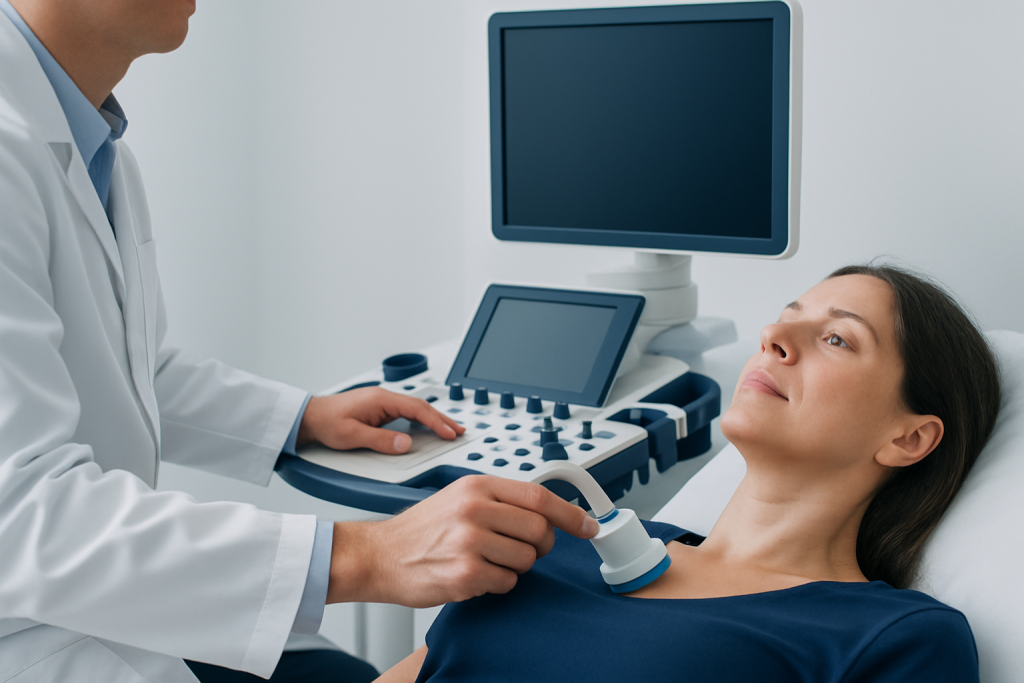
Evaluation usually begins with a physical exam and a blood test to assess thyroid function. A thyroid-stimulating hormone test can help show whether the gland is underactive, overactive, or functioning normally. If a nodule is felt on examination or seen on imaging, thyroid ultrasound is often the next and most important step.
Ultrasound gives doctors a detailed view of the nodule’s size, shape, borders, internal composition, and surrounding lymph nodes. Based on those features, the nodule may be classified as low, intermediate, or higher risk. In some cases, a fine-needle aspiration biopsy is recommended to sample cells and clarify whether the nodule is benign, suspicious, or indeterminate.
If biopsy results are reassuring, or if ultrasound features suggest very low risk, observation becomes a reasonable option. Follow-up may include repeat ultrasound at planned intervals, comparison with prior images, and repeat biopsy if the nodule changes in a meaningful way.
Treatment Options
When observation is chosen, the goal is structured monitoring rather than doing nothing. Doctors may recommend periodic ultrasound, thyroid blood tests, and office visits to review symptoms and compare measurements over time. The exact schedule depends on the nodule’s appearance, size, and any prior biopsy findings.
If a nodule is benign but large, bothersome, or growing, treatment options can include surgery or, in some situations, minimally invasive procedures. If the nodule affects thyroid hormone levels, treatment may also address the underlying thyroid condition. In some cases, a watch-and-wait plan is still preferred at first, especially when the benefits of immediate treatment are uncertain.
Observation is often safer than immediate treatment when the chance of harm from the procedure is greater than the chance of harm from the nodule itself. This is a familiar principle in endocrinology: not every abnormal finding improves with instant action, and not every visible nodule needs to be removed just because it can be removed.
- Stable, low-risk nodules may be monitored rather than treated right away.
- Repeat biopsy may be advised if a nodule changes in size or appearance.
- Surgery is generally reserved for nodules with concerning results, symptoms, or growth.
- Care plans should be personalized, especially when prior tests were done in another country.
Prevention & Self-care
There is no guaranteed way to prevent thyroid nodules, but healthy follow-up habits can make a meaningful difference. Keeping copies of ultrasound reports, biopsy results, and blood tests helps create a reliable record, especially for people who receive parts of their care while traveling. A complete history makes it easier for one clinician to compare findings against another’s.
People under observation should pay attention to new symptoms rather than waiting for the next appointment if something changes. Helpful self-care includes noting whether swallowing feels different, whether the neck appears fuller, and whether the voice becomes persistently hoarse. It is also useful to follow the agreed imaging schedule, even when the nodule has caused no trouble for some time.
General thyroid health also benefits from balanced nutrition and consistent medical follow-up for any thyroid disorder already diagnosed. However, supplements, iodine products, or herbal remedies should not be started on a whim, because they may complicate thyroid testing or interact with treatment plans. Any change in medication or supplement use should be discussed with a doctor first.
When to See a Doctor
Medical review is important if a thyroid nodule is newly discovered, if a known nodule grows, or if symptoms change. People should seek timely assessment if they develop persistent hoarseness, trouble swallowing, breathing discomfort, pain in the neck, or a new lump in the neck that feels different from before. These signs do not always signal something serious, but they deserve attention.
It is also wise to contact a doctor sooner if there is a personal history of radiation exposure, a family history of thyroid cancer, or a prior biopsy that was not clearly benign. Follow-up should never be skipped simply because the nodule seemed quiet at the last visit. Stability is reassuring only when it is documented over time.
For patients planning treatment from abroad, continuity matters. Acibadem Health Point’s multidisciplinary specialists and JCI-accredited hospitals can evaluate and treat thyroid nodules for international patients, with follow-up planning designed to support both diagnosis and recovery.
Living With a Follow-Up Plan
Being told to observe a thyroid nodule can feel counterintuitive at first, especially for someone expecting immediate action. In reality, observation is often a careful, evidence-based choice that avoids unnecessary procedures while preserving the ability to act if the nodule changes. The plan works best when the patient understands what is being watched and why.
Many people find it helpful to ask for a plain-language explanation of the ultrasound findings, the reason the nodule is considered low risk, and what specific changes would trigger the next step. For international patients, this clarity is particularly valuable because it helps align local care, travel plans, and future reviews with minimal confusion.
With the right schedule and a reliable specialist team, follow-up can be both reassuring and practical. The purpose is not to delay care indefinitely, but to keep treatment proportional to the actual risk.
Frequently asked questions
Does every thyroid nodule need treatment?
No. Many thyroid nodules are benign and do not require immediate treatment. If a nodule looks low risk and is not causing problems, doctors may recommend observation with regular follow-up instead.
How do doctors decide whether observation is safe?
They look at the ultrasound pattern, size, growth over time, thyroid blood tests, and sometimes biopsy results. A stable nodule with reassuring features is more likely to be monitored than treated right away.
What does follow-up usually involve?
Follow-up often includes repeat ultrasound at planned intervals and review of any new symptoms. Some people also need repeat blood tests or another biopsy if the nodule changes in a meaningful way.
Can a benign thyroid nodule still cause symptoms?
Yes. Even a benign nodule can create pressure, swallowing discomfort, or cosmetic concerns if it is large enough. In that case, doctors may discuss treatment options even when cancer is not suspected.
What symptoms should prompt faster medical review?
Persistent hoarseness, difficulty swallowing, breathing problems, neck pain, or a rapidly enlarging lump should be assessed promptly. These symptoms do not always mean something serious, but they should not be ignored.
Is observation a sign that the doctor is unsure?
Not usually. Observation is often a confident, evidence-based decision when the nodule appears low risk. It helps avoid unnecessary procedures while still keeping a close watch on any changes.
References
- American Thyroid Association
- American College of Radiology
- National Cancer Institute
- Mayo Clinic
- MedlinePlus
This article is for general information only and is not a substitute for professional medical advice. Please consult a qualified doctor about your individual situation.