

Muscle Strain: Symptoms, Causes and Treatment

Key Takeaways
- Muscle strain is an injury to a muscle or tendon, often caused by overuse or sudden force.
- Pain, tenderness, swelling, and limited movement are common symptoms.
- Diagnosis usually starts with a physical examination and, if needed, imaging to rule out other injuries.
- Treatment often includes rest, activity modification, pain relief, and rehabilitation exercises.
- Gradual return to activity and attention to technique can lower the chance of reinjury.
Medically reviewed by the Acıbadem clinical team — August 19, 2026
Muscle strain happens when a muscle is overstretched or torn, often during sports, lifting, or a sudden awkward movement. Most mild strains improve with rest and guided self-care, but persistent pain, weakness, or swelling should be checked by a doctor.
Overview
Muscle strain is a common soft-tissue injury that occurs when muscle fibers are stretched beyond their capacity or partially torn. It can happen during a sprint, a sudden twist, lifting a heavy suitcase, or even reaching awkwardly while the body is tired or unprepared.
People often call it a “pulled muscle,” but the injury can range from a mild overstretch to a more significant tear. The location depends on the activity involved, with the back, neck, hamstrings, calves, shoulders, and groin among the more frequently affected areas.
For international patients, the practical question is often not only what the injury is, but whether it needs urgent assessment before travel, or whether it can be managed safely with local rest and follow-up. That decision usually depends on pain level, function, and whether there are signs that another injury may be present.
Symptoms
The first clue is usually pain that starts during or soon after activity. The pain may be sharp at the moment of injury and then settle into a sore, tight, or aching feeling when the muscle is used again.
Other common signs include tenderness to touch, swelling, bruising, and reduced strength in the affected area. Some people notice a cramp-like tightness or a feeling that the muscle “won’t let go,” especially when trying to stretch or contract it.
Symptoms tend to vary with severity:
- Mild strain: discomfort with movement but little loss of strength
- Moderate strain: noticeable pain, weakness, and swelling
- Severe strain: marked pain, a possible gap in the muscle, or difficulty using the limb normally
Because several injuries can look similar, persistent pain after a fall, a pop at the time of injury, or pain that spreads beyond the muscle should be evaluated carefully.
Causes & Risk Factors

Muscle strain usually begins with excessive force. That force may be a single sudden movement, such as changing direction quickly, or repeated loading that gradually fatigues the tissue. Warm muscles tolerate activity better than cold, stiff muscles, which is why injuries often happen when exercise starts too quickly.
Several factors can increase risk. A history of previous muscle injury, poor conditioning, dehydration, inadequate warm-up, muscle imbalance, and fatigue are all common contributors. Work tasks that involve repetitive lifting or awkward postures can also strain muscles, especially when the body is under time pressure or the load is unpredictable.
Travel itself can add strain in subtle ways. Long flights, carrying heavy luggage, sleeping in unfamiliar positions, or rushing through transfers may leave the back, neck, or calves more vulnerable. The issue is usually not one dramatic event, but a combination of stiffness, effort, and a sudden extra demand on the muscle.
Diagnosis
Diagnosis usually begins with a history and physical examination. A clinician asks how the pain started, which movement hurts, whether there was a popping sensation, and how the injury affects walking, lifting, or daily tasks. Exam findings help estimate whether the problem is a mild strain or something more involved.
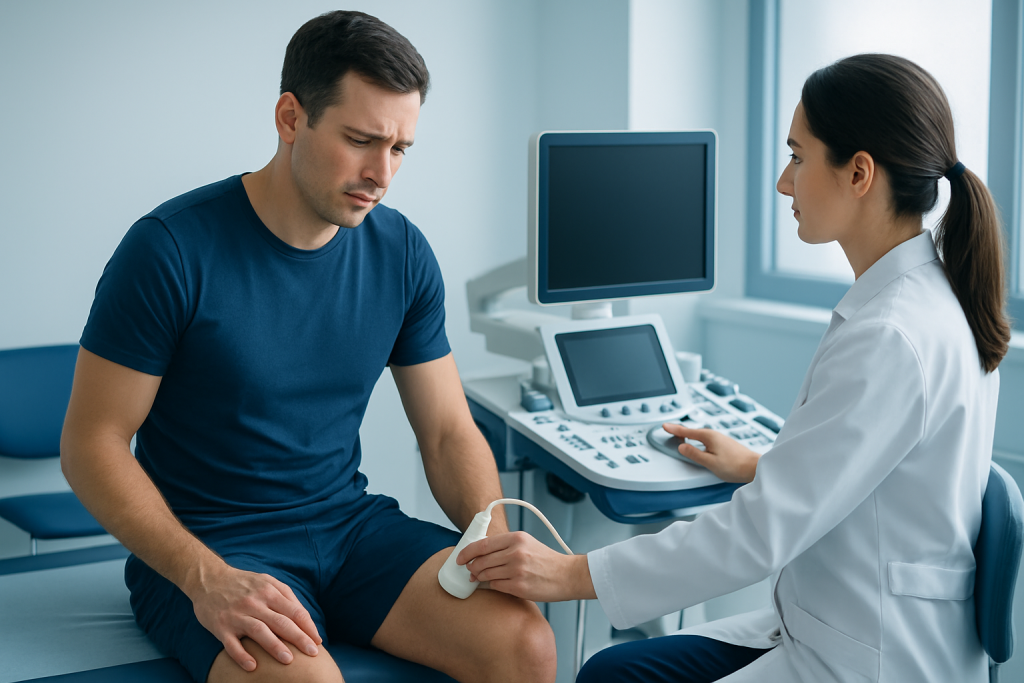
In many cases, no test is needed beyond the exam. Imaging may be used when the symptoms are severe, the diagnosis is uncertain, or another injury must be ruled out. Ultrasound can help assess soft tissue in some settings, and MRI may be considered when a deeper or more complex tear is suspected.
It is especially important to distinguish muscle strain from fractures, tendon rupture, joint injuries, or nerve-related pain. A careful assessment matters because these conditions can look alike at first but require different treatment and recovery plans.
Treatment Options
Treatment depends on the severity of the strain, but the overall goal is the same: allow the tissue to heal while maintaining safe movement. Short-term rest from the specific activity is often helpful, especially when pain is triggered by repeating the same motion.
Many people benefit from a structured approach that includes Knee Pain Relief: Causes and Treatment" class="ahp-ilk">pain relief, gentle movement as tolerated, and gradual rehabilitation. Cold packs are often used early to ease discomfort and swelling, while compression and elevation may help if the injury is in a limb. A clinician may recommend anti-inflammatory or pain-relieving medicines when appropriate, but these should be used only as advised.
Rehabilitation is often the most important step for a lasting recovery. Guided stretching and strengthening help restore flexibility, rebuild support around the injured area, and reduce the chance of the same problem returning. In more significant tears, a longer period of supervised care may be needed, and surgery is only considered in selected cases.
For patients who are traveling for care, treatment plans are often designed with follow-up in mind: clear home exercises, a realistic return-to-activity timeline, and instructions for when to seek a recheck after returning home.
Prevention & Self-care
Prevention starts with preparation. A proper warm-up, gradual training increases, and attention to technique can all reduce strain on muscles. It also helps to match the activity to current fitness level rather than the level the person had in the past.
Simple self-care measures can support recovery and lower reinjury risk:
- Rest the injured muscle from painful activity, but avoid complete inactivity for long periods unless advised
- Use gentle movement and stretching only when it is comfortable and approved by a clinician
- Stay hydrated, especially during exercise, hot weather, or travel
- Break up long periods of sitting with short walks and light mobility work
- Return to sports or heavy work step by step rather than all at once
Good recovery also depends on listening to warning signs. Pain that is repeatedly triggered by an activity may mean the muscle is not ready for full load yet, even if day-to-day movement feels better.
When to See a Doctor
Medical evaluation is wise when pain is severe, swelling is significant, or normal movement is difficult. A doctor should also assess the injury if the person heard or felt a pop, sees bruising spreading quickly, or cannot bear weight or use the limb as expected.
Attention is especially important if symptoms do not improve over several days, if the pain keeps returning with light activity, or if weakness seems out of proportion to the injury. These patterns may indicate a more serious tear or a different diagnosis.
For international patients, it is reasonable to seek timely care before continuing travel when an injury affects walking, luggage handling, or daily independence. Acibadem Health Point’s multidisciplinary specialists and JCI-accredited hospitals evaluate and treat muscle strain for international patients, with coordinated care that can support diagnosis, rehabilitation, and follow-up planning.
Recovery and Return to Activity
Recovery is usually gradual rather than immediate. Mild strains may settle within a short period, while more significant injuries can take longer and benefit from a structured rehabilitation plan. The muscle is often ready to do more before it is fully ready for running, lifting, or competition.
A safe return to activity typically depends on three things: pain that is clearly improving, near-normal movement, and enough strength to perform the task without compensation. If a movement still causes sharp pain, the load is probably too high for that stage of healing.
People often recover better when they use a stepwise plan. That may mean walking before jogging, light resistance before heavy lifting, and short practice sessions before full sport participation. If symptoms return, the safest choice is usually to step back and reassess rather than push through.
Outlook
The outlook for muscle strain is usually good, particularly when the injury is recognized early and the person returns to activity gradually. Most uncomplicated strains heal without long-term problems, although the timeline depends on the tissue involved and how much stress is placed on it during recovery.
Recurring strains are more likely when the underlying causes are not addressed. That is why rehabilitation, conditioning, and movement mechanics matter as much as symptom relief. A well-guided recovery is often the difference between a short interruption and a repeated cycle of pain.
With the right assessment and a practical plan, most people can resume their normal routines confidently. The key is to respect the injury early, then rebuild function in a measured way.
Frequently asked questions
What is the difference between a muscle strain and a muscle sprain?
A muscle strain involves injury to a muscle or tendon, while a sprain affects ligaments, which connect bones to each other. The symptoms can feel similar at first, so a clinician may need to examine the area to tell them apart.
Should a muscle strain be rested completely?
Short rest from the painful activity is usually helpful, especially in the early phase. Complete immobility is not always necessary and may slow recovery, so gentle movement is often introduced when it is comfortable and medically appropriate.
How long does a muscle strain take to heal?
Healing time depends on how severe the strain is and where it occurred. Mild strains often improve sooner, while moderate or severe injuries can take longer and may need rehabilitation before full activity is safe.
Can heat or ice help a muscle strain?
Cold packs are commonly used early to ease pain and swelling, while heat may be more comfortable later for stiffness in some cases. The best choice depends on the stage of healing, so a clinician can advise what is most suitable.
When should imaging be done for a muscle strain?
Imaging is not always needed. It may be recommended if the pain is severe, the diagnosis is unclear, symptoms do not improve, or another injury such as a tear or fracture needs to be ruled out.
Can muscle strain come back after recovery?
Yes, reinjury can happen if the muscle is returned to full load too quickly or if strength and flexibility are not fully restored. A gradual return, along with exercise guidance, helps reduce that risk.
References
- American Academy of Orthopaedic Surgeons
- Mayo Clinic
- National Health Service (NHS)
- MedlinePlus
- American College of Sports Medicine
This article is for general information only and is not a substitute for professional medical advice. Please consult a qualified doctor about your individual situation.
Joint and spine care in Turkey — expert assessment & treatment
JCI-accredited · board-certified surgeons · reply within 24h
Add us as a Preferred Source to see more of our trusted health content across Google Search, AI Overviews and Discover.
More from the Health Library



Related Specialists

Prof. Dr. Ahmet Alanay
Orthopedic Surgery & Traumatology
Dr. Sinan Aksu
Orthopedic Surgery & Traumatology
Dr. Sirri Baştürk
Orthopedic Surgery & Traumatology
Prof. Dr. Korhan Özkan
Orthopedic Surgery & Traumatology