

Deltoid Muscle Anatomy and Function

Key Takeaways
- The deltoid is the main muscle covering the shoulder and supports arm lifting and rotation.
- Pain in the deltoid area may come from muscle strain, tendon irritation, shoulder joint problems, or referred pain.
- Most mild deltoid injuries improve with rest, guided exercise, and gradual return to activity.
- Persistent weakness, swelling, deformity, or limited movement should be evaluated by a doctor.
- Rehabilitation helps restore strength and shoulder control while reducing the chance of reinjury.
Medically reviewed by the Acıbadem clinical team — August 19, 2026
The deltoid is the rounded shoulder muscle that helps lift and position the arm. When it becomes strained, inflamed, or injured, it can make everyday actions such as reaching overhead or dressing more difficult.
Overview
The deltoid is the broad, triangular muscle that gives the shoulder its rounded shape. It sits over the upper arm and shoulder joint, helping the arm lift away from the body, move forward and backward, and stabilize the shoulder during daily tasks.
Because the shoulder is used in so many directions, the deltoid works alongside the rotator cuff, tendons, ligaments, and the shoulder blade. When any part of this system is irritated or injured, pain may be felt in the deltoid area even if the muscle itself is not the only structure involved.
For people deciding on care from another country, understanding the deltoid is useful because shoulder symptoms are often described simply as “muscle pain.” In practice, a careful orthopedic assessment can distinguish a true muscle strain from joint, tendon, nerve, or spine-related problems.
Symptoms
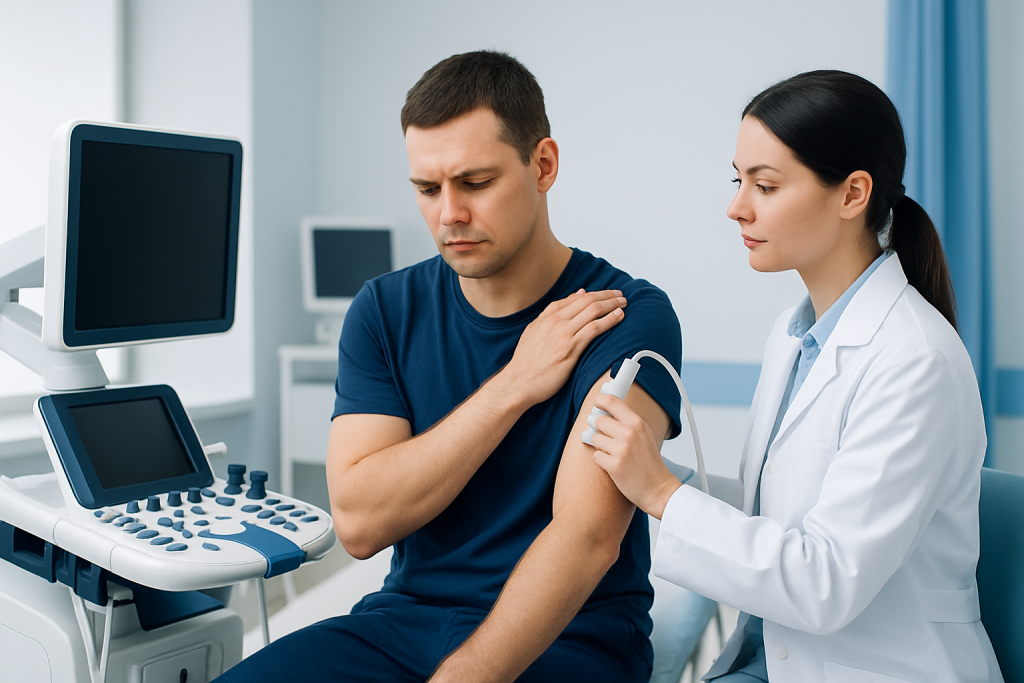
Deltoid-related problems often cause pain on the outer shoulder or upper arm. The discomfort may be sharp after a sudden movement, or dull and lingering after repetitive use. Some people notice that lifting a bag, reaching a shelf, or putting on a jacket becomes harder than usual.
Other symptoms can include tenderness when the shoulder is pressed, swelling after an injury, stiffness, weakness, or pain that worsens when the arm is raised. In more significant injuries, bruising or a visible change in the contour of the shoulder may appear.
- Pain with overhead reaching
- Weakness when lifting the arm
- Tenderness at the outer shoulder
- Swelling or bruising after trauma
- Limited shoulder range of motion
Because pain in this area can also come from the rotator cuff, cervical spine, or the acromioclavicular joint, symptoms alone do not always reveal the exact source. That is why a focused evaluation matters when the pain does not settle as expected.
Causes & Risk Factors

Deltoid pain most commonly follows overuse, sudden strain, or direct impact. Repetitive lifting, throwing, weight training, racquet sports, and work that involves repeated overhead motion can all stress the shoulder. A fall onto the shoulder or a forceful pull can also injure the muscle or nearby tissues.
Risk is higher when the shoulder is not well conditioned, when activity increases too quickly, or when posture and movement mechanics place extra load on the upper arm. People recovering from another shoulder problem may also compensate with the deltoid, which can make the area sore or fatigued.
In some cases, the pain is not a primary deltoid problem at all. Shoulder arthritis, bursitis, rotator cuff tears, cervical nerve irritation, and referred pain from the neck or chest can all be felt near the deltoid. A doctor considers these possibilities, especially when symptoms are unusual or prolonged.
Diagnosis
Diagnosis starts with a detailed history and physical examination. A clinician asks when the pain began, what activity triggered it, whether there was trauma, and which movements make symptoms worse. The shoulder is then examined for tenderness, strength, swelling, range of motion, and signs of instability or nerve involvement.
If the cause is not clear, imaging may be used. X-rays can help identify bone injury, joint changes, or alignment issues. Ultrasound or MRI may be considered when tendon injury, muscle tear, or another soft-tissue problem needs closer assessment.
For international patients, diagnostic planning is often part of a broader care pathway: evaluation, imaging, treatment decisions, and rehabilitation are ideally coordinated so follow-up can continue smoothly after returning home. Clear written instructions and therapy plans are especially helpful when care crosses borders.
Treatment Options
Treatment depends on the underlying cause and the severity of symptoms. Many mild deltoid strains improve with temporary activity modification, rest from aggravating movements, and a gradual return to motion. Ice can be helpful soon after an acute injury, while gentle movement is often introduced later to reduce stiffness.
Physical therapy is a central part of recovery for many shoulder conditions. Exercises may focus on restoring range of motion, rebuilding deltoid and rotator cuff strength, improving scapular control, and correcting movement patterns that overload the shoulder. A therapist usually progresses activity step by step rather than all at once.
If inflammation, bursitis, or another shoulder condition is contributing to pain, a doctor may recommend additional medical treatment. In more serious cases, such as a significant tear or structural injury, further intervention may be needed. The key is matching the treatment to the actual cause instead of treating every shoulder pain in the same way.
Useful treatment components may include:
- Short-term rest from provoking activity
- Guided rehabilitation exercises
- Pain-relief measures recommended by a clinician
- Posture and movement retraining
- Specialist review for persistent weakness or trauma-related injury
Prevention & Self-care
Healthy shoulder habits can reduce the chance of deltoid strain and help prevent symptoms from returning. Warm up before exercise, increase training loads gradually, and pay attention to technique during lifting or overhead sports. Repeated pain is often a sign that the shoulder needs a better balance of strength and recovery.
Daily self-care also matters. People who spend long hours at a desk or on a device should vary position regularly and avoid letting the shoulder round forward for extended periods. When carrying bags, it is usually better to distribute weight evenly rather than loading one side repeatedly.
At home, recovery is generally supported by rest from the specific motion that caused pain, followed by gentle activity as advised. It is usually wise to avoid forcing stretches or returning to heavy work too early, since the shoulder often improves more reliably with a measured progression.
When to See a Doctor
Medical evaluation is important if shoulder pain follows a fall, Knee Pain Relief: Causes and Treatment" class="ahp-ilk">Pain Relief" class="ahp-ilk">sports injury, or direct blow, or if the arm looks deformed or rapidly swollen. Weakness that makes it difficult to raise the arm, numbness, tingling, fever, or pain that spreads beyond the shoulder also deserves prompt attention.
Even without a clear injury, a doctor should review pain that lasts more than a short period, keeps returning, or limits normal activities. This is especially true when home care is not helping or when the person needs a reliable diagnosis before traveling, resuming work, or starting rehabilitation abroad.
Acibadem Health Point can support international patients with multidisciplinary specialists and JCI-accredited hospitals that diagnose and treat shoulder and muscle conditions with coordinated care. For anyone uncertain whether the problem is a true deltoid injury or another shoulder disorder, an orthopedic assessment is a sensible next step.
Frequently asked questions
What does the deltoid muscle do?
The deltoid helps lift the arm away from the body and assists with forward, backward, and rotational shoulder movement. It also supports the shoulder during pushing, lifting, and overhead tasks. Because it works so often, it can become sore when overused or injured.
How can someone tell if deltoid pain is a muscle strain?
A strain often follows a specific movement, workout, or direct impact and may cause tenderness and weakness in the outer shoulder. However, pain in this area can also come from the rotator cuff, joint, or neck. A doctor can help identify the true source if symptoms are not improving.
Is it safe to exercise with deltoid pain?
That depends on the cause and severity of symptoms. Mild discomfort may improve with modified activity and guided rehabilitation, but painful overhead lifting or heavy resistance should usually be avoided until a clinician or therapist advises otherwise. Exercising through significant pain can delay recovery.
How long does a deltoid injury take to heal?
Recovery time varies widely based on whether the problem is a mild strain, a more significant tear, or pain coming from another shoulder structure. Many minor injuries improve with conservative care, while more complex problems may need longer rehabilitation. A personalized assessment gives the best estimate.
Can shoulder pain near the deltoid be caused by something outside the muscle?
Yes. The same area can hurt because of rotator cuff disease, bursitis, arthritis, nerve irritation, or pain referred from the neck. That is why an examination is important when symptoms persist or do not fit a simple strain pattern.
References
- Mayo Clinic
- Cleveland Clinic
- American Academy of Orthopaedic Surgeons
- National Institute of Arthritis and Musculoskeletal and Skin Diseases
- NHS
This article is for general information only and is not a substitute for professional medical advice. Please consult a qualified doctor about your individual situation.
Joint and spine care in Turkey — expert assessment & treatment
JCI-accredited · board-certified surgeons · reply within 24h
Add us as a Preferred Source to see more of our trusted health content across Google Search, AI Overviews and Discover.
More from the Health Library



Related Specialists

Prof. Dr. Ahmet Alanay
Orthopedic Surgery & Traumatology
Dr. Sinan Aksu
Orthopedic Surgery & Traumatology
Dr. Sirri Baştürk
Orthopedic Surgery & Traumatology
Prof. Dr. Korhan Özkan
Orthopedic Surgery & Traumatology