

Meniscus Tear Treatment: When Repair, Trimming, or Rehab Makes the Most Sense

Key Takeaways
- Some meniscus tears improve with guided rehabilitation, activity changes, and time.
- Repair is often preferred when the tear can heal and preserving knee tissue matters.
- Trimming the torn fragment may help when the damage is not repairable and symptoms persist.
- Persistent locking, catching, swelling, or instability deserve orthopedic evaluation.
- Recovery and return to activity are usually individualized rather than one-size-fits-all.
Medically reviewed by the Acıbadem clinical team — July 13, 2026
A ACL Tear or Meniscus Tear: How Orthopedic Surgeons Tell Which One Matters More" class="ahp-ilk">meniscus tear does not always mean surgery. The best treatment depends on the tear pattern, age, activity level, symptoms, and whether the knee is locking or simply painful and swollen.
Overview
The meniscus is a wedge-shaped piece of cartilage that helps the knee absorb shock and move smoothly. Each knee has two menisci, one on the inner side and one on the outer side, and either one can be torn during sports, twisting injuries, or everyday movements in a vulnerable knee.
When people hear “meniscus tear treatment,” they often imagine surgery right away. In practice, the first question is not simply whether the meniscus is torn, but whether the tear is likely to heal, whether it is causing mechanical problems, and how much it is limiting daily life. For some people, especially those with small, stable tears, rehabilitation is enough. For others, a repair or trimming procedure may offer better long-term function.
The best choice usually comes from matching the treatment to the tear rather than treating every meniscus injury the same way. That decision is especially important for international patients planning care from abroad, because the right path affects travel timing, rehabilitation plans, and follow-up needs once they return home.
Symptoms
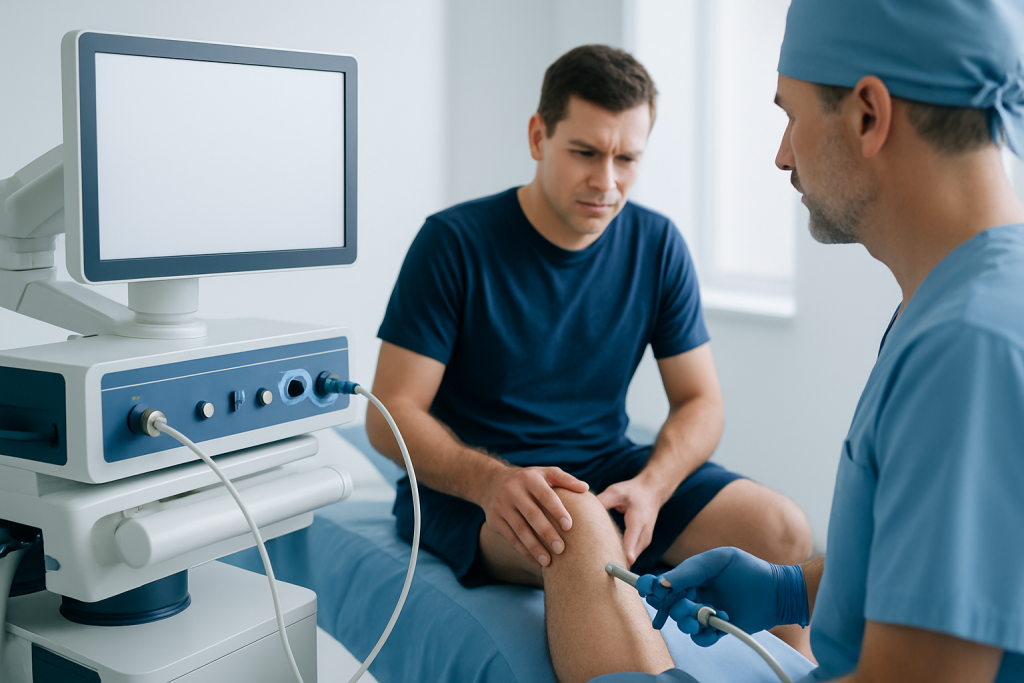
Meniscus tears can feel different from one person to another. Some people notice a sudden twist followed by pain, while others develop symptoms gradually after repeated kneeling, squatting, or pivoting. The knee may feel sore along the joint line, swollen after activity, or difficult to fully bend or straighten.
Common symptoms include:
- Pain in the front, inner, or outer part of the knee
- Swelling that may appear hours later
- Clicking, catching, or a sense that the knee is “stuck”
- Difficulty squatting, kneeling, or rotating
- Feeling that the knee gives way during movement
Not every click means a serious tear, and not every tear causes dramatic symptoms. Some meniscus injuries are found on imaging even when the pain is mild. What matters most is how the knee behaves in real life: walking, stairs, sports, work, and sleep all help reveal whether the tear is acting like a temporary irritation or a problem that needs active treatment.
Causes & Risk Factors
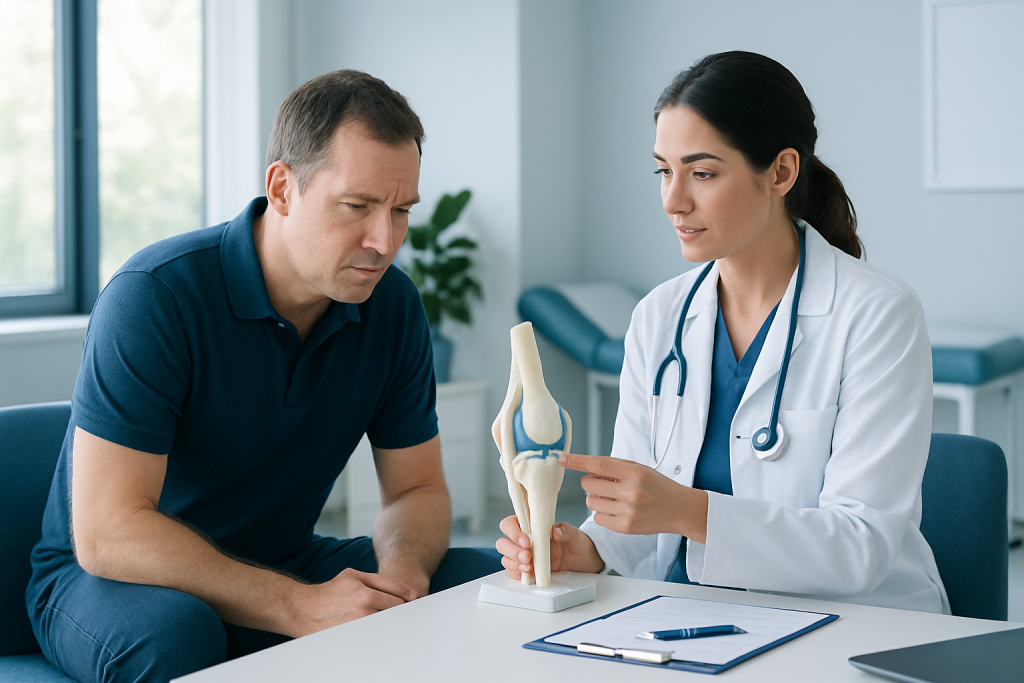
The meniscus can tear in two broad ways. A younger person may injure it with a forceful twist while the foot is planted, such as during soccer, basketball, or skiing. In older adults, the tissue can become more fragile with time, so a small movement such as standing from a squat or turning in the kitchen may be enough to trigger symptoms.
Risk tends to rise when the knee is exposed to repeated stress or when alignment, muscle balance, or prior injuries place extra load on the cartilage. A previous ligament injury, especially one involving the anterior cruciate ligament, may also make meniscal damage more likely.
Factors that can increase the chance of a meniscus tear include:
- Pivoting or contact sports
- Deep squatting or frequent kneeling
- Past knee injuries or surgery
- Degenerative joint changes with age
- Weak hip and thigh muscles that reduce knee control
For many patients, the tear is part of a broader knee problem rather than a single isolated event. That is why specialists often look at cartilage health, ligament stability, leg alignment, and activity goals before deciding whether repair, trimming, or rehabilitation makes the most sense.
Diagnosis
Diagnosis begins with a careful history and physical examination. A doctor will ask how the injury happened, where the pain is located, whether swelling came on quickly or gradually, and whether the knee locks, catches, or gives way. Specific examination maneuvers can help suggest whether the meniscus is involved, although no single bedside test is perfect.
Imaging is often used to confirm the diagnosis and understand the tear pattern. Magnetic resonance imaging, or MRI, is especially helpful because it shows soft tissues clearly and can reveal whether the tear is in a region with better blood supply, which matters when considering repair.
X-rays do not show the meniscus itself, but they can be useful to look for arthritis, joint space narrowing, or bone problems that may influence treatment. In some situations, the doctor may recommend trying conservative care first, especially if symptoms are manageable and the knee is not locking. The diagnosis is therefore not just “tear or no tear”; it is a decision map for what the knee needs next.
Treatment Options
The three main paths are rehabilitation, meniscus repair, and partial meniscectomy, often called trimming. The right choice depends on the tear’s location, shape, age, stability, and whether the patient has mechanical symptoms or ongoing pain despite non-surgical care.
Rehabilitation is often the first step for stable tears, small degenerative tears, or patients whose symptoms are improving. This may include physical therapy to restore motion, reduce swelling, and strengthen the quadriceps, hamstrings, and hip muscles. Activity modification can be important during healing, especially avoiding deep twisting, pivoting, or high-impact exercise for a period of time.
Meniscus repair aims to stitch the torn tissue back together so it can heal. This option is more likely to be considered when the tear is in a better-healing zone, when the tear pattern is favorable, and when preserving meniscal tissue is especially valuable. Repair is often preferred for certain tears in active patients because keeping the meniscus can help protect the knee over time.
Partial meniscectomy removes only the unstable torn portion. It may be used when the tear is not repairable, the tissue is frayed, or the torn fragment is causing catching or repeated irritation. The goal is not to remove as much as possible, but to leave behind a stable, smoothly functioning rim of meniscus.
In practice, the treatment plan is individualized. A patient with a small stable tear and mild pain may do well with therapy alone, while another with repeated locking may need arthroscopic treatment. A thoughtful orthopedic evaluation helps determine which approach offers the best balance between recovery time, symptom relief, and long-term knee protection.
Recovery and Rehabilitation
Recovery differs significantly between rehabilitation-only care, repair, and trimming. With non-surgical treatment, the early focus is usually on swelling control, motion, and strengthening. Progress is guided by symptoms and function rather than by a fixed timeline alone.
After a meniscus repair, recovery is generally more protective because the stitched tissue needs time to heal. Patients may need temporary limits on weight-bearing, bending, or sports participation, and physical therapy is usually essential. The return to running, jumping, or pivoting is often slower than after trimming, but the tradeoff is preservation of the meniscus whenever healing is possible.
After partial meniscectomy, many people regain motion and begin walking more comfortably sooner, but rehabilitation still matters. Strength, balance, and movement mechanics need attention so the knee can tolerate daily life and exercise without repeated irritation. For patients traveling internationally for treatment, planning follow-up visits, therapy access, and flight timing before surgery can make recovery much smoother.
Prevention & Self-care
Not every meniscus tear can be prevented, especially when sports or age-related tissue changes are involved. Still, good knee care can reduce strain and may help lower the chance of further injury.
Helpful habits include:
- Building thigh, hip, and core strength
- Warming up before sports or heavy activity
- Using proper technique for squatting, turning, and lifting
- Avoiding sudden increases in training volume
- Maintaining a healthy body weight to reduce joint load
At home, short rest periods, ice, compression, and elevation may help calm pain and swelling after a flare. Over-the-counter Knee Pain Relief: Causes and Treatment" class="ahp-ilk">pain relief may be appropriate for some people, but it is best used only after checking with a clinician, especially when there are stomach, kidney, or blood-thinning concerns. If symptoms are recurring, self-care should support—not replace—an accurate orthopedic assessment.
When to See a Doctor
A medical evaluation is worthwhile when knee pain lasts more than a few days, swelling keeps returning, or the knee no longer moves the way it used to. A meniscus tear is particularly important to assess if the knee locks, repeatedly catches, or feels unstable during ordinary walking or stairs.
Prompt care is sensible if the injury followed a clear twist, there is significant swelling, or the person cannot fully straighten the knee. These signs do not always mean surgery is needed, but they do help the doctor decide whether repair, trimming, or rehabilitation is the better fit.
Patients who are arranging care from another country should ask about imaging review, procedure timing, expected weight-bearing limits, therapy plans, and what follow-up can be coordinated locally after they return home. Acibadem Health Point’s multidisciplinary specialists and JCI-accredited hospitals diagnose and treat meniscus injuries for international patients in a coordinated, patient-friendly way.
Living With the Decision
Choosing between repair, trimming, and rehabilitation can feel less like picking a procedure and more like choosing a path for the knee’s future. That is normal. The most useful decision is usually the one that fits the tear’s biology, the knee’s overall condition, and the person’s goals for work, travel, exercise, and daily mobility.
Some patients want the quickest route back to routine activity; others want the approach that preserves the joint as much as possible. Neither concern is trivial. A good orthopedic plan respects both the short-term realities of recovery and the longer-term picture of knee health.
When the discussion is clear and individualized, meniscus tear treatment becomes easier to navigate. Patients can move forward with realistic expectations, a structured rehab plan, and a better understanding of what the knee is likely to need next.
Frequently asked questions
Does every meniscus tear need surgery?
No. Many meniscus tears can be managed with physical therapy, activity changes, and time, especially when the tear is small or stable. Surgery is more likely to be considered when symptoms persist, the knee locks, or the tear is suited to repair or trimming.
What is the difference between meniscus repair and trimming?
Repair stitches the torn tissue back together so it can heal, while trimming removes only the unstable torn part. Repair preserves more tissue, but it is not suitable for every tear. Trimming may relieve mechanical symptoms when the tissue is not repairable.
Can a meniscus tear heal on its own?
Some small tears, especially stable ones in better-healing areas, may improve without surgery. Others do not fully heal but become manageable with rehabilitation and symptom control. A doctor can help estimate which pattern is most likely to do well without an operation.
How long does recovery take after treatment?
Recovery depends on whether treatment is non-surgical, repair, or trimming, as well as the person’s age, fitness, and the condition of the knee. Rehabilitation-only care may improve gradually over weeks, while repair usually takes longer because the tissue needs time to heal. Follow-up plans should be tailored to the individual.
What symptoms suggest the knee should be checked sooner?
Persistent swelling, locking, repeated catching, or a knee that gives way should be assessed. It is also wise to seek care if the knee cannot fully straighten after an injury. These signs can help identify whether a meniscus tear is interfering with normal joint movement.
Can international patients travel after meniscus treatment?
Often yes, but the timing depends on the procedure, the need for rehabilitation, and the surgeon’s advice. Travel plans should be discussed before treatment so walking, flights, medications, and follow-up care are organized safely. This is especially important after repair, when movement restrictions may apply.
References
- American Academy of Orthopaedic Surgeons
- Mayo Clinic
- National Institute of Arthritis and Musculoskeletal and Skin Diseases
- American Orthopaedic Society for Sports Medicine
- NHS
This article is for general information only and is not a substitute for professional medical advice. Please consult a qualified doctor about your individual situation.
More from the Health Library



Related Specialists

Prof. Dr. Ahmet Alanay
Orthopedic Surgery & Traumatology
Dr. Sinan Aksu
Orthopedic Surgery & Traumatology
Dr. Sirri Baştürk
Orthopedic Surgery & Traumatology
Prof. Dr. Korhan Özkan
Orthopedic Surgery & Traumatology