

Mcmurray Test

Key Takeaways
- The McMurray test helps clinicians look for signs of a meniscus tear, a cartilage injury inside the knee.
- A positive test does not confirm a tear on its own, and a negative test does not fully rule one out.
- Doctors interpret the test together with symptoms such as pain, swelling, catching, or locking.
- Treatment may include rest, physical therapy, activity changes, or, in some cases, surgery.
- People with persistent knee pain or a blocked knee should seek medical assessment rather than self-diagnosing.
The McMurray test is a physical examination used to help assess possible Meniscus Injury" class="ahp-ilk">meniscus injury in the knee. It is only one part of the diagnostic picture, which also includes symptoms, history, and sometimes imaging.
Overview
The McMurray test is a hands-on knee examination used by clinicians when a meniscus injury is suspected. The menisci are crescent-shaped pads of cartilage that sit between the thighbone and shinbone, helping the knee absorb force and move smoothly.
During the test, the clinician bends and rotates the knee in specific ways while checking for pain, clicking, or a catching sensation. These findings can suggest a ACL Tear or Meniscus Tear: How Orthopedic Surgeons Tell Which One Matters More" class="ahp-ilk">meniscus tear, but they do not tell the full story by themselves. The test is best understood as one clue in a broader assessment that also includes the person’s symptoms, injury history, and physical examination.
For patients who are traveling for care, this kind of assessment is often an important first step because it can help decide whether further imaging, rehabilitation, or specialist review is needed. That can make the next stage of treatment more focused, especially when planning follow-up after returning home.
Symptoms That Lead to the Test

People are often sent for a McMurray test after describing knee symptoms that do not feel like a simple strain. A meniscus tear may cause pain along the joint line, swelling that develops after activity, or a sense that the knee is not moving smoothly.
Some people notice a click or pop when turning, squatting, or getting up from a seated position. Others report locking, a blocked feeling, or a knee that gives way unexpectedly. These symptoms can vary depending on where the tear is located and whether the injury happened suddenly or developed over time.
Not every painful knee has a meniscus problem. Similar complaints can come from ligament injuries, arthritis, tendon irritation, or joint inflammation, which is why the examination needs to be interpreted carefully.
Causes & Risk Factors
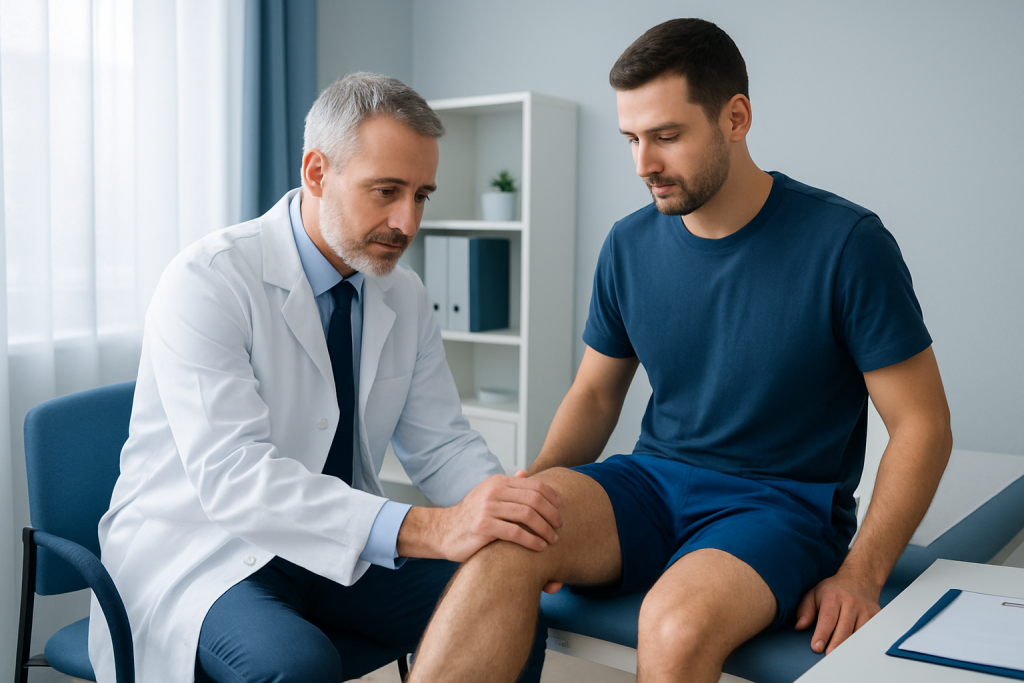
Meniscus tears can happen in two broad ways. A sudden twist, pivot, or deep squat may injure the cartilage in sports or everyday activities, especially if the knee is under load at the time. In other people, the meniscus may weaken gradually and tear with a lower-energy movement, particularly as part of age-related wear.
Several factors can increase the chance of a tear: sports that involve rapid turning, jobs or routines that require frequent kneeling or squatting, prior knee injury, and degenerative joint changes. Body mechanics, muscle balance, and general joint health can also influence how vulnerable the knee is to injury.
It is helpful to remember that a meniscus tear is not always caused by a dramatic accident. Sometimes the symptoms appear after an ordinary movement, which can make the problem easy to dismiss at first.
How the McMurray Test Is Performed
The McMurray test is usually done with the patient lying on an examination table. The clinician flexes the knee and then gently rotates the lower leg while straightening the knee in a controlled way. Different angles and movements help stress different parts of the meniscus.
During the maneuver, the clinician watches for pain, audible or palpable clicking, or a sensation that something is catching inside the joint. These reactions may suggest a tear, but the result is not perfectly sensitive or specific. In other words, some tears may be missed, and some positive findings may occur in knees without a tear.
Because of this, the test is most useful when combined with other parts of the exam, such as joint-line tenderness, swelling, range of motion, and stability testing. In many cases, imaging such as MRI is considered if the diagnosis remains uncertain or if symptoms persist.
Diagnosis and What the Test Can Tell
The McMurray test helps clinicians decide whether the meniscus should be investigated further. It can support a suspected diagnosis when the symptoms, injury pattern, and physical findings all point in the same direction.
However, the test cannot show the size, location, or exact type of tear. It also cannot determine whether the cartilage problem is new, old, or part of broader joint wear. For that reason, a person may still need imaging or a specialist opinion even if the examination seems suggestive.
In practice, the question is not simply whether the test is positive. The more important question is whether the overall pattern fits a meniscus injury and whether the knee is stable enough for conservative care or needs a more detailed plan.
Treatment Options
Treatment depends on the type of tear, the person’s age and activity level, and whether the knee is locking or giving way. Many meniscus injuries are first managed without surgery, especially when symptoms are mild or the tear is small and stable.
Conservative care often includes temporary activity modification, ice, elevation, pain-relief strategies recommended by a clinician, and physical therapy to improve strength and movement. Rehabilitation may focus on the quadriceps, hamstrings, hip muscles, and balance, since better support around the knee can reduce stress on the joint.
When symptoms do not improve, or when the knee is mechanically blocked, specialists may discuss procedures such as arthroscopic surgery. The goal is not to rush into an operation, but to match treatment to the injury pattern and the person’s daily needs.
- Rest from aggravating activities may reduce irritation.
- Physical therapy can restore motion and support knee stability.
- Bracing may be used in selected cases.
- Surgery is considered when symptoms persist or the knee is stuck or unstable.
Prevention & Self-care
Not every meniscus injury can be prevented, but the knee often responds well to habits that reduce unnecessary strain. Gradually building strength in the legs and hips, warming up before activity, and using proper movement technique can all help.
For people returning to sport or exercise after a knee problem, a measured return is usually safer than pushing through pain. It is also sensible to avoid repeated twisting, deep squats, or kneeling positions if these consistently trigger symptoms until a clinician advises otherwise.
Self-care is most effective when it supports, rather than replaces, evaluation. If the knee repeatedly swells, catches, or limits walking, it should be examined rather than managed indefinitely at home.
When to See a Doctor
Medical assessment is recommended when knee pain lasts more than a short period, keeps returning, or is accompanied by swelling, locking, or a feeling that the joint is unstable. A sudden injury followed by difficulty bearing weight also deserves prompt attention.
People should seek care sooner if the knee cannot fully straighten, if pain is worsening, or if everyday activities such as walking downstairs or standing from a chair become difficult. These symptoms may indicate a meniscus tear or another joint problem that needs guided treatment.
For international patients, a structured orthopedic consultation can help clarify what is causing the knee symptoms and what follow-up will be needed after returning home. Acibadem Health Point’s multidisciplinary specialists and JCI-accredited hospitals diagnose and treat meniscus injuries for international patients, with care plans designed to support both treatment and recovery planning.
Frequently asked questions
What does a positive McMurray test mean?
A positive result means the clinician found pain, clicking, or catching that may fit a meniscus injury. It does not prove a tear on its own, because the finding must be interpreted with symptoms and other exam results.
Can the McMurray test miss a meniscus tear?
Yes. No physical exam test is perfect, and some tears do not produce a clear finding during the maneuver. If symptoms strongly suggest a meniscus problem, imaging or follow-up evaluation may still be needed.
Is the McMurray test painful?
It may cause discomfort if the knee is already irritated, but it should be performed gently. Patients should tell the clinician if the movement feels sharply painful or too uncomfortable.
Do all meniscus tears need surgery?
No. Many are treated first with non-surgical measures such as physical therapy, activity changes, and symptom control. Surgery is usually considered when symptoms persist or the knee is mechanically blocked.
What is the difference between a meniscus tear and arthritis pain?
A meniscus tear often causes joint-line pain, clicking, or locking after twisting movements, while arthritis pain is more often linked with stiffness and gradual wear. The two can also occur together, which is why a proper examination matters.
Should someone travel for a McMurray test or orthopedic evaluation?
If the knee symptoms are persistent, mechanical, or difficult to diagnose, an orthopedic assessment can be useful even for international patients. The main goal is to confirm the problem and create a clear plan for treatment and follow-up.
References
- American Academy of Orthopaedic Surgeons
- Mayo Clinic
- National Institute of Arthritis and Musculoskeletal and Skin Diseases
- American Physical Therapy Association
This article is for general information only and is not a substitute for professional medical advice. Please consult a qualified doctor about your individual situation.
More from the Health Library



Related Specialists

Prof. Dr. Ahmet Alanay
Orthopedic Surgery & Traumatology
Dr. Sinan Aksu
Orthopedic Surgery & Traumatology
Dr. Sirri Baştürk
Orthopedic Surgery & Traumatology
Prof. Dr. Korhan Özkan
Orthopedic Surgery & Traumatology