Macular Degeneration Symptoms

Key Takeaways
- Macular degeneration usually affects central vision first, not side vision.
- Early symptoms may include blurred words, dimmer vision, or straight lines appearing wavy.
- Both dry and wet forms can cause vision changes, but wet macular degeneration often progresses faster.
- A comprehensive dilated eye exam is the main way to diagnose the condition.
- Prompt evaluation is important if vision changes appear suddenly or worsen quickly.
Macular degeneration affects the macula, the part of the retina responsible for sharp central vision. Its symptoms often begin subtly, so knowing what to watch for can help a person seek eye care at the right time.
Overview
Macular degeneration is a condition that affects the macula, the small central part of the retina that helps a person read, recognize faces, and see fine detail. When the macula becomes damaged, vision may remain clear around the edges while the center becomes blurred, distorted, or empty in parts.
For many people, the first clue is not a dramatic loss of sight but a quiet change in how everyday tasks feel. A page may seem harder to read, the faces of loved ones may look less distinct, or a bright light may not make central vision as sharp as it once was. These changes can develop slowly, especially in dry age-related macular degeneration, which is why symptoms are sometimes noticed only after they begin interfering with daily life.
Macular degeneration does not usually cause complete blindness because peripheral vision often remains intact. Still, it can make independent living more difficult if it is not recognized and monitored. Understanding the symptom pattern helps people know when to schedule an eye examination, whether they are at home or traveling to another country for specialist care.
Symptoms
The most common symptom is a gradual loss of sharp central vision. A person may notice that small print is harder to read, street signs seem less clear, or tasks that depend on detail require more effort than before. The change is often more obvious when looking directly at something than when glancing at it.
Another frequent sign is distortion. Straight lines, such as the edges of a doorframe or a tiled floor, may appear bent, wavy, or crooked. This symptom, often called metamorphopsia, can be especially important because it may suggest active changes in the macula.
Other possible symptoms include:
- Blurry or fuzzy central vision
- Difficulty seeing in low light or after entering a dark room
- Needing brighter light for reading or close work
- Colors appearing less vivid than before
- A dark, blank, or gray spot in the center of vision
- Trouble recognizing faces, especially at a normal distance
Wet macular degeneration can bring faster and more noticeable symptoms. A sudden increase in blur, a new dark spot, or a rapid change in how lines look should be treated as a prompt for medical review rather than something to watch for weeks on end.
Causes & Risk Factors

Macular degeneration is usually related to aging, which is why it is commonly called age-related macular degeneration, or AMD. Over time, the tissues that support the macula may become less efficient, and tiny deposits or changes in blood vessels can interfere with vision.
The condition is often divided into two main forms. Dry AMD is the more common type and tends to progress slowly. Wet AMD is less common but more aggressive, developing when abnormal blood vessels grow under the retina and leak fluid or blood. The symptom pattern can differ between the two, but both affect the same central part of vision.
Several factors can increase risk, including:
- Older age
- Family history of macular degeneration
- Smoking or a history of smoking
- Cardiovascular risk factors such as high blood pressure
- Long-term exposure to poor lifestyle habits that affect vascular health
- Light-colored eyes and certain genetic backgrounds, which may play a role in risk
People planning care across borders often arrive with questions about whether their symptoms fit a common pattern or suggest a more urgent type. A careful history, retinal examination, and imaging can help an ophthalmologist sort out what is happening and whether treatment should begin quickly.
Diagnosis
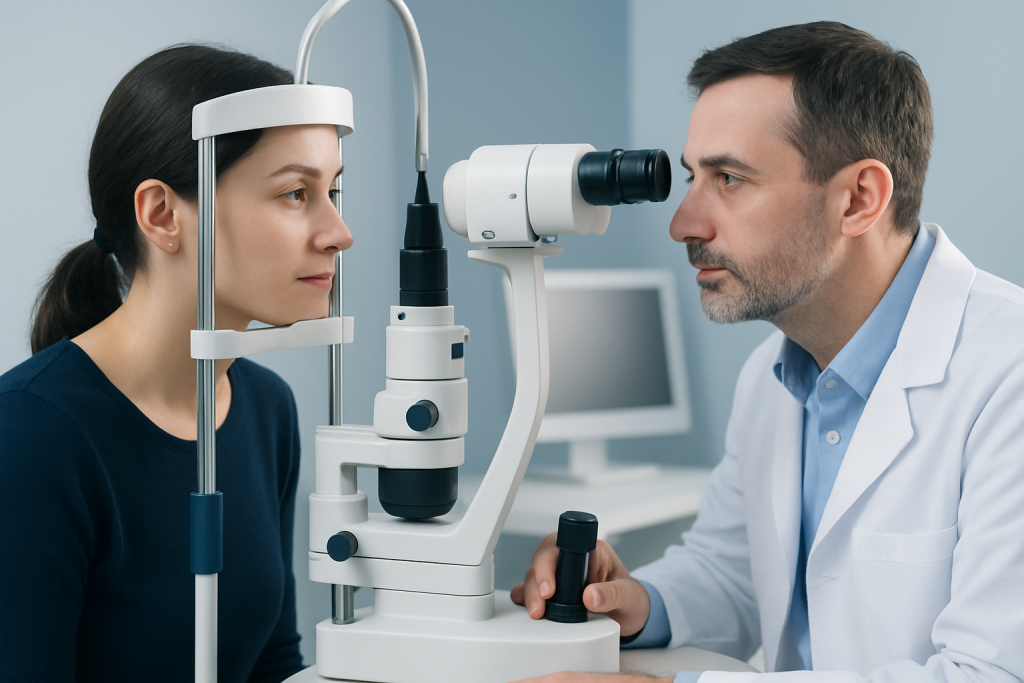
Diagnosis starts with a detailed eye examination, usually including a dilated retinal exam. This allows the doctor to look directly at the macula and check for signs such as drusen, pigment changes, fluid, bleeding, or other structural changes.
Imaging tests often help confirm the diagnosis and guide treatment. Optical coherence tomography, or OCT, is especially useful because it creates cross-sectional pictures of the retina and can show subtle fluid or thinning. In some cases, fluorescein angiography may be used to examine retinal blood flow and identify leaking vessels, particularly when wet AMD is suspected.
Vision testing may also be performed to measure central clarity and detect distortion. Because symptoms can overlap with other eye problems, such as cataracts or diabetic eye disease, diagnosis is best made by an eye specialist rather than by symptom checking alone. For international patients, bringing previous eye reports, medication lists, and imaging copies can make the first consultation more efficient.
Treatment Options
Treatment depends on the type and stage of macular degeneration. Dry AMD is often managed through monitoring, risk reduction, and in some cases nutritional support recommended by an eye doctor. The goal is to slow progression and preserve function for as long as possible.
Wet AMD usually requires more active treatment because it can threaten central vision more quickly. Anti-VEGF injections into the eye are a common approach used to reduce abnormal vessel growth and leakage. The treatment schedule is individualized, and follow-up visits are important because the retina may need repeat assessment over time.
Other parts of care may include:
- Low-vision aids such as magnifiers or special reading tools
- Occupational or visual rehabilitation strategies
- Treatment of related eye conditions when present
- Monitoring both eyes, since one eye may be affected before the other
There is no single treatment that restores normal macular function in every case, so the practical aim is to preserve reading vision, face recognition, and independence. When care is organized from another country, the treatment plan should also account for travel timing, follow-up availability, and how injections or monitoring will be continued after returning home.
Prevention & Self-care
Not every case of macular degeneration can be prevented, but some habits may support eye health and overall vascular health. Stopping smoking is one of the most meaningful steps a person can take, since smoking is strongly linked with worse eye health outcomes.
A balanced diet that includes leafy greens, colorful vegetables, fish, and other nutrient-rich foods may support healthy aging. People should not start supplements on their own without medical advice, because the usefulness of specific formulas depends on the type of macular degeneration and the person’s overall health profile.
Helpful self-care measures often include:
- Keeping regular eye appointments even when vision seems stable
- Using good lighting for reading and close tasks
- Checking one eye at a time at home if advised by a doctor
- Using sunglasses and practical glare reduction when outdoors
- Managing blood pressure and other general health conditions
Small adjustments can make a large difference in daily function. For someone recovering after evaluation abroad, the most useful self-care is often consistency: following the eye doctor’s instructions, keeping the next follow-up on schedule, and reporting changes rather than assuming they are part of normal aging.
When to See a Doctor
A person should arrange an eye examination if central vision becomes blurry, words begin to look distorted, or reading suddenly requires much more effort than before. These changes may be subtle at first, but they deserve attention, especially in adults over 50 or in anyone with a family history of AMD.
Urgent evaluation is especially important if symptoms appear quickly, if a dark or blank area develops in the center of vision, or if straight lines suddenly become wavy. Wet macular degeneration can change fast, and earlier assessment may help preserve vision better than waiting for a routine appointment.
People traveling internationally for care should seek a specialist review before the trip whenever possible, and they should keep records of any scans or prior diagnoses. Acibadem Health Point’s multidisciplinary specialists and JCI-accredited hospitals diagnose and treat macular degeneration for international patients, with care that can be coordinated across consultation, imaging, and follow-up planning.
Living With the Change
Learning that central vision is changing can feel unsettling, but many people continue to manage daily life well with the right support. The important shift is to treat vision changes as a medical issue that can be monitored, explained, and often supported, rather than as an inevitable, unspoken part of getting older.
Simple adaptations can help preserve independence while care is arranged: larger print, digital text enlargement, stronger task lighting, and organized home spaces often make reading and movement easier. If one eye is better than the other, people should not rely only on the stronger eye without medical guidance, because the weaker eye may still need monitoring.
Regular communication with an eye doctor remains essential, particularly if treatment is being delivered across borders. A clear follow-up plan helps the person understand what changes are expected, what changes are not, and when the next review should happen.
FAQ
Can macular degeneration be felt before it affects vision?
No, it does not usually cause pain or physical discomfort. The condition is typically noticed through changes in vision, especially reading difficulty or distortion.
Does macular degeneration affect both eyes at the same time?
Not always. One eye may be affected earlier or more strongly than the other, which is why each eye should be checked separately when symptoms are suspected.
Is blurred vision always macular degeneration?
No, blurred vision can also come from cataracts, dry eye, refractive errors, diabetes-related eye disease, and other conditions. An eye examination is the safest way to identify the cause.
Can vision loss from macular degeneration be reversed?
Some treatments can slow progression or reduce fluid in wet AMD, but they do not always restore lost vision fully. The goal is to protect the remaining central vision and maintain daily function.
Are supplements helpful for everyone with macular degeneration?
Not necessarily. Certain vitamin formulations may be recommended for some people with specific stages of AMD, but supplement decisions should be made with an eye doctor based on the individual case.
How often should the eyes be checked after diagnosis?
Follow-up depends on the type and stage of disease, as well as whether treatment is being given. The ophthalmologist sets the schedule so changes can be found early and managed appropriately.
Frequently asked questions
Can macular degeneration be felt before it affects vision?
No, it does not usually cause pain or physical discomfort. The condition is typically noticed through changes in vision, especially reading difficulty or distortion.
Does macular degeneration affect both eyes at the same time?
Not always. One eye may be affected earlier or more strongly than the other, which is why each eye should be checked separately when symptoms are suspected.
Is blurred vision always macular degeneration?
No, blurred vision can also come from cataracts, dry eye, refractive errors, diabetes-related eye disease, and other conditions. An eye examination is the safest way to identify the cause.
Can vision loss from macular degeneration be reversed?
Some treatments can slow progression or reduce fluid in wet AMD, but they do not always restore lost vision fully. The goal is to protect the remaining central vision and maintain daily function.
Are supplements helpful for everyone with macular degeneration?
Not necessarily. Certain vitamin formulations may be recommended for some people with specific stages of AMD, but supplement decisions should be made with an eye doctor based on the individual case.
How often should the eyes be checked after diagnosis?
Follow-up depends on the type and stage of disease, as well as whether treatment is being given. The ophthalmologist sets the schedule so changes can be found early and managed appropriately.
References
- National Eye Institute
- American Academy of Ophthalmology
- World Health Organization
- Mayo Clinic
This article is for general information only and is not a substitute for professional medical advice. Please consult a qualified doctor about your individual situation.