

Knee Joint Discomfort: Causes and Treatment

Key Takeaways
- Knee discomfort may start suddenly after an injury or develop gradually from wear-and-tear, inflammation, or strain.
- Swelling, stiffness, instability, locking, or difficulty bearing weight can help point to the likely cause.
- Diagnosis often combines a physical examination with imaging or other tests when needed.
- Treatment may include rest, activity changes, physical therapy, medication, injections, or surgery in selected cases.
- Early, guided care can help protect mobility and support a safer return to daily activities and travel.
Medically reviewed by the Acıbadem clinical team — August 19, 2026
Knee joint discomfort can come from overuse, injury, arthritis, or problems in the tissues around the knee. Understanding the pattern of symptoms helps guide the right evaluation and treatment, especially when care is being planned across borders.
Overview
Discomfort in the knee joint is one of the most common musculoskeletal complaints because the knee carries body weight, absorbs impact, and depends on a network of bones, cartilage, ligaments, tendons, and muscles working together. Even a mild imbalance in any of these structures can make walking, climbing stairs, getting out of a chair, or exercising noticeably uncomfortable.
The term itself is broad. Some people feel a deep ache, others notice sharp pain during movement, and some describe stiffness, pressure, clicking, or a sense that the knee is not moving smoothly. The details matter, because the pattern often gives the clinician clues about whether the issue is related to injury, inflammation, arthritis, overuse, or a problem outside the joint.
For international patients planning evaluation or treatment in another country, it is helpful to bring prior imaging, medication lists, and a clear timeline of symptoms. That information can make the first consultation more efficient and help the care team decide whether the knee needs conservative treatment, further testing, or specialist intervention.
Symptoms
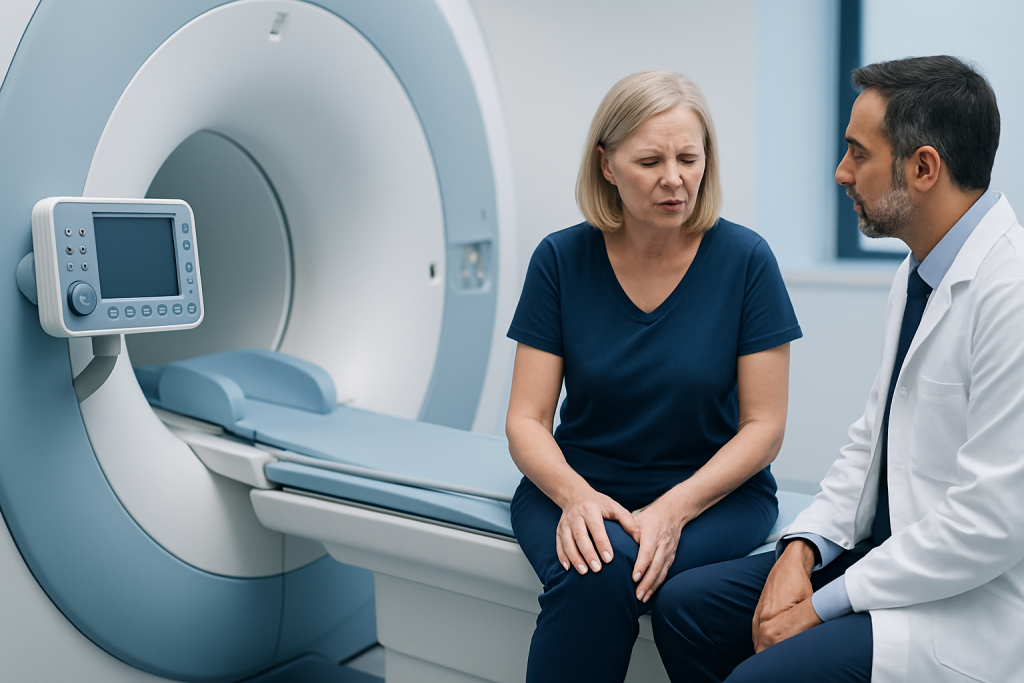
Knee discomfort can appear as pain at the front, inside, outside, or back of the joint, and the location may shift depending on the cause. Some people notice symptoms only when the knee is bent, loaded, or twisted; others feel discomfort even at rest or at night.
Common accompanying symptoms include swelling, warmth, tenderness, stiffness after sitting, reduced range of motion, popping, grinding, or a feeling that the knee may give way. A locked knee, where it cannot straighten fully, can suggest a mechanical problem such as a Meniscus: Symptoms, Causes and Treatment" class="ahp-ilk">torn meniscus or a loose structure within the joint.
- Pain that worsens with stairs, squatting, or running may suggest overuse or cartilage-related irritation.
- Pain after a fall, twist, or direct blow may point to a sprain, tear, or fracture.
- Morning stiffness or swelling that develops gradually can be seen with arthritis or inflammatory conditions.
- Redness, marked warmth, or fever requires prompt medical assessment.
Symptoms that interfere with walking, sleep, work, or travel plans deserve professional evaluation, even if they seem manageable at first. A knee problem that is steadily progressing is often easier to treat early than after it has limited movement for weeks or months.
Causes & Risk Factors
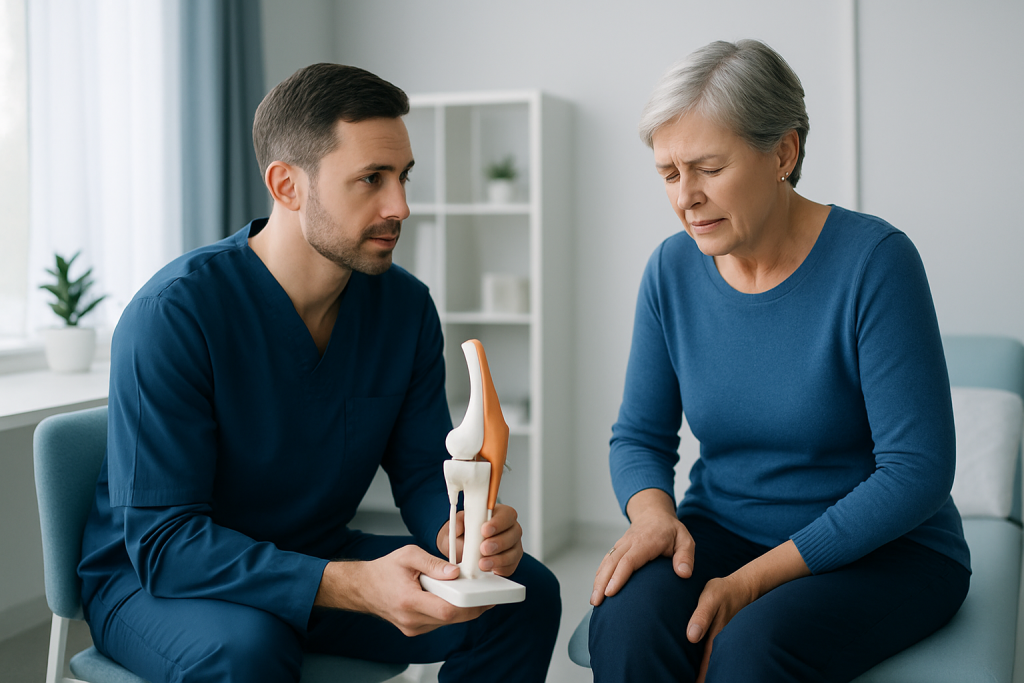
Knee discomfort has many possible causes, and several can occur together. A person may have mild wear-and-tear changes in the joint and also a tendon irritation, or an old sports injury may become more noticeable as activity increases or muscle support declines.
Common causes include osteoarthritis, meniscus tears, ligament injuries, tendinitis, bursitis, patellofemoral pain, iliotibial band irritation, and referred pain from the hip or lower back. Less commonly, inflammatory arthritis, infection, gout, or bone-related conditions may be responsible. In children and adolescents, growth-related conditions or sports injuries may play a role.
Risk factors can include aging, previous knee injury, repetitive kneeling or running, excess body weight, muscle weakness, poor alignment of the legs or feet, and participation in sports with cutting or pivoting movements. Certain occupations and long periods of standing can also place additional stress on the knee joint.
It is worth noting that pain severity does not always match the degree of structural change. Some people with significant imaging findings have only mild symptoms, while others with minimal imaging changes feel substantial discomfort. That is why clinicians combine the story, examination, and test results rather than relying on a single image.
Diagnosis
Diagnosis usually begins with a detailed medical history and a physical examination. The clinician may ask when the pain started, what activities worsen it, whether there was an injury, and whether swelling, clicking, locking, or instability has been present. Observing how a person walks, bends, and straightens the knee can reveal important information.
Depending on the findings, imaging may be used to look more closely at the joint. X-rays can show bone alignment, arthritis, or fracture. Ultrasound may help evaluate soft tissues and fluid. MRI is often considered when ligament, meniscus, cartilage, or other internal structures need a more detailed view.
In some situations, blood tests or joint fluid analysis may be useful, especially if infection, gout, or inflammatory arthritis is suspected. The diagnostic plan is usually tailored to the individual rather than following a single fixed pathway, which is especially helpful when a patient is seeking care while traveling and time is limited.
A good diagnostic process should answer practical questions: What structure is likely involved? Is the condition stable or urgent? What treatment is most likely to restore function safely? Those answers guide the next steps and help prevent unnecessary procedures.
Treatment Options
Treatment depends on the cause, the severity of symptoms, and how much the knee problem is affecting daily life. Many cases begin with conservative care, especially when there is no major structural damage or when symptoms are expected to improve with reduced irritation and targeted rehabilitation.
Typical early approaches may include activity modification, short-term rest from aggravating movements, ice or heat as advised by a clinician, and supportive measures such as bracing or taping in selected cases. Physical therapy is often central because restoring strength in the quadriceps, hip, and supporting muscles can reduce stress on the knee and improve stability.
Medications may be recommended to ease pain and inflammation, but the choice depends on the person’s age, medical history, and other medicines already in use. In some cases, injections are considered for specific inflammatory or degenerative conditions. Surgery may be appropriate when there is a significant tear, severe arthritis, persistent instability, or failed non-surgical treatment.
Common treatment paths may include:
- Exercise-based rehabilitation to improve strength, flexibility, and movement control.
- Anti-inflammatory or pain-relief medications when medically appropriate.
- Injections for selected joint or soft-tissue conditions.
- Arthroscopic or reconstructive surgery when mechanical damage needs correction.
- Joint replacement in advanced arthritis when pain and disability become severe.
For patients who travel for orthopedic care, the plan should also include a realistic timeline for recovery, follow-up, and return flight considerations. After surgery or intensive therapy, safe mobility, wound care, and access to rehabilitation at home should be discussed before travel is arranged.
Prevention & Self-care
Not every knee problem can be prevented, but many episodes can be made less frequent or less disruptive with steady self-care. The goal is not to avoid movement altogether; it is to keep the joint supported, well-conditioned, and less vulnerable to overload.
Helpful measures include maintaining a healthy body weight, warming up before exercise, increasing activity gradually, and choosing footwear that provides adequate support. Strengthening the muscles around the knee and hip can improve alignment and load distribution, especially for people who walk, run, or train regularly.
Practical self-care steps often include pacing activities, avoiding sudden jumps in training volume, and using pain as a signal to modify rather than ignore motion patterns. For people with desk work or long flights, periodic standing, gentle stretching, and ankle or knee movement can reduce stiffness. Those recovering from treatment should follow their rehabilitation plan carefully rather than returning too quickly to high-impact exercise.
When symptoms are mild, keeping a simple symptom log can be useful. Tracking what worsens or eases discomfort may help a clinician identify patterns such as stair pain, running pain, or discomfort after prolonged sitting, which can sharpen the diagnosis during a follow-up visit.
When to See a Doctor
Medical evaluation is advisable if knee discomfort lasts more than a short period, keeps returning, or starts limiting normal activities. Pain that follows an injury, especially with swelling or difficulty bearing weight, should be assessed to rule out a fracture, ligament injury, or meniscus tear.
Prompt care is important if the knee is very swollen, red, hot, deformed, locked, or unable to support weight. Fever, chills, or a sudden severe worsening of pain can signal a condition that needs urgent attention. In people with diabetes, immune suppression, or a history of inflammatory disease, clinicians may be especially cautious about possible infection or other complications.
It is also reasonable to seek a specialist opinion when symptoms have not improved with basic measures, when the diagnosis is unclear, or when someone is considering Herniated Disc Treatment Abroad: Injection, Rehab, or Surgery?" class="ahp-ilk">treatment abroad and wants a coordinated plan. Acibadem Health Point’s multidisciplinary specialists and JCI-accredited hospitals can evaluate and treat knee joint conditions for international patients in a structured, coordinated way.
A timely consultation can help identify whether the knee issue is temporary and manageable or whether it needs a more advanced orthopedic solution. Either way, early guidance usually makes the recovery path clearer and easier to follow.
Recovery and Outlook
The outlook for knee joint discomfort varies widely because the knee can be affected by many different conditions, from short-lived strain to long-term arthritis. In many cases, symptoms improve with targeted rehabilitation and sensible activity changes, while more complex injuries may need a longer recovery period.
Recovery is often smoother when expectations are clear. Some people need a few weeks of activity modification and therapy, while others require months of progressive strengthening or follow-up after a procedure. The key is to measure progress by function, not just by pain level alone. Walking more comfortably, climbing stairs with less effort, and regaining confidence in the joint are all meaningful signs of improvement.
For patients returning home after treatment abroad, follow-up instructions should be easy to understand and realistic to continue locally. A good discharge plan includes warning signs to watch for, guidance on exercise progression, and a pathway for remote or local follow-up if questions arise after travel.
Living Well With Ongoing Knee Discomfort
When knee discomfort becomes a recurring issue, the most useful strategy is often a combination of education, routine movement, and personalized treatment. Many people do best when they understand what triggers their symptoms and how to adapt daily habits without becoming inactive.
Low-impact exercise such as walking on level ground, cycling, or guided swimming may be easier on the knee than repetitive jumping or twisting, depending on the diagnosis. A clinician or physical therapist can help choose activities that protect the joint while maintaining fitness and confidence.
Long-term knee health often depends on consistency rather than dramatic changes. Small improvements in strength, posture, flexibility, and load management can add up over time and help reduce flare-ups. For people navigating care from another country, clear written instructions and a defined rehabilitation plan can make that consistency much easier to maintain.
References
This article is based on established orthopedic and medical guidance from authoritative health organizations and specialty bodies. It is intended for education and should not replace a personalized medical assessment.
- American Academy of Orthopaedic Surgeons
- National Institute of Arthritis and Musculoskeletal and Skin Diseases
- Mayo Clinic
- World Health Organization
- American College of Rheumatology
Frequently asked questions
What are the most common reasons for knee joint discomfort?
Common reasons include overuse, arthritis, tendon irritation, meniscus injury, ligament strain, and bursitis. The exact cause often depends on where the pain is felt, how it started, and whether swelling or instability is present.
Does knee discomfort always mean arthritis?
No. Arthritis is only one possible cause, especially in older adults, but knee discomfort can also come from sports injuries, inflammation, alignment problems, or soft-tissue strain. A proper examination is the best way to sort out the cause.
When is knee pain urgent?
Urgent evaluation is needed if the knee is very swollen, red, hot, visibly deformed, locked, or unable to bear weight. Fever or sudden severe pain also deserves prompt medical attention.
Can knee discomfort improve without surgery?
Yes, many knee problems respond well to non-surgical care such as activity changes, physical therapy, and other doctor-guided treatments. Surgery is usually considered only when symptoms are persistent or when there is a structural problem that needs correction.
What helps when knee discomfort flares during travel?
It can help to rest the joint, avoid repeated stairs or long walks, and use any approved supportive measures recommended by a clinician. If the pain is new, worsening, or associated with swelling, it should be assessed rather than assumed to be a simple strain.
How should someone prepare for orthopedic care abroad?
Bringing prior reports, imaging, medication lists, and a written symptom timeline can make the evaluation more efficient. It is also wise to discuss recovery time, follow-up needs, and safe travel plans before treatment begins.
References
- American Academy of Orthopaedic Surgeons
- National Institute of Arthritis and Musculoskeletal and Skin Diseases
- Mayo Clinic
- World Health Organization
- American College of Rheumatology
This article is for general information only and is not a substitute for professional medical advice. Please consult a qualified doctor about your individual situation.
Joint and spine care in Turkey — expert assessment & treatment
JCI-accredited · board-certified surgeons · reply within 24h
Add us as a Preferred Source to see more of our trusted health content across Google Search, AI Overviews and Discover.
More from the Health Library



Related Specialists

Prof. Dr. Ahmet Alanay
Orthopedic Surgery & Traumatology
Dr. Sinan Aksu
Orthopedic Surgery & Traumatology
Dr. Sirri Baştürk
Orthopedic Surgery & Traumatology
Prof. Dr. Korhan Özkan
Orthopedic Surgery & Traumatology