

Jammed Finger

Key Takeaways
- A jammed finger is often a sprain or soft-tissue injury, but a fracture or dislocation can look similar.
- Pain, swelling, stiffness, and limited motion are common after the injury.
- Early rest, ice, elevation, and protection of the finger can help reduce symptoms.
- Persistent deformity, numbness, severe pain, or inability to bend or straighten the finger should be assessed by a doctor.
- Recovery may take days to weeks depending on the severity and whether a bone, joint, or tendon is involved.
A jammed finger is a common hand injury that usually happens when the fingertip is forced suddenly, such as by a ball or a fall. It often improves with simple care, but some injuries need medical evaluation to rule out a fracture, dislocation, or tendon damage.
Overview
A jammed finger is one of those injuries that can seem minor at first and still make ordinary tasks surprisingly difficult. It usually happens when the tip of the finger is struck forcefully, driving the joint inward and irritating the ligaments, joint capsule, or nearby soft tissues.
In many cases, the finger is simply sprained. In others, the same impact can also cause a fracture, a dislocation, or an injury to the tendon that helps straighten the finger. Because the symptoms overlap, it is not always possible to tell the exact problem without an examination and sometimes an X-ray.
For international patients who are planning care while away from home, finger injuries are often among the first issues evaluated in orthopedics or urgent care. A clear diagnosis helps patients decide whether simple home treatment is enough or whether they need a splint, therapy, or a procedure to put the joint back in place.
Symptoms
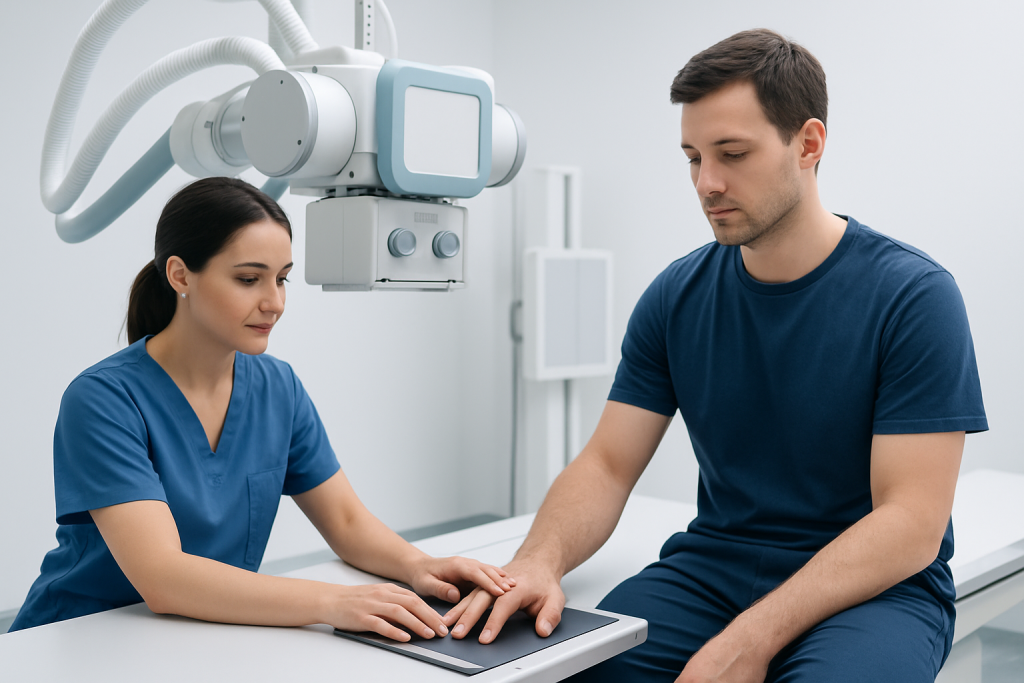
The most common signs of a jammed finger are pain at the injured joint, swelling, and tenderness when the finger is touched or moved. The finger may feel stiff, weak, or difficult to use, especially when trying to grip, type, or hold small objects.
Bruising can appear within hours or the next day. Some people notice that the finger bends less easily than the others, or that it feels unstable when they try to straighten it. If the finger looks crooked, catches during movement, or cannot be moved through its usual range, the injury may be more than a simple sprain.
- Pain near the joint, often after a direct blow
- Swelling and stiffness
- Bruising or redness
- Reduced strength or range of motion
- Visible deformity in more serious injuries
Numbness, tingling, or a pale or cold fingertip are not typical for a simple jam and should be assessed promptly, since they may suggest circulation or nerve involvement.
Causes & Risk Factors

A jammed finger is usually caused by sudden force to the end of the finger. Sports are a frequent setting, especially ball sports in which the fingertip absorbs the impact. It can also happen during a fall, a car door injury, or any situation where the finger is pushed backward, sideways, or against a hard surface.
People who play basketball, volleyball, handball, rugby, or similar sports may have a higher chance of this type of injury because the hands are repeatedly exposed to fast, direct contact. Children and older adults may also be at risk, especially if balance, coordination, or reaction time makes it harder to avoid a fall.
Previous finger injuries can make the joint less stable and more vulnerable to repeat trauma. In some cases, swelling from an earlier injury may make it easier to jam the same finger again, which is one reason proper healing matters before returning to full activity.
Diagnosis
Diagnosis usually begins with a careful history and physical examination. A clinician will ask how the injury happened, which part of the finger hurts, and whether the finger can bend or straighten fully. They may also compare the injured finger with the others to check for swelling, tenderness, deformity, and joint stability.
An X-ray is often recommended when there is significant swelling, marked pain, visible misalignment, or difficulty moving the finger. This helps rule out a fracture or dislocation, both of which may need more specific treatment than a sprain. In some cases, a tendon injury may be suspected if the fingertip droops or the finger cannot be actively straightened.
For patients traveling for evaluation, the diagnosis may be completed in a single visit with an orthopedic specialist and imaging if needed. A prompt, organized assessment can reduce uncertainty and help avoid either undertreatment or unnecessary immobilization.
Treatment Options
Treatment depends on the type and severity of the injury. A mild jammed finger often improves with rest, ice, elevation, and temporary protection of the joint. Some injuries are managed with buddy taping, where the injured finger is gently taped to a neighboring finger for support while it heals.
If there is a fracture, dislocation, or tendon injury, the treatment plan may be more involved. A dislocated joint may need to be realigned by a medical professional. A fracture may require a splint, follow-up imaging, or in some cases a procedure or surgery if the bone is unstable. Tendon injuries often need earlier specialist input because delayed care can affect hand function.
Rehabilitation is an important part of recovery. Even after pain settles, the finger may remain stiff for a while. Hand exercises or formal therapy can help restore motion, strength, and coordination, especially when the injury has been significant or the patient needs to return to work or sports.
- Resting the finger from painful activity
- Applying ice in short intervals during the first couple of days
- Elevating the hand to limit swelling
- Using a splint or buddy taping when advised
- Seeking specialist care for fractures, dislocations, or tendon injury
Prevention & Self-care
Not every jammed finger can be prevented, but practical habits can lower the risk. In sports, proper technique, warm-up, and well-fitting protective gear may help reduce direct finger trauma. Strength and flexibility training for the hand and forearm can also support joint control.
At home and at work, being mindful around heavy doors, tools, and cluttered surfaces can prevent sudden finger impacts. For people who have had a finger injury before, returning to activity gradually may protect healing tissue from being re-injured too soon.
For short-term self-care, the goal is to calm inflammation without forcing the finger. Ice, rest, and gentle protection are usually better than repeated testing of the joint. If a ring is on the injured hand and swelling is developing, it should be removed early to avoid trapping it as the finger swells.
Traveling patients may find it helpful to keep the finger protected during flights or long transfers, especially if a splint has been placed. If follow-up is needed after leaving the country, clear discharge instructions and imaging records make continuity of care much easier.
When to See a Doctor
Medical evaluation is important if the finger looks crooked, the pain is severe, or the swelling is rapid and pronounced. A person should also seek care if the finger cannot bend or straighten normally, if there is numbness or tingling, or if the skin is broken and the injury may be open to infection.
Even when symptoms seem moderate, it is wise to see a doctor if pain and stiffness do not begin to improve over a few days. Ongoing trouble using the finger can mean a fracture, ligament injury, or tendon problem that needs more specific treatment than home care alone.
Patients who need imaging, expert interpretation, or coordinated follow-up may benefit from an orthopedic review, especially if they are away from home and want a clear recovery plan. Acibadem Health Point’s multidisciplinary specialists and JCI-accredited hospitals diagnose and treat finger injuries for international patients with an organized, patient-focused approach.
<section heading="Recovery and Follow-up" body_html="
Recovery time varies. A mild sprain may settle fairly quickly, while a fracture or tendon injury can take much longer and may require staged follow-up. The finger may feel stiff after swelling improves, and that stiffness often eases gradually with regular movement once it is safe to do so.
Follow-up visits matter because the first day’s pain does not always tell the full story. A clinician may check whether the finger is healing in a straight position, whether the joint is stable, and whether exercises or a therapy referral are needed. This is especially important for people who rely on precise hand function for work, sports, or daily tasks.
Return to activity should be guided by comfort, motion, and medical advice rather than by time alone. If pain returns sharply, the finger swells again, or motion worsens after initial improvement, reassessment is sensible.
Complications
Most jammed fingers heal without lasting problems, particularly when they are assessed early and protected appropriately. Still, complications can occur if a fracture, dislocation, or tendon injury is missed at the start. In those situations, the finger may heal crooked, remain unstable, or lose motion.
Stiffness is one of the most common lingering issues. Some people also develop chronic swelling or pain around the joint, especially if they return to activity before the finger has fully recovered. Early and appropriate management lowers the chance of these longer-term problems.
When a finger injury does not follow the expected recovery pattern, it is worth re-evaluating the diagnosis rather than simply waiting longer. Hand injuries are often straightforward, but the hand is also a place where small structural problems can have a big impact on function.
Frequently asked questions
Is a jammed finger the same as a sprain?
Often, yes. A jammed finger commonly involves a sprain of the ligaments or soft tissues around the joint, but a fracture or dislocation can produce similar symptoms. That is why a proper exam is important when the injury seems severe or does not improve.
Should ice be used right away?
Ice is commonly used in the first couple of days to help reduce pain and swelling. It is usually applied in short intervals with a cloth barrier between ice and skin. If there is a severe deformity or intense pain, medical evaluation should come first.
Can a jammed finger heal on its own?
Many mild jammed fingers improve with rest and basic self-care. Even so, healing well depends on the injury being the right one to treat at home. If the joint is unstable, crooked, or very painful, a doctor should assess it.
When can someone return to sports?
Return depends on the extent of the injury and whether the finger can move comfortably and safely. Mild injuries may allow earlier return with protection, while fractures or tendon injuries need more time and supervision. A clinician or hand specialist should guide the decision.
Why does the finger stay stiff after the pain fades?
Swelling, soft-tissue irritation, and short-term immobilization can all make the joint stiff. Gentle movement, when approved by a doctor, often helps recovery. If stiffness is severe or persistent, follow-up may be needed to rule out a more complex injury.
Do all jammed fingers need an X-ray?
Not all do, but an X-ray is often recommended when there is significant pain, swelling, deformity, or difficulty moving the finger. The goal is to rule out a fracture or dislocation. A clinician decides based on the exam and how the injury happened.
References
- American Academy of Orthopaedic Surgeons
- Mayo Clinic
- National Health Service
- American Society for Surgery of the Hand
This article is for general information only and is not a substitute for professional medical advice. Please consult a qualified doctor about your individual situation.
More from the Health Library



Related Specialists

Prof. Dr. Ahmet Alanay
Orthopedic Surgery & Traumatology
Dr. Sinan Aksu
Orthopedic Surgery & Traumatology
Dr. Sirri Baştürk
Orthopedic Surgery & Traumatology
Prof. Dr. Korhan Özkan
Orthopedic Surgery & Traumatology