Inversion Table: Benefits and Risks
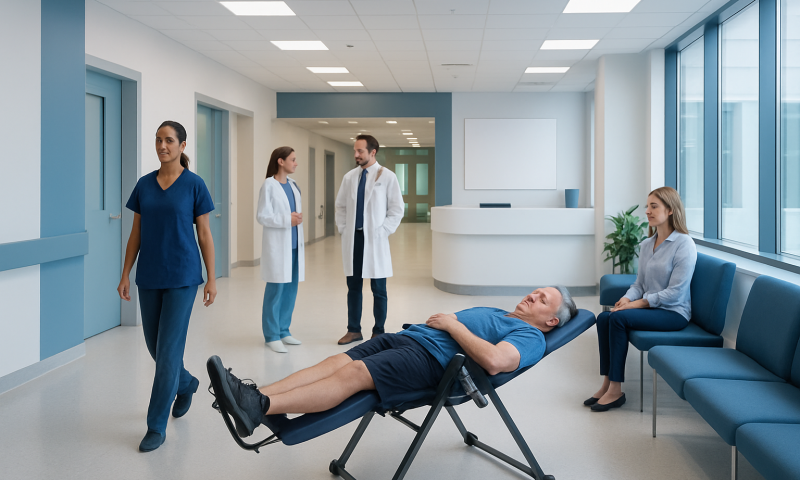
Key Takeaways
- An inversion table changes body position to reduce gravitational load on the spine.
- Some people may feel short-term relief from back tension or disc-related discomfort.
- The therapy is not suitable for everyone, especially those with certain heart, eye, blood pressure, or balance problems.
- Proper technique, gradual use, and medical guidance can improve safety.
- Persistent, severe, or recurring back pain deserves professional evaluation rather than self-treatment alone.
Medically reviewed by the Acıbadem clinical team — August 19, 2026
An inversion table is a home device that tilts the body so the head is lower than the feet, with the goal of easing pressure on the spine. It may offer temporary relief for some people with back discomfort, but it is not appropriate for everyone and should be used with care.
Overview
An inversion table is a device designed to tilt the body backward so that the feet are higher than the head. The idea is simple: by changing body position, it may temporarily reduce the feeling of pressure in the lower back and give tight tissues a chance to relax.
For some people, that position change can feel soothing, especially when back pain is related to muscle strain, stiffness, or certain disc problems. Still, inversion is best understood as a comfort measure rather than a cure. It does not repair the underlying cause of back pain, and it is not the right choice for every patient.
In a real-world care journey, people often try an inversion table after searching for at-home options that fit around work, travel, or a long recovery period. That is understandable, but it is important to match the tool to the problem. What helps one person’s mechanical back pain may be unhelpful or unsafe for someone with a different condition.
Symptoms People Hope to Ease
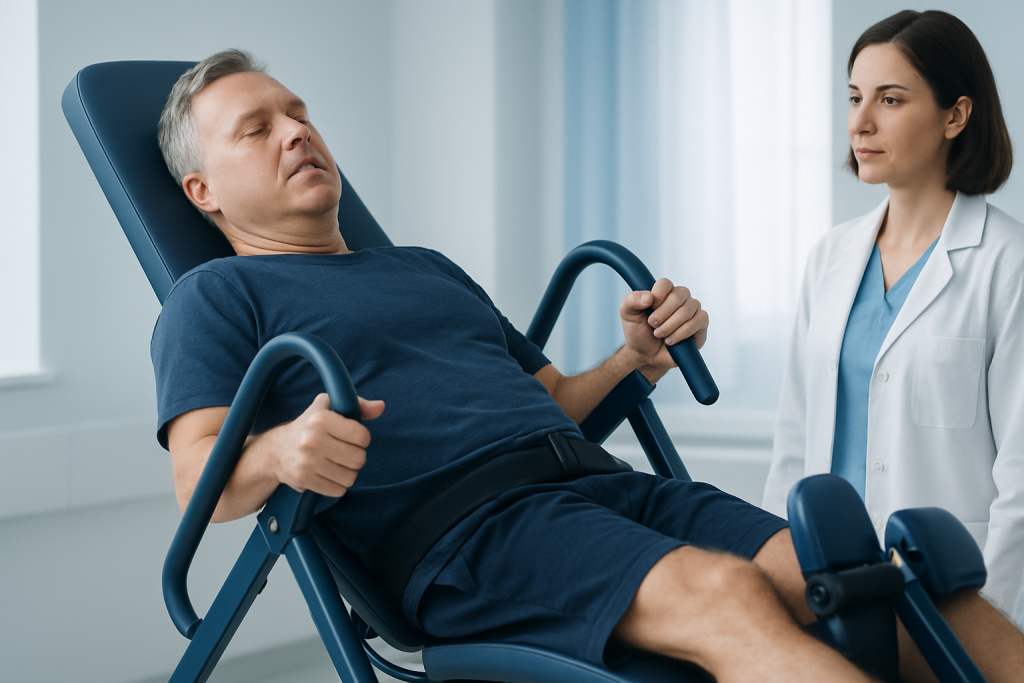
People usually turn to an inversion table because of low back discomfort, stiffness, or a feeling of compression in the spine. Some describe a temporary sense of lengthening through the back, while others hope it will ease pressure-related pain that worsens after sitting, lifting, or standing for long periods.
In some cases, people with disc-related pain or sciatica-like symptoms are interested in inversion therapy because they have heard it may reduce nerve irritation. The experience, however, varies widely. A position that feels relieving at first may later increase discomfort, dizziness, or neck strain.
It is also worth noting that back pain is not a single condition. Pain that comes with leg weakness, numbness, bowel or bladder changes, fever, unexplained weight loss, or a recent injury needs medical assessment rather than a home device. These features point toward causes that should not be managed by trial and error.
Causes & Risk Factors

The main idea behind inversion therapy is traction-like unloading. When the body is tilted, gravity may place less compressive force on the spine for a short time. That can feel helpful if symptoms are driven by muscle guarding, postural strain, or certain degenerative changes.
However, the same body position can create problems for other people. Inversion raises pressure in the head and may affect blood flow, inner-ear balance, and the cardiovascular system. That is why a person’s general health matters as much as the back condition itself.
- Higher-risk conditions may include glaucoma or other eye pressure concerns
- Uncontrolled high blood pressure or some heart rhythm problems
- History of stroke or vascular disease
- Balance disorders, vertigo, or severe motion sensitivity
- Pregnancy, unless a clinician specifically says otherwise
- Recent spinal injury, surgery, or unstable spine conditions
People with osteoporosis or other bone-weakening conditions should also be cautious, since an awkward transition on or off the table may increase injury risk. A clinician can help decide whether inversion is reasonable or whether another approach would be safer and more effective.
Diagnosis: How Back Pain Is Evaluated Before Using Inversion
Before recommending any home therapy, clinicians usually first try to understand what is causing the pain. That process often starts with a history of symptoms: where the pain is located, what makes it better or worse, whether it travels into the leg, and whether there are numbness, weakness, or nighttime symptoms.
A physical examination helps assess posture, range of motion, nerve function, and areas of tenderness. If the picture suggests a disc problem, fracture, infection, inflammatory disease, or nerve compression, imaging or other tests may be appropriate. The goal is to avoid treating all back pain as if it were the same.
For international patients, this evaluation can be especially valuable when plans involve flying home soon after treatment or continuing recovery abroad. A clear diagnosis supports safer self-care, better timing for activity, and a more practical follow-up plan once the patient leaves the clinic or hospital.
Treatment Options
An inversion table may be one part of a broader treatment plan, but it is rarely the only answer. Many patients do better with a combination of targeted exercise, posture changes, supervised physical therapy, and short-term symptom control when needed.
Depending on the cause of the pain, a clinician may suggest activity modification, core strengthening, gentle stretching, heat or cold, anti-inflammatory medicine, or guided rehabilitation. If pain is related to nerve compression, treatment may need to focus on the underlying spinal issue rather than simply creating traction.
In some situations, spinal injections or surgery are discussed, especially when symptoms are severe, progressive, or not improving with conservative care. An inversion table should not delay care when a person is losing strength, having worsening leg symptoms, or cannot function normally.
For patients who do use inversion therapy, the safest approach is usually gradual and supervised at first. Short sessions, careful securing of the ankles and feet, and a controlled return to upright position matter more than trying to reach a dramatic angle.
Prevention & Self-care
The best long-term back care often starts with everyday habits rather than equipment. Regular movement, good lifting mechanics, ergonomic sitting, and a strong trunk and hip musculature can reduce repeated strain on the spine.
People considering an inversion table should keep safety practical and simple: do not use it alone if balance is an issue, stop if dizziness or pain increases, and avoid using it after alcohol or sedating medication. A device should be assembled correctly and placed on a stable surface.
- Warm up with gentle walking or stretching before any back exercise
- Increase inversion angle slowly, not all at once
- Limit early sessions and watch how the body responds later the same day
- Use a chair, wall, or helper nearby when getting on and off the table
- Choose self-care habits that can be continued safely during travel and at home
For people recovering abroad, it can help to leave with a written plan that explains which activities are encouraged, which should be avoided, and when to seek follow-up. That kind of guidance is often more useful than a single device, because it supports recovery across different settings and time zones.
When to See a Doctor
Medical advice is important if back pain lasts more than a few weeks, keeps returning, or interferes with walking, sleep, work, or travel. A clinician can check whether the pain is coming from a muscle, disc, joint, nerve, or something outside the spine.
People should avoid using an inversion table and seek medical guidance first if they have glaucoma, uncontrolled blood pressure, heart disease, a history of stroke, significant dizziness, or a recent spinal procedure. The same caution applies if pain appeared after a fall, car accident, or other injury.
Urgent evaluation is appropriate if back pain comes with new weakness, numbness in the groin area, trouble controlling the bladder or bowel, fever, or severe unrelenting pain. These are not expected responses to simple back strain and should be assessed promptly.
Acibadem Health Point’s multidisciplinary specialists and JCI-accredited hospitals can help diagnose and treat back pain for international patients, with coordinated care that supports evaluation, treatment, and follow-up planning.
Frequently asked questions
What is an inversion table used for?
An inversion table is used to tilt the body into an upside-down or head-down position, with the aim of reducing pressure on the spine. Some people use it for temporary relief of back discomfort or stiffness. It is not a cure for the underlying cause of pain.
Does inversion therapy work for back pain?
It may help some people feel short-term relief, but responses vary. It is best seen as a supportive measure rather than a stand-alone treatment. A proper diagnosis is important before relying on it.
Who should avoid using an inversion table?
People with glaucoma, uncontrolled high blood pressure, certain heart conditions, balance problems, or a history of stroke should be cautious and usually need medical advice first. It may also be inappropriate after spinal injury or surgery. A doctor can help determine whether it is safe.
Can an inversion table help with a herniated disc?
Some patients with disc-related pain report temporary relief, but this is not guaranteed. If symptoms include weakness, numbness, or worsening leg pain, the person should be evaluated rather than self-treating. The right treatment depends on the exact diagnosis.
How long should someone stay on an inversion table?
There is no universal schedule that suits everyone. In general, sessions should start briefly and progress only if the body tolerates them well. Any dizziness, eye pressure, neck pain, or increased back pain is a reason to stop and seek advice.
Is inversion therapy safe to do at home alone?
It can be risky for people who are unsteady, have heart or eye conditions, or are unfamiliar with the equipment. Having another person nearby at first is safer. A clinician or physical therapist can also suggest alternatives if home inversion is not a good fit.
References
- American Academy of Orthopaedic Surgeons
- Mayo Clinic
- National Institute of Neurological Disorders and Stroke
- Cleveland Clinic
- World Health Organization
This article is for general information only and is not a substitute for professional medical advice. Please consult a qualified doctor about your individual situation.
Joint and spine care in Turkey — expert assessment & treatment
JCI-accredited · board-certified surgeons · reply within 24h
Add us as a Preferred Source to see more of our trusted health content across Google Search, AI Overviews and Discover.
More from the Health Library



Related Specialists

Fzt. Elif Tokgöz Nizam
Physical Medicine & Rehabilitation
Fzt. Gizem Aydın
Physical Medicine & Rehabilitation
Dr. Safiye Sayilir
Physical Medicine & Rehabilitation
Dr. Özgün Barış Çolak
Physical Medicine & Rehabilitation