Kinesiology Tape: Benefits, Uses and Risks

Key Takeaways
- Kinesiology tape is designed to allow movement while offering gentle support to muscles, joints, and soft tissues.
- It may help with short-term pain relief, swelling management, and body awareness during rehabilitation.
- Proper application matters; incorrect taping can reduce comfort or limit the intended benefit.
- It works best alongside exercise therapy, rest, and other clinician-guided treatments.
- Persistent pain, numbness, or worsening symptoms should be assessed by a qualified healthcare professional.
Medically reviewed by the Acıbadem clinical team — August 19, 2026
Kinesiology tape is an elastic therapeutic tape used to support movement, reduce strain, and help some people manage pain or swelling during recovery. It is most useful as part of a broader rehabilitation plan rather than as a stand-alone treatment.
Overview
Kinesiology tape is a thin, stretchy tape placed on the skin to provide light support without holding a joint rigidly in place. Many people first notice it on athletes, but it is also used in everyday rehabilitation for shoulder discomfort, knee strain, lower-back aches, and swelling after injury or surgery.
The tape is usually chosen when a clinician wants to support movement rather than restrict it. That makes it different from a traditional athletic wrap or splint. In practice, it is often part of a larger recovery plan that may include guided exercise, activity changes, and symptom control.
For patients who are traveling for care, kinesiology tape may be introduced during rehabilitation visits and then used at home while following a structured plan. It can be a practical tool, but it is not a replacement for diagnosis or treatment of the underlying problem.
How Kinesiology Tape May Help
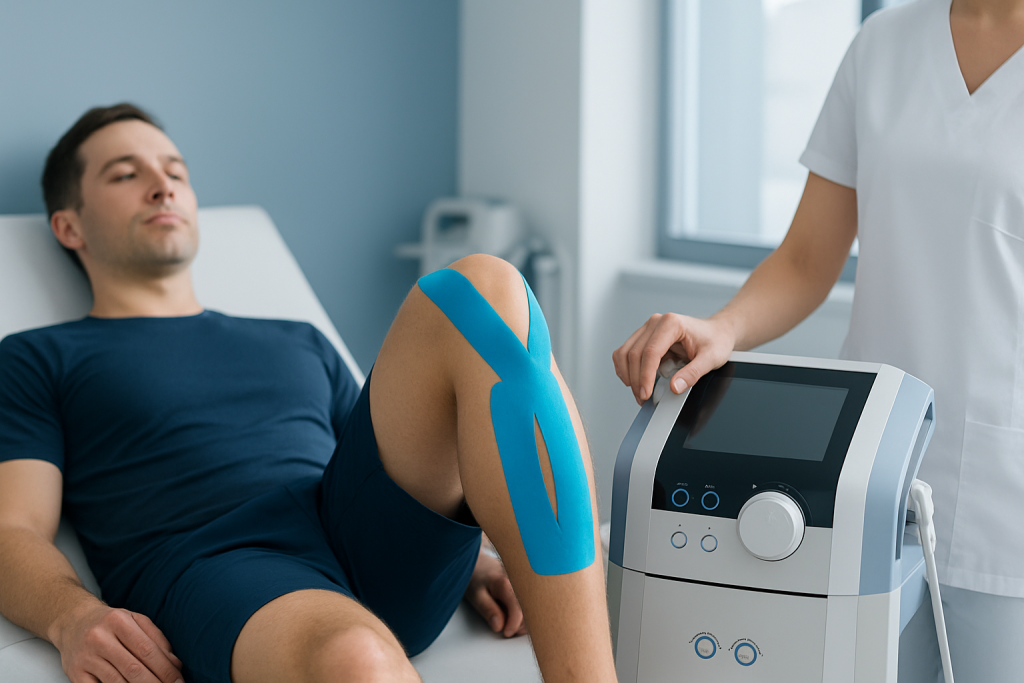
The main idea behind kinesiology taping is simple: gentle tension and skin lifting may change how the body senses movement and pressure. Some people feel better support around a joint or muscle because the tape gives a mild reminder to move more carefully.
Clinicians may use it to help with short-term pain relief, swelling reduction, posture cues, or muscle activation during recovery. In some cases, it may also improve a person’s awareness of how a body part is moving, which can be useful after injury when coordination has been affected.
It is important to keep expectations realistic. Research has shown mixed results, and the tape tends to work best when paired with rehabilitation exercises and other medical advice. It is best viewed as a supportive aid, not a cure.
Common Uses

Kinesiology tape is used across a wide range of rehabilitation settings. A clinician may recommend it for shoulder pain, neck strain, tendinopathy, low-back discomfort, muscle fatigue, sports-related overuse problems, or mild joint instability.
It is also sometimes used after surgery or injury to help manage swelling and encourage comfortable movement. In the clinic, it may be applied to the knee for patellofemoral pain, to the ankle after a sprain, or to the forearm and hand during repetitive-use recovery.
- Support during sports or exercise
- Swelling management after injury
- Postural cueing during rehabilitation
- Assistance with movement confidence
- Adjunct support in physical therapy programs
Because different techniques can be used for different goals, the same tape pattern is not appropriate for everyone. A personalized approach usually works better than copying a generic online demonstration.
Who May Benefit and Who Should Be Cautious
People who are in active rehabilitation often find kinesiology tape helpful when they need support but still want to move. It can be useful for those returning to walking, working, exercising, or daily activities after a minor injury or flare-up.
Some people should be cautious. Tape should be avoided or used only with professional guidance if the skin is fragile, irritated, or allergic to adhesives. Extra care is also needed when there are circulation problems, sensory changes, open wounds, or an unclear medical cause of pain.
Parents, older adults, and international patients managing recovery away from home may also benefit from clear instructions, because correct wear time and skin checks matter. If the skin reacts, the tape should be removed and the situation reviewed by a clinician.
Diagnosis and Professional Assessment
Kinesiology tape is not used to diagnose a condition. Before recommending it, a healthcare professional usually assesses the person’s symptoms, injury history, movement pattern, and the specific body area involved.
This matters because pain can come from many sources. A sore shoulder might reflect tendon irritation, stiffness, nerve-related symptoms, or a problem elsewhere in the upper back or neck. Taping may be helpful in one situation and unhelpful in another.
A proper assessment helps determine whether taping should be combined with exercise therapy, manual treatment, rest, imaging, or referral to another specialist. For patients seeking treatment while abroad, this step is especially valuable because it creates a clear plan for both in-clinic care and follow-up at home.
Treatment Options and How It Is Used
Kinesiology tape is usually applied by a trained clinician or by a patient after instruction. The tape is placed on clean, dry skin and may be shaped or anchored in different ways depending on the target area and intended effect.
Some applications aim to support a muscle during activity. Others are designed to reduce swelling or provide sensory feedback around a joint. The amount of stretch, direction of placement, and duration of wear all influence comfort and outcome.
It is often combined with other treatment options such as:
- Therapeutic exercise and stretching
- Activity modification and rest
- Pain-relief strategies recommended by a clinician
- Manual therapy or physical therapy
- Bracing or other support when needed
Because skin health and anatomy vary from person to person, self-application should be guided by reliable instruction. If the tape causes itching, burning, or increased discomfort, it should be removed.
Prevention and Self-Care
Kinesiology tape can be part of a prevention plan for people who are recovering and gradually returning to activity. However, the most effective prevention usually comes from strengthening, pacing, warm-up routines, and proper technique in sport or work tasks.
Simple self-care helps the tape perform better and protects the skin. The area should be clean and dry before application, and the tape should not be applied over lotions or irritated skin. It is also sensible to check the skin regularly, especially during the first use or in warmer climates where sweating is common.
For patients managing care across borders, it helps to carry written instructions or photos of the taping pattern, along with guidance on how long to wear the tape and when to stop. This makes it easier to continue treatment safely after returning home.
When to See a Doctor
Medical review is important if pain is severe, persistent, or worsening, or if swelling appears suddenly after an injury. Numbness, weakness, loss of function, fever, skin blistering, or signs of infection also deserve prompt attention.
It is wise to speak with a doctor or rehabilitation specialist if kinesiology tape does not help, if symptoms keep returning, or if the problem limits daily activities. A more detailed evaluation may be needed to identify the true cause and prevent prolonged recovery.
Patients considering treatment abroad may prefer a centre where diagnosis, rehabilitation, and follow-up are coordinated across specialties. Acibadem Health Point’s multidisciplinary specialists and JCI-accredited hospitals diagnose and treat this condition for international patients, with care plans tailored to safe recovery and continued rehabilitation.
A Practical Perspective on Recovery
Kinesiology tape tends to be most useful when it fits into a realistic recovery plan. It can support movement, provide comfort, and help patients stay active within safe limits, but it should not be expected to solve the underlying issue on its own.
The most sustainable progress usually comes from combining good assessment, targeted exercise, and sensible day-to-day habits. When patients understand why the tape is being used, they are better able to judge whether it is helping and whether their recovery is moving in the right direction.
Used thoughtfully, kinesiology tape can be a small but practical part of rehabilitation. The key is matching the tape to the condition, the person, and the recovery stage, rather than treating it as a one-size-fits-all solution.
Frequently asked questions
What is kinesiology tape used for?
Kinesiology tape is commonly used to support movement during rehabilitation, ease discomfort, and help with swelling management. It may also improve body awareness around an injured area. Its role is supportive rather than curative.
Does kinesiology tape really work?
It may help some people, especially when used with exercise therapy and other rehabilitation measures. Research findings are mixed, so results vary from person to person. A clinician can help decide whether it is worth trying for a specific problem.
Can kinesiology tape be worn all day?
Many people wear it for a short period as directed by a clinician, but wear time depends on the skin, the reason for use, and the product instructions. If it causes itching, redness, or discomfort, it should be removed. Skin should be checked regularly.
Is kinesiology tape safe for everyone?
It is not suitable for everyone. People with sensitive skin, adhesive allergies, open wounds, or certain circulation or sensation problems should use it only with professional advice. A medical assessment helps determine whether it is appropriate.
Can patients apply kinesiology tape themselves?
Yes, some people learn to apply it at home after instruction. However, correct placement and tension matter, so first-time users often benefit from being shown by a physiotherapist or doctor. Good technique makes the tape more comfortable and useful.
Should kinesiology tape replace other treatment?
No, it is best used as one part of a broader plan. Exercise, rest, and clinician-guided treatment of the underlying cause are usually more important for recovery. Tape can support those steps but should not replace them.
References
- American Academy of Orthopaedic Surgeons
- National Health Service
- Mayo Clinic
- World Health Organization
- American Physical Therapy Association
This article is for general information only and is not a substitute for professional medical advice. Please consult a qualified doctor about your individual situation.
Joint and spine care in Turkey — expert assessment & treatment
JCI-accredited · board-certified surgeons · reply within 24h
Add us as a Preferred Source to see more of our trusted health content across Google Search, AI Overviews and Discover.
More from the Health Library



Related Specialists

Fzt. Elif Tokgöz Nizam
Physical Medicine & Rehabilitation
Fzt. Gizem Aydın
Physical Medicine & Rehabilitation
Dr. Safiye Sayilir
Physical Medicine & Rehabilitation
Dr. Özgün Barış Çolak
Physical Medicine & Rehabilitation