Inguinal Hernia Symptoms

Key Takeaways
- An inguinal hernia often appears as a bulge in the groin or scrotum that may come and go.
- Symptoms may worsen with coughing, straining, lifting, or long periods of standing.
- Pain, burning, heaviness, or a feeling of weakness in the groin can accompany the bulge.
- A hernia that becomes firm, very painful, red, or cannot be pushed back needs urgent medical attention.
- Diagnosis is usually made with a physical examination, sometimes supported by imaging.
- Treatment may involve watchful waiting or surgery, depending on symptoms and risk.
Inguinal hernia symptoms often begin as a bulge or heaviness in the groin that becomes more noticeable with coughing, lifting, or standing. Some hernias are mildly uncomfortable, while others cause pain, pressure, or a change in the way the groin feels during daily movement.
Overview
An inguinal hernia happens when tissue, often part of the intestine or fatty tissue, pushes through a weak spot in the lower abdominal wall near the groin. The most familiar sign is a soft bulge that may become more visible when a person stands, coughs, laughs, or strains.
Not every inguinal hernia causes strong discomfort at first. Some people notice only a mild pulling sensation, a sense of fullness, or a bulge that appears after activity and disappears when lying down. Others feel enough pain or pressure that walking, lifting, or bending becomes uncomfortable.
For international patients, this symptom pattern can be confusing because the problem may seem minor on some days and more obvious on others. That is why a careful medical assessment matters: it helps distinguish an inguinal hernia from other groin conditions and shows whether observation or treatment is the safer path.
Symptoms

The classic symptom is a visible or touchable lump in the groin, usually on one side, although it can occur on both sides. In men, the bulge may extend into the scrotum; in women, it may be less obvious but still cause pain or pressure in the lower abdomen or groin.
People may describe the discomfort in different ways. Some feel a dull ache, others a burning or dragging sensation. Symptoms often increase during the day, especially after standing for long periods, physical work, exercise, coughing, or constipation-related straining.
Common symptoms can include:
- A bulge in the groin that is easier to see when standing
- Pain or aching in the groin or lower abdomen
- Heaviness, pressure, or a pulling feeling
- Discomfort when lifting, bending, or coughing
- Swelling in the scrotum in some men
- A bulge that may flatten when lying down
Some hernias stay relatively quiet for a long time. Others gradually become more noticeable as the opening in the abdominal wall enlarges, which is why new or changing groin symptoms should not be ignored.
Causes & Risk Factors
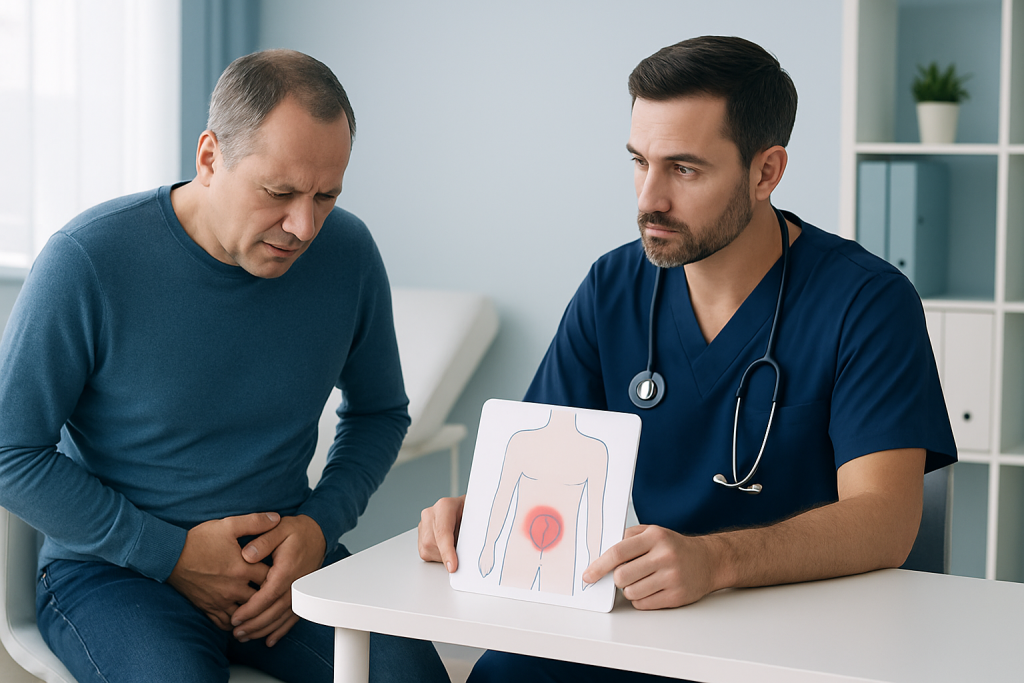
An inguinal hernia develops when muscle or connective tissue in the groin weakens. In some people, this weakness is present from birth; in others, it develops later in life from repeated pressure on the abdominal wall. The hernia itself is the result of anatomy and pressure working together over time.
Anything that increases strain in the abdomen can make a hernia more likely or make symptoms more noticeable. Heavy lifting is one example, but so are chronic coughing, ongoing constipation, repeated straining during bowel movements, and activities that repeatedly tighten the abdominal muscles.
Factors that may raise the risk include:
- Male sex, because inguinal hernias are more common in men
- Older age, when tissues may naturally weaken
- Family history of hernia
- Prior groin hernia or abdominal surgery
- Chronic cough or lung disease
- Constipation or frequent straining
- Heavy physical labor or intense lifting
- Pregnancy-related pressure, which can contribute in some women
Understanding the cause does not usually mean a person did anything wrong. Many hernias develop from a combination of body structure, daily strain, and natural tissue weakening rather than a single event.
Diagnosis
Diagnosis usually begins with a medical history and a physical examination. A doctor may ask when the bulge appears, what makes it worse, whether it can be pushed back in, and whether there is pain, nausea, or bowel-related change. This information helps identify whether the symptoms fit an inguinal hernia or another groin problem.
During the examination, the doctor may ask the person to stand, cough, or strain gently so the hernia becomes easier to see or feel. In many cases, that is enough to make the diagnosis. If the hernia is small, hard to feel, or the symptoms are not typical, imaging may help.
Ultrasound is often used to look at groin structures, and in some cases a CT scan or MRI may be recommended. These tests can be useful for international patients who arrive with intermittent symptoms or prior imaging from another country, because they help clarify the exact location and size of the hernia before a treatment plan is made.
Treatment Options
Not every inguinal hernia needs immediate surgery, especially if the symptoms are mild and the hernia is easily reducible, meaning it can move back in or flatten when lying down. In selected cases, a doctor may recommend watchful waiting with regular follow-up. This approach is usually considered only when symptoms are limited and the hernia is not causing concern for complications.
When pain, discomfort, or daily limitations are present, repair is often discussed. Surgery is the only way to correct the weakness in the abdominal wall. The operation may be done through an open or minimally invasive approach, depending on the person’s situation, the surgeon’s recommendation, and prior surgical history.
Treatment planning often includes practical details that matter to traveling patients, such as how long recovery may take, whether someone will need help after the procedure, and when follow-up can safely occur. A surgeon will also consider other health conditions, because the best approach is the one that fits the whole person, not only the hernia.
Prevention & Self-care
Not every hernia can be prevented, especially if tissue weakness is already present. Still, some habits may reduce strain on the groin and ease symptoms while a person is waiting for evaluation or treatment.
Helpful self-care steps often include avoiding heavy lifting or learning safer lifting techniques, preventing constipation with hydration and fiber, and treating chronic cough or other conditions that create repeated abdominal pressure. Wearing supportive clothing may help some people feel more comfortable during daily activities, though it does not fix the hernia itself.
General self-care considerations include:
- Use proper body mechanics when lifting
- Do not force bowel movements
- Manage persistent cough or sneezing with medical advice
- Choose activities that do not worsen pain
- Monitor whether the bulge changes in size, comfort, or reducibility
It is also wise to avoid trying to push a painful or stuck hernia back in forcefully. Gentle reduction should only be discussed with a clinician, especially if the area is tender or the symptoms are changing.
When to See a Doctor
A medical evaluation is appropriate whenever a new groin bulge appears, even if the discomfort seems mild. Early assessment helps confirm the diagnosis and prevents confusion with swollen lymph nodes, muscle strain, hydrocele, or other conditions that can look similar.
Prompt attention is especially important if the pain is getting stronger, the bulge is no longer going back in, or the area has become firm, red, or tender. Nausea, vomiting, abdominal swelling, or inability to pass stool or gas can also suggest a complication that needs urgent care.
For a person traveling from another country, it is reasonable to seek care before the trip if possible, rather than waiting until symptoms become severe. Acibadem Health Point’s multidisciplinary specialists and JCI-accredited hospitals diagnose and treat inguinal hernia for international patients, with coordinated assessment and follow-up when needed.
Even when the situation is not urgent, a doctor’s review gives clarity. Knowing whether the hernia can be monitored safely or should be repaired can make day-to-day decisions about work, travel, exercise, and recovery much easier.
Frequently asked questions
What does an inguinal hernia feel like?
It may feel like a soft bulge, a heavy sensation, or a pulling ache in the groin. Some people notice pain only during lifting, coughing, or standing for long periods.
Can an inguinal hernia go away on its own?
No, an inguinal hernia does not usually heal by itself because the tissue weakness remains. Some hernias can be observed if they are not causing much trouble, but they still need medical follow-up.
Is groin pain always caused by a hernia?
No, groin pain has several possible causes, including muscle strain, swollen lymph nodes, and joint problems. A doctor can sort out the cause with an examination and, if needed, imaging.
When is an inguinal hernia an emergency?
It becomes more urgent if the bulge is very painful, firm, red, or cannot be pushed back in. Nausea, vomiting, and bowel obstruction symptoms also need immediate medical attention.
Can exercise make symptoms worse?
Some exercises, especially those involving heavy lifting or straining, can make symptoms more noticeable. A clinician can suggest safer activity choices while the hernia is being assessed.
How is an inguinal hernia usually treated?
Treatment depends on the size of the hernia and the symptoms it causes. Mild cases may be watched for a time, while painful or enlarging hernias are often repaired surgically.
References
- Mayo Clinic
- Cleveland Clinic
- NHS
- American College of Surgeons
- World Health Organization
This article is for general information only and is not a substitute for professional medical advice. Please consult a qualified doctor about your individual situation.