What Does A Hemorrhoid Look Like

Key Takeaways
- Hemorrhoids may appear as soft lumps, swollen tissue, or skin-colored bumps around the anus.
- Internal hemorrhoids are often not visible unless they prolapse, while external hemorrhoids are usually easier to see or feel.
- Rectal bleeding, itching, discomfort, or a feeling of pressure can happen with hemorrhoids but should still be medically assessed.
- Many cases improve with fiber, fluids, and gentle bowel habits, but persistent symptoms deserve a doctor’s evaluation.
- Sudden severe pain, heavy bleeding, or a new anal mass should not be self-diagnosed.
Hemorrhoids are swollen veins in and around the anus or lower rectum, and their appearance can vary depending on whether they are internal or external. Understanding what they may look like can help a person recognize common symptoms and decide when medical evaluation is appropriate.
Overview
When people ask what a hemorrhoid looks like, they are often trying to separate a common, manageable problem from something that may need medical attention. Hemorrhoids are swollen blood vessels in the lower rectum or around the anus, and their appearance depends on where they are located and whether they are inflamed, irritated, or prolapsed.
External hemorrhoids are usually the most visible. They may look like soft lumps or small rounded bumps near the anus, sometimes the same color as the surrounding skin and sometimes darker or bluish if a clot has formed inside them. Internal hemorrhoids are higher up in the rectum, so they often cannot be seen from the outside unless they protrude during bowel movements.
For international patients who are deciding whether to travel for care, it helps to know that a visual change alone does not confirm the diagnosis. A clinician usually considers the appearance together with symptoms, bowel habits, and an examination to rule out other causes of bleeding or a lump.
Symptoms
Not every hemorrhoid causes pain, and some are noticed only because of bleeding or a small bulge. A person may see bright red blood on toilet paper, on the surface of stool, or in the toilet bowl after a bowel movement. Itching, mild burning, mucus leakage, or a sense of incomplete emptying can also occur.
External hemorrhoids may feel tender, especially when sitting or wiping. If a blood clot forms in one, the area can become firm and painful, and the lump may look bluish-purple rather than flesh-colored. Internal hemorrhoids are more likely to cause bleeding than pain, although prolapsed internal hemorrhoids can create pressure, irritation, or a moist, bulging tissue at the anus.
Because several anal and rectal conditions can look similar, symptom patterns matter. A fissure, skin tag, abscess, inflammatory bowel disease, or other problem may produce overlapping signs, so the appearance of a lump should not be the only clue used to make assumptions.
Causes & Risk Factors
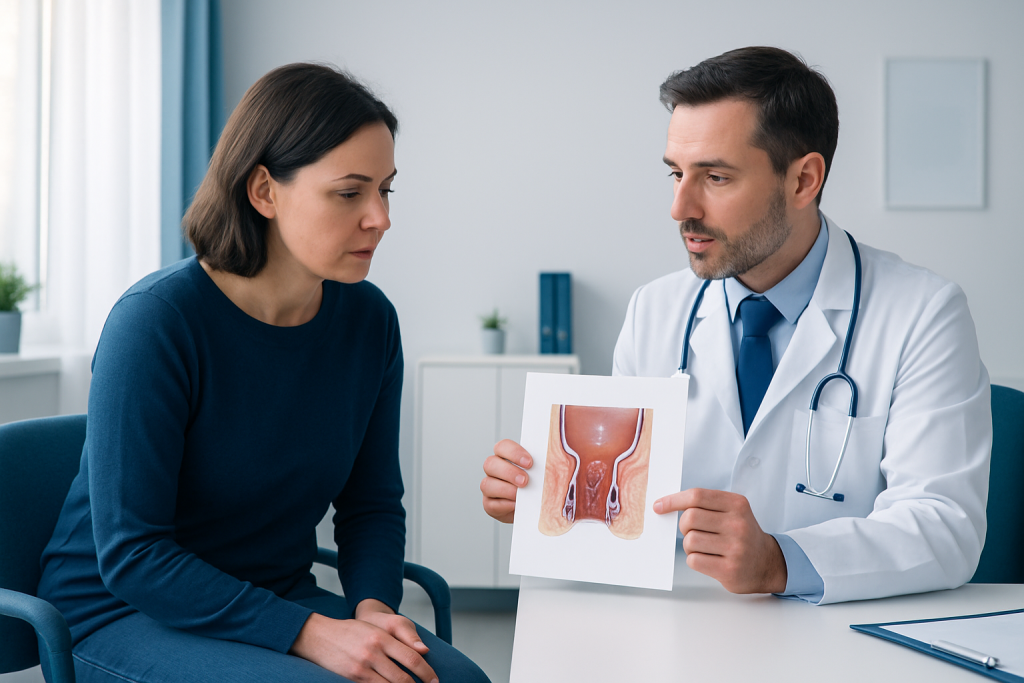
Hemorrhoids develop when pressure builds in the veins of the rectum or anus. Straining during bowel movements, prolonged sitting on the toilet, and chronic constipation are common contributors. Repeated diarrhea can also irritate the area and worsen symptoms.
Risk tends to increase during pregnancy, with aging, and when a person spends long periods sitting or lifting heavy objects. A low-fiber diet, inadequate fluid intake, and habits that make bowel movements harder to pass can all make hemorrhoids more likely to appear or flare.
Some people have a family tendency toward hemorrhoids, while others notice them after changes in activity, diet, travel routines, or stress. For patients managing care across borders, even a temporary shift in meals, hydration, or routine during travel can affect bowel regularity and symptom severity.
Diagnosis
Doctors usually diagnose hemorrhoids by asking about symptoms and performing a physical examination. External hemorrhoids are often visible on inspection. Internal hemorrhoids may require a rectal exam or an instrument-based look inside the anal canal, depending on the symptoms and the clinician’s judgment.
If bleeding is present, the doctor may want to ensure it is truly coming from hemorrhoids rather than another source. Age, family history, stool changes, anemia, weight loss, or ongoing abdominal symptoms can influence whether more testing is advised. This careful approach is especially important because rectal bleeding should not automatically be attributed to hemorrhoids.
Many patients feel relieved when a clear explanation is given, particularly if they have been looking at online images and trying to match their own symptoms. A proper exam can distinguish a hemorrhoid from a skin tag, fissure, prolapse, or other condition and guide the right next step.
Treatment Options
Many hemorrhoids improve with conservative care. Increasing fiber intake, drinking enough fluids, and avoiding straining can make stools easier to pass and reduce irritation. Warm sitz baths, gentle cleansing, and limiting time on the toilet may also help symptoms settle.
When home measures are not enough, a doctor may suggest office-based procedures such as rubber band ligation, sclerotherapy, or infrared coagulation for internal hemorrhoids. These treatments are selected based on the type and severity of hemorrhoid, the person’s overall health, and whether symptoms are recurring.
Surgery is usually reserved for more advanced or persistent cases, such as large prolapsing hemorrhoids or repeated bleeding that does not improve with other care. A specialist can explain whether a procedure is likely to be done as an outpatient treatment, how recovery may feel, and what follow-up is needed after returning home.
- Fiber and fluids to soften stool
- Stool-softening strategies recommended by a doctor
- Office procedures for persistent internal hemorrhoids
- Surgery for advanced or recurrent cases
Prevention & Self-care
Prevention often starts with making bowel movements easier and less forceful. A fiber-rich diet, regular hydration, and consistent movement during the day can help support smoother digestion. People who travel frequently may also benefit from keeping routines as steady as possible, since diet changes and long hours of sitting can affect bowel habits.
Simple habits can reduce repeated irritation. It is better to avoid straining, to respond to the urge to have a bowel movement without delaying too long, and to keep toilet time brief. Gentle wiping or rinsing can be easier on the area than rough rubbing, especially when symptoms are active.
Self-care is not a substitute for medical review if symptoms continue. If a person has ongoing discomfort, frequent bleeding, or a lump that changes quickly, it is wise to arrange an evaluation rather than relying on appearance alone.
When to See a Doctor
Medical advice is important when rectal bleeding appears for the first time, when symptoms last more than a short time, or when the pain is significant. A new anal lump should also be checked, especially if it feels firm, is growing, or is associated with fever, drainage, or severe tenderness.
It is also sensible to seek assessment if bowel habits change, stools become black or very dark, or bleeding occurs with dizziness, weakness, or unexplained weight loss. These signs may point to conditions beyond hemorrhoids and deserve prompt evaluation.
For patients planning care from another country, a specialist visit can help determine whether treatment should happen locally or after travel. Acibadem Health Point’s multidisciplinary specialists and JCI-accredited hospitals diagnose and treat hemorrhoids for international patients, with attention to evaluation, procedure planning, and follow-up coordination.
Living With Hemorrhoids While Traveling or Recovering
Travel can make hemorrhoid symptoms more noticeable because sitting for long periods, changes in meals, and disrupted routines can affect bowel regularity. Patients who are recovering after treatment may need clear guidance on activity, diet, and hygiene before flying home or continuing onward to another destination.
Planning ahead often makes recovery smoother. Packing any recommended supplies, knowing how to stay hydrated during travel, and arranging follow-up instructions in advance can reduce stress. If a procedure was performed, a patient should understand what level of discomfort is expected and which symptoms would require contact with the treating team.
Because hemorrhoid care is usually straightforward but individualized, the right plan depends on the type of hemorrhoid, symptom pattern, and overall health. A doctor can help the patient choose the most practical option and recover with confidence.
Frequently asked questions
What does a hemorrhoid usually look like?
An external hemorrhoid may look like a soft bump or swollen lump near the anus. If a clot forms, it can appear bluish or purple and feel firm or tender. Internal hemorrhoids are often not visible unless they prolapse outside the anus.
Can hemorrhoids look like skin tags?
Yes, a healed or long-standing hemorrhoid can be mistaken for a skin tag, and the two can look similar. A clinician can usually tell the difference with an examination. That distinction matters because the treatment approach may be different.
Do hemorrhoids always cause pain?
No, many hemorrhoids are not painful. Internal hemorrhoids often cause bleeding or protrusion rather than pain, while external hemorrhoids may be sore or itchy. Pain can increase if a clot develops or the tissue becomes irritated.
Is rectal bleeding always caused by hemorrhoids?
No, rectal bleeding has several possible causes. Although hemorrhoids are common, bleeding should not be assumed to come from them without an evaluation. A doctor can determine whether further testing is needed.
How are hemorrhoids usually treated at first?
Initial care often focuses on softer stools, less straining, and reducing irritation. Fiber, fluids, and gentle bowel habits help many people. If symptoms continue, a doctor may suggest an office procedure or another treatment.
When should someone seek urgent help for a hemorrhoid-like lump?
Urgent care is reasonable if there is heavy bleeding, severe pain, fever, drainage, or a rapidly changing mass. These symptoms can point to something other than a simple hemorrhoid. A prompt medical review is the safest choice.
References
- National Institute of Diabetes and Digestive and Kidney Diseases
- American Society of Colon and Rectal Surgeons
- Mayo Clinic
- Cleveland Clinic
- NHS
This article is for general information only and is not a substitute for professional medical advice. Please consult a qualified doctor about your individual situation.