How to Prepare for a CT or MRI Trip: Fasting, Medications, and Documents

Key Takeaways
- CT and MRI preparation depends on the body part being scanned and whether contrast dye will be used.
- Patients should tell the imaging team about allergies, kidney disease, pregnancy, implants, and all medicines and supplements.
- Some scans require fasting, while others allow normal eating and drinking; instructions should always be followed exactly.
- Comfortable clothing without metal and complete medical documents can save time and avoid delays.
- If something is unclear before the appointment, the imaging center should be contacted rather than guessing.
Medically reviewed by the Acıbadem clinical team — June 13, 2026
Preparing for a CT or MRI is usually straightforward, but a little planning can make the experience smoother and safer. Knowing when to fast, which medicines to mention, and what documents to bring helps the imaging team tailor the scan to the patient’s needs.
Overview
A CT or MRI appointment often feels simple from the outside: arrive, change clothes if needed, complete the scan, and go home. In practice, the experience is smoother when the patient knows what the imaging team is looking for and what information matters before the scan day. Preparation is not about doing everything perfectly; it is about giving the radiology team the details they need to choose the safest and most useful approach.
CT and MRI are both powerful tools, but they are not prepared for in exactly the same way. A CT scan may involve iodinated contrast, which sometimes calls for fasting or blood test review. An MRI may require more attention to metal implants, clips, devices, or prior surgeries. For patients traveling from another country, preparation also includes organizing records, planning transport, and allowing enough time for questions before the appointment.
The most reliable rule is simple: follow the instructions issued by the imaging center for that specific scan. Those instructions are tailored to the patient’s body part, medical history, and whether contrast is planned. When in doubt, it is safer to ask than to assume.
Symptoms or Situations That May Lead to Imaging
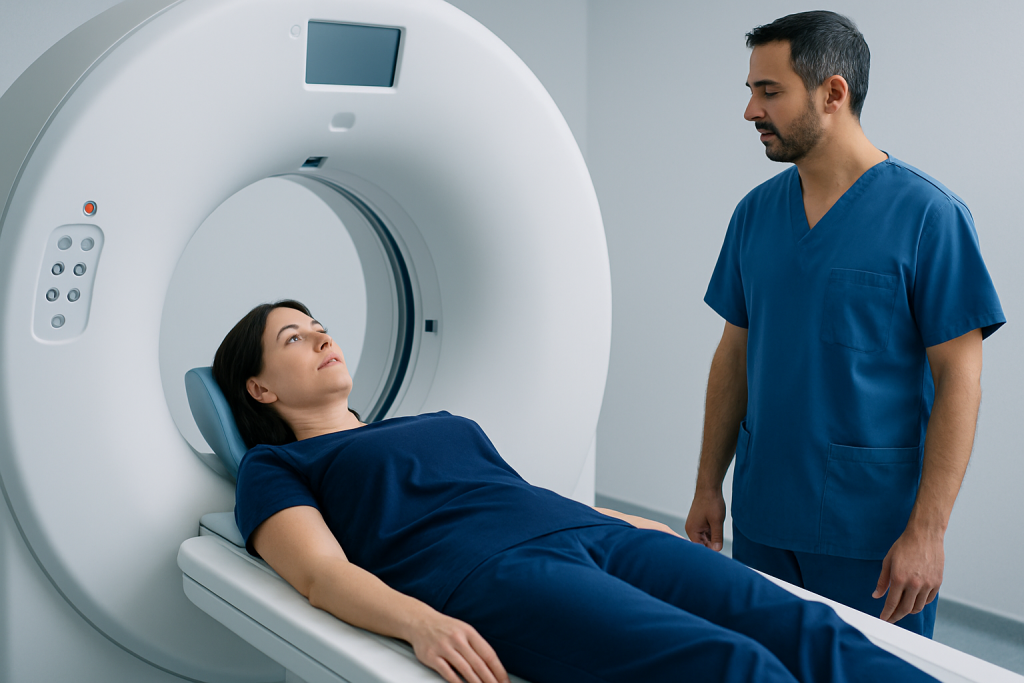
CT and MRI are usually ordered to answer a specific clinical question rather than because of one single symptom. A doctor may request imaging for persistent headaches, abdominal pain, back pain, injury, suspected infection, unexplained weight loss, or to look more closely at a finding from another test. The preparation depends on why the scan is being done and which area of the body will be examined.
Some patients are scheduled for imaging as part of monitoring an already known condition, such as a tumor, a spine problem, liver disease, or a follow-up after surgery. Others may have imaging after an emergency visit, or before a planned procedure. In each situation, the team needs the same basic information: what is being investigated, whether contrast is planned, and whether there are any safety concerns such as pregnancy, kidney issues, or implanted medical devices.
For international patients, a scan may be just one step in a longer care journey. A travel itinerary, outside reports, and previous imaging can help the specialist compare results accurately and avoid repeating tests unnecessarily.
Causes & Risk Factors: What Affects Scan Preparation

The main reasons preparation differs are contrast use, safety screening, and the type of scanner. CT uses X-rays and may be paired with contrast to make blood vessels, organs, or inflammation easier to see. MRI uses a magnetic field and radio waves, so anything containing metal or electronic components must be carefully reviewed before the scan.
Several factors can change the instructions patients receive. These include a history of allergic-type reactions to contrast material, kidney disease, diabetes, pregnancy, asthma, severe claustrophobia, prior surgeries, and implanted devices such as pacemakers, cochlear implants, neurostimulators, or metal fragments. Even everyday items such as jewelry, watches, hairpins, hearing aids, or removable dental appliances can matter on scan day.
Preparation is also influenced by practical issues. Patients who are coming from abroad may need to coordinate medication timing across time zones, arrive early for paperwork, and bring a full list of prior procedures. The more complete the background information, the easier it is for the imaging team to adapt the plan safely.
Diagnosis and Pre-Scan Evaluation
Before imaging begins, the radiology team usually completes a short safety review. This may include questions about allergies, kidney function, pregnancy, previous contrast exposure, current medicines, prior operations, and metal implants. The team may also ask whether the patient has had prior scans done elsewhere, because comparison images can be very helpful.
Depending on the type of scan, a doctor may request blood tests beforehand, especially if contrast is planned and kidney function needs to be checked. Some patients will receive an injection, an oral contrast drink, or both. Others will not need any contrast at all. If the appointment involves sedation or strong anxiety management, additional instructions about eating, drinking, and escort arrangements may apply.
Patients should not try to guess what documentation is enough. The safest approach is to bring any report that may help the radiologist or referring doctor, even if it seems old. A scan is more useful when it is interpreted alongside previous information rather than in isolation.
Treatment Options: What to Do Before CT or MRI Day
There is no “treatment” in the usual sense, but there is a practical checklist that helps most patients arrive ready. First, follow fasting instructions exactly as written. Some CT scans with contrast ask patients not to eat for a few hours beforehand, while others do not require fasting at all. MRI preparation may allow normal meals unless sedation is planned or the center gives different instructions.
Second, review medications carefully. Most routine medicines can be taken as usual, but the imaging team may give specific advice for diabetes medications, blood thinners, kidney-related medicines, or drugs that interact with contrast planning. Patients should bring an up-to-date medication list that includes prescriptions, over-the-counter products, vitamins, herbal remedies, and inhalers. If a medicine is usually taken with food and the patient has been told to fast, the center should clarify what to do rather than the patient deciding alone.
Third, organize documents and personal items. Useful items typically include:
- the referral or order for the scan
- previous imaging reports and, if available, image files on CD, USB, or online access
- recent blood test results if they were requested
- a list of allergies, implants, and surgeries
- passport or identification, insurance or payment documents, and travel details if relevant
Comfort also matters. Patients should wear loose clothing without zippers, snaps, or metallic decorations when possible. If the scan is expected to be lengthy, they may wish to arrange transport home, especially if sedation is involved or if they feel anxious being in a confined space.
Prevention & Self-care: Making the Appointment Easier
Good preparation lowers stress, but it also improves safety. One of the most useful habits is to tell the imaging team everything that could matter, even if it seems unrelated. A remote infection, a prior reaction to contrast, a new pregnancy, or a forgotten implant can all change the plan.
Patients can also help themselves by arriving early, staying hydrated only if fasting is not required, and keeping a written list of questions. If the scan is happening during a trip, it can be wise to leave a buffer before and after the appointment so there is no rush to catch transportation or attend another medical visit immediately afterward.
For claustrophobic patients, self-care may include practicing calm breathing, asking in advance whether the center offers music, wider-bore MRI options, or support for anxiety, and discussing whether a companion may accompany them. People with chronic conditions should keep their everyday medical routine as stable as possible unless they are told otherwise by the doctor or radiology team.
When to See a Doctor or Call the Imaging Center
Patients should contact the imaging center before the appointment if they are unsure about fasting, medication timing, pregnancy status, metal implants, or whether a recent blood test is needed. It is also important to call if they have had a previous reaction to contrast, have kidney disease, or have recently undergone surgery or a procedure involving a device or clip.
After the scan, a doctor should be contacted promptly if there are unusual symptoms such as breathing difficulty, swelling, hives, severe dizziness, or persistent pain after contrast administration. These problems are not common, but they deserve immediate medical attention. If the scan was part of an international treatment plan, the patient should also ensure that the results are shared with the referring physician for timely follow-up.
Patients who are preparing from abroad may find it helpful to choose a center that coordinates records, scheduling, and interpretation clearly. Acibadem Health Point can support international patients through multidisciplinary specialists and JCI-accredited hospitals that diagnose and treat these conditions with coordinated care.
Frequently asked questions
Do all CT scans require fasting?
No. Fasting depends on whether contrast is being used and which part of the body is being scanned. The imaging center’s instructions are the best guide, because different CT protocols have different preparation steps.
Can regular medicines be taken before an MRI or CT?
Many medicines can be taken as usual, but some need special instructions, especially diabetes medicines, blood thinners, or medications related to kidney health. Patients should always share a full medication list before the scan.
Why do I need to mention implants or metal objects before an MRI?
MRI uses a strong magnetic field, so certain implants or metal fragments may interfere with the scan or create safety concerns. The team needs this information to confirm that the MRI is appropriate and to adjust the plan if needed.
What documents should I bring to my imaging appointment?
Patients should bring the referral, identification, any requested blood test results, and previous reports or images if available. A written list of medications, allergies, surgeries, and implants is also very useful.
Is contrast dangerous?
Contrast is used routinely and is safe for many patients, but it is not suitable for everyone in every situation. The team screens for allergies, kidney function, pregnancy, and other factors before deciding whether contrast is appropriate.
What if I feel anxious in the scanner?
It is common to feel uneasy, especially during an MRI. Patients should tell the imaging team in advance, because the center may be able to offer practical support such as explanation, music, or other comfort measures.
References
- RadiologyInfo.org
- American College of Radiology
- Mayo Clinic
- National Health Service (NHS)
- World Health Organization
This article is for general information only and is not a substitute for professional medical advice. Please consult a qualified doctor about your individual situation.